Thursday, October 15, 2020

2020 Polaris Music Prize shortlist, Day 3: Lido Pimienta, Nehiyawak

My annual five-part look at the shortlist examines two records a day, plus two personal picks from the qualifying period, and this year—as the prize gets older and still skews young—I’m including one veteran artist each day whose latest work risks getting lost in the shuffle.


This year we’re going in reverse alphabetical order, because, hey, everything else about 2020 is upside down.


The winner this year will be announced on Monday, October 19 in a televised ceremony featuring 10 commissioned short films, airing on CBC Gem, YouTube and social media.

Day 1, with Witch Prophet and U.S. Girls, is here. Day 2, with Jessie Reyez and Pantayo, is here. 


Day 3:

Lido Pimienta – Miss Colombia (Anti)

The album: It’s great. And I say that as someone who didn't at all love Pimienta’s Polaris-winning La Papessa. Here, her vocals are much (MUCH, MUCH) warmer, the production is impeccable, the melodies more memorable, and her blending of Colombian rhythms with electronics more fully developed. The record is roughly divided into two parts: side one is more modern, side two is (mostly) more traditional, with guest spots from South American pop stars Bomba Estereo and the traditional Afro-Colombian percussion/vocal Sexteto Tabala illustrating the scope of what Pimienta is aiming for
—and achieves. Her lyrics are fearless (“Nada”) and her musical choices just as daring. 

Bandcamp here.

Bonus: Though Pimienta clearly runs her own show, her primary collaborator here is Matt Smith, a.k.a. Prince Nifty, best known for his work with Owen Pallett in and outside Les Mouches. Prince Nifty put out a wonderful, weird, and virtually unnoticed album earlier this year, We’re Not in Kansas Anymore. It doesn’t sound anything like either Pimienta or Pallett. Check it out here. 


The chances: Normally I’d say good to strong, but there’s the fact that Polaris has yet to have a repeat winner and I think it’s unlikely Lido will be the person to do it, especially only one album later.


Nehiyawak – Nipiy (Arts and Crafts)

The album: I thought this was just another boring rock band, until I started reading reviews claiming the lack of melodic hooks was a conscious act of decolonization by this Cree band, who are apparently toying with the tropes of Western music. 

That’s an interesting idea. I’m not sure I buy it—but it’s also not my place to buy it. I’ll leave that to my more academic-minded colleagues who want to know What It All Means. 

What I hear is an Edmonton act influenced by what’s known as Flegelrock, the Calgary bands revolving around the Flegel brothers (Women, Viet Cong / Preoccupations / Cindy Lee), dream pop, and a healthy dose of early Cure, all produced very well by Colin Stewart (Black Mountain, Destroyer, Kathryn Calder). What I don’t hear are a lot of songs I want to hear again, other than maybe “Starlight” or “Copper.” Guitar music has to be a lot better than this to get me out of bed these days. I wish these guys all the best for a whole bunch of reasons, but this record cuts no mustard with me. 

Bandcamp here.


The chances: Weak. But who knows? They could pull a Karkwa. I realize this is entirely subjective, but I can’t see a guitar band like this inspiring people who might not even like guitar music in the first place (and yet, obviously, it does). It’s neither experimental nor melodically strong. It’s interesting, but that’s not enough. Maybe the fact it doesn’t register with this raised-on-rock music listener only means it has greater appeal to generations after me. Also: For the past 30 years I’ve impulsively recoiled at any artist labelled “shoegaze,” so take that with several shakes of salt. But trying to be clever and calling it “moccasin-gaze” doesn’t make it any more inspiring.


The could’ve, should’ve beens:

Lightning Dust – Spectre (Western Vinyl)

The album: When this came out in the fall of 2019, there were already a lot of spectres on the horizon. We had no idea we’d be blindsided by an entirely new one. I liked this record well enough when it first came out, but it became one of my go-tos during the pandemic (also, my partner fell in love with it around that time). Partly because Amber Webber’s stunning voice, with its trademark quaver, is the ideal companion for the darkest of days. And partly because she and musical partner Josh Wells have always favoured minor-key melancholy, hints of psychedelia and goth-y new wave informing their fractured take on modern folk music: perfect for dark nights of the soul during months of isolation. Sweet Jesus, there’s even a song called “Inglorious Flu.” 

“Run Away” is a killer pop song, where the chord progression borrows ever so slightly from Springsteen’s “The River.” “When It Rains” is beautiful and devastating, and I’m hoping someone sends it to Stevie Nicks. The arrangements are universally sparse, even when the strings come in or Stephen Malkmus drops by. Spectre sits on a shelf with records by Low (“Devoted To”), Robert Plant’s trippier solo material, or, on the piano ballads (“Inglorious Flu,” “More”), even early, pre-cheese Sarah McLachlan.

This is their first record since jumping off Black Mountain (whose latest record suffered from their absence), and Webber wasn’t even sure she wanted to continue as a musician. And so Spectre is filled with a sense of clear, midlife purpose: do your best, or don’t bother anymore. As a result, Spectre might well be the best record either of them have been associated with (and I’m a huge fan of the first Black Mountain record). 

Bandcamp here.


Why it didn’t even make the long list: I’m guessing it’s still viewed merely as a Black Mountain side project, which is really unfortunate. Not only are they not in the band anymore, Lightning Dust has clearly developed their own identity since their 2007 debut. We’re also getting to the point where the mid-2000s crowd is getting squeezed out of Polaris picks. See also: New Pornographers (on whose 2014 shortlisted album Brill Bruisers featured Webber), discussed on Day 2.

Marlaena Moore – Pay Attention, Be Amazed! (independent)

The album: It's a good sign when the opening track on your debut album is a song of longing on par with "Nothing Compares 2 U." Yes, this Edmonton performer's "I Miss You" is that good, and so is the rest of the record. Moore has no shortage of great lyrics that document fragility ("You came to see my harvest and you wanted it for free / Now this empty garden is all that's left of me"), and she often delivers them with a voice with just enough waver that you think she might break, but her inner strength pulls through every line. Moore's an incredible torch singer, as closing waltz "Tiger Water" demonstrates, over guitar feedback, vibraphones and snare brushes. "Imposter" borrows from Roxy Music's "More Than This," likely  unconsciously, but the album is full of equally killer melodies all her own. "Xmas Oranges" is a total earworm, an acrobatic melody set to chugging cellos and a beguiling chorus: "Christmas oranges / I don't care for sticky citrus / You can't tell the difference between love and fatal interest." Producer Chad Van Gaalen, who's known for an often-hazy and psychedelic '90s aesthetic in his solo work and for others, helps Moore deliver a vivid and colourful sonic backdrop for songs that are part Patsy Cline, part Liz Phair, part Angel Olsen. It's hard not to be impressed with the chutzpah of the album title, but it turns out to be entirely accurate. I can't wait to hear more from this woman. 

If you don't believe me, always listen to Fish Griwkowsky. 

Bandcamp link is here. 


Why it didn't even longlist: No idea, but there were no other sad-lady songwriters on the long list, either; I'd hoped to also see pan-Canadian Dana Gavanski on there. And in terms of Western exposure, fellow Edmontonians Nehiyawak and Wares arrived with better backstories. Me, all I needed to hear was "produced by Chad Van Gaalen" and I was intrigued, but this record exceeded any and all expectations.  


Veterans MIA:


Wolf Parade 
– Thin Mind (Royal Mountain / Sub Pop)

It's a complicated thing to assess a band's "comeback" records. I mean, the Buzzcocks put out a lot of great songs in their second and third waves, but all anyone wants to hear is Singles Going Steady. Wolf Parade, on the other hand, have put out two albums in the last five years that are infinitely better than the two records they released after their classic debut, which came out 15 years ago. Granted, I have a soft spot for 40-year-olds kicking this much ass, and with this much sense of renewed purpose. Sure, Dan Boeckner and Spencer Krug have put out a lot of great work in their own projects, and will continue to do so. But hearing them together and with Arlen Thompson—one of my favourite drummers—behind them is a whole other beast. Whether you were ever a fan or not, listen to the first three tracks here and try to deny their visceral power, captured by Sleater-Kinney's favourite producer, John Goodmanson. (And then go listen to 2017's even better Cry Cry Cry.) This isn't a comeback. This is a band still actively writing their legacy. They were one of the last acts I saw before the shutdown, a memory I'm going to cherish for a long time.

Bandcamp here.

Video for "Julia Take Your Man Home" animated by Chad Van Gaalen:


Tomorrow: Kaytranada, Junia T

Wednesday, October 14, 2020

2020 Polaris Music Prize shortlist, day 2: Jessie Reyez, Pantayo


My annual five-part look at the shortlist examines two records a day, plus two personal picks from the qualifying period, and this year
—as the prize gets older and still skews young—I’m including one veteran artist each day whose latest work risks getting lost in the shuffle.


This year we’re going in reverse alphabetical order, because, hey, everything else about 2020 is upside down.


The winner this year will be announced on Monday, October 19 in a televised ceremony featuring 10 commissioned short films, airing on CBC Gem, YouTube and social media.


Day 1, looking at Witch Prophet and U.S. Girls, is here.


Day 2:


Jessie Reyez – Before Love Came to Kill Us (FMLY / Universal)

The album: The only superstar on this list, Reyez has also been a critical favourite since her debut EP, for obvious reasons: her singing voice, her rap flow, and her charismatic audacity. This is her first full-length, and it comes with enormous expectations.

Nobody cares what I think of Jessie Reyez, and nor should they. For what it’s worth, I thought the Kiddo EP was one hell of an introduction, and she hasn’t topped it yet. Her breakout hit was “Figures,” which reappears here for no apparent reason, and most of the better songs here adhere to the same formula: ballads, often waltzes, in which Reyez has a tendency to over-emote and pull off the biggest aural pouts since Corey Hart. The title track works; “Worth Saving” is, uh, not. When she goes back to club tracks like “Dope,” they sound forced (exception: “Roof”). 

“Coffin” is an album highlight, a 6/8 bluesy ballad with one of Reyes’s finest vocal performances, until Eminem shows up to take a massive misogynist shit all over it. What the fuck is he doing here? She doesn’t need that prick. Her own machismo can be downright embarrassing: “If I blow your brains out, I could kiss it better.” Really? Some of the left turns work best of all, like “Intruders” and “I Do.” But what’s up with the atrocious autotune on “La Memoria”? It’s not like Reyez isn’t an amazing singer (see: “Love in the Dark”).

I’d love to love Before Love Came To Kill Us, but it’s all over the place, and not in a good way. I realize how patronizing and perhaps sexist it is to say about a successful artist like Reyez that she has yet to come into her own, but I’m still waiting for her to deliver a great album. Her debut full-length is not it. 


The chances: Fair. On an entirely personal note, this album came out the week of the lockdown, and it was absolutely not the kind of music I wanted to hear at that point in time. The very first lyric is, “I should have fucked your friends”—wait, is that even possible anymore? But both this and the new album by noted misanthrope the Weeknd (released a week earlier) obviously had no problem finding their audience in the coming apocalypse. But I’ll admit that if I was in the jury room, I’d have a hard time giving this album a fair shake in 2020. It sounds like an odd time capsule from the Before Times.


Pantayo – s/t (Telephone Explosion)

The album: All critics—okay, the best ones—are suckers for something they haven’t heard before. We’re curious people (ideally). And it’s safe to say that few people, if anyone, in North America has heard a band like this, which combines traditional Filipino percussion with modern R&B and pop. Producer Alaska B (Yamantaka//Sonic Titan) ensures everything sounds rich, thick and totally pro: deep grooves over which the Moondog-ish metallophones and other kulintang percussion sparkle with life. If this were just a novel and evocative instrumental record, it would already succeed, but these women are also great singers: check out the sultry soul ballad “Desire,” which absolutely could and should be a pop hit. The brooding pulse of “V V V” is a 2020 anthem (“They lie / they will never tell the truth”). “Heto Na” and “Taranta” have some serious ESG vibes, while obviously sounding nothing like them. 

If the Polaris was awarded on originality alone, this would be a shoo-in. My only criticism is that there’s a bit of debut-itis; as good as this is, I’m pretty sure it’s only the beginning. But even if this is all we ever hear from Pantayo (and I have no reason to suspect this), it’s more than enough. I’m so happy this band exists, that this debut record got made the way it did, and that we’re talking about it on the Polaris shortlist.

Bandcamp link here. 

The chances: Good. It’s certainly as strong as the best albums on this list, and the underdog story might help them in the subconscious minds of jury members. Do not be remotely shocked if Pantayo wins this, putting them in a fine Polaris tradition of left-field winners.


The could’ve, should’ve beens:


Little Scream – Speed Queen (Dine Alone / Merge)

The album: Writing political pop music is one of the hardest tasks as a songwriter. It’s incredibly easy to fall flat on your face, deep in name-calling and juvenile call-outs. It’s also incredibly easy to be so incredibly vague as to be completely irrelevant. Little Scream’s Laurel Sprengelmeyer avoids all those pitfalls here. First of all, she clearly puts the music first: all these songs are sparkling pop constructions, with exemplary players; there’s a lot of Fleetwood Mac and Prince lurking between the layers. At least half this record sounds like a greatest-hits collection by a ’70s legend. What elevates Little Scream is her lyrical approach: on tracks like “Disco Ball” and “Privileged Child,” her characters “bear the dead weight of a dream,” living in late-stage capitalism, longing for a basic luxury like their own washing machine (the title track), dealing with post-decadence regret (“No More Saturday Nights”) now that the stakes are higher than they’ve ever been (“Dear Leader”). Sprengelmeyer writes vivid portraits with a universal ring, and the fact that she does so on top of such lush and glorious songs makes it all that much better.


Why it didn’t even make the long list: From what I can tell, this record got reviewed in Exclaim, had an article in the Montreal Gazette
—and that’s about it. Radio silence. Why?! Musically, it’s not that far removed from U.S. Girls, and it’s just as intriguing lyrically, so it’s not like she’s out of step and out of time. Little Scream has been around a while; her 2011 debut made the long list, though she only surfaces every few years. As much as I love this record, I will admit that it was a bit of a grower. But once it clicked, I started playing it every day for a month. These hooks are deep. Nobody heard this record. Did you hear this record? Go listen to this fucking record. 


Lil Andy – All the Love Songs Lied to Us (independent)

The album: “All the love songs lied to us, except the one you’re hearing now.” I’m not in a mood to trust anyone these days, so I appreciate Lil Andy’s chutzpah and his honesty. I also appreciate what a phenomenal collection of songs he’s written, and I appreciate the ace players he gathered to play them, and I appreciate that he’s given me a reason to love a straight-up country record again, which is not something I’ve done in a long, long time (though the new Brandi Clark is pretty good, and I have to admit I haven’t spent a lot of time with the new Corb Lund). I’ve written before that Lil Andy sounds like what would’ve happened had Leonard Cohen stuck with the Buckskin Boys in his early Montreal days. Having followed Andy’s work for many, many years, I can confidently state this is the best thing he’s ever done.

Why it didn’t even longlist: It’s a country record from Montreal. Enough said. Do jurors hang out at the Wheel Club? I'm guessing no. Not a lot of roots-y music on the long list, outside of Andy Shauf, Joel Plaskett and William Prince. But: seriously? Jurors think longlister and fellow folkie Montrealer Leif Vollebekk is a better songwriter than Lil Andy? I bought a vinyl copy of this after accosting Andy in the Montreal metro system last winter. But you can just go listen to it here.


Veteran MIA:


New Pornographers – In the Morse Code of Brake Lights (Collected Works)

It's so easy to take this band for granted, 20 years in. I'll admit that I did that when this album came out in August 2019; I know the formula, I know what to expect. But it's a grower. Just as Carl Newman and company did on 2014's surprise shortlister Brill Bruisers, this record stands out as one of the best that anyone on here, including Neko Case, has ever been a part of. (FWIW, there's no Dan Bejar on here, though he co-wrote the single "Falling Down the Steps of Your Smile.") 

It marks the official debut of touring violinist Simi Stone, who adds welcome orchestration; there are also appearances by Vancouver string quartet Strength of Materials (who made a full-length collab with Ford Pier), who bring glorious colour. The keyboards and synths, handled entirely by Newman and Kathryn Calder, are rich and lovely, not unlike those heard on Newman's highly underrated 2012 solo album Shut Down the Streets. One of the biggest challenges this band has always faced has been balancing moods and textures, if only because they do big, dense, pop-rock songs so well. Here, tracks like the sparse "You Won't Need Those Where You're Going," "Opening Ceremony" or the slow, choral build of the bitter "Higher Beams," are album highlights that don't for a second distract from the sugar highs. 

This marks the first time the New Pornographers have failed to at least make a Polaris long list, which is a) good for Polaris, to make way for new blood, but b) underrates these vets at a time when they sound as good or better than they ever have. I'm sad I didn't get to see this record performed live. 


Tomorrow: Nehiyawak, Lido Pimienta

Tuesday, October 13, 2020

2020 Polaris Music Prize shortlist Day 1: Witch Prophet, U.S. Girls

In its early days, Polaris was often slagged as an indie rock prize, which is not entirely unfair. More accurately, it often featured records that were unknown to mainstream listeners and unheralded by gatekeepers. Sure, it’s been won by the likes of Arcade Fire, Feist and Buffy Sainte-Marie, but most shortlisters still draw blank stares from lay people. This year in particular is a real head-scratcher for the uninitiated, with only pop star Jessie Reyez considered a “name,” despite the presence of three previous winners (Caribou, Kaytranada, Lido Pimienta). It’s also a head-scratcher, as it usually is, for people who wonder if all Canadian music comes only from Montreal and Toronto. 

It’s also a head-scratcher for me, as a long-time juror, as none of the five albums on my initial ballot even made the long list—a first for me. Of the long list, I thought there were a lot of good records on there, some promising debuts, and only a few stinkers; I certainly didn’t have trouble filling my second ballot. But I don’t love anything on this year’s shortlist; the records I like the most are either by artists whose earlier records I prefer, or by very promising new artists I think have yet to make a masterpiece. There are only two records I actively dislike, and one I just find disappointing. I don’t really feel I have a horse in this race. So all bets are off.

My annual five-part look at the shortlist examines two records a day, plus two personal picks from the qualifying period, and this year--as the prize gets older and still skews young—I’m including one veteran artist each day whose latest work risks getting lost in the shuffle.

This year we’re going in reverse alphabetical order, because, hey, everything else about 2020 is upside down.

The winner this year will be announced on Monday, October 19 in a televised ceremony featuring 10 commissioned short films, airing on CBC Gem, YouTube and social media.


Day 1

Witch Prophet – DNA Activation (Heart Lake)


The album: “Bow down to queen,” demands Ayo Leilani on her second album as Witch Prophet. As we should: DNA Activation is a completely captivating, entrancing journey through trippy soul with an Eritrean Erykah Badu bent. Jazzy vibes, deep grooves and synesthesiac textures abound, creating a sonic splendour in which it’s easy to get lost. Leilani’s vocals aren’t a focus as much as they are a centring guide, a soothing presence asking, “Where do we go from here, when the whole world is falling?” Karen Ng’s saxophone plays a key role on three of the 10 tracks, indebted to Ethio jazz. “Makda” comes off like a trippier Dan the Automator. Everything about DNA Activation is a huge step up from her promising debut; its only real drawback is that it’s incredibly brief: 10 songs in 24 minutes. As an album prize, Polaris allowed EPs to be eligible in recent years, which makes a lot of sense given the way a lot of music is released these days. Still, though DNA Activation is nothing if not consistent in both mood and quality, I’d love to hear something longer and more diverse from Witch Prophet. In the meantime, I’m just excited she made the shortlist. This was on my ballot.


The chances: Depends on how much psylocibin is consumed during the process of jury deliberation. But I’d say fair to good.

Bandcamp here.


U.S. Girls – Heavy Light (Royal Mountain / 4AD)

The album: This was recorded by humans in a room together at the same time. Crazy, right? Meg Remy and her circle are politically progressive but have decidedly old-school beliefs when it comes to musical chops: you should be able to play, you should be able to play well with other people, and no amount of multitracking can substitute for the sound of amazing singers surrounding a microphone in real time. As a grumpy old man entering his “jazz years” when I first heard Heavy Light, this concept was very appealing to me. As a lonely man in the middle of a pandemic, this appealed even more, for obvious reasons.

Curmudgeonly philosophy aside, this record succeeds for several reasons, on several levels. It aims to be a What’s Going On of this generation: lyrics that address personal and systemic pain, enveloped in melodies, grooves and arrangements that seek to soothe rather than confront. “You gotta have boots, if you wanna lift those bootstraps,” goes the opening track, addressing historic economic inequality in the guise of a sweet soul song. “Overtime” is a first-person song about a widow discovering that her overworked husband drank their savings away. “Born to Lose” could be a Sarah Kendzior or Barbara Ehrenreich book about American decline in a torch-y song with a choral chorus, set to ’50s lounge exotica. A Latin excursion on “And Yet It Moves / Y Se Mueve” works surprisingly well—or, not so surprising at all, considering the calibre of musicians involved. The entire record is lush and expansive, and yet always in subtle ways; this is not a record that wants to show off, it wants to draw you in.

Remy has a lot of top-shelf help here: Basia Bulat, Arcade Fire’s Tim Kingsbury, partner Slim Twig, the band Ice Cream, future superstar James Baley, the E Street Band’s Jake Clemons, the underrated Geordie Gordon and Michael Rault, engineer Howard Bilerman, and vocal arranger Kitty Uranowski. It’d be hard to make a bad record with those people in the room. But with Remy at the helm, the result is an instant classic.


The chances: Good. This is my personal favourite on the shortlist, even though I enjoy it slightly less than 2018’s In a Poem Unlimited, which was my hands-down pick that year (though I also love Jeremy Dutcher, to whom they lost, so I’m not complaining)—in fact, that is one of my favourite records of the last 10 years. Meg Remy is in her prime; hopefully the first wave of many in a long career, but there’s no denying the winning streak she’s on right now. In the past I would have said that her inclusivity—drawing many other talented artists into her sphere and letting them shine—would help her chances at Polaris, but I’ve been proven wrong on that in the past (A Tribe Called Red). I’m also skeptical that a musically conventional pop record based on ’70s rock has a winning chance in 2020, but who knows? It worked for Buffy Sainte-Marie (one of only four times in Polaris history my personal favourite was the winner). Whether she wins or not, Remy has now had her last three albums shortlisted, and delivered two of the most memorable performances in Polaris history, no small feats on their own.


The could’ve, should’ve beens:

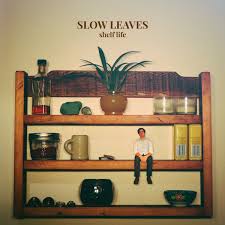
Slow Leaves - Shelf Life (Birthday Cake)

The album: I’m a middle-aged white dad who doesn’t listen to a lot of middle-aged white dad music (or so my crippling sense of self-importance has led me to believe). So if you’re going to play acoustic guitar in a roots-rock or folkie vein, something’s gotta jump out of the mix. In the case of Winnipeg’s Grant Davidson, a.k.a. Slow Leaves, it starts with his voice: a gorgeous quiver that sounds like it’s from a long-lost ’60s folk classic. Then there’s his guitar playing, with a lot more delicate finger-picking than your usual strummer. Finally, the songs are all solid as a rock: a bit Jim Cuddy, a lot of early M. Ward, a little L.Cohen (musically) and a whole lotta Lightfoot.


Why it didn’t even longlist: The obvious answer would be “Winnipeg” (which is what people from Winnipeg will be quick to tell you). But this year Winnipeg actually did pretty well, with Begonia, William Prince and Super Duty Tough Work all making the longlist. The other answer would be: middle-aged, sensitive guy you’ve never heard of before, singing rootsy music that sounds like Gordon Lightfoot—that doesn’t fly at a lot of story meetings. Just ask Doug Paisley. 

Bandcamp here. 


Obuxum – Re-Birth (Urbnet)

The album: Psychedelic beat science from Somali-Canadian producer Muxubo Mohamed, who doesn’t fit any easy profile: there are elements of hip-hop, techno, jazz, soul, Madlib fuckery and Flying Lotus-level interstellar travel, but this sounds like a unique voice at the beginning of her journey. I’m also curious to hear more from featured vocalist Yourhomienaomii, who’s sadly only featured on one track (“Don’t Blame Them”).

Why it didn’t shortlist: Frankly, I’m amazed that it made the long list, considering its low profile. But more power to her. I’m just glad she’s no longer a stranger to the larger world of Canadian music, and that getting on the long list opens a lot of doors.

Her Bandcamp is here.


Veterans MIA in 2020:

Owen Pallett – Island (Secret City / Domino). 

This album had a surprise drop a few days before the ballot deadline, so it’s a small miracle that it squeaked on to the long list. But Pallett, who won the first-ever Polaris in 2006 under the name Final Fantasy and has been shortlisted twice more, is the type of artist who can be out of the public eye for six years and still command attention, and I would not have been surprised if he vaulted onto the shortlist. Island is much more focused on acoustic guitar than anything he’s done since his first band, Les Mouches (who reunited this year, pre-pandemic, for a one-off show). It’s an album of quiet intimacy; the orchestrations rarely take centre stage, and when they do they are often glacial and majestic, evolving drones that open up the sonic space. It’s a meditative record of pain and redemption, of self-loathing and forgiveness: “You don’t need to die to be forgiven.” Pallett’s previous records usually had a couple of pop songs; this does not. It’s a record easily lost to short attention spans and shortlists. It’s Owen Pallett, a man always worth your time.

Bandcamp here.

Tell me this isn't the greatest pandemic video made in the first three months of lockdown:


Tomorrow: Jessie Reyez, Pantayo and more

Thursday, July 23, 2020

20 years of the Weakerthans' Left and Leaving


When people talk about Canadian rock music in the early 2000s, they talk about Montreal, where Arcade Fire and others turned international eyes and ears toward Canada en masse. Sometimes they talk about Toronto, with its various Broken Social Scene satellites and a lot more. They might even talk about Vancouver, where in 2000 the New Pornographers unknowingly launched the idea that the pseudo-socialist country in North America was full of indie rock “collectives” containing multiple songwriters and singers.

But the record that launched one of the most creatively fertile musical periods in Canada’s history didn’t come from Montreal, Toronto or Vancouver. It came from smack dab in the middle of the country, where the music industry dare not tread, where the hipsters dare not look: Winnipeg. The record is the Weakerthans' Left and Leaving.

In 2000, rock music was in the era of rap rock and fourth-generation grunge. Popular punk had become rote and largely juvenile. Garage rock was thriving, but fairly far underground. In the next two years, there would be a so-called “rock revival,” most of which was welcome escapist fantasy in a post-9/11 world. But in the final week of July 2000, a poetic punk band from Winnipeg struck different chords entirely, and released one of the greatest albums of 
the coming decade. 


“The Weakerthans”-- not a terribly inspiring name. It’s the Canadian insecurity complex incarnate. It’s a name chosen by a band in a Prairie province far removed from the corridors of power, in a country that plays inevitable second fiddle to the superpower to the south. It’s a band whose lyrics could, at an extremely superficial level, be heard as yet another adenoidal adolescent pining for the girl to whom he’s pushing a political pamphlet.

But rarely had the broken sounded so bold. Rarely had the weak sounded so strong. Sure, the characters who populate the Weakerthans’ 2000 album Left and Leaving are, in their own words, defeated, exiled, heartbroken, poor and lonely. In the hands of a lesser writer, they might be either obviously autobiographical, or empty abstracts: anonymous huddled masses. In the pen of singer/songwriter John K. Samson, though, those lives are rich and full, brought to life with Dostoevskian detail, their circumstances universal. That portraiture extends to the music behind him as well: rousing punk anthems with chunky guitars countered by tender ballads that made the band folk festival favourites, all coloured by unusually interesting percussive patterns that contributed colour to the sonic palette rather than simply backing rhythms.

This was not another shitty emo band. These were not mall punks on the Warped Tour. This wasn’t screaming for your attention. This wasn’t even Fugazi or Bad Religion. This was something that could only have come from Winnipeg, Manitoba. 


Winnipeg’s socialist tradition is taught in classrooms across the country, in the story of the 1919 Winnipeg General Strike. It’s not remotely surprising that the Weakerthans took their name, in part, from a line in “Solidarity Forever”: “What force on earth is weaker than the feeble force of one?” (Though I’m entirely unclear why this would inspire anyone to name their band the Weakerthans.) Samson’s inspirations include Billy Bragg; Bragg in turn was inspired by bands like the Clash. Bragg eschewed the idea of being backed by a punk band, and opted to play solo electric guitar instead. Samson wanted to be both Bragg and Strummer; the Weakerthans are what it would sound like if Bragg was actually backed by the Clash, alternating ferocity and fragility, with political sloganeering backbenched in order to examine ennui and daily compromises.

The Weakerthans had debuted in 1997 with Fallow, which was received mostly by fans of the band Samson had just left: Propagandhi. He was the third bassist to join the core members, who formed in Portage la Prairie and played their first show at Winnipeg’s Royal Albert, but he was with the band during their international breakthrough. That happened when they befriended Fat Mike of NOFX after sharing a bill at the Royal Albert. He put out the first two Propagandhi records; the second, 1995’s Less Talk More Rock, is considered a game-changer for the 90s generation of Warped Tour kids (not that Propagandhi played Warped), its provocative radical politics an anomaly in the scene. The album featured two Samson songs, “Gifts” and “Anchorless.” The latter was mere small-town malaise next to the rest of the material, written by a band that quoted Noam Chomsky, advocated veganism, and called out the misogynist, homophobic macho culture of punk. But because Propagandhi stood out so far from their peers, Samson had a lot of clout in punk circles. He reprised “Anchorless” on Fallow, which was released on Propagandhi’s then-new label, G7 Welcoming Committee. For much of the Weakerthans’ career in the U.S., Samson was forever referred to as the “ex-bass player in Propagandhi.” But much of Fallow--particularly the devastatingly beautiful ballad “None of the Above,” featuring a decidedly non-punk pedal steel guitar--proved that Samson was on a much different path. 


Left and Leaving came out July 25, 2000. The Weakerthans were on the cover of Exclaim magazine, a free national music monthly in Canada, but few other outlets were paying close attention, other than CBC’s nascent and niche Radio 3 service (to this day, host Grant Lawrence cites the Weakerthans as his favourite Canadian band ever). Within a year, however, mainstream artists like Gord Downie and Sarah Harmer were champions. A young Ontario band called the Constantines was taking careful notes as they prepared to record their debut album. The Weakerthans toured Canada with the non-punk likes of 90s vets Rheostatics and Lowest of the Low. The album landed on the radar of Stuart McLean’s Vinyl Cafe and was nominated for a Juno award. It was no longer the cherished secret of punks, poets, and people likely to buy anarchist books--people like Samson himself, who co-ran Arbeiter Ring Publishing. And it spread through word of mouth: this was an independent band raised on DIY methods and ethics, and existed outside corporate culture. If you heard the Weakerthans on the CBC or campus/community radio and wanted to buy Left and Leaving, you had to find a physical copy (or, uh, find it on Napster, which was just gaining steam). Once you found it, you cherished it for the rest of your life. 

Hyperbole alert, but hear me out: The first three songs on Left and Leaving are perhaps the greatest opening salvo in Canadian guitar rock music. 


“Everything Must Go” begins with a minor-key fanfare of sorts on electric guitar, four bars that give way to unaccompanied bass chords that underpin Samson’s voice singing about a garage sale to “pay my heart’s outstanding bills,” eventually offering a “complicated dream of dignity” in return. Jason Tait enters with a syncopated boom-bap beat on the brushes, with a sprinkling of sizzle cymbals, and later plays a vibraphone solo. The chorus boasts a soaring melody, in which Samson sings of a place "where awkward belongs," and how “recovery comes to the broken ones.” After it ends with a shower of cymbals and Tait’s snare run through distortion, it gives way to a four-count on an open hi-hat announcing the punk flurry of “Aside,” with its fire-alarm guitar riff. That song’s bristling musical confidence contrasts with lyrics about agoraphobia and “leaning on a broken fence / between past and present tense” (a line Gord Downie quoted on stage during the Tragically Hip's induction into the Canadian Music Hall of Fame). 


Both “Aside” and the third track, “Watermark,” feature Stephen Carroll’s nimble guitar work, injecting countermelodies and flourishes when not doubling up Samson’s rhythm guitar and John P. Sutton’s bass for extra chunk. Throughout, Ian Blurton’s production gives the guitars the glory they deserve, with clarity that never sacrifices the sense of volume. The entire record rings with the immediacy of a live performance, but with the attention to minute detail required of any great recording, like the way the bell of Tait’s ride cymbal is amplified anticipating the bridge in “Aside” before shifting to a triangle playing eighth-notes at a key moment of transition. (Hot tip, guitar bands: hire Ian Blurton to produce your record. He's available.)


Great band, great songs, great production: that describes a lot of beloved records. But the left turns in Left and Leaving always surprise. The whirly tube (corrugated plastic toy) solo in “Elegy for Elsabet.” The malletted toms accompanying beat poetry on “Without Mythologies.” The barroom piano and weeping violin on “Slips and Tangles.” The line about the mayor “killing kids” in the beautiful acoustic “My Favourite Chords,” which also features a musical saw. All these are interspersed with punk songs not particularly far removed from Propagandhi’s musical template, albeit at slightly less frenetic tempos. Each member of the band sees Samson’s lyrics and melodies as a black and white picture with which to imbue colour, no matter the tempo or style. 


No one outside Winnipeg would have considered the Weakerthans a so-called “supergroup” like the New Pornographers or Broken Social Scene, but their collective pedigree in their community went beyond the obvious Propagandhi connection: Tait’s skate-punk band Red Fisher was a popular Prairie favourite, and featured John Sutton in its later years, while Tait also played with Stephen Carroll’s Painted Thin, a band that once released a split CD with Samson’s first solo recordings. That these four men ended up pooling their strengths in Winnipeg’s greatest band at the time--in a fertile scene that also spawned Greg MacPherson, the Bonaduces, Sixty Stories, Novillero and more--seemed inevitable. 


Though there are no duds in their discography, the Weakerthans never sounded better than they did on Left and Leaving. The album’s lyrical tone anticipates the band’s trajectory: many of the songs are about a complicated relationship with one’s hometown; “This is a Fire Door Never Leave Open” presages Samson’s 2003 song “One Great City,” an equally empathetic and scathing municipal anti-anthem. (The Winnipeg Free Press this year named “One Great City” the best song ever written by Manitobans, tied with the Guess Who’s “American Woman.”) Left and Leaving documents a transitory time in one’s mid-20s when friends are leaving: to other towns, to other lives. 


The title track in particular, the album’s centrepiece, set to a descending chord pattern and a percussive brush pattern with a triplet skip at the end of each bar, registers deeply with any Canadian who doesn’t live in Montreal, Toronto or Vancouver. “My city’s still breathing, it’s true / through buildings gone missing like teeth,” sings Samson; writer Sheldon Birnie would later borrow the phrase Missing Like Teeth to title his book about 90s Winnipeg music. Samson, the eternal Winnipegger, is deeply committed to being a regional writer of universal truths, and there’s no better example than “Left and Leaving.” 


Shortly after the album came out, Tait and Sutton moved to Toronto; Sutton left the band after 2003’s Reconstruction Site, and was replaced by Torontonian Greg Smith. Auxiliary players from Winnipeg, Toronto and Ottawa floated in and out of the band. (Who's left and who's leaving?) Samson’s writing became more adult, less understood to be autobiographical, more of a short story writer, always with an abundance of empathy. His writing changed and evolved, but it didn’t get better--because it didn’t have to. He was fully formed at 27 years old, with an album that perhaps he could only have written at that age. The same age Joni Mitchell was when she wrote Blue.


Listening to Left and Leaving now, it’s not remotely dated. It’s a timeless rock record, musically and in its production. There are lyrical elements that speak particularly to the melancholy of youth, but are hardly exclusive to that time in one’s life. In “Fire Door,” Samson sings about one emotionally stunted character’s “forty years of failing to describe a feeling.”

Twenty years after Left and Leaving, the strength of the band called the Weakerthans’ is that they never failed at anything, least of all the ability to describe a feeling.

Monday, June 15, 2020

Moneyballing the 2020 Polaris long list


The 2020 Polaris Music Prize long list was announced today. My annual moneyballing follows, but first here’s the list: 

Allie X — Cape God
Anachnid — Dreamweaver
Aquakultre — Legacy
Marie-Pierre Arthur — Des feux pour voir
Backxwash — God Has Nothing To Do With This Leave Him Out Of It
Badge Époque Ensemble — s/t
Begonia — Fear
P'tit Belliveau — Greatest Hits Vol. 1
Daniel Caesar – Case Study 01
Caribou — Suddenly
Chocolat — Jazz engagé
Louis-Jean Cormier — Quand la nuit tombe
Corridor — Junior
dvsn — A Muse in Her Feelings
Flore Laurentienne — Volume 1
Jacques Greene — Dawn Chorus
Sarah Harmer — Are You Gone
Ice Cream – Fed Up
Junia-T — Studio Monk
Kaytranada — Bubba
Cindy Lee — What's Tonight To Eternity?
Men I Trust — Oncle Jazz
nêhiyawak — nipiy
Obuxum — Re-Birth
Owen Pallett — Island
Pantayo — Pantayo
Lido Pimienta — Miss Colombia
Joel Plaskett — 44
William Prince — Reliever
Jessie Reyez – Before Love Came to Kill Us
Riit — ataataga
Andy Shauf — The Neon Skyline
Super Duty Tough Work — Studies in Grey
U.S. Girls — Heavy Light
Leif Vollebekk — New Ways
Wares — Survival
The Weeknd — After Hours
Whoop-Szo — Warrior Down
Witch Prophet — DNA Activation
Zen Bamboo – Glu

My stats are, as always, full of subjective slip-ups. All corrections are welcome:

Pantayo
Demographics:

Female-led and female-identified: 17 (includes Backxwash, Cindy Lee, Wares)

Racialized, for lack of a better term: 14

Specifically Indigenous: 6
(Anachnid, Nehiyawak, Lido Pimienta, William Prince, Riit, Whoop-Szo)
That’s quite a diverse range of sounds, sure to shatter any stereotypes. None of those people sound remotely alike.

First-ever Filipina nominees: Pantayo (CORRECTION: First Filipina band. First FilipinX longlister was Vancouver's Kimmortal way back in... 2019. Toronto band Ohbijou performed at the very first Polaris gala beside Owen Pallett, but were never on a long list.)

Francophone: 6
(Marie-Pierre Arthur, P’tit Belliveau, Chocolat, Jean-Louis Cormier, Corridor, Zen Bamboo) 
Flore Laurentienne is the work of francophone Mathieu David Gagnon, but he makes instrumental music.

Allophone: 4 (Nehiyawak, Pantayo, Lido Pimienta, Riit)

Acadian: P'tit Belliveau. First franglais rapper in Polaris since Radio Radio. Waiting for a Lisa LeBlanc collab. 

Artists over 40 (that I’m aware of): 6
(Caribou, Chocolat, Jean-Louis Cormier, Sarah Harmer, Owen Pallett, Joel Plaskett)

Bands or duos (vs. solo projects): 11

---

Backxwash
Specifically hip-hop/R&B: 13
(Aquakultre, Backxwash, Begonia, P’tit Belliveau, Daniel Caesar, Dvsn, Junia T, Kaytranada, Obuxum, Jessie Reyez, Super Duty Tough Work, The Weeknd, Witch Prophet). 

No doubt some will argue about me putting Begonia and P'tit Belliveau in this category.

For the first time ever, I believe, the aforementioned loose genre overshadowed the next one, which is…

What was once known as indie rock: 10
(Chocolate, Jean-Louis Cormier, Corridor, Ice Cream, Cindy Lee, Nehiyawak, Owen Pallett, Wares, Whoop-Szo, Zen Bamboo)

Specifically roots/folk: 4
(Sarah Harmer, William Prince, Andy Shauf, Leif Vollebek). Could include folk festival favourite Joel Plaskett here.

Instrumental: 4 (Badge Epoque Ensemble, Jacques Greene, Flore Laurentienne, Obuxum). Could include Kaytranada here, but most of his record features vocals.

Should be a commercial radio star: 4 (Allie X, Begonia, Dvsn, U.S. Girls) Actual commercial radio stars: 3 (Daniel Caesar, Jessie Reyez, The Weeknd)

Super weird: 3 (Anachnid, Cindy Lee, P’tit Belliveau)
Remotely heavy: 2 (Backxwash, Whoop-Szo)

---

Owen Pallett
Previous winners: 4
(Caribou, Kaytranada, Owen Pallett, Lido Pimienta. Also Jean-Louis Cormier as member of Karkwa.)
Previous shortlisters (not including above winners): 10
Previous longlisters who have yet to make a shortlist: 3 (Chocolat, Jean-Louis Cormier solo, Jacques Greene)

Total veterans: 17
Debut albums: 12

---

Geography:

Toronto: 17 (two, Jacques Greene and Andy Shauf, come from Montreal and Regina)
Montreal: 10
Winnipeg: 3 (Begonia, William Prince, Super Duty Tough Work)
Halifax: 2 (Aquakultre, Joel Plaskett)
Edmonton: 2 (Nehiyawak, Wares)
Calgary: 1 (Cindy Lee)
Panniqtuq, Nunavut: 1 (Riit)
Guelph: 1 (Whoop-Szo)
Moncton: 1 (P’tit Belliveau)
London, UK: 1 (Caribou)
Kingston: 1 (Sarah Harmer)
Vancouver: 0 (!)

Laurentian elites: 30
Atlantic Canada: 3
Prairies: 6 (7 if you include Andy Shauf)
North: 1

---

Hall of famers:

All-time hall-of-famer Dan Boeckner missed out this year, as Wolf Parade’s Thin Mind (a great record, by the way) did not make this year's long list. The man who now leads Operators has a total of six nods to date, including two shortlist spots (one each for Wolf Parade and Handsome Furs).

Joel Plaskett and the Weeknd are now at five nods each; Plaskett takes the edge for having been shortlisted twice (which the Weeknd now has a chance to match). They now join a club that includes winners Arcade Fire, as well as repeat shortlisters New Pornographers, Drake, and eternal longlist bridesmaid Tom Wilson. Those last three artists all had eligible records this year; none made the longlist. This marks the first time the New Pornographers have failed to long list (their latest is also a great record, one of their best).

Four-timers Basia Bulat, Daniel Romano and Patrick Watson all failed to longlist this year. The fact that Romano put out seven albums in 2020 alone might—might—have hurt his chances. Matthew Tavares left four-time nominees BadBadNotGood to put out a solo album; it did not longlist. Other four-timers in the hall of fame, who did not put a new record in the last year, are Bahamas and the Sadies (though there is a collection of Sadies odds and sods). 

Also in the four-timer club is Shad, who has had each of his last four records shortlist. He's the only artist with four shortlist nods, which puts him in a class of his own.
UPDATE: Owen Pallett, winner of the inaugural prize in 2006 and shortlisted in 2010 and 2014, has been longlisted again, which now puts him in the four-timer club. Same with Caribou, who won in 2008 and, like Pallett, was shortlisted in 2010 and 2014. If both men shortlist again this year, they'll tie with Shad. And of course, if either wins, they'll be the first repeat winner. Because we're all friends here, Pallett played on the last two Caribou records. 

---

Things I didn’t see coming at all:


Joel Plaskett’s 44. It’s a four-record set with 44 songs on it, which is a lot to digest, and it came out a month before the deadline. Plaskett has a lot of good will in Canada’s critical community, as he certainly should, but at this point in his career I didn’t expect this risky move to make jurors’ ballots—especially when the jury is skewing younger than, uh, 44.
Zen Bamboo’s Glu: I heard a lot of discussion about many franco artists this year, but not a lot about this one. Produced by Julien Mineau, of the first-ever franco Polaris shortlisted band, Malajube.

Things I’m super sad about not seeing on the long list:

Speaking of francos, Bon Enfant made one of my favourite albums of the last 12 months. Go find it and play it loud in the springtime sun. I’m also upset fellow Montrealers Lil Andy and Little Scream didn’t make the cut, and the absolutely gorgeous Frazey Ford record. I’ve been a huge fan of Lightning Dust for years, and they put out their strongest record to date. The Dears put out a strong new record. Marleana Moore from Edmonton was one of my favourite new finds this year, followed by Boniface and Dana Gavanski. Kacy & Clayton from Saskatchewan suffered from both an anti-roots and anti-Prairie bias. I wrote about all my favourites in four parts, here, here, here and here.

Go listen! Shortlist will be announced July 15.