Tuesday, November 17, 2020
2020 vision on 2019's missing greats
2020 old friends: Regina Gently, Minotaurs, Ropes
Some lovely old friends put out lovely records in the not-so-lovely 2020, and flew under the radar. They each warm my heard for very different reasons.
Saturday, October 31, 2020
FLIP THIS: Playlist for Nov. 3 2020
Made this week during high anxiety. Much love to all my American friends, who fight the good fights every day.
Spotify playlist is here. All YouTube links below. Mix, match, borrow, make your own. Music heals.
1. Curtis Mayfield – "If There's a Hell Below We're All Gonna Go." Among the many things I love in these lyrics ("educated fools from uneducated schools") is the fact that he delineated between "whiteys" and "crackers."
2. Angelique Kidjo – "Born Under Punches." From her amazing reimagining of Talking Heads' Remain in Light. "All I want is to breathe."
3. Arcade Fire & Mavis Staples – "I Give You Power." Recorded during the 2016 election.
4. Peaches – "Flip This." Released this summer. Kick a column, make it crumble.
5. The Comet is Coming – "Summon the Fire." No lyrics required.
6. Weaves – "#53." Hope to have the chorus of this song in my head in January 2021. Buy here.
7. Steven Page – "White Noise." Written after Charlottesville. "As an immigrant and a Jew, I'd be more than glad to replace you."
8. International Noise Conspiracy – "Smash It Up." Metaphors only, please.
9. Bodega – "How Did This Happen?" How indeed. (Buy here)
10. Queen – "Another One Bites the Dust." Looking forward to watching the Senate races.
11. Leonard Cohen – "Everybody Knows." The boat is sinking. The captain lied.
12. Amiri Baraka – "Who Will Survive America?"
13. Gil Scott-Heron – "Whitey on the Moon." For Elon Musk and those who want to market moon water.
14. Geoff Berner – "Why Don't We Take the Billionaires' Money Away?" Entirely valid question, should not be considered radical. Buy here and don't give your money to billionaires.
15. Bruce Cockburn – "The Trouble With Normal." Had this song in my head ever since the election of Rob Ford.
16. Buddy & Julie Miller, the McCrary Sisters, Steve Earle – "Let It Rain." Released in the spring of 2020 at the height of the BLM protests. Worldwide pandemic won't slow us down. Thank you, Nashville.
17. Sarah Harmer – "New Low." Every day. Buy here.
18. Arcade Fire – "Intervention." I can taste your fear. Who's going to reset the bone?
19. Handsome Furs – "What About Us." An army of thieves, lies and deceit so hard to believe. Read Sarah Kendzior's Hiding in Plain Sight.
20. EMA – "Aryan Nation." Tell me stories of famous men, I can't see myself in them. Buy here.
21. Brad Mehldau – "The Prophet is a Fool." The emperor's new clothes.
22. Damon Locks & Black Monument Ensemble – "Rebuild a Nation." From an album of beautiful, choral uplift, released in 2019. Buy here.
23. Handsome Boy Modeling School, Roisin – "The Truth." You can't hide.
24. Stars – "No One is Lost." Put your hands up if you ever feel afraid. Buy here.
25. U.S. Girls, Alex Frankel – "Overtime"
26. Melt Yourself Down – "Every Single Day"
27. James Brown – "Funky President (People It's Bad)" Stock market going up, jobs going down.
28. Sharon Jones & the Dap-Kings – "People Don't Get What They Deserve." Buy here.
29. Tune-Yards – "Bizness." Don't take my life away.
30. A Tribe Called Quest – "We the People." Simple voodoo, so maniacal.
31. Beastie Boys – "So Whatcha Want." Where'd you get your information, huh? You think you can front when Revelation comes? I think I'm losing my mind this time.
32. Ministry – "Thieves." Tear this MFer down.
33. Spoon – "Shotgun."
34. Le Tigre – "Keep on Livin'." Don't let them bring you down and don't let them fuck you around.
35. Thompson Twins – "Lies." They won't forget ya.
36. Jimmy Cliff – "The Harder They Come." The harder they fall.
37. Janelle Monae – "Turntables." Got a new agenda, got a new dream, I'm kicking out the old regime.
38. Max Romeo – "War Inna Babylon"
39. The National – "Fake Empire."
40. Karen O & Willie Nelson – "Under Pressure." One of the greatest goddam covers I've ever heard in my life. More on this later.
41. John Lennon – "Starting Over." Because despite my despair, I'm an optimist.
Tuesday, October 20, 2020
Samples and stifled creativity
![]() |
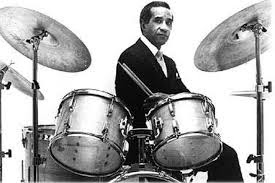
| This man should be a household name |
I’m not going to retell her story here. It’s a great story. You can read about Backxwash:
In Exclaim here.
At NPR here.
In Complex here.
At Bandcamp here.
In Cult MTL here.
In Keep MTL Weird here.
The album was one of three I didn’t want to win Polaris this year, but I’m in the minority, and many people genuinely love the record. I'm not going to tell them they're wrong; art is subjective. Polaris has been controversial since its inception, as it should be. Every single year there are howls about who won and why, for wildly different reasons (Too mainstream! Too obscure! Too new! Too old! “Why does my favourite genre never win?!”). Although Polaris is not supposed to be political, it inherently is, because it’s decided by journalists, and journalists love stories. That’s not to denigrate any of the winners, including this year’s. I’m a big fan of 2/3 of all Polaris-winning records in the prize’s 15-year history, and you and I will disagree over which ones “deserved” to win or not. Hence the inherent fallacy of arts prizes in general.
This year part of the controversy is that Backxwash had to take her album off streaming services because she samples Black Sabbath and Led Zeppelin liberally. As a result, the album is only available on Bandcamp as a free download.
Michael Rancic of the web mag New Feelings (an essential read and welcome addition to the landscape of Canadian music criticism) argues that copyright laws around sampling are a farce that serve to further marginalize independent artists who can’t afford sample-clearance fees, that creativity is somehow stifled because of these legalities. The article brings up a lot of great points.
You should read that piece first: it’s here.
There are many terrible things about copyright law: how it largely benefits the wealthiest rights-holders, how the rules keep changing to benefit baby boomers whose work from decades years ago was about to enter the public domain, etc. And when Rancic writes about AI scouring the internet for random sampling “violations,” that’s terrifying for a few different reasons.
But the fact is, whether anyone likes it or not, once you’re in the public eye you can’t sample easily recognized works from popular music without expecting legal repercussions, and that's been true for 30 years now.
Backxwash made her record when, it’s safe to say, she had no expectation of being featured in national and international press and being interviewed on CBC Radio’s flagship mainstream arts show next to Natalie Portman. Once the album got long-listed for Polaris, the vultures came circling. She could have removed the samples and kept the album on monetized streaming platforms. She chose not to, arguing that the samples were used for very personal reasons and she felt they told a story related to the lyrical themes of the album. That’s fair. I get that. But keeping them on there is a conscious decision to marginalize her own work, financially speaking, in the face of a legal reality--a reality worthy of debate and discussion, but a reality nonetheless.
There’s a precedent here in Polaris history. The Weeknd was an unknown artist in 2010, when he released what he billed a “mixtape,” House of Balloons, exclusively online, for free. It was inventive, fresh and fascinating, and it too made the Polaris shortlist that year, alongside Arcade Fire, Destroyer and Ron Sexsmith. It featured unauthorized samples, including Siouxie and the Banshees, Beach House, Cocteau Twins and Aaliyah. The attention and success of House of Balloons led to a major-label deal and a re-release that cleared all samples (and added songwriting credit); the Aaliyah sample was the sole exception. The album still did very well, and the Weeknd is now an international mainstream star.
Even if House of Balloons had never been legally cleared for official release, it could have been seen as a loss leader: a stepping stone, using samples and given away for free, on the path to bigger things.
Somewhat similarly, Kaytranada became a name in the industry with an unauthorized Janet Jackson remix in 2012 (streamed 10 million + times on his Soundcloud). That opened all kinds of doors for him, including a Juno nomination before he put out his debut album, 99.9% (which won the Polaris, and I’m not aware of any sample issues that album had).
Small, uncleared sample snippets appear all the time in songs of varying levels of visibility. Earlier this year I asked Dan Snaith of Caribou which rapper’s voice appears all chopped up on his track “Sunny’s Time”; it’s from his new album Suddenly, which was also on the 2020 Polaris shortlist. He wouldn’t tell me, because he didn’t clear it. He did, however, clear the old, obscure soul song that provides the hook for “Home” (and I doubt anyone related to the original artist got royalties, because of crooked old publishing deals). But the “Sunny’s Time” sample is twisted beyond recognition. Is that “fair use” but the melodic hook on “Home” is not? Are both further examples of pillaging African-American artists? These are questions I don’t have answers for. “Fair use” is wide open to interpretation. But that’s where Backxwash got burned.
Backxwash’s samples in question, Black Sabbath and Led Zeppelin, are easily recognizable. Other samples on the album are not. Were I in court, I would argue that sampling Ozzy Osbourne’s voice--from the song “Black Sabbath,” howling, “Oh god, god, please god help me”--on the title track is fair game. It’s a small component of the original song in question; not the melodic hook, not the chorus, not a defining feature. Repurposed in Backxwash’s music, it’s incredibly effective. The last 10 seconds of the same song samples the opening of “War Pigs” straight up. It doesn’t add much to the Backxwash song, it’s more of a quick nod to an obvious influence. It’s superfluous. For all the legal hassle, it could easily be cut. Or simply re-sung by anyone who can do a passable Osbourne imitation; it's not like there's a copyright on that phrase.
The Zeppelin sample is on Backxwash’s “Adolescence,” the drum break from “When the Levee Breaks,” which you’ve heard even if you’re not a rock fan. Beastie Boys, Eminem, Dr. Dre, Ice-T, Neneh Cherry, the list goes on. But who’s done it since 2000? It’s a cliché at this point. Apparently Beyoncé used it on “Don’t Hurt Yourself,” from Lemonade, but it’s cut up, used only on the chorus and hardly recognizable (I didn’t even realize it was there until researching this). It’s bare naked on the Backxwash track. Small wonder that lawyers came calling. The entire track is less than 90 seconds long. Is it really that important to this album? I would argue the sample is a red herring, drawing unnecessary attention when there’s a whole lot of other things to discuss in this artist’s work, including her other, more creative samples.
There’s a rich irony here, too, in that Zeppelin--and many white musicians of their generation--often lifted African-American songs verbatim and claimed all songwriting credit (see: Zeppelin vs. Willie Dixon, or Beach Boys vs. Berry, or Gainsbourg vs. Olatunji, or, or, or...). Should anyone care about ripping off Led Zeppelin? But the principle holds. Nile Rodgers and Bernard Edwards deserve credit for “Rappers’ Delight,” which their lawyers quickly sought and got, back in 1980. Rick James deserves credit for “Can’t Touch This.” Clyde “Funky Drummer” Stubblefield should have died a multi-millionaire, instead of having his friends hold fundraisers to pay for his kidney operation. That most people don't know his name is a crime against music.
There are many creative reasons to use samples of popular songs. In 2020, I’m not convinced using them as a hook for your own song is one of them. That was different in hip-hop’s infancy, when sampling records birthed a whole new genre of music made by disenfranchised people, and necessity birthed invention. By the time of its Golden Age, I loved A Tribe Called Quest, but “Can I Kick It” bothered me just as much as “Ice Ice Baby,” because it seemed like a lazy shortcut. Ten years after that, the electronic artist Mr. Scruff lifted Moondog wholesale and made a mint licensing the track to every ad agency, which was just as bad as ’80s novelty act Jive Bunny and the Mastermixers, who simply put a medley of ’50s hits to a dance beat (a big hit at weddings). I was a huge fan of DJ Shadow’s Endtroducing until I actually heard his source material, David Axelrod et al, and realized how much he lifted straight-up. Obscurity worked in the crate-digger’s favour back then. It’s still an impressive record, but now I admire its Kid Koala-esque technique rather than its originality or composition. (Kid Koala's first tape, which freely sampled Bjork, Ryuichi Sakamoto and others, was never sold commercially but it landed him a record deal and is available, PWYC, from Bandcamp.)
It’s now 2020. Home recording equipment and software has never been cheaper to obtain and easy to use, especially if you’re not recording acoustic instruments other than your voice. It’s not impossible to make great music, even award-winning music, out of nothing.
Not being able to sample popular records in no way impedes someone’s creativity. It should spark even more creativity. Dig deeper.
Let’s give Backxwash the final word, in an interview with Erik Leijon for Complex Magazine: “I was experimenting to go sample-less, but as I started making these beats, they sounded cool, but the idea of the sample is telling a story, and I miss telling those stories ... With the samples, I’m connecting to those sounds. But [the sampling controversy has] changed the way I approach music. The other day I did make a beat with a Diamanda Galás sample. If I use it, I’ll just have to approach them and see how much they want for it. Now I’m going to look for more obscure sounds and field recordings and friends. That’s how I’m going to do it.”
Saturday, October 17, 2020
2020 Polaris Music Prize shortlist, Day 5: Caribou, Backxwash
This year we’re going in reverse alphabetical order, because, hey, everything else about 2020 is upside down.
The winner this year will be announced on Monday, October 19 in a televised ceremony featuring 10 commissioned short films, airing on CBC Gem, YouTube and social media.
Day 1, with Witch Prophet and U.S. Girls, is here. Day 2, with Jessie Reyez and Pantayo, is here. Day 3 with Lido Pimienta and Nehiyawak is here. Day 4 with Kaytranada and Junia T is here.
Day 5:
Caribou – Suddenly (Merge)
The album: It’s a bit weird that Dan Snaith gets increasingly popular the older he gets, and the longer he waits between records--especially as a so-called “electronic” artist. But dammit, he’s very good at what he does. This time out his old-school songwriting continues to develop, whether it’s warped electro-folk like bookends “Sister” and “Cloud Song,” soul-sampling pastiches like “Home,” straight-up four-on-the-floor pop songs like “You and I” (which could almost pass for Tom Petty, were it not for the absence of guitars), total psychedelic loveliness like “Magpie,” or early 90s house music like “Never Come Back.” Nothing is ever straightforward, however, or particularly faithful to genre: everything here sounds unmistakably like Caribou, with all the twists and turns that entails.
The chances: Fair. It’s been long enough since his 2008 Polaris win that he might be able to shake the previous-winner curse. But I think it’s unlikely.
Backxwash – God Has Nothing to Do With This Leave Him Out of It (independent)
The album: The title track opens the album with Ozzy Osbourne moaning, “Oh no, no, please God, help me!” from the song “Black Sabbath,” and it closes with a sample of that band’s “War Pigs.” Yes, this record is bleak. It’s a metal-tinged rap record with seriously goth overtones, maybe even “horrorcore,” made by a black trans woman known to wear devil horns on stage. Which sounds great--on paper.
She is a Montreal artist, via Vancouver, via Zambia, with a little help from now-defunct Toronto duo Black Dresses, and yeah, there’s a whole lot of personality and backstory behind Backxwash. That she’s been vaulted from obscurity to pseudo-mainstream exposure (let’s face it, the mainstream doesn’t pay Polaris much mind) is a massive achievement, and one to be celebrated. Unfortunately, that also shone a spotlight on some of the uncleared samples here--you can’t exactly lift a Sabbath riff or one of the most overused drum samples in history, Led Zeppelin’s “When the Levee Breaks,” without getting some unwanted legal attention. And so the album had to be pulled off streaming services, and can only be heard on Bandcamp as a free download.
That’s the story of the album. As a listener, as a critic, I come from a considerably more privileged position, and this album is based on some very personal pain that I could never begin to understand. For starters, I got out of Christianity unscathed; Backxwash clearly did not. And as a black trans person from an immigrant family, there are entire skyscrapers of struggle to leap over for an artist to reach this place of catharsis. She says the album is about her “version of forgiveness, and things I need to face in order to reach my version of that.” The song “Into the Void” is the sound of burning everything down to the fucking ground.
And yet, as much as simplicity is the shortest path to catharsis, as generations of hardcore punk musicians know, I want the rapping here to be better, especially with such a compelling story to tell. Many of the lyrics here are--well, fuck. Fuck fuck fuck. “Fuck these motherfucking fuckers.” “I fuck with black magic / I fuck with mathematics / I fuck with bad habits.” “FUUUUUUUUCK!” A whole lot of fucking rage here--not at all unwarranted or ineffective, but I think she has a lot more to say than this, and more interesting ways to say it.
I’ll be the first to admit though I'm a fan of both genres, I’m not a metal guy or a hip-hop guy; most of my favourite new records of either genre usually sound like they were made at least 20 years ago. But for a record that professes to combine the two, I don’t think it succeeds at either, and nor does it forge a new path. I’m not pining for the Judgment Night soundtrack or anything, but I want the music here to at least match the intensity of Backxwash’s delivery. Metal aside, I want the beats to be more engrossing. Backxwash helmed most of this herself, and it’s no small achievement (“Black Sheep”), but there’s a lot to develop. There’s no reason at all, in 2020, to turn to tired classic rock cliches that sound like the Beastie Boys in 1985. I’d love to hear what Backxwash could get up to with Tricky or Arca or Lotic (“Spells” makes a good argument for this).
Hopefully the Polaris nod will open up doors to opportunities as well as exposure (check this major piece on NPR). Right now it’s a story in search of a record. It’s a great story. And lo and behold, I probably spent more time listening to this record than many of the others on this list, if only to reckon with how I felt about it over the space of 800 words. So: thanks, Polaris. That’s what this should all be about.
The chances: Who knows? Stranger things have happened in Polaris history. Some winners have been accused of winning for political reasons: not coincidentally, in John A. Macdonald’s Canada, the subjects of said accusations are almost all racialized. If Backxwash were to win at this moment in time, it would certainly send a political message (which is not the point of Polaris, but whatever). Whereas a record like Jeremy Dutcher’s also had a great political backstory, it was a phenomenal record by an artist who arrived fully formed. That was also a so-called “novelty” record. You know what else is a “novelty” record? Pantayo’s. And that record rules. Maybe this does, too. Maybe.
The could’ve, should’ve beens:
Bon Enfant – s/t (Duprince)
The album: Okay, after talking about Backxwash, this is going to sound like some weak-ass shit. Because this is sunshine and roses. This is the kind of album you play on the first real day of spring, the day you open your windows and tune up your bike and start eyeing your garden. This year has sucked ass, so small wonder I’ve been drawn to music like this on any day we’re lucky to see sunlight.
Bandcamp here.
Why it didn’t even longlist: It was #1 on my ballot, for what that's worth. I tried.
Corridor - Junior (Sub Pop)
The album: The first franco band signed to Sub Pop, Corridor make it pretty clear why they’re ready for an international stage. A stew of potential influences immediately leap to mind: Television guitar interplay, Fleet Foxes harmonies, nods to Sonic Youth, traces of Stone Roses and Super Friendz. Propulsive rhythms and hypnotic guitars are the main appeal here; the vocals make it that much better. This is one of many acts on these lists that I long to have seen live this year. (I saw them cold several years ago and they blew me away.)
Bandcamp here.
Why it didn’t shortlist: It’s always a mystery which franco acts crack the shortlist, which doesn’t happen often enough. This is yet another year without any franco representation. When Bon Enfant didn't make the long list, I put Corridor on my shortlist ballot.
Veteran MIA:
The Dears - Lovers Rock (Ting Dun)
Friday, October 16, 2020
2020 Polaris Music Prize shortlist, Day 4: Junia T, Kaytranada
This year we’re going in reverse alphabetical order, because, hey, everything else about 2020 is upside down.
The winner this year will be announced on Monday, October 19 in a televised ceremony featuring 10 commissioned short films, airing on CBC Gem, YouTube and social media.
Day 1, with Witch Prophet and U.S. Girls, is here. Day 2, with Jessie Reyez and Pantayo, is here. Day 3 with Lido Pimienta and Nehiyawak is here.
Day 4
Kaytranada – Bubba (RCA)
The album: It’s good. I know that ideally all these albums should be reviewed in isolation, without regard to biography, previous work, or live show. But I loved Kaytranada’s 2016 debut, 99.9%, so much; it was a total breath of fresh air. To these ears, he brought a unique sound to modern grooves; it wasn’t hip-hop or funk or pop or R&B or house or whatever else it was described as. It was a party in a can, with some top-shelf guests. I could say all the same things about Bubba—but I’m not sure what else I would say. There are some strong guests here, especially British singer Estelle, Chicago rapper Mick Jenkins, and Jamaican-American Masego, but others sound like they’re phoning it in, and it’s the four instrumental tracks on Bubba that come out the strongest. The biggest name here, Pharrell Williams, shits the bed; his track shouldn’t have even been a B-side. So what we have here is Kaytranada doing what Kaytranada does exceptionally well, with less impressive collaborations bogging things down.
The chances: Slim. Again, as with Lido Pimienta and Caribou (and Owen Pallett, who didn’t shortlist) I think “previous winner” is a Polaris curse, even more so for a follow-up album. And Kaytranada would have had to make a better album than 99.9% to win again.
Junia T – Studio Monk (Pirates Blend)
The album: Kaytranada is hardly the only uber-funky beatmaker making waves this year. Right from the get-go, Junia T gives the previous Polaris winner a run for his money on the extremely Kaytranada-ish “Tommy’s Intro,” featuring Sean Leon and 99.9% guest River Tiber. The rest of the album maintains that standard, through different moods and singers. Jessie Reyez is the only big name here, but that’s because she appeared on a Junia T album long before her big break, and she then took him on the road as her DJ. Reyez is in fine company: Every guest here shows off big personalities—Benjamin A.D., Elijah Dax, Storry, Faiza, Toronto vet Adam Bomb and others—while never overshadowing the brilliance of Junia T’s arrangements, which draw from vintage funk, neosoul, reggae, triphop, Brazilian beats and jazz. The beats are killer; the bass lines even better. The singers are all pitch perfect. Slakah the Beatchild is behind the boards, ensuring a rich, warm, vintage sound. This album was two years in the making, and it shows: there is a deep attention to detail and mood on every track. This album should be to the next generation of Toronto what Broken Social Scene’s You Forgot It In People was to indie rock in the early 2000s.
The chances: Strong. The only strike against it would be Polaris rewarding two Toronto hip-hop-adjacent records in a row, which is hardly a strike at all, considering Polaris's chin-stroking, wallflower history, and that Haviah Mighty was the first rap record to win Polaris (also: any broader contextual talk like this is banned during grand jury discussions, which are about the current albums only). But this isn’t a rap record, far from it; only four of the 13 songs even feature rappers. This is a genre-averse album that should be heard far and wide.
The could’ve, should’ve beens:
Ice Cream – Fed Up (independent)
The album: These daughters of Peaches and Le Tigre bring not only next-gen feminist electro pop extraordinaire, but some serious guitar shredding, inventive programming, strong vocals and top-notch production. Opening tracks “Bun Roo” and “Peanut Butter” are fun, industrial-tinged pop songs, but “Banana Split” is seriously slinky. The title track channels dystopian Detroit soundscapes while they sing about being “queens of the void, queens of everything.” “Dove’s Cry” is a surprisingly affecting ballad over an off-kilter beat—though it’s about soap, self-image and consumerism (I think). “Not Surprising” is ghostly and ice-cold while a saxophone dances around like a snow squall. Closing track “0.22” is a Gary Numan throwback, with lyrics seemingly about a woman’s indoctrination into a cult. And—that’s it! Eight songs, ba da bing, ba da boom.
Why it didn’t shortlist: I was surprised it didn’t. Hopefully the long list raised their profile a bit. They somehow ended up opening for Sam Roberts at a big drive-in concert by the Toronto waterfront last month.
Frazey Ford – U Kin B the Sun (Arts and Crafts)
The album: This B.C. singer has exactly the kind of voice I needed to hear this year. She returned from a six-year hiatus with her strongest solo record to date, 20 years after we first heard her in the Be Good Tanyas. She’s still mining Memphis grooves from Al Green, although this time she doesn't borrow his band like she did on 2014’s Indian Ocean. She co-wrote all this material with her Vancouver band, including longtime producer/engineer John Raham. The arrangements are incredibly sparse, usually with just a dash of piano or guitar over top the rhythm section, giving Ford’s voice room to roam. Ford sings of healing, redemption, empathy and resilience, in her unique delivery. The Aretha Franklin of the Kootenays? Let’s just say that words fail to describe the magic that is Frazey Ford. Or maybe I’m just a shitty writer. Kitty Empire at the Guardian is not, so read her live review here.
Why it didn’t even longlist: Just curious, but I’m guessing that—other than the complete anomaly that is Buffy Sainte-Marie—no mid-career woman in her 40s has ever made the long list, with the exception of the mighty Sarah Harmer this year. Am I wrong? Also: not a single artist from Vancouver, or even British Columbia, made the long list this year. (Though Backxwash grew up there before moving to Montreal.)
Veteran MIA: