Tuesday, November 26, 2019

The Rites of John Mann


"I'm grateful for what you did for me."

John Mann of Spirit of the West is dead at age 57, after a seven-year battle with early-onset Alzheimer’s. He went public with his battle in 2014, while in remission from a bout with colorectal cancer. Much like the Tragically Hip shortly after them, Spirit of the West embarked on a final tour in 2015 while their singer faced a terminal disease. They played their final shows, at the Commodore Ballroom in their hometown of Vancouver, a month before Gord Downie announced his own diagnosis with another deadly brain disease (glioblastoma, a form of brain cancer).

John Mann was a towering presence in Canadian music, a real mensch. Broadcaster Dave Hodge wrote this week, “I’m never sure how and when to use the word ‘beloved’. Except when describing John Mann, who couldn’t be mentioned without using it.” Fellow musicians have flooded online to testify to Mann’s generosity, his sense of humour, and his talent.

I met John Mann only once: the very first day I heard his music. I was 14 years old and my family was visiting Expo 86 in Vancouver. Spirit of the West were playing some crappy side stage in front of almost no one. Their debut for Stony Plain, Tripping Up the Stairs, came out that same year; I don’t know if it was before or after this Expo 86 gig, but this certainly didn’t seem like any triumphant show in front of a hometown crowd; far from it. I was immediately smitten by this acoustic trio; I was just starting to break out of my Top 40 tastes and veering off in all directions, so the Celtic instrumentation was new and exciting to me. And they were really fucking good.


Most important was that singer: he was electric, wiry, and completely compelling. He was funny looking, too. John Mann was incredibly handsome as he aged, but at age 24 he still seemed awkwardly adolescent, with exaggerated features: his unbelievably intense eyes, his nose, his forehead, his teeth. He was somewhat devilish, impish, and you couldn’t take your eyes off him. I was still at the age when pop stars looked beautiful and glamorous and seen only from a distance. John Mann looked real. The music wasn’t punk, but I was pretty sure he was. The Expo crowd was sparse and unresponsive. I later found out the band had considerably mixed feelings about playing Expo, when I heard their 1988 song "Profiteers," about forced evictions of lower-income tenants during the build-up to the world fair. My family went up afterwards to tell the band how much we loved the show. As anyone who ever met the band will tell you, they were gracious and thoughtful and polite to total strangers. John Mann became the first (future) rock star I ever met.

I heard the record a few months later, most likely on David Wisdom’s CBC Radio overnight show Night Lines, which was appointment listening for me every weekend. I bought it at Sam the Record Man on Yonge Street. I became a huge fan, saw them whenever I could while underage (thank you, Ontario Place Forum and Concert Hall) and then as much as possible in my 20s.


I went to the University of Guelph and studied music, politics and Canadian history; I also took a lot of theatre courses. All that meant that my circle of friends were inevitably Spirit of the West fans. Music students loved their instrumental chops, especially those of muso multi-instrumentalist Hugh McMillan (Chapman stick!). Guelph is/was full of hippies and socialists and Billy Bragg fans, so naturally Spirit of the West had broad appeal there. “Political” was the soundtrack to most breakups in our social circle (allegedly written about Mecca Normal’s Jean Smith, I was once told). My own band and many others in town covered Spirit of the West songs in our infancy. The rockers and jocks had the Tragically Hip; the hippies had Spirit of the West. There was some crossover between the audiences, of course, and the two acts toured together quite a bit in the mid-’90s. Either way, these were the two most important Canadian bands on campuses coast to coast in the early ’90s. Such was our devotion to this band that when, in 1991, they added a drummer and electric guitars—a flying V, no less, on at least one song in their set—this was tantamount to Bob Dylan going electric. Spirit of the West were going pop, and they lost several diehard fans, especially when they made a “blasphemous” re-recording and rearrangement of the oh-so-sacred “Political.” I recall heated arguments in the bars of Guelph's Albion Hotel and Jimmy Jazz, no doubt replicated elsewhere in the country as well. Of course, for every acoustic ideologue lost, the band gained thousands more fans in the process. “And If Venice is Sinking” was a bonafide Top 40 pop hit, and it’s still in rotation today.


In 2019, Venice is actually sinking and now John Mann is dead.

I didn’t go see that final tour in 2015. I was too scared. Quite honestly, I hadn’t listened to the band since the turn of the century; my tastes had changed, and my memories were so good that I’d rather leave them in the past. Did I now want to see a once-great performer in a compromised position? Wouldn’t it just be sad and depressing? Would I just be lamenting my own youth?

Of course, within a year I’d be facing those exact questions again, this time about Gord Downie and the Tragically Hip. Honestly, if I wasn’t professionally compelled to witness the Hip tour, I’m not sure I would have, citing many of the same excuses. (I’m glad I did, for so many reasons.) In both cases, each man rose to the challenge and gave it their all in astonishing acts of bravery. (John Mann went to see Downie perform in 2016; Geoffrey Kelly told me about that here.) Spirit of the West were never as massively popular as the Tragically Hip; they never played arenas, not even in their hometown. Because of that, I fear their legacy is somewhat diminished, especially in the shadow of their friends in the Hip. But those who loved this band loved them deeply and with great fervour—even if they existed in a time capsule, as they did for me.


Spirit of the West had quietly faded away over the years, touring only occasionally. Mann put out a couple of solo records and had a successful career as an actor in television and theatre, returning to thespian roots he nurtured in high school. The band never broke up, but became known simply as the band who did the national drinking anthem “Home for a Rest.” (A song which, by the way, wasn’t even the lead single from 1990’s Save This House, never charted, and I don’t recall it ever being played on commercial radio in the band’s heyday. Its eventual place in the canon was achieved entirely through live shows, word of mouth—and pub DJs at closing time.)


Relegating Spirit of the West as a drinking band does them a huge disservice. Sure, “Home for a Rest” is easy to love, its appeal obvious. It’s now one of the few Canadian songs you’re likely to hear on the dance floor at a wedding. But throughout their entire discography, Mann’s sharp wit is always in full effect, and his pen is often pointed at a variety of social issues: environmentalism (“Save This House,” “Dirty Pool”), inequality (“Profiteers,” “The Hounds That Wait Outside Your Door”), and they were the only settler pop act I knew of other than Bruce Cockburn and Blue Rodeo to address Indigenous issues (“Homelands”). At times, Mann’s wordplay and puns could be overwrought (“God’s Apprentice”), downright clunky (“6th Floor”), or what would be referred to by later generations as “emo” (“Take It From the Source”). But you can’t fault a guy for trying; when you aim high, you’re bound to occasionally stumble. At their best, Mann’s lyrics brought a rare literacy and compassion to pop music, on par with his hero and peer Billy Bragg. Most important, they were one of the only Canadian pop acts of the day, like the Tragically Hip, to write explicitly about their surroundings: songs about streets in Vancouver and Halifax, videos with Mulroney effigies, and a biting, anti-patriot song called “Far Too Canadian” (“I am a sorry state”). They were ours. Maritimers loved them just as much as British Columbians, and they were steady draws in all stops in between.

More than a few Brits loved them as well:


Spirit of the West’s legacy was hurt by the decline of Celtic music’s influence, which was at an apex in the late ’80s and early ’90s (Waterboys, Sinead O'Connor, Proclaimers, etc.). I would argue that Spirit of the West, along with their British contemporaries the Pogues, were so good and singular at what they do (and very different from each other) that, for me at least, every similar band in their wake pales in comparison. The sight of flutes, whistles and accordions in rock bands was decidedly out of fashion by the mid-’90s (except for the Titanic soundtrack). Spirit of the West itself moved away from their core strengths, and by the time they turned their amps back down on 1997’s Weights and Measures, audiences—including me—had moved on. Seven years later, their next album, Star Trails, would be their last. Neither of those last two records made a commercial dent, though that’s hardly unusual for any band 20 years into their career.

In 1995, there was really only one band who took their torch and ran with it. Great Big Sea made chipper pop music from Spirit of the West’s template, devoid of the politics and darker side of life that made Mann’s lyrical world complete. It worked: Great Big Sea were far more successful commercially than Spirit of the West ever were. The Newfoundland band have multiple platinum records; the Vancouver band has two. Great Big Sea always give credit where it’s due: singer Alan Doyle always says Spirit of the West is the primary inspiration for his own band. In return, the magnanimous Mann was a big booster. In 2009, Spirit of the West was the opening act for the band they spawned (let’s call it a double bill). Doyle was one of many Canadian stars who re-recorded “Home For a Rest” in 2018 as a benefit for Alzheimer’s research, in Mann’s honour: he easily enlisted Sarah McLachlan, Jim Cuddy, Barenaked Ladies’ Ed Robertson, Colin James, the Odds’ Craig Northey and others. 


Mann fought his disease publicly for the past five years—not just with Spirit of the West, but at a series of concerts in his honour where he was content to simply dance on stage while his musical peers took the reins. He wasn't going to fade away until he was past a point of no return—which eventually came. His passing should not be greeted with sadness as much as it is relief. His condition continually worsened, as Alzheimer’s does, and Mann was finally moved into an assisted-care home in 2017, after his wife, Jill Daum, had been his primary nurse for seven years. Their struggle was beautifully portrayed in the powerful 2016 documentary Spirit Unforgettable. It’s essential viewing for any fan, naturally, but just like the Tragically Hip’s Long Time Running or the 2014 Glen Campbell film I’ll Be There—about that singer’s final tour in 2010-12, battling Alzheimer’s—it’s first and foremost a devastating story about a beloved man choosing to live the fullest life he can, in public and on stage, while afflicted with an awful disease. Yes, it’s painful, but it’s a brilliant film on every level, and it's by no means just for fans. It's a great film, period, because of the bravery and openness of both Mann and Daum. You can find it on Crave or you can rent it from iTunes. Do it. Tears be damned.


John Mann leaves a hole in many hearts. It’s our duty to fill that hole with passion, with compassion, with music, with literature, with theatre, with care for society’s outcasts and downtrodden, with care for the land and our surroundings. Yeah, that's earnest. So was he. Mann made his friends and fans want to be better, in every way. “Save this house,” he urged, in a song that is now 30 years old. 

This beautiful, talented, witty, hilarious and indefatigable Mann died in a hospital on Nov. 20, 2019. He was surrounded by friends and family, including his bandmates. His musical brother-in-arms Geoffrey Kelly told CBC’s As It Happens about how they shared a final glass of Guinness in the hours before he passed.

As his song goes, “Those spirits we drank are now ghosts in the room.” John Mann’s unforgettable spirit lives on, in the hundreds of people who were close to him, and in the tens of thousands more who experienced his music. The circle is unbroken. He christened us with wonder.

Come on and lift me up
Raise me off the floor
Let me hear the band
Play the Rites of Man


-->

Wednesday, October 30, 2019

The 2010s in 10x10


Informative, not authoritative. I much prefer personal lists to those that lay some sort of claim to objectivity. I learn about a lot of great music from them. I hope this does this same for you. I want to read yours.

During this decade, like the one before it, I had a weekly review column in which I discussed approximately 200 albums a year. That’s 2,000 in a decade, not counting music by artists about whom I wrote stories or by whom I was hired to write bios, and not counting music I listened to just for the hell of it. So yeah, I had trouble narrowing a few things down.

This list has nothing to do with any professional obligation, however; it’s personal. It’s a list made by a 48-year-old white dad who lives in Central Canada, so make of that what you will. I don’t feel an obligation to pretend to like Frank Ocean or Taylor Swift or Bon Iver or Lana del Rey or Radiohead or whomever else leaves me cold. I didn’t think I listened to much rock’n’roll anymore, but apparently I listen to a lot more of it than Pitchfork writers do. Because I’m still very much an album listener, there’s nothing here by some decade-defining artists whose singles I love. And there’s definitely no Drake here—because, hey, I’m older than 35 and I’m pigheaded about my emperor’s-new-clothes crusade. The fact that he’s universally hailed as the “artist of the decade” only proves how wrong I am about everything.

So here’s my top 100 of the decade 2010-19. There’s no way I’m going to rank these. I did, however, break it down into a top 20 and the remaining 80, singling out 30 underdogs for discovery purposes. With four exceptions, no artist appears twice. One of these records seems to have been wiped from the internet, and I’m probably one of the only people who’s noticed. All lists arranged alphabetically, except the one off the top that’s not. I’m sure I forgot more than a few things.

If you want to shuffle all these up in your Spotify, there’s a playlist here.
If you just want one sample song from each, that playlist is here.

Here we go:


The top 20:

I wrote year-end lists every year—which made this task a helluva lot easier. Looking back, it’s always interesting (to me) to see what records I still want to listen to, and which merely sounded good at the time. But I’ll stand by my 10 #1 choices: I might not feel, today, that they’re necessarily the best records of that given year, but they’re still favourites that earn an easy pass onto an end-of-decade list. Click for links to the full lists for the years in question.

2010: Arcade Fire – The Suburbs
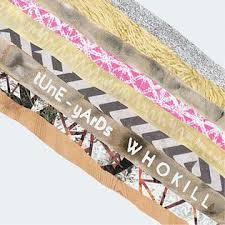
2011: TuneYards – Whokill
2012: Grimes – Visions
2013: AroarA – In the Pines*
2014: Owen Pallett – In Conflict
2015: Buffy Sainte-Marie – Power in the Blood
2016: Beyoncé – Lemonade
2017: Weaves – Wide Open
2018: U.S. Girls – In a Poem Unlimited
2019: Snotty Nose Rez Kids – Trapline

Here’s the last half of my top 20, absolutely essential records, all—at least to me, if no one else:

Alabama Shakes – Sound and Color (2015)
Eric Bachmann – s/t (2016)
Bonjay – Lush Life (2018)
Jeremy Dutcher – Wolastoqiyik Lintuwakonawa (2018)
Veda Hille – Love Waves (2016)
Kaytranada – 99.9% (2016)
Man Man – On Oni Pond (2013)
Mbongwana Star – From Kinshasa (2015)
Robyn – Body Talk (2010)
Gillian Welch – The Harrow and the Harvest (2011)


--

Stop here if you’re already bored. But of the other 80 records on this list, here are 30 underdogs records that got little or no press, by artists unlikely to fill a venue in English Canada larger than 500 capacity. Again, other than the top 20 listed above, these aren’t ranked; these are just highlighted in the hopes that you make some discoveries here. Broken down by Canada vs. the world:

Canada:
Geoff Berner – Canadiana Grotesquica (2017)
Cadence Weapon – s/t (2018)
Kathryn Calder – Bright and Vivid (2011)
Le Couleur – P.O.P. (2016)
Mark Davis – Eliminate the Toxins (2011)
Dennis Ellsworth – Things Change (2018)
Jim Guthrie – Takes Time (2013)
Hilotrons – At Least There’s Commotion (2013)
Zaki Ibrahim – Every Opposite (2012)
La Force – s/t (2018)
Jean Leloup – À Paradis City (2015)
Michelle McAdorey – Into Her Future (2015)
Scott Merritt – Of (2015)*
Nick Buzz – A Quiet Evening at Home (2013)
Doug Paisley – Constant Companion (2010)*

International:
Africa Express Presents Maison des Jeunes – Various Artists (2014)
Christian Scott aTunde Adjuah – Ancestral Recall (2019)
Gaye Su Akyol – Istikrarli Hayal Hakikattir (2018)
Altin Gun – On (2018)
Anna Calvi – Hunter (2018)
Brandy Clark – 12 Stories (2013)
Nels Cline – Lovers (2016)
EMA – The Future’s Void (2014)
Bill Fay – Life is People (2012)
Kikagaku Moyo – Masana Temples (2018)
Nakhane – You Will Not Die (2019)
Sons of Kemet – Your Queen is a Reptile (2018)
Moses Sumney – Aromanticism (2017)
The Thermals – Personal Life (2010)
Shye Ben Tzur, Jonny Greenwood and Rajasthan Express – Junun (2015)

--

Looking for more familiar faces? Here’s the remaining 50, featuring somewhat more well-known subjects (though not necessarily, especially if you’re not Canadian):
Arca – s/t (2017)
Arcade Fire – Everything Now (2017)
BadBadNotGood – IV (2016)
Beach House – Teen Dream (2010)
Belle and Sebastian – Write About Love (2010)
Mary J. Blige – The London Sessions (2014)
David Bowie – Blackstar (2016)
Broken Social Scene – Forgiveness Rock Record (2010)
Basia Bulat – Tall Tall Shadow (2013)
Caribou – Swim (2010)
Rosanne Cash – The River and the Thread (2013)
Jennifer Castle – Pink City (2014)
Cat Power – Sun (2012)
Neneh Cherry – Broken Politics (2018)
Leonard Cohen – You Want It Darker (2016)
Destroyer – Poison Season (2015)
Beth Ditto – Fake Sugar (2017)
Gord Downie and the Country of Miracles – The Grand Bounce (2010)
Feist – Metals (2011)
Fucked Up – Dose Your Dreams (2018)
Lady Gaga – Joanne (2016)
Kendrick Lamar – To Pimp a Butterfly (2015)
Lee Harvey Osmond – The Folk Sinner (2013)
Low – Double Negative (2018)
Corb Lund – Cabin Fever (2012)
Janelle Monae – Dirty Computer (2018)
AC Newman – Shut Down the Streets (2012)
Joanna Newsom – Have One on Me (2010)*
Orville Peck – Pony (2019)
Perfume Genius – Too Bright (2014)
Robert Plant – Band of Joy (2010)
Jessie Reyez – Kiddo EP (2017)
Rosalía – El Mal Querer (2018)
Santigold – Master of My Make-Believe (2012)
Sleater-Kinney – No Cities to Love (2015)
Solange – True EP (2012)
Spoon – Hot Thoughts (2017)
Mavis Staples – One True Vine (2013)
Vince Staples – Summertime 06 (2015)
Tanya Tagaq – Animism (2014)
Tracey Thorn – Love and Its Opposites (2010)
Timber Timbre – Sincerely, Future Pollution (2017)
Tinariwen – Elwan (2017)
The Tragically Hip – Man Machine Poem (2016)
Rokia Traoré – Beautiful Africa (2013)
A Tribe Called Quest – We Got It From Here… (2016)
A Tribe Called Red – Nation II Nation (2013)
Vampire Weekend – Modern Vampires of the City (2013)
The Weeknd – House of Balloons (2010)
The Xx – I See You (2017)

*Four titles are not available on streaming services

AroarA seems to have ceased their web presence since Ariel Engle launched La Force: you can’t stream or buy this anywhere. I’ve been told In the Pines is about to be reissued in the U.S. on a poetry label out of Portland, Oregon.

Scott Merritt’s music can be purchased here.

Joanna Newsom’s music can be purchased here.

Doug Paisley's music is on Spotify, but curiously his 2010 album Constant Companion is not. It is, however, on Bandcamp here. 

--

What’s that? You’re still here? Finally, in the highly unlikely event you’re not already satiated, here’s yet another 50 excellent records I think should also be thrown in the time capsule:
Alvvays – Antisocialites (2017)
Atoms for Peace – s/t (2013)
Courtney Barnett – Sometimes I Sit and Think… (2015)
Willis Earl Beal – Nobody Knows (2013)
Geoff Berner – Victory Party (2011)
Jim Bryson – Somewhere We Will Find Our Place (2016)
The Comet is Coming – Channel the Spirits (2016)
Darkside – Psychic (2013)
Dirty Projectors – Swing Lo Magellan (2012)
Gord Downie – Introduce Yerself (2017)
Dominique Fils-Aimé – Stay Tuned (2019)
Dr. John – Locked Down (2012)
Kevin Hearn – Days in Frames (2014)
Hidden Cameras – Home on Native Land (2016)
Japandroids – Celebration Rock (2012)
J Rocc – Some Cold Rock Stuff (2011)
Sharon Jones & the Dap Kings – Give Them What They Want (2014)
The Julie Ruin – s/t (2013)
Lydia Képinski – Premier juin (2018)
Angelique Kidjo – Remain in Light (2018)
Michael Kiwanuka – Love & Hate (2016)
Pierre Kwenders – Le dernier empereur bantou (2014)
Terra Lightfoot – New Mistakes (2017)
Hubert Lenoir – Darlène (2018)
Lykke Li – Wounded Rhymes (2011)
Lizzo – Coconut Oil EP (2016)
Lotic – Power (2018)
Brad Mehldau – Finding Gabriel (2019)
Miguel – Kaleidoscope Dream (2012)
Tami Neilson – Don’t Be Afraid (2015)
Tunde Olaniran – Transgressor (2015)
Operators – Blue Wave (2016)
Anderson.Paak – Malibu (2016)
Pusha T – My Name Is My Name (2013)
Kim Richey – Edgeland (2018)
Rocket Juice & the Moon – s/t (2012)
The Roots – And Then You Shoot Your Cousin (2014)
Sagot – Valse 333 (2014)
Sampha – Process (2017)
Paul Simon – Stranger to Stranger (2016)
Snowblink – Inner Classics (2012)
Kae Sun – Afriye (2013)
Tobi – Still (2019)
Maylee Todd – Acts of Love (2017)
Two Hours Traffic – Foolish Blood (2013)
Tom Waits – Bad As Me (2011)
Jack White – Lazaretto (2014)
Whitehorse – Panther in the Dollhouse (2017)
Wolf Parade – Cry Cry Cry (2017)
Wye Oak – Civilian (2011)

Apparently I thought 2018 and 2013 were amazing years for music. Breakdown by year:
2018: 21
2013: 20
2016: 19
2017: 18
2014: 14
2015: 14
2012: 14
2010: 13
2011: 10
2019: 7 (I’m less likely to trust my recent infatuations)

Thursday, September 19, 2019

Haviah Mighty's historic win


“My history is not viewed on a pedestal”
—Haviah Mighty, “Thirteen”

In the previous 13 years of the Polaris Music Prize, a rap record has never taken the top prize. It almost happened at least three times before, to the best of my knowledge. (I’m not allowed to tell you when.) In the year 2019, Haviah Mighty brought one home. Her record is called 13th Floor. It’s about subjects people prefer to avoid, about historical omissions. It broke a 13-year curse.


The first time I saw Haviah Mighty perform, at the Hillside Festival earlier this summer, she was so compelling on so many fronts—as a rapper, a singer, a wordsmith, a performer—I thought I was watching the second coming of Lauryn Hill. So it wasn’t at all surprising that 20 years after Hill made history with the first rap record to ever win Album of the Year at the Grammys, that Haviah Mighty would break the glass ceiling at Polaris.

“I work / All the fucking time,” proclaimed fellow shortlister Marie Davidson on stage earlier that evening. But watching Haviah Mighty take the stage, it was clear who was going to work their ass off that night to give the performance of a lifetime, a five-song medley of tracks from 13th Floor. The Fanshawe College grad roamed the stage like it was the Scotiabank Arena. She had choreography, dancers, and a guest turn from her sister, Omega. Another sister played jazzy piano in the band—apparently the first time Mighty had ever performed her music with live musicians before. Opening her medley with “Thirteen,” which packs the punch of a Malcolm X speech in the space of a few verses, she echoed Kendrick Lamar’s “Blacker the Berry” at his legendary 2016 Grammy performance. (This being Polaris, she didn’t have access to costumes, black light, dozens of dancers, or a large bonfire as a backdrop. But she didn't need them.) This was a performance by a woman who was not going to be ignored, as she rapped: “I’m darker than my friends … I gotta do four times more to get two times less.” Work it, she did.


My money for the prize was actually on Snotty Nose Rez Kids, an Indigenous rap duo from Kitimaat, B.C., who would also have been the first Western Canadian winners (hopefully that’s rectified sooner than later—have you heard that new Begonia record?). Haviah Mighty was my second bet. I thought a rap record would win either way. But it’s incredibly important that the first rap Polaris went to a black woman from the Greater Toronto Area. After all—as Maestro and Chuck D and countless other will tell you—the story of Canadian hip-hop begins with Michie Mee, from Toronto’s West End, who cut her first single 32 years ago.


Much respect to Shad, who was shortlisted this year and is also the host of HBO/Netflix show Hip-Hop Evolution (season three just launched). He has a record four appearances on a Polaris shortlist—all more than well deserved, but it also speaks to the shallow pool from which Polaris often draws its shortlists.

Kaytranada won the Polaris in 2016, for a mostly instrumental album heavily informed by hip-hop. That was a huge breakthrough. But until the Rez Kids, there were only three other rap artists to shortlist more than once: Drake (3x), K’naan (2x) and Cadence Weapon (2x). That’s four artists whose work comprises most of Polaris’s rap history. The only other rap acts to ever shortlist were bilingual Acadian crew Radio Radio—which was a head-scratcher for most hip-hop fans—and, uh, Ghostface Killah, for his collaboration with BadBadNotGood.

On top of that, the only other black women to ever be shortlisted are Cold Specks (2012) and Zaki Ibrahim (2013). With Dominique Fils-Aimé also on this year’s shortlist, it was the first year two black women were on a Polaris stage. (It should be noted that Arcade Fire’s Régine Chassagne, like Fils-Aimé and Kaytranada, is Haitian-Canadian; her band has won once and been shortlisted two other times.)


All that adds up to Haviah Mighty’s win being a big breath of fresh air.

Her win is being widely recognized for the breakthrough it is, but usually only as a throwaway line in a news item. She won! Kendrick might have a Pulitzer, but has never won the Grammy for Album of the Year; neither has Beyoncé; that Grammy hasn't gone to a rap act since Outkast—a whopping 15 years ago. 

The Polaris Prize itself is still a curiosity for much of Canadian media, despite the fact that its jury is populated with music critics. Editors don’t place much stock in the prize, hence Polaris articles don't get green-lit. Other than media sponsor CBC Music, this year’s pre-Polaris coverage elsewhere amounted to crickets. Perhaps not that surprising: other than Jessie Reyez and maybe Shad, there were no names that would register for anyone but diehard music fans. I’ve long lamented that the Polaris doesn’t get the same amount of coverage as the literary Giller Prize—another juried prize where the shortlisted titles are often unknown to larger audiences—which speaks to the marginalization of serious music coverage in this country.

At the gala I was talking to a peer slightly older than I am, who started out in Toronto campus radio in 1985; as a huge champion of homegrown hip-hop from almost day one, he was visibly moved by Mighty’s win. But he’s no longer a writer. So when someone like Haviah Mighty takes home the prize, and makes history doing so, what does it say about Canadian media that no one bothered to put the win in context? The best we could do was this piece by Brad Wheeler in the Globe and Mail, which at least went slightly deeper than a line or two. Am I missing anything?

Who called Michie Mee for a quote? Who called Zaki Ibrahim? Nana McLean? Lillian Allen? Sate, the daughter of Salome Bey? How about Ron Nelson—can we assume anyone in a position of power even knows who Ron Nelson is? (Shout out to Del Cowie, who’s currently writing a long-overdue history of Toronto hip-hop for ECW Press.) Furthermore, did anyone even notice in 2016 when The Weeknd became the first non-white artist ever to win Album of the Year at the Junos?

I’ve always known I live in a country with terrible cultural amnesia, a country where art made by marginalized communities has been historically ignored. I’ve been complicit, tacitly and otherwise. I’m excited a new generation of artists is changing the game. But is Canadian media even close to catching up? Or does everyone think just a few tweets and a pat on the back will suffice? Is that the future of cultural history in this country?

While I have your attention, Haviah Mighty is rejoining her group The Sorority for dates in B.C. and Ontario with Snotty Nose Rez Kids this November. That will be one for the history books. See you there. 

“Man, we have so much work to do.” —Haviah Mighty, “Thirteen”


-->

Friday, September 13, 2019

Polaris Music Prize, day 5: Shad, Snotty Nose Rez Kids


Here it is! The final of a five-day look at this year’s Polaris Prize shortlisters, culminating in my personal pick to win. Bonus: two more should’ve-beens. Day one is here; day two is here; day three is here; day four is here.

The shortlisters:


Shad – A Short Story About A War (Secret City)

The album:


From my October review:
Two years ago, Shad collaborated with avant-garde Inuk singer Tanya Tagaq on a track from her album Retribution. On it, the rapper proved his stylistic versatility on music that didn’t resemble his own, or most other hip-hop, for that matter. Not that Shad had ever fit into much of a mould to begin with, but on his first proper record in five years, Shad goes for a total reinvention. First single “The Fool Pt 1 (Get It Got It Good)” draws from the early ’90s hip-hop that most influenced his early work, but after that he moves all over the map, from bright pop to dark electronics, with lyrics largely focused on conflict and violence in its many manifestations, and maintaining his rep as one of the richest, most poetic MCs working today. He gets musical assist from Kaytranada, Lido Pimienta, 2oolman of A Tribe Called Red (also heard behind the boards on the Haviah Mighty record), and B.C. rock band Yukon Blonde, with some lyrical assist from Toronto underground heroes Ian Kamau and Eternia on the municipal lament “Another Year.”

Only the Yukon Blonde track, “All I Need,” sounds like a potential radio hit, but it’s obvious that elsewhere his music is simply going wherever his lyrical fancy takes him. The only other rapper that springs to mind, who shares this level of lyrical density and musical agnosticism, to say nothing of overall talent? Kendrick Lamar.

The chances: Fair. This is a dense album that rewards repeat listening, and it stands out from the other hip-hop records on this list, both musically and lyrically. Shad himself attracts a lot of good will, and after three previous shortlist appearances, it’s possible the tide could possibly turn in his favour. That said, this is an easier album to respect than it is to love. And on top of that… (see below)


Snotty Nose Rez Kids – Trapline (independent)

The album: Here we go. This is the one.

Excerpts from my May review:

This is not an album you should hear. It’s an album you have to hear.

Right from the first track, “Rebirth,” their mantra is “resist, revive, indigenize.” As I wrote about The Average Savage, this is not music of reconciliation: it is music of resistance. It is inherently political. It pulls no punches.

But it’s also better than that: it’s clever, it’s funny, rich in metaphor, puns and wordplay, and intersects deep references to Indigenous cultures across the country and the history of hip-hop. And while the music is inherently of-the-moment, influenced heavily by trap (which makes the title that much more brilliant), the two MCs are a far cry from the opiated mumblemouths who dominate the genre of the day: SNRK's presence is arresting, animated, playful and gripping. They’re rapping like their lives are on the line, grabbing the listener by the collar and demanding an audience. As yet as uncompromising as the lyrics are, the music is full of hooks, and the beats are brassy and bold.

Then there are the guests. Not surprisingly, Tanya Tagaq shows up on “Rebirth.” Rising Vancouver rapper Kimmortal soars on “Lost Tribe.” Boslen is ferocious on “Creator Made an Animal.” Brevner scores on “Hooligans” and bombs on “Hunger Games.” But it’s the presence of Toronto crew the Sorority on “Son of a Matriarch” that provides the truly historic track here. The Sorority, of course, are a Torontonian all-woman crew (whose Haviah Mighty is also shortlisted), and the track is predictably packed with feminist fire (“Don’t forget you was raised with your face in a tit!”). But SNRK don’t just cede the spotlight to the sisters; they join in with some of the fiercest anti-misogynist lines I’ve ever heard from male MCs. It’s ferocious and invigorating.

And essential. Just like the rest of this record.

I also love this record because I'm a Canadian history nerd who grew up on rap duos and trios (Tribe, Beasties, Cypress Hill), and the interplay between these two MCs is a glorious throwback even though the beats are thoroughly modern. Oh, and this video is amazing: 


The chances: This can and should win. Lyrically and musically, it’s outstanding. Artistically, it achieves its goal and stands apart from other records in the same genre; indeed, it stands apart from other records in any genre. It’s a high-water mark all around. If it wins, it will be the fourth Indigenous winner in the last six years (fifth, if you count Lido Pimienta’s maternal roots with the Wayuu people of Colombia). It will also mark the first Western Canadian winner, and—remarkably—the very first straight-up rap record to win Polaris.

It won’t win because of any of those external factors. It will win because it’s just simply a great, groundbreaking, historic record that’s also a helluva lotta fun.


The could’ve/should’ve/would’ve beens:


Alexandra Stréliski – Inscape (Secret City)

The album:


From my October review:

Alexandra Stréliski is a Montreal pianist and composer whose second album, Inscape, contains several songs that appear in the HBO mini-series Sharp Objects, directed by fellow Québécois Jean-Marc Vallée; she’s also worked with him on Dallas Buyers Club, Demolition, and Big Little Lies. For all the talk about the new wave of Quebec directors running away to Hollywood, the ongoing collaboration between Vallée and Stréliski is heartening. It’s also led to streaming numbers in the multi-millions.

As to be expected, Stréliski’s composition and gentle and meditative, designed to be both evocative and transparent. There is a mournful melancholy throughout, a darkness underneath the beauty; few, if any, of these songs will be soundtracking sentimental rom-coms. In a crowded field of pianists, this record stands out.


Why it didn’t shortlist: I won’t expect an instrumental album of solo piano to shortlist, but that didn’t stop Jean-Michel Blais last year. Maybe it’s too much to expect that to happen two years in a row? I thought Stréliski would have had even more traction, because of this album’s immense popularity in her home province. Her success is one of the best-kept secrets in English Canada; Polaris would’ve helped break that a bit, but she seems to be doing pretty well without it. 


Tobi – Still (Same Plate)

The album: This Nigerian-Canadian R&B artist hit it out of the park on his debut album. Why? For starters, he’s as good a singer as Daniel Caesar, and he’s a far better writer. Check out “City Blues,” where he croons like Luther Vandross and raps like Nas over a jazzy boom-bap, delivering an ode to his mama and displaying a kind of vulnerability that Drake could only dream of, not to mention insight into the vapidity of celebrity culture: “Monetize my pain / commodify my fame.” The rest of the album is just as strong; as a complete work, it easily stands alongside—and arguably betters—shortlisted records by Haviah Mighty and Jesse Reyez, with a dash of Dominique Fils-Aimé (speaking of whom, I’d love to hear her do a duet with Tobi). It's a record that should definitely be part of the Polaris discussion in 2019, a longlister that shouldn’t be left behind. If he follows it up with something as good or better, he’ll be taking home the prize sooner than later. To learn more, there’s a good interview in Billboard here.

Why it didn’t shortlist: It’s a debut album and independent release and it came out in May, mere weeks before the Polaris deadline, so it had limited time to gain enough traction to make the final stretch. (Bonjay suffered the same fate last year, and they made one of the greatest records of 2018.) Mind you, the exact same could be said of Haviah Mighty, but she was already a known entity from The Sorority. All this is to say that don’t be surprised to see Tobi’s name on year-end lists come December. This record is way too good to get buried. 

The winner of the 2019 Polaris Music Prize will be revealed at the gala on Monday, Sept. 16, which will be broadcast online by CBC Music.