Part one of this Polaris discussion is here.
The Polaris Prize will be awarded on Monday, Sept. 20.
 The remaining five nominees are:
 Owen Pallett – Heartland (For Great Justice)
The album: I’m tired of anyone with a string section getting comparisons to classical composers. Because frankly, Owen Pallett is one of the only composers making some semblance of pop music who writes the kind of melodies and orchestrations that successfully blend classical forms, pop melodicism and modern arrangements. There are straight-up songs here that need no explanation—“Lewis Takes Off His Shirt” being the obvious one—but it’s tracks like “The Great Elsewhere,” with its seemingly spastic keyboards, skittering and stuttering electronic percussion, stabbing strings and gentle, lilting melody that sum up most of Heartland’s strengths. In terms of compositional ambition in 2010, I don’t see anything in Canada or anywhere else that approaches this album’s scope. For that reason alone I’m ready to write Pallett another Polaris cheque.
The chances: Fair. Like Caribou, Pallett has the previous Polaris winner curse on him; at this young stage in Polaris history, the chances of a repeat winner are slim. And not everyone—including the self-deprecating Pallett himself—thinks he has the vocal chops to pull this off. Arguably the whole project is too egghead-y and not visceral enough. But more than a few critics simply don’t buy into Pallett’s lyrical concept, which has something to do with a meta-narrative involving a 13th-century farmer in a story told by one Owen Pallett, who rises up and kills off his creator, the very same Owen Pallett. I think it’s a fascinating comment on free will, theology, role-playing games, power struggles and the role of fiction in general. Others would use Pallett’s least favourite adjective: pretentious. Which is an entirely inaccurate term, as Heartland is very much true to who Pallett is, and manages to meet his own lofty ambitions.
 Radio Radio – Belmundo Regal (Bonsound)
The album: If there’s a dark horse this year, this is it. It’s also a testament to the growing power of the listserv to which Polaris jurors subscribe, where we champion albums we love and spam each others’ inboxes. It’s safe to say that this Acadian hip-hop group had zero profile in the rest of Canada until it began to be championed by a couple of jurors. And while Bonsound is a promotional powerhouse in Quebec, there’s no guarantee of a golden touch. The music, however, is merely okay. It is fun trying to decipher the deeply regional take on franglais, but (I’m only guessing here) there’s nothing terribly deep going on. Not that there has to be: the music is funky enough, a hip-hop-electro-pop hybrid with a bit of Southern bounce to it, and it’s pleasant enough one track at a time. But album of the year? This sounds like Bran Van 3000 b-sides at best.
The chances: Slim. This is definitely the luckiest band on the list—in that sense, they’ve already won.
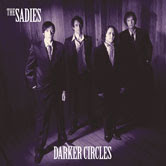 The Sadies – Darker Circles (Outside)
The album: Like anyone else in southern Ontario, I love the Sadies and have seen them dozens of times, with one or two ecstatic experiences in there somewhere. And yet I never, if ever, put on one of their albums for my own listening pleasure. There’s good reason this album—their, um, umpteenth—is getting more than its usual share of attention. I was frankly worried when I heard they were working with Gary Louris of the Jayhawks—a man who, talented though he is, is not known for his grit or sense of adventure. (Side note: he did excellent work on another Torontonian album last year, Kirsten Jones’s The Mad Mile, though no one would accuse that of being adventurous or gritty.) But as he did with their last album, New Seasons, Louris clears away only a bit of the haze and otherwise helps the band define their textures a bit more clearly; on Darker Circles, they’ve definitely hit their stride in their studio work, both with each other and with Louris. Whether he whipped their songwriting into shape or whether they’re just naturally maturing is beside the point; one finally gets the sense that the Sadies believe in these songs, that they’re not just vehicles to get them on the road and perform.
The chances: Good. Surely when a band that could be eligible for a lifetime achievement award makes an album this strong, it has to count for something.
 Shad – TSOL (Black Box)
The album: The best Canadian MC whose name doesn’t begin with K (although his last name does), Shad is hard to dislike: he’s warm, witty, and nerdier than thou. He’s also whip-smart and insightful when he wants to be, like on the haunting “At the Same Time,” but his metaphors can just as easily fall flat on their face (“Trying to listen to Jesus is hard as fake boobs”). Mostly, though, he’s full of good times and positivity, and uses his spotlight to spread the love and laugh at himself. The music rarely matches the dexterity of his lyrics, however; hopefully his continued success will attract stronger collaborators.
The chances: Excellent. Shad surprised a lot of people with his last Polaris shortlisted album, The Old Prince, and many feel that this is his year—not to mention the fact that it might be time a hip-hop album took home the prize. On top of genuine love for TSOL, people also love Shad himself; his chances of riding a wave of goodwill to the top are better than strong. He splits his time between B.C. and Ontario, which would at least be a small dent in Central Canada’s stronghold on the prize so far.
 Tegan and Sara – Sainthood (Universal)
The album: I’ll admit to having dismissed this album when it came out; not because I disliked it particularly, but because it was a competent, commercially palatable pop record and the world has plenty of those—why should I care about this one? I listened with open ears, hoping for at least a conversion on the level of Metric’s Fantasies; instead, I cast it away. The single “Hell” crept up on me during many a grocery trip (where I’m always a captive audience); the other singles are just as strong, and there’s a good chance they could be giving Carl Newman a run for his money in another few years. Maybe if my stepkiddo was as enthralled with Tegan and Sara as she is with Billy Talent, I might have succumbed by now, due to sheer overexposure.
The chances: Fair. Like the Sadies, they’ve been around a long time and their recorded output continues to improve; this may well be their best album yet (I have no idea; I haven’t followed them closely), which could tip some votes their way. But the same critics who won’t give Billy Talent the time of day are unlikely to give Tegan and Sara an objective listen.
The could've beens:
 Schomberg Fair – Gospel (Hi Hat)
The album: Last year I dumped on Elliott Brood, and arguably Schomberg Fair are cut from the same cloth. Except that they’re awesome. The breakneck banjo songs are thrilling, but there's much more going on here than a hackneyed hoedown. Bassist Nathan Sidon is the most frog-voiced singer I've heard since Gabe Minnikin in the Guthries, but it totally works for him. I don't hear a lot of people putting soul into roots music these days—and by soul I don't mean R&B (though there is a strong gospel element here, hence the title, as well as the aptly titled oddball track “Motown Break”), but that indescribable "it" that gives certain bands undeniable chemistry and sets them apart from genre-fication. This band absolutely kicks my ass: the blistering shredding, the Christian guilt, the gutsy playing that's probably the most punk rock thing I've heard in Canada this year, the banjos, the rumbling baritone voice, and the ability to breathe life into hoary clichés like "Wayfaring Stranger."
Why it didn’t make the short list: This band barely has a profile in its hometown of Toronto, never mind the rest of the country.
 Souljazz Orchestra – Rising Sun (Strut)
The album: What began as a rather imitative second-rate Afrobeat band has grown up quickly, and Rising Sun is an intriguing and varied jazz album that happens to use some African instrumentation and grooves. It’s their first for an international label, and they’re more than ready for the spotlight. Keyboardist Pierre Chretien deserves top marks for tying it all together; tenor saxophonist Steve Patterson has plenty of fine performances here as well, particularly on the dreamy, spacy “Consecration,” which owes a debt to Alice Coltrane.
Why it didn’t make the short list: World music? Jazz? Polaris has a long way to go. And fans of these genres rarely rally around a favourite, no doubt leading to an insane amount of vote-splitting.
 South Rakkas Crew – The Stimulus Package (Mad Decent)
The album: Polyglot pop and deconstructionist dancehall that draws from just about every dance music trend of the last 15 years. It’s wicked, wacky and wild party from beginning to end, full of booty bass that’s both abrasive and persuasive, and even the occasional auto-tuned vocal merely adds to the overall madness rather than a nauseating distraction. This came out on Diplo’s Mad Decent label, and it has much more in common with that scene than anything else going on in Canada. Indeed, the Crew themselves have lived in Orlando (?!) for over 10 years now, but coming from Brampton and Mississauga, their sound is definitely the sound of the modern, multicultural suburbs—suburbs barely recognizable to Arcade Fire.
Why it didn’t make the short list: Because it’s a free mix tape, not a “real album,” the old world has a bit of trouble grasping the fact that this was not available in stores and therefore not legit. It also recycles a couple of “riddims,” in Jamaican parlance, which means four tracks here with the “double-up riddim” sound exactly the same except for the vocal—that doesn’t mean each individual one is less thrilling, however. But really, the main reason South Rakkas Crew didn’t make the shortlist is because not nearly enough people listen to David Dacks.
 John Southworth – Mama Tevatron (Dead Daisy)The album: John Southworth must be as sick as anyone by descriptors like “weird and wonderful” or, that classic kiss of death, “quirky.” But on Mama Tevatron this unique character not only shows off his songcraft at its best, but moves away from several of the stranger personas he’s inhabited in the past. Gone is the sweater-clad boyish man, gone is the weird blackface bluegrass phase; in its place is a space-age bachelor pad pop music that’s a strange hybrid of Esquivel, the Ramones and Dirty Mind-era Prince—that has to be heard to be believed. Nine of these 10 songs are pop perfection, both in their immediate appeal and the layers underneath. The final one, “Zulou,” could be Klaus Nomi covering Pink Floyd, as Southworth heads deeper and deeper into space.
Why it didn’t make the short list: Southworth’s heyday—if he had one—was over 10 years ago, when both he and Hawksley Workman were starting out and were cut from the same cloth; their paths have since diverged considerably. Maybe people still have him pegged in that period, who knows. If so, they’re missing out.

 Yukon Blonde – s/t (Nevado)
Zeus – Say Us (Arts and Crafts)
The albums: I’m going to cheat and group these together—because I can barely tell them apart, and not just because they’re always neighbours at the bottom of any alphabetical list. They’re both full of bearded boys who love ’60s pop and ’70s guitar rock, and have the kind of chops that will come in handy when Paul McCartney needs a new pool of backing players. They’re both full of rich harmonies and harmonized guitar leads, and goddammit, they both write songs that are mere inches away from the greatness of their biggest influences. If I had to give the nod to one, it would be Zeus; though their lyrics are equally as inconsequential, they do avoid downright dorkiness, which Yukon Blonde is guilty of on occasion.
Why they didn’t make the short list: Because no one else can tell them apart either, and most jurors likely reserved only one spot on their ballot for ’70s retro rock, meaning both of them (and Jason Collett, for that matter) suffered from vote-splitting. Just get together and form a supergroup already!
The following reviews appeared in the Kitchener-Waterloo Record and Guelph Mercury in April 2010.
Erykah Badu – New Amerykah Part Two: Return of the Ankh (Universal)In 2008, Erykah Badu dropped one of the most mindbending, exciting slabs of soul music of the last decade with this album’s predecessor. But where New Amerykah Part One was subtitled 4th World War and filled with paranoid tension, Return of the Ankh sounds like a huge sigh of relief, with Badu returning to the seductive neo-soul sound that first launched her career in the late ’90s, yet no less psychedelic than her more recent forays.Lead single "Window Seat" is the breeziest Badu has been in years, and easily the most accessible. But she’s still deliciously weird, such as when guest producer Madlib creates a hazy gauze on "Incense," offering her only a trippy bass line, simple drums, and a florid harp to decorate an already sparse melody. The rest of Ankh lies somewhere between those extremes, with some subtle but serious funk ensuring that Badu doesn’t drift away entirely. As with 4th World War, Ankh is a producer’s album, with some of the most outré names in neo-soul enlisted to provide tiny details that make all the difference in the world. (April 8)Download (iTunes, puretracks.com, amazon.com): "Window Seat," "Incense," "Turn Me Away"
Bettie Serveert – Pharmacy of Love (Sound of Pop)Dutch band Bettie Serveert put out three albums of loud, grungy and melodic albums in the mid-’90s that made a small dent on this continent’s indie rock scene—and then seemingly disappeared. They didn’t, of course: they continued to play for faithful fans and refine their sound to reflect their age (i.e. less grunge, more space), and, in the case of 2000’s Private Suit, released some of the most underrated pop of the past decade.Pharmacy of Love—despite the terrible title—might be the album to put them back on the radar. Not only because it’s their finest collection of songs since Private Suit, but because they’ve decided to turn up their amps again and revisit the raucous elements of their ’90s sound, without eschewing the keyboards and delicacy they’ve acquired over time. As a result—with the possible exception of the barn-burning opening track, "Deny All"—it doesn’t sound like an obvious ploy to their ’90s fans who gave up on them a long time ago (or would only cheer older songs at live shows).In other words, Pharmacy of Love is everything that Bettie Serveert has ever done well. Peter Visser is an astounding guitarist who alternates between squalls of feedback, crushing guitar chords and emotionally charged countermelodies and solos—all played with tasteful restraint. Carol Van Dijk’s slacker drawl has matured into a wise yet world-weary confidence, and her subtly complex and catchy melodies fall somewhere between Neil Young and Burt Bacharach. The rhythm section rarely falls back on the obvious, whether they’re driving a 6/8 ballad or a straight-up rock song.“I hope you never change for me,” sings Van Dijk. And though her band has definitely evolved, they haven’t lost a bit of their original spark. (April 29)Download (iTunes, amazon.com): "Deny All," "Mossie," "Souls Travel"
Bjork – Voltaic (Warner)Six years ago, Bjork opened up her vaults and released live albums representing every major tour she’d done. Now we have a document of the 2007-2008 Volta tour—though it’s a “live” album only in the sense that it was recorded live, in a studio, as a rehearsal before her set at the U.K.’s Glastonbury Festival.So there are no exhilarating crowd noises, no sign that the unflappable Bjork is letting loose at all. But worst of all—for a performer known to radically reinvent her recorded work for various live set-ups—these are incredibly faithful renderings, making this all but redundant; even the most acute listener would be hard pressed to hear any difference between the studio and “live” version of Volta’s Timbaland-produced single, Innocence.Perhaps that’s a mixed blessing: Volta was Bjork’s most wildly uneven album, balancing some of her most joyous work in years with tedium that didn’t even qualify as interesting failures. Voltaic cherrypicks the album’s top five tracks and pads it out with some older staples—which still makes it a curiosity at best, and one that even diehard fans will probably skip. (April 15)Download (iTunes, amazon.com): "All is Full of Love," "Wanderlust," "Declare Independence"
V V Brown – Travelling Like the Light (Universal)V V Brown may dress like it’s the mid-’80s, but there’s no telling which era she’s plucked from. While the sound of her debut album is decidedly modern, there are direct links to an eclectic list of influences from the past 55 years of pop music. One minute she’s Buddy Holly, the next she’s Pat Benatar; some songs sound like ELO, some like Rihanna; many channel ’60s girl group exuberance. There’s very little original here—one song even cops the beginner-piano standard "Heart and Soul"—except for the way Brown mashes it all up with glee. She’s already scored hits writing for other people, and there are more than a few worthy chart-toppers here; don’t be surprised if she’s penning Broadway musicals sometime in the next 10 years. Combine that with her charisma as a performer and her fashion sense—and, compared to Amy Winehouse, her stability—and you have Britain’s next soul sensation. (April 8)Download (iTunes, puretracks.com, amazon.com): "Game Over," "Leave," "Everybody"
David Byrne and Fatboy Slim – Here Lies Love (Nonesuch/Warner)There is no précis paragraph that could make David Byrne’s new album sound like a good idea. And yet it’s easily his finest achievement since his days in the Talking Heads.Here’s the gist: Here Lies Love is a two-CD, 22-song pop opera about former Filipino first lady Imelda Marcos, set primarily to a disco pulse, and in collaboration with big-beat electronica producer Fatboy Slim (Norman Cook), who arguably passed his prime 10 years ago. About the only thing to stop most people from fleeing in terror is the guest list of female vocalists, which range from almost forgotten ’80s icons (the B-52’s Kate Pierson, Cyndi Lauper, Natalie Merchant) to current artists (Santigold, Martha Wainwright, Sharon Jones) to complete unknowns to, uh, Steve Earle (whom, it should be said, performs admirably in such vocally superior company).When writing a modern musical, most writers forget about the music, hoping the concept will sell itself. In Byrne’s case, every track is first and foremost a perfectly composed pop song, with a melody that maintains independence from the narrative theme. His seamless amalgam of classic Broadway elegance, funk, disco and bossa nova is telegraphed in the opening title track, where Florence Welch (of new act Florence + the Machine) reaches for the rafters. There are few stylistic variations—a couple of ’70s soft rock tracks slow the tempo slightly, and only four tracks would stop the dance floor entirely. Most importantly, there is no sense of repetition, no sign that Byrne and Cook treated any of this material lightly.That extends to the lyrics, which take the tale of someone who many people know only as a shoe-obsessed dictator’s wife and transforms it into a rags-to-riches, princess-to-pariah story by using some of Imelda Marcos’s actual quotes. She was born in poverty, became a beauty queen, and charmed not one but two rising politicians: one became president, the other the opposition leader; the latter is eventually assassinated, and years later his widow ousts the Marcoses from power. She was raised by a nanny, Estrella Cumpas, not much older than herself, whom she abandons when she becomes successful. She jets around the world practising “handbag diplomacy,” enjoying the ear of world leaders while her ailing husband stayed home and tightened his clench on power. And, most curious to Byrne, Imelda kept a residence in Manhattan where she built a disco on the sixth floor; hence, Here Lies Love is the imaginary soundtrack to a very private party.Here Lies Love succeeds on a level that all great musicals do: each song is tailored with specifics of the story, and yet functions universally as well. The one incongruity—"American Troglodyte," sung by Byrne, which uses pop culture references well outside the time frame of the story—works well enough on its own. Besides, unless you’re reading the detailed and incredibly fascinating liner notes while listening (recommended: springing for the deluxe edition), you’re unlikely to appreciate the narrative.But it’s all there if you want it: the charming beauty who betrays her oldest friend; the philanthropist who steals from her countrymen; the jet-setting star who made the Philippines glamorous and then became the country’s biggest disgrace. Here Lies Love ends with Cyndi Lauper and Tori Amos duetting on "Why Don’t You Love Me?," sung by Cumpas to Marcos, and Marcos to her country. Byrne doesn’t ask you to love Marcos, but he ensures she’s more than just a punchline. (April 15)Download (iTunes, amazon.com, puretracks.com): "Here Lies Love," "Eleven Days," "Dancing Together"
Caribou – Swim (Merge)What once was small became big; and now what once was big is small again. Caribou’s Dan Snaith was once a bedroom producer making subtle, melodic and slightly jazzy electronic records; he soon evolved into thundering psychedelia that took 15 people to reproduce on stage (the Caribou Vibration Ensemble, which featured Four Tet and members of Junior Boys, Born Ruffians, and K-W’s Pick a Piper), including an avalanche of drummers. While never short of stunning, much of Caribou’s music in recent years has been a tad overwhelming.On Swim, Snaith scales back to his more minimal beginnings, but with all the lessons learned from his excursions into ’60s pop still on full display. Opening track "Odessa" is driven by an aquatic and hypnotic bass line, which sits underneath one of Snaith’s finest melodies, while cowbells and what sounds like wild monkeys frolic around in the background. Throughout Swim, he’s judicious with his electronic trickery and psychedelic palette, setting up deep grooves and then brushing them lightly with vivid yet minimal colours, including his fragile Arthur Russell-like vocals.With the exception of "Odessa," he doesn’t score any big pop songs like he did on 2008’s Polaris Prize-winning album Andorra ("Melody Day," "Andorra"), but that’s not the point. Swim aims for transcendence in repetition—either on the dance floor, or (as on the drumless track "Kaili") entirely in your headphones—but that doesn’t mean Snaith is treading water. (April 22)Download (iTunes, amazon.com, puretracks.com): "Odessa," "Leave House," "Bowls"
Sharon Jones and the Dap-Kings – I Learned the Hard Way (Daptone)In retro soul circles, Sharon Jones is queen. While the likes of Erykah Badu were reaching back to soul music’s roots and retrofitting it for the digital era, Jones was going back to the source and staying there. On her fourth album, Jones is singing less like she has something to prove—the 52-year-old singer struggled in obscurity for decades before becoming a word-of-mouth sensation in the last five years. Here, she sinks her teeth in at slower tempos, and gives the songs more space to breathe. A string section and backing vocalists enhance the Dap-Kings’ impeccable arrangements, which once again supersede the actual songs—but whereas before the songwriting was the Dap-Kings’ Achilles heel, this time out it matters less because Jones owns every note. (April 8)Download (iTunes, amazon.com): "I Learned the Hard Way," "She Ain’t a Child No More," "Window Shopping"
Jónsi – Go (XL)Jónsi Birgisson has spent more than 10 years fronting the Icelandic band Sigur Rós while warbling incoherently—on purpose, to great effect, in an invented dialect. Now he’s launching his solo career by singing in English for the first time. Not that it makes a bit of difference: this eunuch’s enunciation isn’t much better. That’s never been the point, of course, but he sounds best here when he steers closest to Sigur Rós territory: sparse yet grandiose, cinematic opera that is as mysterious as it is magical. That band’s template can be understandably suffocating, yet its developments on recent albums into sunnier territory aren’t that much different than what Jónsi is doing here—so instead of being a liberating revelation, Go sounds unmistakably like a Sigur Rós album, with or without Jónsi’s instantly identifable vocals. Not that there’s anything wrong with that, and with the band on indefinite hiatus, Jónsi is shooting for bigger and brighter things. (April 15)Download (iTunes, amazon.com, eMusic, puretracks.com): "Go Do," "Around Us," "Boy Lilikoi"
Andy Kim – Happen Again (Koch)Barenaked Ladies – All in Good Time (EMI)In 1995, the Barenaked Ladies appeared at the Molson Ampitheatre in Toronto, and invited a very special guest, a Canadian legend, to the stage. “Ladies and gentlemen, Andy Kim!” It’s safe to say that most of the audience had no idea who Andy Kim was, even though he had written a long series of hits in the ’60s and ’70s, notably "Rock Me Gently" and the Archies’ "Sugar Sugar. "In 2004, the Ladies’ Ed Robertson co-wrote a new Andy Kim single, "I Forgot to Mention," which was a Top 10 hit in Canada, even though there was no accompanying album—until now, where the single leads off Kim’s comeback bid.Andy Kim is well steeped in classic pop songwriting of the Brill Building variety, but he’s by no means stuck in the past. Happen Again doesn’t go for a retro vibe, but rather shoots for stadium status, rich with stirring, sweet anthems that would give Coldplay a run for their money. Kim surrounds himself with L.A. studio pros, and puts his Neil Diamond-ish voice to work asking all of life’s important questions, i.e. “Do you believe in love?”Because this album has been so long in the making (it’s Kim’s first album in 20 years), every song could easily be a hit and there isn’t a single wasted moment—except perhaps "Without You," a dated synth-heavy ballad that, for all we know, may well back date to the ’80s itself. Otherwise, when Kim and his backup singers promise “We’re going to make it happen again,” you’d better believe them.While it may look like Ed Robertson did Kim a favour by co-writing "I Forgot to Mention," one wishes that they teamed up again to co-write the Barenaked Ladies’ new album, their first without founding songwriter Steven Page. To say that there’s a lot of pressure on Robertson and the remaining Ladies is a gross understatement. There are some fine moments here where they appear to step up to the challenge—but then you realize that’s just because Robertson was always the underrated member of the songwriting duo; he’s always carried half of a Barenaked Ladies album. The question is whether he can carry an album on his own.Opening track "You Run Away" is a promising start; it stands among the Ladies’ finest singles, even if it’s a thinly veiled dig at Page. The hot-jazz freestyle romp "Four Seconds" is the lone light moment, and succeeds even if it seems strained in the overall context. Keyboardist Kevin Hearn steps up with a couple of gems that don’t sound that different from his underrated solo work; Robertson would do well to cede him more space, even if Hearn’s low-key, fragile vocals are nowhere near a substitute for Page’s bluster.Or they could just invite Andy Kim to join the band. (April 8)For Andy Kim, download (iTunes): "I Forgot to Mention," "Love Is," "Happen Again"
For Barenaked Ladies, download (iTunes, puretracks.com, amazon.com): "You Run Away," "Another Heartbreak," "Four Seconds"
Natalie Merchant – Leave Your Sleep (Nonesuch/Warner)The former 10,000 Maniacs vocalist and Lilith Fair-era solo artist hasn’t had a major label release in almost 10 years (she put out a low-profile indie release in 2003), which is likely why she’s bouncing back with an ambitious double album.Perhaps part of Merchant’s absence was a lyrical writer’s block; the concept here was to set some of her favourite poets’ work to music, from Ogden Nash and e.e. cummings to contemporary writers and anonymous nursery rhymes. With the pressure off to write lyrics, Merchant threw herself into an ambitious musical journey, where she effortlessly touches on not just the rich history of American music—gospel, jazz, folk songs, Cajun country, Aboriginal music—but also the sounds of cultures that have been at the centre of the American immigrant experience: Chinese, Celtic, Yiddish, Jamaican, European chamber music and others.It might as well be a soundtrack to one of Ken Burns’s sweeping PBS miniseries—not that there’s anything wrong with that. There are certainly times—mostly on the uptempo material—when Merchant sounds like a dispassionate librarian, but she’s largely successful as a chameleon bringing a consistency to all the material, while working with all-star collaborators such as Wynton Marsalis, Medeski Martin and Wood, and the Klezmatics. No matter what he genre she’s plundering, it’s obvious she’s invested all the energy she saved by not writing lyrics into a strong set of songs that’s almost an embarrassment of riches. The main fault with this album is that it’s too long, though it rarely dips in quality; Merchant could easily have strung this concept into a series of releases. (April 22)Download (iTunes, amazon.com, puretracks.com): "It Makes a Change," "Topsyturvey World," "The King of China’s Daughter"
Plants and Animals – La La Land (Secret City)The phrase “la-la land,” according to the Canadian Oxford Dictionary, refers to “a fanciful state or dream world”—a descriptor that could apply any number of boundary-busting, exploratory and mind-bending musical works. Unfortunately, this is not one of them.Montreal’s Plants and Animals announced their arrival on the international stage with their 2008 album Parc Avenue, a curious blend of anthemic indie rock, jam-band looseness, prog twists, a bit of Neil Young’s Crazy Horse, and even some West African guitar stylings. Here, they still sound suitably restless—but without any kind of anchor. They’re all fine players, yet the songwriting is limp and they seem incapable of conjuring any chemistry—which is downright shocking considering the highs of Parc Avenue. By the time a Vocoder voice starts intoning the title of the barely-there song "Future From the ’80s," it’s safe to say that this once-promising band has completely run out of ideas. (April 22)Download (zunior.com, iTunes, amazon.com): "Kon Tiki," "The Mama Papa," "Fake It"
Poirier – Running High (Ninja Tune)Slowly but surely, all the great global dance music has gone digital: there is digital dub, digital cumbia, digital Brazilian baile funk, and digital dancehall. Ghislain Poirier is determined to bring Caribbean soca into the mix. It’s part of a natural evolution for the Montreal producer, whose distinctive brand of electro hip-hop has been voraciously absorbing all sorts of cross-cultural influences over the past five years. Because of the diversity of his work—heard on 2007’s underrated No Ground Under and 2005’s Breakupdown—Running High could stand to include some more eclecticism, even though he’s included a second disc of remixes to sweeten the package. Much of this material is better absorbed in small doses—like on the EPs that he quietly released leading up to Running High— but with both discs being sold at a bargain price, there’s no point complaining about an embarrassment of riches—and it’s a worthy introduction to an artist charting new courses for Canadian dance music and bringing it to the world. (April 29)Download (iTunes, amazon.com, eMusic): "Immigrant Visa" (featuring MC Zulu), "Marathon," "Que Viva" (featuring Boogat)
The Runaways OST – Various Artists (Warner) The legendary mid-’70s all-girl glam punk band were more famous for what they were—one of the first all-female rock bands, and the only good one before the Go-Go’s—than their recorded legacy. The soundtrack to their eponymous biopic sticks to the essential tracks, and rounds it out with pitch-perfect period pieces like the epochal David Bowie single "Rebel Rebel," the Sex Pistols’ "Pretty Vacant," Canadian classic "Roxy Roller," and tracks by Suzi Quatro, the Stooges and the MC5. Most soundtracks to rock’n’roll biopics either feature the original tracks or the actors’ renditions; usually the latter are pale imitations of the former. Yet The Runaways does both. And it’s to the credit of stars Dakota Fanning and Kristen Stewart that they hold their own competing with the rock’n’roll swagger of Cherie Currie and Joan Jett (respectively) on the original tracks, especially the ultra-campy teens-gone-bad epic "Dead End Justice." Much like the movie itself, their tracks capture the time and place and teenage abandon perfectly. This is the rock’n’roll—the sex and drugs and depressing downfall stay on the screen, of course. (April 1) Download (iTunes, amazon.com): "Where the Boys Are," "Dead End Justice," "Cherry Bomb"
Elizabeth Shepherd – Heavy Falls the Night (Do Right)This Toronto jazz singer and keyboardist comes into her own on her third album, and as producer and sole songwriter this time out, she deserves every inch of credit. (The one cover, of Anne Murray’s "Danny’s Song," is virtually unrecognizable, as Shepherd takes complete ownership of the song.) Shepherd is no longer content to write sketches of songs to showcase her piano skills, and with vocals as an afterthought: here, she sinks her teeth into the lyrics and melodies, still has time to let loose on the piano, and allows bassist Scott Kemp to drive most of the material. The vocals are always front and centre—and side to side, as Shepherd toys with layering her own voice to great effect. Her forays onto the dance floor flow much more naturally ("Seven Bucks"), even when she slips into tricky time signatures ("The Taking," "It’s Coming"), while her melancholy moods (the title track) have greater depth than every before. (April 29)Download (Zunior.com, iTunes, eMusic, puretracks.com, amazon.com): "Numbers," "Seven Bucks," "High"
Souljazz Orchestra – Rising Sun (Strut)Tony Allen – Secret Agent (World Circuit)Ottawa’s Souljazz Orchestra made their name on Canadian stages as an Afrobeat band—an average one at that, not particularly in the league of other Afrobeat revivalists that have surfaced in the last 10 years—but here, on their third full-length, they live up to their name by delving in deeper to funk and jazz, with extended solos that show off what formidable players they’ve become—particularly keyboardist Pierre Chretien and tenor saxophonist Steve Patterson. While the African rhythms are still a large part of their sound, they’re not the only part, making Rising Sun a diverse album that doesn’t wear out its welcome by sticking to one groove.Tony Allen is one of the greatest names in Afrobeat history: as Fela Kuti’s drummer, he is the anchor of many recordings that defined the genre; his own solo work over the last 30 years is often stellar as well. For his first major label release in North America, sadly, he offers up a merely average slice of African pop that, while admirable, doesn’t measure up to his past glories. The vocalists employed are part of the problem; they’re often distractions spouting cheesy platitudes instructing you to “celebrate your life,” while the tracks easily could work well enough on their own. Any fan of this genre should own a Tony Allen record—just not necessarily this one. (April 22)Download Souljazz Orchestra: (iTunes, amazon.com): "Agbura," "Negus Nagast," "Serenity"
Download Tony Allen: (iTunes, amazon.com, puretracks.com): "Secret Agent," "Busybody," "Celebrate"
Rufus Wainwright – All Days Are Nights: Songs for Lulu (Universal)For the last 12 years, Rufus Wainwright has made over-the-top, orchestral studio albums full of show-stopping numbers that he’s always been able to communicate as a solo performer. Now, on his first album of original material in three years, he finds himself alone at the piano, singing sombre songs and sonnets and an excerpt from his first opera (which gets its North American debut in Toronto in June).And yet the powerful performer appears unable to pull it off: his melodies are uninspiring and often turgid, his piano playing sounds clumsy at times ("True Loves"), and—though he’s written explicitly and expertly about his fabled family in the past—the track "Martha" is embarrassing in its naked exposition that it sounds like one of Alanis Morissette’s lesser moments.With one or two exceptions, it all sounds like a mere off day in an otherwise excellent discography, except that Wainwright is taking this album very seriously: apparently he’s playing the entire album in sequence at solo shows, insisting the audience not clap between songs as if they were movements in a larger piece. Maybe his hubris has finally caught up to him, but he probably won’t have to worry about that not clapping bit. (April 1)Download (iTunes): "The Dream," "Give Me What I Want and Give It To Me Now!," "Sonnet 43"
The White Stripes – Under Great White Northern Lights (Warner) Despite having only two people in their rock band, the White Stripes don’t do anything halfway. That’s why when they decided to tour Canada to celebrate their tenth anniversary as a band, they not only hit every major city, but also three dates in the territories, a bowling alley in the Prairies, a theatre on Cape Breton Island, and a boat in the Charlottetown harbour—all with a film crew following them around to make a documentary concert film. Now you can buy the CD; you can buy the DVD; you can buy both together. You can buy the vinyl. Or you can spend a small fortune on a box set that includes all of the above with a poster, a bonus seven-inch single, a bonus live disc of the entire Cape Breton show, and a 208-page hardcover book of photographs. Why buy it all? Well, it could possibly be the last thing the band ever does; drummer Meg White has withdrawn from the stage due to anxiety issues, and Jack White has two other bands and numerous production duties to keep him busy. More importantly, both the album and film capture the duo at their white-hot best. Huge rock riffs, lurching blues, churning organs, mandolin hoedowns, folkie singalongs, and a scorching cover of Dolly Parton’s "Jolene" all pay testament to the odd chemistry between the frantic, overachieving Jack and the perfect foil provided by the laid-back, understated power of Meg’s drumming. Though the studio recordings have always been raw, this live document is obviously even more so, and much of the joy is hearing how unhinged and spontaneous this seemingly tightly scripted band can be. It’s not a greatest hits, either; several key singles are missing, and "Fell in Love With a Girl" is subject to reinvention. Instead, it’s a worthy snapshot of a typical set list that dips into their discography on various whims. The film doesn’t offer much as a documentary: though there are some illuminating interview sequences, there’s nothing terribly probing; much more is revealed in moments of quiet contemplation, especially the awkward yet loving relationship between the hyperactive Jack and the silent Meg (the filmmaker actually subtitles her inaudible speaking voice). Some of the “interacting with the locals” sequences are a bit staid; Jack’s apparent Nova Scotian ancestry is unexplored, even though it was supposed to be one of the reasons they chose Canada for their tenth anniversary trip. Needless to say, the film comes alive on the stage, watching Jack peel off the squealing solo on "Icky Thump," leap from his guitar pedals to his strategically misplaced organ on the other side of the stage, or stand facing Meg and singing to her like they’re two kids practising in a basement and still in love with every note of musical connection—not an iconic, internationally successful band in front of thousands of rowdy, chanting Canucks. (April 1) Download (iTunes, puretracks.com, amazon.com): "Fell In Love With a Girl," "Jolene," "Blue Orchid"
 Owen Pallett – Heartland (For Great Justice)
 Radio Radio – Belmundo Regal (Bonsound)
 The Sadies – Darker Circles (Outside)
 Shad – TSOL (Black Box)
 Tegan and Sara – Sainthood (Universal)
 Schomberg Fair – Gospel (Hi Hat)
 Souljazz Orchestra – Rising Sun (Strut)
 South Rakkas Crew – The Stimulus Package (Mad Decent)
 John Southworth – Mama Tevatron (Dead Daisy)

 Yukon Blonde – s/t (Nevado)

