Not ranked this year, other than into tiers.
Bandcamp links where possible; please support your favourite artists.
Tidal playlist:
https://tidal.com/browse/playlist/55a29b0e-f86c-4de0-b864-4ba725e3ce41
Spotify playlist:
https://open.spotify.com/playlist/2TOeEJcUH4MlGPVaTV4t7W?si=6e684aee7de0486b
Tier 1: #1-10 (alphabetical)
Arooj Aftab – Vulture Prince (New Amsterdam). This Pakistani-American singer has made a gorgeous record that’s a beguiling amalgam of Dorothy Ashby, Sheila Chandra and Owen Pallett. Dedicated to her late brother and another lost friend, the “neo-Sufi” album is beyond haunting, whether she’s singing in Urdu or English. Right in the middle she drops “Last Night,” an acoustic reggae song comparing her beloved to lunar majesty. Read a P4K profile here.
Altin Gun – Yol (ATO). A Turkish-Dutch psych-pop band that lean more Talking Heads than Tame Impala? Yes, please. This band blew me away live a few years ago, and each record is better than the last. Every player is essential, the rhythm section is killer, and the new-wave synths are a nice touch alongside the Fuzzy guitars, Balkan scales and male-female vocals. In yet another bleak year, this January release was a constant source of sunshine.
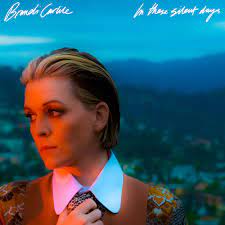
Brandi Carlile – In These Silent Days (Elektra). I’m not ranking anything this year, but this is the album I listened to the most compulsively after it came out, the album that sent me to a piano to learn all the songs (not something I do often). I admired Carlile before, but hearing a 40-year-old woman knock it out of the park on her seventh album is beyond inspirational. This is one of the great mainstream singer-songwriter albums of the last two decades; it’s that fucking good. Opening track “Right on Time” is a total show-stopper, both as a song and a vocal performance—but she’s only warming up. Every song here is a stone-cold classic. And did you see her on SNL? Holy shit.
Cochemea – Vol. II: Baca Sewa (Daptone). His record label calls him “the Dap-Kings’ electro-sax space warrior.” Sounds about right. On this album of mostly just saxophone and percussion, with occasional help from the Dap-Kings’ rhythm section, Cochemea taps his Indigenous Mexican-American roots to create a swampy brew with faint echoes of Dr. John’s Gris Gris and the quality control that Daptone brings to everything it puts out.
Delvon Lamarr Trio – I Told You So (Colemine). Move over, Khruangbin, there’s a new instrumental trio on the scene, and this one is not chill. This one, from Seattle, channels New Orleans legends the Meters almost effortlessly—no small feat. This is a whip-tight funk band led by an organist and featuring a jazz guitarist; miraculously, there’s no bassist. Even the cheeseball ’80s cover totally works, in part because the original material around it is so strong.
Daniel Lanois – Heavy Sun (Maker Series). The Hamilton producer goes to church: a church in Shreveport, Louisiana, specifically, where the father of drummer Brian Blade preaches. One day Lanois and Blade heard the church organist, Johnny Shepherd, and insisted on making a record with him. Praise Jesus, they did. Heavy Sun is a gorgeous, gospel-soaked album centred around Shepherd’s voice and B-3 Hammond organ playing, while masters Lanois and Blade are joined by their regular bandmates, bassist Jim Wilson and guitarist Rocco DeLuca for gorgeous harmony singing. I’ve been a Lanois fan for decades now, so trust me when I say this is his greatest solo record, second only to Acadie. One could argue, however, that Shepherd deserves equal billing.
Low – Hey What (Sub Pop). I listened to more Low than any other artist in 2020, their music offering the ideal mix of extremes: the beauty I craved and the discomfort I felt. Going through their whole discography made me appreciate the last three records they made with producer BJ Burton even more: 2016’s gorgeous Ones and Sixes (my favourite), the profoundly strange Double Negative in 2018, and now Hey What, which pulls back somewhere between those two poles. Every year at this time you’re likely to hear their version of “Little Drummer Boy” cutting through the usual dreck; if you haven’t checked in Low in a while, it’s never been a better time.
Mustafa – When Smoke Rises (Regent Park Songs). “Stay Alive” is the opening track here—and it’s not a metaphor. When Smoke Rises is about the losses Mustafa has witnessed through gun violence in his Toronto neighbourhood, and about a resilient community awash in grief. A child prodigy who’s releasing his debut album at the age of 25. Worth the wait. Though Mustafa first made his name in Toronto as a poet, he has a gorgeous singing voice, and the music owes more of a debt to Sufjan Stevens than my inherently racist assumptions led me to expect. His first headlining hometown gig? At the newly reopened Massey Hall, where he was the third performer to take the stage after Gordon Lightfoot and Buffy Sainte-Marie. Now that’s a baller move. Too bad Toronto police deemed it a “high-security event” and installed airport-level security outside the venue, while Mustafa himself wore a backwards bulletproof vest on stage as a fashion statement. All of which is to say: This is a stunning album, an astounding debut, and something you absolutely must hear.
Allison Russell – Outside Child (Fantasy Records). Speaking of Brandi Carlile’s mid-career excellence, this was a breakthrough year for one of Carlile’s favourites: Montreal-Vancouver-Chicago-Nashville singer/songwriter Allison Russell. Canadian folk festival attendees might know Russell from Po’ Girl in the 2000s (with Be Good Tanya Trish Klein) or with Birds of Chicago. The latter band’s JT Nero is a big part of this record, but it’s very much Russell’s story to tell: these are at-times harrowing personal stories, dressed up in the velvet glove of Russell’s luxurious voice. There are some Al Green grooves, some Lucinda Williams twang, some Norah Jones comfort, and some of Emmylou’s Wrecking Ball: this is the very definition of what’s called Americana. You can listen to this record devoid of context and find it lovely; once you listen closer, it’s profoundly moving.
Yu Su – Yellow River Blue (Yi She Yi Se). This Chinese-Canadian world traveller made perfect music for a microdosing summer (see also: K.D.A.P.’s Influences). Opening track “Xiu” layers Chinese instrumentation over a Neu groove and Colleen-esque layers. There’s some sparse electro-dub, some Four Tet-ian psychedelia, and even some Prince-like Linn drums on “Meleleuca.” This is a fascinating sonic journey from a restless spirit.
Tier 2: #11-20 (alphabetical)
Godspeed You! Black Emperor – G_d's Pee at State's End (Constellation). Don’t take this band for granted. Yes, it’s largely the same bag of tricks they’ve explored for the past 25 years, but they’ve never sounded as sonically fierce as they do here, thanks mostly to engineer Jace Lasek. Godspeed is always more hopeful than they’re given credit for—even though they literally spell it out in their stage visuals—and this album arrived at the perfect moment in time. (See also: Fly Pan Am’s Frontera.)
Geordie Gordon – The Tower (Victory Pool). Perhaps you’ve seen Geordie Gordon in U.S. Girls, Islands and many other Toronto/Montreal/Guelph acts in the last 15 years. This is his first solo album, and at times he sounds like an unusually good synth-lounge act of the early ’80s. Drum machines that sound lifted from old organs, vintage keys with modern synths delivering one soft-rock gem after another, with some seriously strong songwriting at the core. Also remarkable is Gordon’s constantly developing vocal range; having seen him perform since he was a teenager, I’m never not amazed at the singer he’s become.
Arushi Jain – Under the Lilac Sky (Leaving). This Indian composer and singer, now based in San Francisco, plays ragas using only modular synths—which are helpful to get at microtonality unavailable on most Western instruments. This material was composed for a sunset performance on a rooftop near the Rajasthan desert; it sounds like it. Close your eyes and you might as well be there. More info here.
Rochelle Jordan – Play with the Changes (Royal Mountain). This L.A.-via-Toronto singer channels vintage Neneh Cherry or what the post-drum’n’bass Brits called “garage,” but I don’t remember any of that music from more than 20 years ago sounding this good (no disrespect to Cherry, who continues to be awesome). Jordan is a wispy vocal presence, yet effective—and just in time for the Janet Jackson renaissance. This is the kind of club record lush enough to feel like a warm bath. Luxurious.
Little Simz – Sometimes I Might Be an Introvert (Awal). This rap album opens with martial drums, big symphonic brass and a choir, before breaking into a nylon guitar riff over a Questlove-worthy beat while a string section swells. Ambitious? Yep. But this British MC can do anything she puts her mind to—except, maybe, maintain our interest through way too many “interludes,” what used to be called skits (why is that still a thing?!). The production here is once again by Inflo, the man behind Sault (whose Cleo Sol appears here) and Michael Kiwanuka; he also pops up on the new Adele. If Little Simz wasn’t the charisma magnet she is (not unlike Haviah Mighty), she’d be in jeopardy of being overshadowed by Inflo. But this is a perfect meeting of the minds.
Madlib – Sound Ancestors (Madlib Invazion). This producer has likely more than 100 releases to his name over the last 20 years. After the landmark 2004 Madvillain album, where to start? Right here. Combining his love of jazz and obtuse samples with his post-J Dilla beat innovation, this is an album assembled with the help of Four Tet, who brings focus to the usually scattered genius.
Mdou Moctar – Afrique Victime (Matador). There are many artists on this list I would have loved to have seen live this year, but I do regret that I have yet to have my face melted off by the electric guitar wizardry of this Nigerien master. Especially now that he has a large North American indie behind him. Is this album better or worse than its predecessor? Who cares? Turn it up and surrender.
Serena Ryder – The Art of Falling Apart (Arthaus). It seems weird that a woman with big radio hits here in Canada would be so critically underrated. But did I read anything, anywhere about this record? One of the most naturally gifted pop singers working today, her writing keeps improving, and this record is full of affirmational earworms—“Waterfall,” “Kid Gloves,” “Better Now,” for starters—that hit me right in the gut during a most difficult year. This record should be mentioned in the same breath as Adele or Olivia Rodrigo or Brandi Carlile—it’s that good.
Leanne Betasamosake Simpson – Theory of Ice (You’ve Changed). The first time I heard this record was walking on a frozen lake in Simpson’s general vicinity (near Peterborough, Ontario), a vivid experience I relive every time I put this on. Simpson is an acclaimed poet and writer; this is her first album. A singer, she’s not—and that’s not the point (though she’s just ever so slightly AMSR for my taste). If Laurie Anderson were an Indigenous Ontario folk musician, she might make a record like this. Musical textures from sister Ansley and producer Jim Bryson bring her words to life, giving them further depth and colour. A cover of Willie Dunn’s “I Pity the Country” is essential listening in 2021, but doesn’t overshadow anything Simpson does on her own.
Suzie Ungerleider – My Name Is (Stella). Ungerleider recorded for almost 25 years as Oh Susanna, so this is a bit of a rebirth. And what a way to make a mark: this is easily one of her best records, if not a career high (so far). If she’s new to you, she’s a short-story lyricist with an exceptional sense of melody, not unlike a folkier Aimee Mann, writing perfect character sketches like “Mount Royal” or “Summerbaby” or the devastating “Disappear,” about a child hiding from an abusive parent. Oh, and there’s a song here with the chorus “hearts on fire” which also happens to be the title of an amazing book out next April. Just FYI.
Tier 3: #21-30 (alphabetical)
Cadence Weapon – Parallel World (eOne). The most heartening thing about Cadence Weapon’s Polaris prize win this year wasn’t that the mid-career musician finally copped it (after two shortlists and two longlists), but that he was just as weird as he’d always been—musically, that is, which proves that the world is catching up to him. Lyrically, he’s more direct here than he’s ever been in his career, and tough times call for straight talk.
Theon Cross – Intra-I. Theon Cross plays tuba in Sons of Kemet, a band credited with spearheading much of Britain’s current jazz revival. That band’s prolific saxophonist, Shabaka Hutchings, deservedly gets most of the attention. But Cross’s second solo album—yes, the tuba player’s solo album!—bettered his main project this year, by delving into dubby electronics, hip-hop, cinematic soundscapes and anywhere else a tuba is not normally supposed to go.
Eris Drew – Quivering in Time (independent). Very little electronic music ever makes me want to dance in a dark club packed with people—especially now. But this album does. Apparently it was crafted in a rural New Hampshire cabin where, during the pandemic, Drew would broadcast DJ sets held in a nearby clearing. With shades of Chicago house and early ’90s rave with deep bass, actual funk, and constantly intriguing samples and shifting textures, this is a dense delight.
Equiknoxx – Basic Tools Mixtape (independent). This Jamaican production team began in dancehall but now go wherever they want, and the weirder the better: like Tricky took an American R&B artist to make a record in Kingston and only rolled tape between 2 and 4 a.m. This is murky, muggy, swampy music—and it’s glorious. The vocalists are a welcome presence, but the instrumental versions speak just as loudly.
Greg Keelor – Share the Love (Warner Canada). The Blue Rodeo co-lead has put out several solo albums; this is easily the best since his debut, Gone. Recorded and then re-recorded live for a video promo, Keelor decided to scrap the original and go with the live performance. An ace band (including drummer Glenn Milchelm and Peterborough singer/songwriter Melissa Payne) that was likely pent up from months of pandemic isolation pour their hearts into Keelor’s music, which teeters between melancholic and morose as it grapples with gratitude, death and heartbreak.
Miranda Lambert, Jack Ingram, Tim Russell – The Marfa Tapes (Sony). Note: it’s not a “campfire record” unless there’s an actual fucking campfire. Which there is here: this is as unplugged as it gets, other than the recording equipment—which may well have been a smartphone, by the sound of it. It’s like Michelle Shocked’s Texas Campfire Tapes, except instead of a young, unknown folk singer, we’re eavesdropping on three of the biggest names in modern country music. Okay, I’ll admit I was only familiar with Lambert, but Ingram has had No. 1 hits, and Russell is a hitmaking songwriter and producer. Here, the three of them pass the acoustic guitar and harmonize exquisitely. There’s offside conversation, crackling fire, and at least once you can hear Lambert say, “Beautiful!” Which it absolutely is.
Salomé Leclerc – Mille ouvrages mon coeur (Audiogramme). Snowy-day franco melancholy rarely gets better than this—except when Leclerc ramps up the drama with lush strings and Velvet-y rhythms. (See also: Myriam Gendron’s Ma Delire.)
Olivia Rodrigo – Sour (Geffen). Being a 50-year-old man, I’m not the target demo for this teenage Disney actress who sings about getting her driver’s licence. But goddammit, she’s good. She’s got a Broadway voice, co-writes a collection of earworms, and while she’s very much rooted in modern pop idioms, opening track “Brutal” betrays a lineage from Joan Jett to Liz Phair to Courtney Barnett—so, right up my alley. How good is she? Taylor Swift and Jack Antonoff show up for a co-write—and it’s one of the weaker tracks here. The rest of the album shows immense dynamic range, from big pop ballads to rockers (“Good 4 U”) to acoustic numbers (“Favourite Crime”) to Lorde-ish self-awareness (“Déjà Vu”).
John Southworth – Rialto (Tin Angel). Stay with me here: Rialto is not just a 14-song album about an insomniac who works as a driver for a writers festival and must courier a film called The History of Jazz to its premiere: apparently, it’s also a book and an eight-episode podcast performed by a cast of 25, made by a perpetual underdog with 13 albums under his belt. I’ll admit, I have no idea what’s going on here, or if Southworth has simply constructed an elaborate ruse. But the always-ambitious, hit-and-miss artist comes out swinging hard, with a strong chamber-pop record fuelled by a muscular string quartet, arranged by Andrew Downing; guest singers include the Weather Station’s Tamara Lindeman, Rheostatics’ Martin Tielli and members of Bernice. It’s… something, to be sure. But I’m pretty sure it’s brilliant.
Vanille – Soleil '96 (Bonbonbon). There were many moments this year when I just wanted simple pleasure, such as a French woman cooing in my ear over carefully arranged dreampop à la Alvvays. Which is what made this Vanille record such a tasty treat.
Reissues:
Willie Dunn – Creation Never Sleeps, Creation Never Dies (Light in the Attic). I’ve been waiting years for this project, ever since Kevin Howes assembled the Native North America box in 2014. It does not disappoint. Much like the Jackie Shane reissue, it’s worth it just for the liner notes alone (both got Grammy nominations). Dunn’s rich baritone is a commanding presence, communicating painful truths through modern Canadian folk songs that deserve to be heard far and wide. Howes does exceptional archival work on all his projects; he has yet to disappoint. This is beautiful.
Bruce Springsteen and the E-Street Band – The 1979 Legendary No Nukes Concerts (Sony). Recorded at the arguable height of their live prowess, this is everything I could ever hope for in an archival E-Street recording, including the “Detroit Medley” that I seem to recall thrilling me on FM radio in Toronto in the early ’80s. Every time something like this surfaces I become a fan all over again.
Nancy Sinatra – Start Walkin’: 1965-76 (Light in the Attic). “How Does That Grab You, Darlin’?” Why, just fine, Ms. Sinatra, just fine. Come for “These Boots,” “Bang Bang,” “You Only Live Twice,” “Some Velvet Morning” and put on your go-go boots for 19 more brassy ’60s pop hits, with and without Lee Hazlewood.
2020 albums I listened to the most in 2021:
Eddie Chacon – Pleasure, Joy and Happiness. Reviewed here.
Sam Roberts – All of Us. Yes, I’m in my dad-rock years, and this is as good an example as any. I’ll admit I’m not a big Roberts fan outside of the occasional single, but this album really hit home and had nary a dud track—but plenty of dad tracks! (Maybe it helped that he’s one of my favourite interview subjects in my last two books.)
Lists I always read (but I didn’t before making this list):
Sean Michaels’s Said the Gramophone has been doing this for 16 years now.
Aquarium Drunkard’s list usually takes me a couple of weeks to get through and I always find fascinating new things
Same with Bandcamp’s extensive lists, this year broken into four pieces.
Dominionated is always on top of interesting new Canadian music. Here’s their fave 50.
CBC leans more to the R&B side these days on their list.
Exclaim is my alma mater. They went with Little Simz this year.
Pitchfork: congrats to the Weather Station for being the only Canadian on this year’s list
NPR: congrats to Allison Russell for being the only Canadian on this year’s list


