Showing posts with label Jessie Reyez. Show all posts

Wednesday, October 14, 2020

2020 Polaris Music Prize shortlist, day 2: Jessie Reyez, Pantayo


My annual five-part look at the shortlist examines two records a day, plus two personal picks from the qualifying period, and this year
—as the prize gets older and still skews young—I’m including one veteran artist each day whose latest work risks getting lost in the shuffle.


This year we’re going in reverse alphabetical order, because, hey, everything else about 2020 is upside down.


The winner this year will be announced on Monday, October 19 in a televised ceremony featuring 10 commissioned short films, airing on CBC Gem, YouTube and social media.


Day 1, looking at Witch Prophet and U.S. Girls, is here.


Day 2:


Jessie Reyez – Before Love Came to Kill Us (FMLY / Universal)

The album: The only superstar on this list, Reyez has also been a critical favourite since her debut EP, for obvious reasons: her singing voice, her rap flow, and her charismatic audacity. This is her first full-length, and it comes with enormous expectations.

Nobody cares what I think of Jessie Reyez, and nor should they. For what it’s worth, I thought the Kiddo EP was one hell of an introduction, and she hasn’t topped it yet. Her breakout hit was “Figures,” which reappears here for no apparent reason, and most of the better songs here adhere to the same formula: ballads, often waltzes, in which Reyez has a tendency to over-emote and pull off the biggest aural pouts since Corey Hart. The title track works; “Worth Saving” is, uh, not. When she goes back to club tracks like “Dope,” they sound forced (exception: “Roof”). 

“Coffin” is an album highlight, a 6/8 bluesy ballad with one of Reyes’s finest vocal performances, until Eminem shows up to take a massive misogynist shit all over it. What the fuck is he doing here? She doesn’t need that prick. Her own machismo can be downright embarrassing: “If I blow your brains out, I could kiss it better.” Really? Some of the left turns work best of all, like “Intruders” and “I Do.” But what’s up with the atrocious autotune on “La Memoria”? It’s not like Reyez isn’t an amazing singer (see: “Love in the Dark”).

I’d love to love Before Love Came To Kill Us, but it’s all over the place, and not in a good way. I realize how patronizing and perhaps sexist it is to say about a successful artist like Reyez that she has yet to come into her own, but I’m still waiting for her to deliver a great album. Her debut full-length is not it. 


The chances: Fair. On an entirely personal note, this album came out the week of the lockdown, and it was absolutely not the kind of music I wanted to hear at that point in time. The very first lyric is, “I should have fucked your friends”—wait, is that even possible anymore? But both this and the new album by noted misanthrope the Weeknd (released a week earlier) obviously had no problem finding their audience in the coming apocalypse. But I’ll admit that if I was in the jury room, I’d have a hard time giving this album a fair shake in 2020. It sounds like an odd time capsule from the Before Times.


Pantayo – s/t (Telephone Explosion)

The album: All critics—okay, the best ones—are suckers for something they haven’t heard before. We’re curious people (ideally). And it’s safe to say that few people, if anyone, in North America has heard a band like this, which combines traditional Filipino percussion with modern R&B and pop. Producer Alaska B (Yamantaka//Sonic Titan) ensures everything sounds rich, thick and totally pro: deep grooves over which the Moondog-ish metallophones and other kulintang percussion sparkle with life. If this were just a novel and evocative instrumental record, it would already succeed, but these women are also great singers: check out the sultry soul ballad “Desire,” which absolutely could and should be a pop hit. The brooding pulse of “V V V” is a 2020 anthem (“They lie / they will never tell the truth”). “Heto Na” and “Taranta” have some serious ESG vibes, while obviously sounding nothing like them. 

If the Polaris was awarded on originality alone, this would be a shoo-in. My only criticism is that there’s a bit of debut-itis; as good as this is, I’m pretty sure it’s only the beginning. But even if this is all we ever hear from Pantayo (and I have no reason to suspect this), it’s more than enough. I’m so happy this band exists, that this debut record got made the way it did, and that we’re talking about it on the Polaris shortlist.

Bandcamp link here. 

The chances: Good. It’s certainly as strong as the best albums on this list, and the underdog story might help them in the subconscious minds of jury members. Do not be remotely shocked if Pantayo wins this, putting them in a fine Polaris tradition of left-field winners.


The could’ve, should’ve beens:


Little Scream – Speed Queen (Dine Alone / Merge)

The album: Writing political pop music is one of the hardest tasks as a songwriter. It’s incredibly easy to fall flat on your face, deep in name-calling and juvenile call-outs. It’s also incredibly easy to be so incredibly vague as to be completely irrelevant. Little Scream’s Laurel Sprengelmeyer avoids all those pitfalls here. First of all, she clearly puts the music first: all these songs are sparkling pop constructions, with exemplary players; there’s a lot of Fleetwood Mac and Prince lurking between the layers. At least half this record sounds like a greatest-hits collection by a ’70s legend. What elevates Little Scream is her lyrical approach: on tracks like “Disco Ball” and “Privileged Child,” her characters “bear the dead weight of a dream,” living in late-stage capitalism, longing for a basic luxury like their own washing machine (the title track), dealing with post-decadence regret (“No More Saturday Nights”) now that the stakes are higher than they’ve ever been (“Dear Leader”). Sprengelmeyer writes vivid portraits with a universal ring, and the fact that she does so on top of such lush and glorious songs makes it all that much better.


Why it didn’t even make the long list: From what I can tell, this record got reviewed in Exclaim, had an article in the Montreal Gazette
—and that’s about it. Radio silence. Why?! Musically, it’s not that far removed from U.S. Girls, and it’s just as intriguing lyrically, so it’s not like she’s out of step and out of time. Little Scream has been around a while; her 2011 debut made the long list, though she only surfaces every few years. As much as I love this record, I will admit that it was a bit of a grower. But once it clicked, I started playing it every day for a month. These hooks are deep. Nobody heard this record. Did you hear this record? Go listen to this fucking record. 


Lil Andy – All the Love Songs Lied to Us (independent)

The album: “All the love songs lied to us, except the one you’re hearing now.” I’m not in a mood to trust anyone these days, so I appreciate Lil Andy’s chutzpah and his honesty. I also appreciate what a phenomenal collection of songs he’s written, and I appreciate the ace players he gathered to play them, and I appreciate that he’s given me a reason to love a straight-up country record again, which is not something I’ve done in a long, long time (though the new Brandi Clark is pretty good, and I have to admit I haven’t spent a lot of time with the new Corb Lund). I’ve written before that Lil Andy sounds like what would’ve happened had Leonard Cohen stuck with the Buckskin Boys in his early Montreal days. Having followed Andy’s work for many, many years, I can confidently state this is the best thing he’s ever done.

Why it didn’t even longlist: It’s a country record from Montreal. Enough said. Do jurors hang out at the Wheel Club? I'm guessing no. Not a lot of roots-y music on the long list, outside of Andy Shauf, Joel Plaskett and William Prince. But: seriously? Jurors think longlister and fellow folkie Montrealer Leif Vollebekk is a better songwriter than Lil Andy? I bought a vinyl copy of this after accosting Andy in the Montreal metro system last winter. But you can just go listen to it here.


Veteran MIA:


New Pornographers – In the Morse Code of Brake Lights (Collected Works)

It's so easy to take this band for granted, 20 years in. I'll admit that I did that when this album came out in August 2019; I know the formula, I know what to expect. But it's a grower. Just as Carl Newman and company did on 2014's surprise shortlister Brill Bruisers, this record stands out as one of the best that anyone on here, including Neko Case, has ever been a part of. (FWIW, there's no Dan Bejar on here, though he co-wrote the single "Falling Down the Steps of Your Smile.") 

It marks the official debut of touring violinist Simi Stone, who adds welcome orchestration; there are also appearances by Vancouver string quartet Strength of Materials (who made a full-length collab with Ford Pier), who bring glorious colour. The keyboards and synths, handled entirely by Newman and Kathryn Calder, are rich and lovely, not unlike those heard on Newman's highly underrated 2012 solo album Shut Down the Streets. One of the biggest challenges this band has always faced has been balancing moods and textures, if only because they do big, dense, pop-rock songs so well. Here, tracks like the sparse "You Won't Need Those Where You're Going," "Opening Ceremony" or the slow, choral build of the bitter "Higher Beams," are album highlights that don't for a second distract from the sugar highs. 

This marks the first time the New Pornographers have failed to at least make a Polaris long list, which is a) good for Polaris, to make way for new blood, but b) underrates these vets at a time when they sound as good or better than they ever have. I'm sad I didn't get to see this record performed live. 


Tomorrow: Nehiyawak, Lido Pimienta

Thursday, September 12, 2019

Polaris Music Prize, day 4: Pup, Jessie Reyez

Day four of five examining this year's Polaris Music Prize shortlist, and some should've-beens. Day one (Marie Davidson, Elisapie) is here; day two (Fet.Nat, Dominique Fils-Aimé) is here; day three (Les Louanges, Haviah Mighty) is here.


The shortlisters: 

Pup – Morbid Stuff (Little Dipper)

The album:
 It’s my own ignorance that I can’t tell the difference between this and Sum 41. Musically, anyway: it’s clear that Pup wade into much deeper, darker lyrical territory, grappling with myriad mental health issues—could you tell from the title? Or maybe from the ferocious sounding “Full Blown Meltdown,” which is as heavy as it should be. As far as pop-punk with unison gang vocals go, this record is likely as good as it gets. My hang-ups with this album are entirely subjective and likely related to my age; it says a lot that my favourite thing about it is the accordion coda at the end of “Scorpion Hill.” Bonus points for having one song in 6/8 with a chorus in 5/8 (“Bloody Mary, Kate and Ashley”). Looking forward to hearing where these guys are in 10 years.

The chances: Nil. I do not think an all-boy, straightforward punk guitar quartet will ever win Polaris, no matter how good they may be. And no, please, for the love of your Christian god, please do not write an unreadable, interminable Quillette "think" piece about it. 


Jessie Reyez – Being Human In Public (Universal)

The album: This seven-song EP is a follow-up to her sensational 2017 EP Kiddo, which announced this major new talent to the world. She slayed on The Tonight Show and had a star turn with Daniel Caesar at the Junos duetting on “Figures.” Expectations were sky-high, and yet Being Human in Public sounds like Reyez slamming on the brakes and taking time to collect herself. She’s as fiery as ever on “Dear Yessie,” “Body Count” and “Saint Nobody,” all of which exude the confidence and prowess as a singer and rapper that set her far apart from her peers. “There is no template for Jessie Reyez: she is the template,” wrote Ryan Patrick in his Exclaim review—and yet “Fuck Being Friends” is almost a parody of herself. “Apple Juice” is a lovely soul waltz, and “Sola” is a solo acoustic number sung in Spanish (Reyez is the daughter of Colombian immigrants). Yet there’s nothing here that’s as bold or gripping as “Blue Ribbon,” “Figures” and “Gatekeeper,” the killer triumvirate at the heart of Kiddo, three of the greatest pop songs written in this country in the last decade. After arriving as one of the most original new voices in pop music—and a welcome antidote to the morose moping that passes for cutting-edge in both pop and rap—Reyez still sounds like she’s just warming up.

The chances: Slim. Reyez is a goddam superstar, but this feels like a mere stopgap.


The could’ve/would’ve/should’ve beens:
 

Orville Peck – Pony (Royal Mountain / Sub Pop)

The album:


From my May review: 


Let’s say you’re a Toronto guy via Vancouver with a strong lower-register who loves country crooners. You’re also queer and you love Joy Division as much as you do Johnny Cash. At best, you’ll appeal to the same crowd as Timber Timbre, who certainly do well enough, but there’s a glass ceiling there. What do you do?
 
You dandy up in full rodeo regalia, develop a persona named Orville Peck and reveal very little about yourself—including your face, which you keep veiled behind a mask. The result: everyone is intrigued, no one asks about authenticity, and the music speaks for itself. 

Start with the voice: Peck has a commanding presence, his low tenor enhancing the gravity of whatever it is he’s singing about. If we are to believe the little about himself that he’s revealed to the press, he’s a classically trained singer who did time on stage in London’s West End. It’s not hard to believe. There’s certainly some Ian Curtis in the mix, although Peck’s particular accent calls to mind a much more unlikely ’80s reference: Stan Ridgway of Wall of Voodoo. The ’80s loom large here: not just in the overall Twin Peaks vibe (Peck would be a shoo-in for a gig at the Bang Bang Bar featured in the series’ 2017 sequel), but in that decade’s reverb-heavy approach to country music in what was then rebranded as “roots rock”: Steve Earle, BoDeans, Blue Rodeo, R.E.M.

Twangy guitars alone do not country music make; no, it’s the melancholy balladry that puts Peck in a country tradition. A song like “Kansas (Remember Me Now)” or “Roses Are Falling” aches like Patsy Cline, devoid of the drippy string sections, as if Cline were produced by Lee Hazlewood and not Owen Bradley. And titles like “Queen of the Rodeo,” “Old River” and “Big Sky” don’t hurt, either.

There’s a danger that all of this could just add up to shallow shtick, a male counterpart to Lana Del Rey (against whom I hold no prejudice, but also have no love). But Peck is no cypher. The man’s voice has passion and personality to burn—there’s a helluva lotta Elvis in this here building. He sounds completely invested in every note here, as does his backing band (comprised largely of angular Toronto postpunk band Frigs). Even his whistling is on point.

Time to ride Peck’s pony.

Why it didn’t shortlist: I was convinced it would. Alas. Among some jurors there is some deep resistance to Peck’s shtick—why, I don’t know. I thought authenticity died sometime in the ’90s. I think some critics feel conned by someone hiding behind a mask; a journalist’s instinct is that the public has the right to know everything about public figures—especially in this era of excessive sharing, on social media or otherwise—and so when someone purposely messes with that, critics get their collective back up. Of course, plenty of people just subjectively don’t like Peck’s songs. I’m sure the mask doesn’t help. Yet I’m not sure this project would work otherwise; Peck’s vibe doesn’t fit into modern sounds in country and western music, and would likely fall through several cracks without some other way of getting your attention. Remember Daughn Gibson? Right, exactly. 


Rae Spoon – Bodiesofwater (Coax)

The album:
 

From my September 2018 review:
“Should I be an artist, even after I turn 40?” asks Rae Spoon, rhetorically, on a peppy song they titled “Do Whatever the Heck You Want.” The answer, as shouted back by a sudden chorus of onlookers on the track, is, of course, “YES!” Especially if, like Spoon, you’re just hitting your prime.

Bodiesofwater, however, sounds very much like the culmination of a life’s work, and not only just because it’s so good that it sounds like a greatest-hits, with pop melodies that rival Alvvays and other current master crafters. Spoon has successfully integrated their electronic influences, which in the past often felt like slightly ill-fitting clothes, into their often sparse, guitar-based arrangements with live drums. The one time they dive deep into the electronics, on the stirring, dirgey anti-pipeline protest song “You Don’t Do Anything,” they sound like the Eurythmics’ earliest work (i.e. “This is the House,” from 1983’s Sweet Dreams). As an arranger, a producer, a songwriter and a storyteller, Spoon is at the top of their game.

Why it didn’t even longlist: That’s a bit of a crime. All these songs are killer, not to mention total earworms. I can only guess that a prolific artist of Spoon’s age is easily taken for granted, and people with a set impression didn’t open their ears. Don’t make the same mistake. Unrelated: there’s been some internal Polaris jury discussion about the lack of longlisters from the Prairies, which is entirely valid. (See also: Christine Fellows, Belle Plaine, John Wort Hannam.) Rae Spoon’s inclusion would have made a difference. They have a brand new record, Mental Health, which is almost as good. Let's talk about it in the next eight months.


Tomorrow: our final look at the shortlisted albums, with Shad and Snotty Nose Rez Kids, along with two final should've-beens.


Monday, February 04, 2019

2018 cleanup

Some housecleaning: Waterloo Record reviews that ran in December, January and February of primarily late 2018 releases, as well as some older records I discovered through others’ year-end lists (shout out to Aquarium Drunkard).


Anchorsong – Cohesion (Tru Thoughts)


Masaaki Yoshida, the London-based Japanese electronic producer who records as Anchorsong, recently became smitten with Indian composers. Specifically, he was drawn to the use of tabla and dholak, which are pitched to play part of the melody. That led him to other pitched percussion instruments, which he electronically manipulated into the beats that comprise his new album. I only learned that by research; listening to Cohesion, there is no sense he’s borrowing from any culture in particular—hence the title. Anchorsong’s brand of electronica is the kind unfortunately associated with branded playlists to stream in retail outlets—background music, in other words. But there’s a lot of musical invention in these grooves that demand closer attention. (Jan. 25)


Stream: "Mindscape," "Serendipity," "Awake"


Alessia Cara – The Pains of Growing (Universal)

The pressure on any artist to follow up a wildly successful, out-of-the-blue debut album is inherent—especially if, like Brampton’s Alessia Cara, they also won a Grammy for Best New Artist (she became the first Canadian to do so). In Cara’s case, there’s even more pressure, because so much of her debut dealt with teenage concerns, written with unusually acute detail that managed to be painfully accurate without being juvenile. That debut was called Know-It-All. It seemed like the 19-year-old most certainly did.
Almost exactly three years later, Cara’s follow-up is pitch perfect. Fame hasn’t changed her outlook one bit, which isn’t surprising for someone whose first hit single, “Here,” was all about being the uncomfortable outsider at a party full of popular people. Cara still captures the awkwardness of youth everywhere—sometimes for better (“Growing Pains,” “My Kind”) or worse (“It’s like a Nintendo game, but nobody wins”). The only nod to her newfound status as a globetrotting superstar is when she sings, “Home is wherever I live.”
Musically, she remains faithful to the production duo of Pop & Oak, who were central to the sound of the debut, and return for almost half the tracks here. But she also taps a couple of pro hitmakers, like No I.D. (Jay-Z, Kanye West, Drake), Rick Nowels (Lana Del Rey, Lykke Li) and Canadian Jon Levine (Philosopher Kings, Serena Ryder, Buffy Sainte-Marie), some of whom indulge not only Cara’s big pop ambitions, but also her knack for Amy Winehouse-style retro-modern R&B (“Comfortable, “Out of Love”). More important, Cara seizes the production reins herself on the solo guitar songs “I Don’t Want To” and “A Little More,” the latter of which sounds not unlike Sarah Harmer’s quietest moments.
Normally the Grammys are neither indicative nor predictive of anything, but naming Alessia Cara a “best new artist” was the best decision they made since another Canadian artist, Arcade Fire, won best album in 2010. (Dec. 7)
Stream: “Not Today,” “7 Days,” “A Little More”

Neneh Cherry – Broken Politics (Smalltown Supersound)
 
Broken Politics is the second record Cherry has made recently with the equally eclectic Kieran Hebden of FourTet in the producer’s chair; the two make perfect partners—or, rather, Hebden fits in seamlessly with the 30-year creative partnership Cherry has maintained with her husband, Cameron McVey.


Their musical journey here begins with a jazzy snare beat accompanied by a lilting kora and syncopated, subtle electronic bass drum giving the whole thing a bounce; Cherry’s alluring, wisdom-of-ages vocals gently imploring, “Just because I’m down, don’t step all over me.” The single “Kong” rides a deep reggae groove not unlike something from Massive Attack’s Blue Lines, an album Cherry helped midwife; naturally, it’s produced by that band’s Robert del Naja. “Faster Than the Truth” draws from a similar well, except with Steve Gadd’s drum pattern nicked from Paul Simon’s “50 Ways to Leave Your Lover.” “Slow Release” is set primarily to just flutes and congas. Much of the album delivers modern torch songs with a political bent that’s obvious yet never heavy-handed; occasionally the light touch is broken up with a club track like “Natural Skin Deep,” complete with air horns, or the slinky ’90s hip-hop of “Shot Gun Shack.”

Broken Politics pieces together everything that’s ever made Neneh Cherry such a compelling artist from day one. (Dec. 7)
Stream: “Fallen Leaves,” “Kong,” “Natural Skin Deep”

Dead Can Dance – Dionysus (Pias)

Wait, what decade is it, anyway? With Dead Can Dance, of course, one never could tell. The Australian duo’s heyday was the ’80s and ’90s, but their amalgam of medieval European music with modern goth and globally ambiguous instrumentation was unusual and groundbreaking. Where were those other influences from, exactly? East Asia? South Asia? The Middle East? Slavic countries? North Africa? It would be somewhat difficult to accuse this band of cultural appropriation, because you’d never be sure from where exactly they were appropriating. Their legacy is considerably more stained than their near-impeccable discography: every time you’ve been in a yoga studio and heard a voice singing non-Western scales over sparse percussion and instruments laden with reverb, you can probably blame Dead Can Dance. But you should just seek out the original template instead.

Dionysus is the second album of their comeback, following 2012’s Anastasis. It does what they’ve always done best, without sounding like it’s trapped in the past and definitely not descending into cliché—which some of Brendan Perry’s songs could easily become in the past. He and Lisa Gerrard limit their vocal contributions to supporting roles; that will undoubtedly disappoint some die-hard fans, but they really want to let the music do all the talking here. (Dec. 14)
Stream: “Act I: Sea Borne,” “Act I: Liberator of Minds,” “Act II: The Mountain”


Echlo – Echolocation (Kowloon)


I won’t name names, but there is a Toronto singer/producer/instrumentalist who came out of nowhere in recent years to become a phenomenon, drawing from jazz and electronics, and her narcoleptic music mostly features lyrics about how bored and detached she feels. As if the music didn’t convey that already.
Then there is Chloe Charles, from Uxbridge, Ont., who put out a few records under her own name in the last decade, and won a few international prizes for new talent along the way, but who couldn’t get arrested by Toronto media. She has a stunning, jazz-influenced voice that she puts to work on pop, R&B and torch music, but no one seemed to care.
Now she’s back with a new project name, and here’s hoping the rebrand works—because her music just took a huge leap forward. If her earlier records were a bit too safe and polite, she dives deeper into electronics here, and it suits her perfectly, like on the Lorde-ish “Warn You” or “Be Brave.” When she plays it smooth, like on “Got Me Drinking,” she’s deep into Sade territory. And yet when she strips everything down to just piano (“Beautifully Cruel”) or guitar (“I Can’t Bear to See You Cry”), the results are even more astounding.

Why Toronto media, and by extension Canada, has been sleeping on this is a mystery. Because there’s no narcolepsy here. (Jan. 18)


Stream: "Beautifully Cruel," "Warn You," "I Can't Bear to See You Cry"


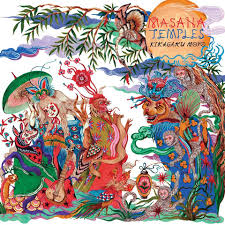
Kikagaku Moyo – Masana Temples (Guruguru Brain)


Here we have a Japanese band featuring an Indian-trained sitar player playing a take on 1970s German kosmische music, with occasional dips into Black Sabbath or Stereolab territory, recorded in Portugal. What could go wrong? Well, lots, actually, but it never does here, on this remarkably inventive and consistently strong album. The second track, “Dripping Sun,” features a gentle bossa nova vocal section in the middle, bookended by the kind of psychedelic jazz funk from Thailand now championed by Texan band Khurangbin. In other words, there’s a lot going on here. And it works. This may be the best album I missed in 2018. (Jan. 11)


Stream: "Dripping Sun," "Fluffy Kosmisch," "Majupose"


Salomé Leclerc – Les choses extérieures (Audiogramme)

This haunting Quebec singer makes music for Montreal winters, sung with an intimacy that she learned—at music school? In 2009, the budding songwriter was studying at École nationale de la chanson, a college in the Eastern Townships, where one of her instructors told her never to think about writing or singing for groups of people, but only one person in your life. Leclerc writes and records this way, and even if a language barrier separates her from English listeners, the effect is still evident. Leclerc would be compelling even if she was just mumbling into her microphone alone, which she does occasionally, but her arrangements draw from trippy, rainy-day art-rock balladry on either side of the English Channel (Radiohead, Charlotte Gainsbourg). Leclerc takes her time between albums; this is her first in four years, and it’s obvious nothing about it was rushed: it sounds like she’s savouring every note. And so will you. (Jan. 4)

Stream: “Dans une larme,” “Nos revolutions,” “Le mois de mai”


Makaya McCraven – Universal Beings (International Anthem)
Kamasi Washington is not the only modern jazz artist bursting out of genre restrictions with sprawling double albums. Makaya McCraven is a Chicago drummer who thrives on spontaneous collaboration; his albums are recorded live and then edited into compositions. This gets him comparisons to what Teo Macero did with Miles Davis, but McCraven is nowhere near as dense. He is from a hip-hop generation, so everything remains sparse and beat-friendly. It’s not a coincidence that this month he’s performing J Dilla’s “Donuts” album live, just for kicks.
“Universal Beings” was recorded in four cities (Chicago, New York, L.A., London), with four ensembles, comprising four different sides of a vinyl album.

The good news about the opening New York suite is that it features Brandee Younger, a jazz harpist in the tradition of Dorothy Ashbee. The bad news is that it features a vibraphonist, an instrument that sends me directly to the skip button in any jazz context (apologies to the great Lionel Hampton). The amazing news about the Chicago session is that it features London saxophonist Shabaka Hutchings from Sons of Kemet, who released one of the greatest records of 2018, jazz or otherwise. The London session is by far the funkiest, and the L.A. session features former Tortoise guitarist Jeff Parker.
With plenty of entry points, there is no reason jazz-phobic listeners shouldn’t find something to love here. (Jan. 11)

Stream: "Holy Lands," "Inner Flight," "Mantra"


Orquesta Akokán – s/t (Daptone)

The Daptone label has built a reputation on new music in old styles recorded in a decidedly old-school fashion. It started with the likes of Sharon Jones and Charles Bradley’s brand of ’60s R&B, Antibalas’s take on ’70s Afrobeat, and branched out into gospel, reggae and garage rock.
Now comes Daptone’s foray into Cuban music, an updated take on the Buena Vista Social Club, in which a couple of Americans head to the Caribbean island and make a collaborative album with a bunch of old-timers. The Americans in question are pianist Michael Eckroth and producer Jacob Plasse; the latter runs a Daptone-ish label himself, Chulo, committed to reviving the sound of the mighty Fania in the ’70s, the golden age of New York salsa. The Cubans include members of Los Van Van and Irakere; the singer is José “Pepito” Gómez, now a NYC resident who has fronted several key Cuban bands in his homeland, including Habana Ensemble and Los Que Son Son.
Naturally, the performances are lively, the grooves are solid, and the arrangements are light and punchy. Most important, as Daptone fans would expect, the production is deep and rich, devoid of the trebly sheen that much Latin jazz (and every other genre) has today, bringing you right into the room where the music was recorded live. (Jan. 4)
Stream: “Mambo Rapidito,” “Un Tabaco para Elegua,” “Cuidado Con el Tumbador”

The Other Years – s/t (No Quarter)

The Other Years are a duo from Louisville, Kentucky. One of them played violin in a heavy metal band and spent months learning how to make birch syrup in Talkeetna, Alaska. The other played sad-sack solo piano songs for a while and works on a farm. They first met as roommates in first-year residence at university, jamming in the dorm room, but didn’t start this band until ten years later.


It’s a good thing they did. Anna Krippenstapel’s often-droning violin and Heather Summers’s banjo (they both play acoustic guitar as well) are all that’s needed to accompany their eerie Appalachian harmonies, singing original new songs that sound centuries old. They’ve played with Louisville weird-folk legends Freakwater and Will “Bonnie Prince Billy” Oldham, and are natural inheritors to that legacy. (Feb. 1)

Stream: "Red-Tailed Hawk," "Wildgeeses," "Talkeetna”


Lou Phelps – 002 / Love Me (Last Gang)
Now that trap seems to have entirely taken over hip-hop, the genre’s roots in funk music are getting lost. Montreal rapper Lou Phelps is not immune, but his best moments here are when he breaks out the roller-skate jams. It makes sense that he’s the brother of beatmaster Kaytranada, whose beats draw largely from boogie and house music. Phelps comes out swinging on his second record, bucking current trends and staking his own claim, even when he’s veering closer to the mainstream (“Squeeze,” “Want To”). But it’s telling that the surefire bounce of party jam “Tasty” hasn’t even been released as a single yet. (Jan. 25)

Stream: “Fun N Games,” “Come Inside” feat. Kaytranada and Jazz Cartier, “Tasty” feat. Pony


The Philosopher Kings – Return of the Kings (eOne)
One of the most commercially successful bands of the ’90s, who also spawned the equally successful Prozzak and helped launch the careers of Nelly Furtado and K’naan, has reunited after a 10-year hiatus. (Full points for the Tolkien wordplay in the title.) Little has changed: technically proficient smooth pop designed for doctors’ waiting rooms never goes out of style. “You’re still the one I want,” goes the chorus of their 2017 comeback single, and they’re hoping fans still remember and feel the same. Just in case they don’t, they take a shortcut to success: covering a beloved song from 20 years ago. In the ’90s, this paid off when they scored a hit with a cover of Godley & Crème’s “Cry.” This time, they take on the Cranberries’ “Linger,” and are likely to score the same result. The original material is up to the same standard, melodically and musically. Lyrically, it sounds like singer Gerald Eaton is trying a bit too hard to maintain a long-term relationship in midlife, with songs titled “Still the One,” “Good Life,” “Wild For You,” “Time For Us,” and a song that goes, “I know you think your toes are a little bit too small… I only see the best in you.” This band is coming up on the 25th anniversary of their debut album, and they’ve made a new record that will probably soundtrack several couples’ 25th anniversary parties as well. (Dec. 14)
Stream: “Heavy Hearts,” “Time For Us,” “Castles in the Sand”

Jessie Reyez – Being Human in Public EP (Universal)
Jessie Reyez cannot be contained. Not by Toronto, not by Canada, not by genre of music. Her talent is massive—so much so that on her limited recorded output so far, even her voice sounds just short of fully exploding, like it’s too big for any recording studio. There was little she held back on her 2017 breakthrough EP Kiddo, which featured the hit R&B ballad “Figures,” the explosive “Blue Ribbon,” and the #MeToo whistleblower “Gatekeeper.”
For its follow-up, however, Reyez seems to be purposely lowering expectations, both musically and lyrically. If this were her debut, it would be solid and promising. But because it comes on the heels of such an incendiary arrival, which blew away not just fans her own age but industry titans (she guests on the new Eminem album, and apparently Steven Tyler was dumbstruck after seeing her perform), the aptly titled “Being Human in Public” sounds like Reyez letting her legendary mane of hair down and killing some time before she drops a real bomb on the music industry as a whole. (Dec. 7)
Stream: “F--k Being Friends,” “Sola,” “Dear Yessie”

Robyn – Honey (Konichiwa/Universal)

The first proper full-length album from Robyn in—eight years? Really?
In that time, the songs from 2010’s Body Talk got better and better with age, and two EPs—one with Royksopp, one with La Bagatelle Magique, both of which were solid and kept her touring and in the public eye. Even though singles rule the industry these days, the fact that Robyn had yet to follow up Body Talk with a full-length album was making fans hungry and insatiable.
Released in late October, Honey met with universal adoration and instantly vaulted to the top of year-end lists. This critic—and big Robyn fan—might be alone in thinking the album is just… okay. She’s consciously dialled back the dancefloor fever: Honey is more mid-tempo and contemplative, but with all the strong melodies and Europop sheen Robyn fans expect. Honey is underwhelming not because of the tempos—the languid pace of tracks like “Baby Forgive Me” are lovely—but because at least half the songs here seem like packing peanuts, separating the big pop singles in the overall package. Tracks like “Beach2k20” and “Send to Robin Immediately” wouldn’t even normally make the cut on a Robyn EP, never mind a full album.
No matter. Singles do rule. So stream at least the three songs below into your playlists. (Dec. 14)
Stream: “Missing U,” “Honey,” “Ever Again”

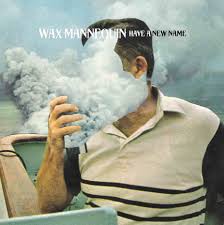
Wax Mannequin – Have a New Name (Coax)


I should know this Hamilton artist by now: he’s been around since 2000, this is his seventh album, and on top of that, we have many mutual musical friends who have always raved about him to me. Yet for whatever reason, I’ve missed the Wax Mannequin boat. Now, with his first release for Rae Spoon’s Calgary-based Coax Records, it’s time to climb on board.

The man they call Wax is a sardonic folk singer who veers into cabaret, not unlike other national treasures like Geoff Berner, Ben Caplan, Martin Tielli’s solo work, or older legends like Loudon Wainwright III, maybe even Frank Black. One minute he’s singing the most astute summation of white privilege ever put to a snappy pop song (“Someone Fixed the Game”), and the next he’s singing a child-like ode to the sport of basketball (“It’s a good game!” he enthuses). There are lovely string arrangements, synths, and full-on choirs augmenting but never overwhelming his acoustic guitar. People call him “quirky,” which is a kiss of death, except that there’s nothing unusual about his voice, his songs, or his arrangements—unless you expect every musician from Hamilton to sound like the Arkells.
I’d never opened myself up to the charms of Wax Mannequin before. But as the man himself says, “People Can Change.” (Jan. 11)
Stream: “Someone Fixed the Game,” “Boring,” “People Can Change”