Showing posts with label Lady Gaga. Show all posts

Tuesday, November 29, 2016

November '16 reviews

Highly recommended this month: A Tribe Called Quest, Hidden Cameras, Lizzo

Well worth your while: Cosmic Range, Alicia Keys, Agnes Obel


As always, these reviews ran in the Waterloo Record.


Streaming is great for sample purposes, but please find a way to directly support your favourite artists financially.


A Tribe Called Quest – We Got It From Here … Thank You 4 Your Service (Sony)


A Tribe Called Quest have been teasing out promises of new music since they split up almost two decades ago. Throughout the 2000s, there were a series of reunion shows, and little new music from any of the three principals; even bandleader Q-Tip only released three albums in those 18 years.


Almost exactly a year ago, on a night that turned out to be the most horrific in music history with an attack on a Paris nightclub, Tribe performed on the Tonight Show to promote a reissue of their 1990 debut. For whatever reason—perhaps because rapper Phife Dawg’s diabetes was taking what would soon be a fatal toll—they decided to finally re-enter the studio. Phife would be dead four months later. This album came out days after the election of Donald Trump.


One of the first things you hear is sampled voice imploring, “It’s coming down hard: we got to get our s--t together!” One of the strongest tracks—indeed, one of the best singles of the year—is “We the People,” a screed against the polarized politics of the election year, particularly, and explicitly, the xenophobia that propelled a whitelash all the way to the presidency.


For all those reasons and more, this is not the happy-go-lucky Tribe of past glories. “F--k you and who you think I should be,” raps Phife; he’s addressing the power structure, not the listener, but the sentiment might as well apply to anyone expecting a nostalgia party or some kind of balm to relieve modern-day anxiety.


Musically, it’s a perfect update of their vintage sound: nothing here is a throwback, but nor do they try to fit into the latest fashions. It’s everything a comeback should be. There’s a heavy Caribbean influence throughout, including some straight-up reggae tracks. The slight touches of jazz are still there. The programming is decidedly modern. Jack White is one of the guests, alongside Busta Rhymes, Kendrick Lamar, Anderson.Paak, Talib Kweli and Andre 3000. In an entirely unexpected bit of stunt casting, Elton John shows up to sing the outro on a track that samples “Bennie and the Jets.” MC Consequence is practically a fourth member. Both Tip and Phife sound entirely on top of their game, the potency of their collective flow hasn’t diminished in the slightest. It’s telling that the only younger MCs to even be invited to this party are Lamar and Paak; few others of the next generation could attempt to hold a candle to these old-school masters.


This victory lap is bittersweet, of course. It’s quite consciously a farewell celebration to Phife Dawg. “Lost Somebody” is where Tip and Jarobi get downright mushy, and closing track “The Donald” (still trying to parse that title) is one big shout-out to the man they knew as the “five-foot assassin,” “the Trini-gladiator,” “the funky diabetic.”


A Tribe Called Quest is back. A Tribe Called Quest is finished. Thank You 4 Your Service. (Nov. 17)


Stream: “We the People,” “The Space Program,” “Black Spasmodic”


Cosmic Range – New Latitudes (Idée Fixe)


This was my most pleasant surprise of the Hillside Festival this past summer. Taking the stage were musicians I recognized from Bruce Peninsula, Diana, Slim Twig, Jennifer Castle’s band, and—wait, was that the original sax player from Martha and the Muffins? Why, yes it was.


Some semi-legendary starship cowboy Matthew “Doc” Dunn is the ringleader of this motely crew, who sound like Yo La Tengo covering Miles Davis’s Bitches Brew: a droning, wigged-out psychedelic trip driven by distorted organ and plenty of percussion. There are more delicate diversions as well, which bookend the album: the lovely ambience of “Morning, Ontario,” and the less enthralling eight-minute new-age piano of “Look at What Our Love Has Done.” In between, however, the grooves are heavy and haunting, the cacophony carefully conducted.


Bands like this are often a lot of fun on stage and a holy terror in the recording studio: one of the many wonders of New Latitudes is that it sounds fantastic—mixing engineer Jeff McMurrich is the real star of this project. (Nov. 10)


Stream: “Morning, Ontario,” “Love II,” “Kowboy”


Lori Cullen – Sexsmith Swinghammer Songs (True North)


Fans of Ron Sexsmith and Kurt Swinghammer, his long-time friend and frequent guitarist—the two once covered each other’s songs in a project called Sexhammer—will know that they share a love of the songwriting master of Burt Bacharach and the bossa nova pioneer Antônio Carlos Jobim. Sexsmith is also a big fan of Swinghammer’s wife, Lori Cullen, who has six previous albums to her name. Ergo, Sexhammer reunited to write a full album for Cullen, one that’s a full-on tribute to the breezy, sophisticated pop of their heroes. The instrumentation is perfect: plenty of nylon guitar, trombones, Rhodes piano, the most featherweight percussion, and the occasional clarinet or oboe to further remove it from any modern pop norms. Mia Sheard and Jennifer Foster chime in on backing vocals. It adds up to a series of love letters between incredibly accomplished musicians: both between friends and between generations. (Nov. 24)


Stream: “Face of Emily,” “New Love,” “Then There Were Three”


Hidden Cameras – Home on Native Land (Evil Evil/Outside)


Joel Gibb has had this on the backburner for almost 10 years, but Home on Native Land is far from a procrastination project; it’s more than worth the wait. It’s also not a coincidence that he’s finally releasing it immediately before Canada’s sesquicentennial year: the pun in the title is obvious, and for the album’s design he uses the beautiful new typeface called, yes, Canada 150, commissioned by the federal government for the upcoming national celebration.


Gibb’s nasal voice is well-suited to country and western, his skill at squeezing the most out of three- and four-chord songs perfectly in line with the genre. There are a couple of covers here, including a revelatory take on Percy Sledge’s “Dark End of the Street,” which illuminates the song’s sympathies with the love that dared not speak its name during more closeted times: “Hiding in shadows where we don't belong / Living in darkness, to hide alone / You and me, at the dark end of the street / I know a time has gonna take its toll / We have to pay for the love we stole / It's a sin and we know it's wrong / Oh, our love keeps going on strong.” It’s a song Gibb was born to sing. More important, it’s Gibb’s originals that truly shine: “Counting Stars” and “The Great Reward” deserve to be standards.


It may well be a cliché that every indie rocker eventually makes a country record, but few are likely to do it better than Joel Gibb. (Nov. 24)


Stream: “The Day I Left Home,” “Counting Stars,” “The Great Reward”


Jim James – Eternally Even (ATO)


The second solo album by the frontman of My Morning Jacket is another excuse for him to dive deep into his synth collection, sit down at his electric piano and jam over some sparse R&B grooves. The sound is luxurious and trippy, but the songs seem like afterthoughts and there’s little of the magic that James conjures when he’s leading a full band. His first album was delicate and lovely, like Bill Withers collaborating with the Flaming Lips; this time it’s more like Isaac Hayes being hijacked by Tangerine Dream. Hardcore fans of James won’t be disappointed; others should take this as a welcome reminder how good that overlooked first solo record was. (Nov. 10)


Stream: "Same Old Lie," “In the Moment,” “Hide in Plain Sight”


Alicia Keys – Here (Sony)


First Beyoncé, then Lady Gaga, now Alicia Keys: the biggest female pop and R&B artists have reinvented themselves in 2016, abandoning the maximalist demands of modern production, stripping down their sound and sounding better than they ever have.


Keys is still working with longtime associates Swizz Beatz, Mark Batson and Harold Lilly, but this time they turn their ear to early ’90s hip-hop beats, Roy Ayers samples (“She Don’t Really Care”), gospel blues (“Pawn it All”), Brazilian electro-pop (“In Common”), Lauryn Hill-style showdowns (“The Gospel”), Portishead-via-Issac Hayes balladry (“Illusion of Bliss”) and acoustic country music (“Kill Your Mama”). Even her incredibly earnest world-peace anthem (“Holy War”) is a winner; no doubt Bono is scrambling to figure out how to cover it with U2 ASAP. Is there anything she can’t do? Well, first single “Blended Family,” on the other hand, sounds like a treacly addendum to a TV movie soundtrack.


Alicia Keys has sold millions of records so far in her career; she didn’t need to change anything up to prove anything to anyone. But this finds her fulfilling the massive potential she’s shown since day one; this is the album she’s always had in her. (Nov. 10)


Stream: “Pawn It All,” “The Gospel,” “She Don’t Really Care”


Lady Gaga – Joanne (Universal)


There was always a lot more to Gaga than tabloid headlines and activism: her songs, her voice and her piano playing, for starters. Here, those three elements are at the forefront. Gone are the EDM trappings, the half-baked ideas fleshed out into album filler between singles, the cloying need to be everything to everyone. If 2011’s overproduced Born This Way started to fizzle her early promise, 2013’s Artpop just plain flopped and her 2014 album of duets with Tony Bennett was merely a distraction, Joanne marks a full-on comeback for one of the most exciting performers to emerge in the last decade.


Yes, there are more ballads, some with clear nods to Nashville, and one dedicated to Black Lives Mater. There are classic Gaga inspirationals, like “Diamond Heart” and the ’50s-via-’70s “Come to Mama.” There are obvious bids for pop radio (“John Wayne,” “Dancin’ in Circles”) and the dance floor (“A-YO,” “Perfect Illusion”). There are contributions from Mark Ronson, Queens of the Stone Age’s Josh Homme, Father John Misty, Beck, Tame Impala’s Kevin Parker and Haim, as well as a frankly forgettable duet with Florence Welch called “Hey Girl”—a lost opportunity to team up with Ryan Gosling, if nothing else.


Rare is the superstar pop record this varied and this satisfying. For those who’ve been waiting for Gaga to make a record like this, it’s as thirst-quenching as Beyoncé’s Lemonade. (Nov. 3)


Stream: “Diamond Heart,” “Million Reasons,” “Sinner’s Prayer”


Lizzo – Coconut Oil (Atlantic)


"I don't need a crown to tell me I'm a queen." No doubt. Minnesota’s Lizzo makes her major-label debut with a flawless EP that announces her Queen Latifah/Lauryn Hill-level talent to the world: after two promising but uneven independent releases, a collaboration with Prince, a tour with Sleater-Kinney and a new job as an MTV host, she comes out swinging here as an unstoppable force not only as an MC, but as a powerhouse R&B singer—and, um, a flautist (that’s her playing the solo on the title track). With producer Ricky Reed (Pitbull, Meghan Trainor, Twenty-One Pilots), her stripped-down beats owe debts to New Orleans and dancehall, with the Latin-tinged opener “Worship” and first single “Phone” leaping out of the speakers. Body positivity is at the core of her message, hence the title track and “Good as Hell.” Best of all, she leaves us wanting more. A whole lot more. (Nov. 3)


Lizzo plays the Velvet Underground in Toronto on Dec. 8.


Stream: “Worship,” “Phone,” “Good as Hell”


Donny McCaslin – Beyond Now (Motéma)
Lazarus Original Cast Recording – Various Artists (Sony)


This year started with the death of David Bowie, and it ends with two direct reflections on his departure and his final creative endeavours.


The more successful of the two is from saxophonist McCaslin, whose band Bowie employed to create his final album, Blackstar. They are an enormous reason for its artistic triumph, bringing an energy not heard in his recordings for decades. On their own, they do their own thing—which makes it all the more remarkable how they managed to shoehorn themselves into Bowie’s songs in the first place. There are two direct nods to Bowie here: a cover of “A Small Plot of Land,” a forgettable later-period Bowie song that doesn’t get much better here, and a meditation on “Warszawa” from 1977’s experimental album Low. Both are curiosities at best, better employed as a gateway drug for Bowie fans to discover what McCaslin and band are capable of on their own compositions.


The cast recording for Lazarus, the off-Broadway production that was an odd jukebox musical of sorts produced with Bowie’s full participation, is a different beast. Recorded the day after he died, the cast runs through both popular (“Life on Mars”) and unpopular (“It’s No Game”) Bowie tracks, alternately murdering them (“This is Not America”) or reinventing them (“The Man Who Sold the World”) and, extremely rarely, improving them (“Absolute Beginners,” “Where Are We Now?”). The three new, previously unheard Bowie tracks are—okay. The bigger revelation, for those who didn’t already know, is that actor Michael C. Hall (Dexter, Six Feet Under) is a fantastic singer; I’d much rather hear him do his own Bowie tribute, independent of this weird stage production. (Nov. 3)


Stream Donny McCaslin: “Shake Loose,” “Bright Abyss,” “Warszawa”
Stream Lazarus: “Absolute Beginners,” “Where Are We Now?” “Valentine’s Day”
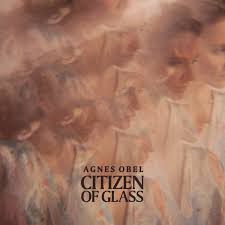


Agnes Obel – Citizen of Glass (Play it Again Sam)


As the weeks tick by on 2016, music lovers no doubt dread the news of each passing day: what beloved musician is going to die next? (Last week it was Sharon Jones.) How much more grief can we handle?


Agnes Obel is a Danish musician living in Berlin, who was raised by two accomplished musicians who buried their bigger dreams to take straight jobs. Her father died while she was touring her second album, 2013’s Aventine, and it was a huge blow. She cancelled a few shows but had to return to the road immediately. “After he died, I thought so much about his whole life, knowing how my life is now,” she told the Guardian newspaper. “He should have been a musician and I’m very aware I have something my father didn’t.”


It sounds like that stock-taking channelled directly into her work, because Citizen of Glass, her third album, is easily her best to date. It’s also heavy with grief: plaintive minor keys, her eerie string arrangements are filled with swoops and swoons, her voice increasingly comfortable in its lower range—in one case, artificially so; on “Familiar,” she duets with a pitch-shifted, masculine version of herself (not unlike Fever Ray of The Knife). Obel has a decidedly delicate touch as a pianist; here, she also utilizes harpsichord, spinet, celeste and a 1920s German synth called a Trautonium.


Citizen of Glass is for those long, dark winter nights ahead, during which we’ll reflect on all that we’ve lost. And in this case, what we’ve gained. (Nov. 24)


Stream: “Stretch Your Eyes,” “Familiar,” “It’s Happening Again”


Peppermoth – Now You Hear Me (independent)


How do you review ambient music? What makes one relaxation tape infinitely better than any other? Isn’t this music more of a function than art? Well, maybe, but it’s certainly easy to tell a good Saturday-night-beer-bash anthem from a piss-poor one, and you can easily delineate a quality Sunday morning meditation soundtrack from something that just sounds like a tap running in another room.


Peppermoth is the ambient project of Eccodek’s Andrew MacPherson, joined on occasion here by bassist Jeff Bird (Cowboy Junkies), trumpeter (and arts therapist) Gary Diggins, and guitar wizard Kevin Breit. It’s more than obvious that he’s spent time studying early Eno records—particularly the ones that featured trumpeter Jon Hassell—as well as the moodier side of the 4AD catalogue. But there’s nothing about Peppermoth that can be reduced to mere homage. Unlike a lot of ambient music, there is clear intention to every instrumental choice, every carefully placed note, every sonic layer that chooses to reveal itself at any given time. For a guy whose main band is about seeing what corners of the world he can bring into his sonic stew, this is a project where he peels back as much as he possibly can, how to make the most out of the most minimum of motifs—and he most certainly does. (Nov. 10)


Stream: “Dive,” “Ghosting,” “Moon Walk”


Robbie Robertson – Testimony (Universal)


The guitarist and principal songwriter with The Band has a new memoir out, you don’t need to be a fan of The Band or Bob Dylan or anyone else in the cast of dozens to appreciate a good yarn. But it sure helps to have an audio companion like this.


Much of this fans will have heard before: we don’t need to hear “The Weight” ever again, but by the same token this collection would be incomplete without it. No, the draw here is two tracks by Levon and the Hawks, recorded after Robertson and his bandmates quit as Ronnie Hawkins’s sidemen and before they hooked up with Bob Dylan. Here we finally hear the raw power of what was reputed to be the hottest live band on the Toronto scene of the mid-’60s—and the rumours are true. There are also live documents from their time with Bob Dylan, a track from The Basement Tapes, and other odds and ends.


There’s really no reason for any of Robertson’s post-Band solo material to be on here, as his book concludes with The Last Waltz. Apparently he’s writing a second volume; it’s safe to say there won’t be as much of an appetite for an audio companion to that one. (Nov. 17)


Stream: “He Don’t Love You” by Levon and the Hawks, “Honky Tonky” by Levon and the Hawks, “Come Love” by Ronnie Hawkins and the Hawks

Tuesday, November 26, 2013

November '13 reviews


The following reviews appeared in the Waterloo Record and the Guelph Mercury.

  
Highly recommended this month: Pusha T, the Strumbellas


Recommended: M.I.A., Deep Dark Woods, Red Hot + Fela, Omar Souleyman


Cowboy Junkies and Various Artists - The Kennedy Suite (Latent)


Michael Timmins of the Cowboy Junkies took the 50th anniversary of John Kennedy’s assassination as reason to complete a long-gestating project he’d been producing, featuring original songs by an unknown Ontario schoolteacher, Scott Garbe, obsessed with the ripples the event sent through North American culture.


Timmins had no trouble collecting an impressive circle of friends to give voices to the various characters in the song cycle. That includes generations of incredible Ontario artists, from veterans of the ’70s Toronto punk scene (who now perform as The Screwed) to country icons the Good Family to the Skydiggers to the Rheostatics to Hawkley Workman to Sarah Harmer to Jason Collett to Doug Paisley to newcomers like Jessy Bell Smith and Harlan Pepper. The backing band on most tracks is the Cowboy Junkies, minus singer Margo Timmins (who of course sings one track).


So how did it all go horribly wrong? The songs obviously captivated the Skydiggers’ Andy Maize, who gave a tape of Garbe’s demos to Timmins over a decade ago, and unless there was some serious extortion going on, clearly all the artists involved signed on willingly. When so few of them are able to breathe any life into the material, despite the calibre of talent involved, the problem has to be at the source.


Which is a shame, because there are a few gems, including the previously released “The Truth About Us” (found on the Skydiggers’ 1997 album Desmond’s Hip City) and “Parkland” (found on Lee Harvey Osmond’s 2009 album A Quiet Evil). It’s a joy to hear the Rheostatics’ Martin Tielli and Dave Clark reunite and play off each other on “Slipstream.” Outside of that, only Sarah Harmer and Reid Jamieson manage to make a song sound better than it is. 


The Kennedy Suite could have been a fascinating project; indeed, the elaborate CD packaging alone shows how much care went into the project. Let’s hope the same cast finds something else to rally around. (Nov. 21)


Download: Sarah Harmer – “White Man in Decline,” Martin Tielli and Dave Clark – “Slipstream,” Reid Jamieson – “Take Heart”


Deep Dark Woods – Jubilee (Six Shooter)


With the notable exception of the Sadies and Lee Harvey Osmond, most Canadian roots music is too safe and squeaky clean. Thank God for the weirdoes, like Saskatoon’s Deep Dark Woods, who specialize in organ-drenched, spooky and psychedelic minor-key country songs—the kind Neil Young and Greg Keelor are so good at yet rarely indulge in anymore. This, the band’s sixth album, was recorded in a Rocky Mountain cabin in Alberta. It’s helmed by L.A. producer Jonathan Wilson (Father John Misty, Bonnie Prince Billy, Roy Harper), who recorded the powerful live band direct to tape—though the group’s superstar keyboardist Geoff Hilhorst surely layered his organs, pianos and oddball synths with a few different takes.


Much of the album is morose and set to the same lurching tempo, but that all works in Deep Dark Woods’s favour. This is not a band of showboating singers or instrumentalists. Every member digs deep into the grooves, adding layers of haunting textures and backing vocals to support lead singer Ryan Boldt’s fragile lead.


I’d heard some of this band’s previous records, which never left much of an impression. Jubilee, on the other hand, is immediately striking and sounds like an instant late-night classic. This band’s years of hard work are finally paying off; you can hear it in every note. (Nov. 28)


Download: “Miles and Miles,” “18th of December,” “East St. Louis”


The Hunger Games: Catching Fire – Original Soundtrack (Universal)


We’re not in District 12 anymore, Toto. The soundtrack to the first Hunger Games film was a largely acoustic affair, reflecting the rural roots of protagonist Katniss Everdeen; the sequel is considerably slicker. T-Bone Burnett is not involved. Neither, for that matter, is Arcade Fire, who nailed the first film’s tone of fascist dread with their two contributions.


Instead, we get a lot of already mopey rockers and R&B stars shoehorning themselves into a Panem state of mind. Few survive. Coldplay display a remarkable sense of subtlety, which in this case means they’re indistinguishable from The National, who also appear; neither band phones it in, though both sound like they’re doing a better than average U2 ballad. Likewise, the Lumineers and Ellie Goulding fare better than expected.


But the meeting of hitmaker Sia with Toronto’s The Weeknd and superstar Diplo is shockingly flat; The Weeknd’s own track is even worse. Likewise, Santigold forsakes her usual firecracker personality and wades through the too-obviously-titled “Shooting Arrows at the Sky.” The album never gets worse, however, than Christina Aguilera singing, “Burn me with fire / drown me in rain”—a lyric the 16-year-old protagonist of the film would never dare write herself.


Perhaps not surprisingly, the only real standout here is 17-year-old Lorde, who covers Tears For Fears’ ’80s staple “Everybody Wants to Rule the World,” reducing it to a death-row dirge and creating something more ominous than ever suggested in the original. It’s note perfect—and, at 2.5 minutes long, never wears out its novelty.


Who wins this round of Hunger Games? The actual teenager, of course. (Nov. 28)


Download: “Lean” – The National, “Everybody Wants to Rule the World” – Lorde, “Mirror” – Ellie Goulding


Lady Gaga - Artpop (Universal)

M.I.A. - Matangi (Universal)


“Pop culture was an art / now art’s in pop culture, in me.” It’s a line from Lady Gaga’s new single, “Applause,” but it could just as well apply to M.I.A. Both ladies revel in visuals, incongruous imagery, provocation and performance art: what they do in the public sphere is as important as their music. But without the music, the rest is empty.


Gaga has sold millions of records; M.I.A. has inspired millions of words from critics trying to make sense of her truly cross-cultural mashups and the political significance—if any—of her wordplay. Until now, Gaga had plenty of ace pop songs to back up the avalanche of media-baiting stunts she delighted in. Meanwhile, M.I.A. was all style and little substance; her visual aesthetic and personality far outshone her lyrics and beats.


That’s all changed.


Gaga has always excelled in maximalist pop anthems, but at least she had the melodies to back it up. Here, she sounds cloying and bored. Even for a performer who always embraced the glitz and absurdity of celebrity culture, tracks like “Jewels and Drugs,” “Swine” and “Fashion” are beyond vacant—Paris Hilton could do better. Meanwhile, her production team steamrolls over everything, making the Black-Eyed Peas sound like sultans of subtlety. The nods to post-Skrillex EDM take her out of respectable discos into low-rent meth parties with tweakers’ anthems (“Jewels and Drugs”). This record sounds too loud even at the lowest volume; it’s compressed to the point where it sounds no better from the worst computer speaker than it does from the best headphones.


“Do you want to see me naked, lover?” she asks, “Do you want to see the girl who lives behind the aura?” Well: tough. Ain’t gonna happen. The most personal Gaga gets is an attempt at a stirring piano ballad, with the unfortunate chorus: “I need you more than dope.” Other than that, she stoops as low as rhyming the planet Uranus with, “Don’t you know my ass is famous?” One can’t help but respond: yes, but for how long?


Meanwhile, reading about M.I.A. was always more fascinating than actually listening to her records. It’s not that she’s matured or mellowed: far from it. She still spits po-mo flow over unconventional beats, and she’s still more likely to turn to Angolan dance music than any trend in American hip-hop, throwing in pan-Asian elements, Caribbean rhythms and Britpop along the way.


Her beats take samples of traditional drumming—from which tradition exactly it’s hard to tell—and sets them to pitched-up synths and clipped vocals, while tempos accelerate and drag and generally lurch in ways unheard of in dance culture. “Come Walk With Me” starts out as a power ballad for the rave generation, before the video-game-Arabic-dancehall-whatever beats kick in and turn the pop melody into a frenetic ADD anthem.


It works. As does everything else here, the first time M.I.A.’s world of sound coalesces into a truly great album that matches her outsized personality. (Nov. 14)


Download Lady Gaga: “Aura,” “Manicure,” “Gypsy”
Download M.I.A.: “Matangi,” “Come Walk With Me,” “Bring the Noize”


Machinedrum - Vapor City (Ninja Tune)


It’s 2013: does anyone listen to ’90s drum’n’bass anymore, never mind make it? Roni Size and Goldie were spotted on (some kind of) comeback trail this summer, so who knows. Yet here is Machinedrum, aka Trevor Stewart, a Brooklynite now living in Berlin who got his big break when hot new hip-hop MC Azealia Banks rapped over a couple of his tracks. On his debut album for venerable beat purveyors Ninja Tune, Vapor City could have rivalled Plug’s Drum N Bass For Papa for the best electronic album of 1997. Coming out in 2013, however, Stewart incorporates elements of the noir-ish corners of dubstep, ala James Blake, and latter-day Ninja Tune heavyweights like Bonobo. There’s no mistaking the retro vibe, and it’s a reminder that not all of the ’90s was terrible. (Nov. 14)


Download: “Gunshotta,” “Don’t 1 2 Lose U,” “U Still Lie”


Sam Phillips – Push Any Button (Littlebox)


Though Phillips has a stellar reputation among those lucky enough to know her music, she’s paid many of her bills in the last decade doing incidental music for two TV series by Amy Sherman-Palladino: Gilmore Girls and the recently cancelled Bunheads. Because I loved both those shows, I felt inundated with Phillips and that that therefore gave me an excuse to ignore her more recent records. Foolish, foolish.


Composing 20-second snippets appears to have honed Phillips’s talent for concision even more: The 10 songs on this, her second self-released record, clock in at under half an hour. Phillips knows how to encapsulate joy, loneliness, disappointment and determination in tiny, perfect songs rich with melody and driven by a rockabilly backbeat with modern production. Phillips is now free of a record contract, free of a TV show, and free to make lovely little records like this whenever she feels like it. Our gain. (Nov. 28)


Download: “When I’m Alone,” “Pretty Time Bomb,” “You Know I Won’t”


Pusha T - My Name is My Name (Universal)


You spent the last month reading about Rob Ford. You might not be in the mood to immerse yourself in an album about the cocaine trade that includes tracks called “No Regrets” and “Nosetalgia.” Or conversely, that might just put you in exactly the right mood to try and make sense of the seamier side of urban life.


Pusha T has pulled this off before, as one half of The Clipse, whose 2006 album Hell Hath No Fury spun harrowing narratives atop incredible beats courtesy of Pharrell Williams’s Neptunes. Now he has a second lease on life courtesy of Kanye West, who brought Pusha T into his G.O.O.D. Music imprint, and provided production on more than half the album. Williams, The-Dream and Swizz Beatz are also on board, as are vocalists Kelly Rowland, Rick Ross, Kendrick Lamar, Future and 2 Chainz. Despite the wealth of talent, My Name is remarkably sparse and lean—the polar opposite of West’s bloated output of late. Pusha T proves to be a better vehicle for Kanye’s beats than West himself.


The big-name backup certainly helps, but Pusha T is the rare MC who can deliver street stories, smarts and charisma in equal doses. You don’t like the guy, but you can’t help but hang on every inflection in his voice: “36 years of doing dirt like it’s Earth Day?” he posits, before exhaling with either self-loathing or mockery of your own disdain: “Gawwwwwwwd.” 


One can engage the endless debate about whether or not Pusha T is glorifying the drug game—or if he’s doing so any more than countless crime shows. Pusha T tackles the subject with menace, neither celebratory nor cautionary and far removed from the undisputed crossover king, Jay-Z. Unlike Jay, Pusha T still sounds hungry, unsatisfied, and restless—and far superior to any other MC who put out an album in 2013. (Nov. 7)


Download: “Numbers on the Boards,” “Let Me Love You,” “Pain”


Red, Hot + Fela – Various Artists (Knitting Factory)


There’s never a shortage of hastily assembled, wishy-washy compilation albums for charitable causes. The Red Hot series, raising money and awareness for HIV/AIDS, has always been the exception to the rule. After releasing at least an album a year for 12 years, the series took a seven-year hiatus after 2002’s incredible tribute to Afrobeat superstar Fela Kuti—perhaps because it was hard to beat. Now a new Red Hot record only surfaces every couple of years, and this Fela-centred follow-up is more than worth the wait.


Only a few African artists participated last time. This time, it’s the Western artists who are in the minority, leaving room for Spoek Mathambo, Canadian expat Zaki Ibrahim, and, well, a lot of artists of whom you and I have never heard. Most of the major starpower, if you will, is consolidated on one track: ?uestlove, TuneYards and Angelique Kido, on an absolutely sizzling version of “Lady.” And My Morning Jacket, joined by TuneYards’ Merrill Garbus and Alabama Shakes’ Brittany Howard, get the longest track, with 11 minutes of “Trouble Sleep Yanga Wake Am.”


The largely unknown cast that fleshes out the lineup draws from Africans living in Germany, Belgium and the U.S., as well as discoveries like the Kenyan group Just a Band and Sierra Leonean hip-hop crew Bajah.


They all excel at the near-impossible task of interpreting Fela, the man who invented Afrobeat, which seems as daunting as covering James Brown. Granted, many versions are far removed from the originals, but the spirit is intact, and what is a tribute project except an excuse to reinvent? (Nov. 7)


Download: “Lady” – TuneYards, ?uestlove, Angelique Kido and Akua Naru; “Sorrow, Tears and Blood” – Kronos Quartet, Kyp Malone, Tunde Adebimpe and Stuart Bogie; “Afrodisco Beat 2013” – Tony Allen, M1 and Baloji


Omar Souleyman – Wenu Wenu (Ribbon)


When Hosni Mubarak was deposed as president of Egypt during the Arab Spring, his immediate successor was Omar Souleyman—not, sadly, the Syrian musician of the same name. One can dream.


Souleyman makes dabke, the kind of pulsing Arabic electro-folk that one imagines blasting from street carts on a dusty market alleyway—which is where the American who first brought his recordings to the West first heard them. Either a dumbek or an electronic facsimile rattles away insistently, creating an ecstatic trance that Bjork (whom Souleyman has remixed) calls “Syrian techno.” Synths set to approximate reedy wind instruments play furious, frenetic melodies that would send Ashley MacIssac spinning, while Souleyman plays the energetic frontman with the command and charisma of a Jamaican dancehall singer.


Before the civil war, this was Syrian wedding music. Now Souleyman lives in exile in Turkey, admitting that he has trouble making joyous music while his country is falling apart.


He made this, his first official Western release, with Kieran Hebden of FourTet, whose dreamy, psychedelic strains of electronica Hebden keeps to himself; he knows better than to mess with Souleyman’s working formula. The only significant change is perhaps more definition of the bass tones, creating greater contrasts with the tinny synths. Souleyman’s vocals also benefit from better microphones; everything no longer sounds overdriven, which may lose some of the appeal for his early adopters, but the improvements are incredibly subtle, and absolutely nothing has been watered down or Westernized. Hebden merely loaned Souleyman’s keyboardist some new synths.


Souleyman may be a man without a country, but the whole world is about to embrace him. (Nov. 7)


Download: “Ya Yumma,” “Nahy,” “Mawal Jamar”


The Strumbellas - We Still Move on Dance Floors (Six Shooter)


The zeitgeist could not be better for the Strumbellas—who, on the surface, are another group of beirdos with acoustic instruments that sound like Elliott Brood mixed with Funeral-era Arcade Fire, tailor-made for the millions of fans that have transformed Mumford and Sons, Edward Sharpe and the Magnetic Zeros, and the Lumineers into platinum acts in the past two years. Indeed, We Still Move on Dance Floors was produced by Ryan Hadlock, the architect of the Lumineers’ massive breakthrough.


Name-dropping might provide context, but the Strumbellas, who hail from Lindsay, Ont., would be a fantastic band regardless of current trends. Singer Simon Ward writes soaring melodies for both campfires and stadiums; his backing band, including violinist Isabel Ritchie, sound like they road-tested this material for a full year before capturing the energy in the studio. Unlike their folkier contemporaries, the Strumbellas are at heart an electric rock band, having more in common with modern classic rockers like Yukon Blonde or Zeus, and the songs would be as powerful no matter what the instrumentation.


Right now the Strumbellas are the kind of band with a weekly residency at Toronto’s tiny Cameron House, with their tour schedule including Irish pubs in Sarnia. Based on this sure-to-be breakthrough album, that’s all about to change very quickly. (Nov. 21)


Download: “Sailing,” “Did I Die?,” “End of an Era”


12 Years a Slave – Various Artists (Sony)


You’ve spent over two hours in a darkened theatre enduring the gripping, powerful and emotionally draining cinematic experience of being trapped in one man’s hell as a slave.


Now: relive the magic with this companion soundtrack album!


(Did Schindler’s List come with an album “inspired by” the film featuring contemporary pop stars?)


John Legend was put in charge of this project, and he’s done a largely tasteful job, maintaining the sombre tone of the film while curating something that, unlike the film, you can handle experiencing more than once. The heavy-handed score by Hans Zimmer is thankfully relegated to a bare minimum, and the solo fiddle tunes are impossible to hear without picturing the tortured expression of Chiwetel Ejiofor being forced to play for his masters. Legend himself shines on two tracks: one an a cappella, one accompanied by just guitar—both rare settings for the normally slick R&B singer. Bluesman Gary Clark Jr., Alabama Shakes and African-American opera singer David Hughey provide solid era-appropriate material, while Alicia Keys panders with a limp modern track, and Chris Cornell—wait a minute, what the hell is Chris Cornell doing here?


The film is a stunning, unforgettable work of art; the fact that the largely unrelated “soundtrack,” which on the surface seems like a quick cash-in, manages to make an impact of its own is a minor triumph. (Nov. 21)


Download: John Legend feat. Fink – “Move,” Alabama Shakes – “Driva Man,” David Hughey and Roosevelt Credit – “My Lord Sunshine (Sunrise)”