Showing posts with label Polaris 2018. Show all posts

Thursday, September 13, 2018

Polaris Music Prize, day 4: Partner, Snotty Nose Rez Kids


Day four of my annual five-day Polaris preview, examining two shortlisters and two absentees a day:


Partner – In Search of Lost Time (You’ve Changed)


The album:


The first song on this Weezer-derived ’90s homage opens with a line about grocery shopping after doing 13 bong hits. Which, even for this here Big Lebowski fan, is a good enough reason to stop listening right away. That’s even before the interstitial skits show up, a relic of ’90s hip-hop for which absolutely nobody laments.

But that’s just me.

This album is here for a reason: people love it. Specifically, people younger than me love it—people who were born in the ’90s or shortly before. It's not like this is a terrible band or a terrible record—far from it. Whereas the likes of me never need to hear another album like this in my life, it does sound fresh for the legalization generation (Rock doesn’t have to be deathly serious! Real live rock bands are exciting! Dual-guitar leads are corny but fun!). It's been suggested to me that because Partner is fronted by two queer lyricists who also shred on guitar goes a long way for the argument that this is much more than a retro rehash. But I’ll just say this: thank God that the almighty Courtney Barnett exists, and that she didn’t decide on her career path after getting too baked listening to Barenaked Ladies. (Pound of salt: I say this as someone who has generational, geographical and social affection for Barenaked Ladies.)

The chances:

Slim, and not just because I’m a grumpy grampa. It’s just that I’d be downright shocked if any traditional rock record ever won the Polaris again (see also: Alvvays). It’s just so… ’90s. Note: if either this or Alvvays or Jeremy Dutcher wins, it will mark the first time a Maritime artist takes the Polaris.


Snotty Nose Rez Kids – The Average Savage (independent)

The album:

It’s safe to say this one surprised a lot of people by making the shortlist. But that’s only because of its obscurity; it more than deserves to be here. Audacious, modern, funny, explosively political—this is not music for reconciliation, it’s music for confrontation, and it’s stronger for it. It’s also about a lot more than just the lyrics: these MCs have great flow and commanding voices, and the music underneath them overshadows anything coming out of the moroseness of the so-called Toronto sound.

There’s a lot more where it came from: It’s the second of two records they released in 2017 (this came out last September), with a third due in the fall of 2018.

Minor point: I keep hearing the chorus of the track “Savages” as “Sammiches.” Am I the only one? Wait, don’t answer that. I’m probably just hungry.

My July 21 review for the Waterloo Record:

Hip-hop has been popular in Indigenous communities for the past 30 years; just like blues music before it, songs sprung from African-American oppression resonate clearly in persecuted communities here. Until very recently, of course, Indigenous music in general flew under the mainstream radar, and SNRK are the first hip-hop act to ride this new wave.

They’re able to do so for the most obvious reason: they’ve got serious skills, both as MCs and as producers. Rappers Yung Trybez and Young D have both chemistry and charisma, while the beats underneath them draw from Dan the Automator’s work in the early 2000s (Gorillaz, Del the Funkee Homosapien), Kanye West, as well as modern trap. 
Other than those objective strengths, it’s the fiery politics here that set this apart from all other rap in Canada in 2018. The SNRK do not mince words: this is a voice of Indigenous resistance. If Tanya Tagaq communicates non-verbally, and A Tribe Called Red is an instrumental act, and Jeremy Dutcher sings in a language only 100 people still speak, then SNRK speak their truth in plain English, and demand that their country pay attention: “Until we cut all the bullshit there will always be three K’s in KKKanada.”  There’s nothing odd about this group’s sudden arrival in the national musical conversation. What’s odd is that they’re the only rap group in 2018 who not only dare to include skits (there are six of them here), but they actually work.


The chances:

This seems crazy, but these guys could actually win this thing—despite the fact that they were completely unknown outside Indigenous communities a mere four months ago. Again, as with Hubert Lenoir, because this record is so fresh in jurors’ minds—I doubt that anyone who didn’t vote for either spent much time with either record before the shortlist—it might trump familiar sounds in the jury room. And if the francophone Lenoir is an appealing underdog, how about a fiery hip-hop act from Kitimat, B.C.?


The shoulda, woulda, coulda:

Zaki Ibrahim – The Secret Life of Plants (independent)

The album:

From my Feb. 2 Waterloo Record column:

Zaki Ibrahim is in no hurry. Totally independent, she doesn’t owe anybody anything, and so her pursuit of her art has taken a long and luxurious path, resulting in a new album that rewards the listener who lets it marinate. The Nanaimo-born singer built some buzz in Toronto 10 years ago, then relocated to her father’s homeland of South Africa, where she made 2012’s Every Opposite—an album that landed on the Polaris Music Prize shortlist with no label, no publicist, nothing but a defining statement that placed her at the forefront of electronic R&B, a sound she started calling “sci-fi soul.”
After taking some downtime during which she lost her father and gained a son, Ibrahim slowly pieced together The Secret Life of Planets using plenty of analog equipment. As a result, her record doesn’t fall easily into any patterns or predictable sounds, other than her naturally alluring and commanding voice, which has the carefully controlled skill of a jazz stylist. Her writing is equally open-ended, borrowing from smooth R&B, avant-garde electronics, house music, and sounds she absorbed during her time in Africa; it’s not a combination that delivers immediate pop thrills, but the layers here are what pull the listener back again and again. 
Even in a genre in which the most progressive pop music is being made right now, Ibrahim’s unique approach sets her far apart.


Why it didn’t shortlist:

No idea, but I’d say it was probably close—there is a lot of love for this record. My only guess is that it split votes with Bonjay, Allie and Charlotte Day Wilson. There’s also the fact that Ibrahim didn’t do a lot of promo upon the album’s release, outside of a CBC session and one gig in Toronto. (Her first-ever Western Canadian tour kicks off the day after Polaris; dates here.) But none of that stopped 2012’s Every Opposite from being propelled onto the shortlist while Ibrahim lived in South Africa, with no label or publicist working her record. No matter: shortlist or not, this album has definitely found the right ears. Be sure to read Anupa Mistry’s excellent review in Pitchfork.


Terra Lightfoot – New Mistakes (Sonic Unyon)

The album:

I love this record. LOVE this record. I’m going to be driving around Canada for much of October, and I can’t wait to blast this from my rental car across the Prairies (along with the Dennis Ellsworth album I talked about yesterday).

What’s not to love? Terra Lightfoot, she of the killer guitar chops and soaring androgynous voice. Terra Lightfoot, the songwriter who captures tiny perfect distillations of falling in and out of love, and writes character sketches on par with Lucinda Williams and John Prine. Terra Lightfoot, the band leader whose musicians know when to rock out like a fuzzed-up ZZ Top and when to play with the sensitivity of the gentlest Nashville studio pro. Dig “Pinball King,” obviously set at Ottawa’s House of Targ, for a rollicking rocker. Weep along with “Norma Gale,” about the trials of a single mom from Toronto who made her way to Nashville in the ’70s. Rock along to the Springsteenian song that even features a Jake Clemons sax solo.

Mistakes, new or otherwise? I don’t hear any.

As I’ve made clear in other entries this week, a rock’n’roll band has to be absolutely killer to peak my interest these days. And I keep coming back to Terra Lightfoot, again and again and again.


Why it didn’t shortlist:

My guess is that there was only room for one traditional rock record on the shortlist, and this year that went to Partner. Lightfoot slays every single time she steps on stage, but a large part of the hype around her is tied to legacy acts (Blue Rodeo, Bruce Cockburn, Daniel Lanois, etc.—even Willie Nelson last weekend), so maybe this woman in her early 30s isn’t considered “new” enough, or is too old-school to even be retro cool? Whatever. Terra Lightfoot doesn’t need attention from Polaris jurors, when she’s getting showered with real live affection from audiences every single night.

Tomorrow: U.S. Girls, Weaves, and the final two shoulda-woulda-coulda.

Tuesday, September 11, 2018

Polaris Music Prize, day 3: Pierre Kwenders, Hubert Lenoir


Day three of my annual five-day Polaris preview, examining two shortlisters and two absentees a day:


Pierre Kwenders – Makanda (Bonsound)


The album:

My Sept. 14 review:

This Montreal artist burst onto the scene with 2014’s Le Dernier Empereur Bantou, a multi-lingual, genre-hopping record rooted in Congolese rumba that landed him nominations for the Junos, the Polaris Music Prize, and Quebec’s ADISQs. Born in Kinshasa, Kwenders wanted to dive deeper into his Congolese roots on his second album. To do so, he travelled to Seattle to work with Tendai Baba Maraire, the Zimbabwean-American half of psychedelic hip-hop duo Shabazz Palaces. Makanda moves Kwenders away from modern dance trends and further into mid-tempo polyrhythms. Kwenders is a natural star, but some of the best tracks here are where he cedes the spotlight, sharing it with Shabazz Palaces’ Ishmael Butler on the title track, and duetting with Tanyaradzwa on the lush, string-drenched ballad “Zonga.”

I also wrote about Kwenders, alongside Zaki Ibrahim, Kae Sun and Afrotronix, in an article for the Globe and Mail here.

I wished I liked this record more than I do; I was a huge fan of Empereur Bantou, and voted for it that year on my Polaris ballot. I’m also a big Shabazz Palaces fan, so this should be right up my alley. I can’t even put my finger on what’s missing here for me, but I do know that the mysteriously popular single “Sexus Plexus Lexus” makes me absolutely cringe.  

The chances:

Slim. Happy though I was for Kwenders, I was shocked this made the shortlist. It’s a unique record here, but not in ways that I think will do it any favours in the jury room. Also, this year’s shortlist has some huge heavyweights that will be hard to overshadow.


Hubert Lenoir – Darlène (Simone)

The album:

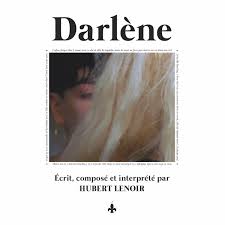
This 23-year-old put his punk band on hold to make a genre-bending pop album, based on a new novel by his friend Noémie D. Leclerc, where the first five tracks jump from jazz piano to ’70s glam to Black Sabbath to gospel-inspired pop to Fleetwood Mac, with plenty of tenor saxophone all over the arrangements, which occasionally nod to Joe Jackson’s 1984 album Body and Soul. It’s totally bonkers in a way that only the Québecois can pull off—or maybe the Flaming Lips, on a good day. Is it a retro record? Absolutely, but it’s also audacious in its scope, and Lenoir has the songwriting chops, the production values, plenty of earworms and the pure charisma to pull it all off. And yes, francophobes, there is one song in English (“Wild and Free”), so you have no excuse not to start there and then dive deeper.

The chances:

Strong. It’s a great album that gets better with each listen and transcends the retro tag it’s been saddled with. I’ll admit I was initially dismissive, but it quickly grew on me once it shortlisted—and if my experience is true for this year’s grand jurors, then the scent of the new will also propel this further in the jury-room discussion. The fact that it’s the first francophone record to shortlist in seven years also gives it strong underdog appeal.


The shoulda, woulda, coulda:

Cold Specks – Fool’s Paradise (Arts and Crafts)

The album:

My review for the Waterloo Record, Sept. 21, 2017:

A few years ago, I was working at a magazine that ran very little music coverage. A freelancer had successfully pitched a story about struggles facing a new wave of female R&B voices out of Canada: Divine Brown, Melanie Fiona and Jully Black among them. The story started out by talking about Cold Specks, the musical project for a young woman who then called herself Al Spx, who possessed a powerful voice and played stark, haunting music she termed “doom soul.” Wait a minute, I asked the editor: why is Cold Specks in this article? Spx played slow, guitar-based music that has more in common with Nick Cave than Nicki Minaj. Is it because she’s black, one of the few African-Canadian women to have any kind of profile in this country’s music scene? Because otherwise, we’re talking about apples and oranges here.


Two albums and a couple of Polaris nods later, Cold Specks—who dropped the Al Spx pseudonym, and now goes by her birth name, Ladan Hussein—has indeed drawn closer to R&B, although Fool’s Paradise is more Massive Attack than Mary J. Blige. There are barely any guitars: synths and drum programming dominate. The background isn’t necessarily important: as always, it’s Hussein’s voice that draws you in first and foremost, but it does sound even better with some deep bass and beats behind it, situating her somewhere between Sade and Bjork (“Ancient Habits” borrows a bit from Bjork’s “All is Full of Love”), if either artist wrote almost exclusively in minor keys. Hussein also slips into Somali on the title track, acknowledging a family history she once felt she had to mask to make it in the Canadian music industry.If third albums are where an artist really proves themselves—after the potential fluke of a debut, and the transition of a second album—then Cold Specks has most definitely stepped up. The songs are strong, the setting is right, and she’s evolving easily. There’s nothing remotely foolish about Fool’s Paradise.


Why it didn’t even longlist:

What the living hell. This woman shortlisted with her debut album, back in 2013, so it’s not like she’s unknown. But she’s long since abandoned her supposed “doom-folk” genre, and now makes downtempo, synth-ridden R&B—so maybe critics only liked her when she was wielding a guitar? Who knows. In a year where we’re talking about singers like Daniel Caesar and Alanna Stuart, we should also be talking about Ladan Hussein. This album is incredible. I hope it found an audience. It's not too late.


Dennis Ellsworth – Things Change (Pyramid Scheme)

The album:

I had no idea who this P.E.I. songwriter was. I spent a lot of time driving around Ontario in April, and grabbed this CD (yes, CD) off my promo pile and brought it with me. It never left my player. As I reconnected with old friends and family across the province— celebrating a personal triumph while hearing tales of divorce, disease and age—the song “Cruel But Beautiful” was constantly in my head. It hasn’t left, five months later.

An exceprt from my Waterloo Record review:

Right after Bruce Springsteen finished 1987’s Tunnel of Love, he recorded a legendary, long-lost album with fellow New Jerseyites Yo La Tengo, which for its 30thanniversary in 2018 is finally being—oh, wait, no, that’s not it at all. This is a new record by P.E.I. songwriter Dennis Ellsworth, his fifth.  Ellsworth is a new name to me, as I suspect he is to you—although his last couple of albums came out on Kitchener label Busted Flat, and were produced by either Josh Finlayson (Skydiggers) or David Barbe (Bob Mould’s Sugar), and featured many of my favourite Ontario musicians. This time out, he headed east to Joel Plaskett’s New Scotland Yard studio in Dartmouth, N.S., with other Halifax Pop Explosion veterans Charles Austin and Dave Marsh. So, yes, fans of ’90s indie rock and singer-songwriters will find plenty to love here, with shades of Lucinda Williams and Ryan Adams (or Aimee Mann, or Eric Bachmann, or…). Ellsworth’s songs are as worthy as any found in the canon of those artists: he has an incredibly strong sense of melody, writing songs to be sung at the top of your lungs, whether they’re anthems like “The Bottom” or “Stoned,” or dream pop songs like “Caught in the Waves.” Plaskett once again proves his mettle as a producer—as heard on his own work as well as Mo Kenney and others—giving Ellsworth a gritty rock’n’roll backdrop with rich, Big Star vocal harmonies.


Why it didn’t even longlist:

I’d never heard of him. Have you? Let’s all work on changing that.

Conflict of interest alert: Since falling in love with Ellsworth’s music, I discovered that he also fronts a Tragically Hip cover band in his spare time, the Fabulously Rich. So when I bring my book tour east this fall—the Carleton in Halifax on Oct. 13, and the Charlottetown Beer Garden on Oct. 17—they’ll be performing after my talk. (Full list of events here.)


Tomorrow: Partner, Snotty Nose Rez Kids and two more coulda-woulda-shoulda.
-->

Polaris Music Prize 2018, day 2: Daniel Caesar, Jeremy Dutcher

Day two of my annual five-day Polaris preview, examining two shortlisters and two absentees a day:


Daniel Caesar – Freudian (Golden Child)

The album:

If, at the sound of Daniel Caesar’s voice in the opening track here, “Get You,” you don’t melt even just a little bit, then you are one cold fish.

Even in a genre where a voice like this is almost necessary, Caesar easily stands out in the crowd. There is a significantly larger influence from gospel than we often hear in 2018. There is a focus on old-school skills, matched with modern production that is decidedly stripped down, with nods to the sparse production of The Xx, as well as to obvious R&B classics like D’Angelo’s Voodoo. There are pleasant twists, like the rich, Prince-like harmonies on the a cappella “Neu Roses.” And, unlike, oh, I don’t know, The Weeknd, there’s zero sign of creepy misogyny.

Freudian is a song cycle: boy meets girl, girl is his everything, they split, he’s bitter, they get back together—and by the end of the album, he’s declaring that she “saved my soul like Jesus” and thanking her for “saving my life.” Standard pop lyrical fare, with the occasional clunker (“You’re my sunshine in the rain when it’s pouring … if life is a movie, then you’re the best part”), but with a voice like Caesar’s, one hardly minds.

Almost everything about this record is solid—and yet it’s not that different from the Alvvays record: a major step up from the debut, an album that turns heads around the world, but simply… nice. Much like the somewhat similar Sampha debut—which won the Mercury Prize, mind you—Freudian sounds like a major talent just getting warmed up.

The chances:

Jurors younger than I consider this a shoo-in as winner. Because—why? Because it’s the most commercially successful shortlister? That logic has historically never applied to Polaris, with one exception: Arcade Fire’s 2011 win for The Suburbs. Caesar has a strong shot, no doubt, but I think other albums here hold up more to repeat listens as a whole work.


Jeremy Dutcher – Wolastoqiyik Lintuwakonawa (independent)

The album:

An excerpt from my April 6 review for the Waterloo Record, which can be read here in full:

“When you bring the songs, you’re going to bring the dances back. You’ll bring the people back. You’ll bring everything back.” That’s a tall order to hear from an elder in your community, a community where the past 100 years of colonialism have left fewer than 100 people speaking the Wolastoqiyik language of the Tobique First Nation in New Brunswick. Those remaining people are known as the “song carriers”—needless to say, they are all elderly.  Except one. His name is Jeremy Dutcher, a young, classically trained tenor singer and pianist who lives in Toronto and hangs around experimental circles. His debut album, Wolastoqiyik Lintuwakonawa, is not merely an academic project that involved him listening to his ancestors singing these songs, stored on 100-year-old wax cylinders at the Canadian Museum of History in Gatineau, Quebec. If it was merely an interesting and culturally significant history project, that would be enough. But Dutcher’s voice and arrangements transform these songs into a stunning contemporary classical record—which was entirely the point. Even without the high concept, this would be a stunning work…
 Jeremy Dutcher’s dance with the dead is nothing short of transformative. That it’s his debut record makes it all the more remarkable.

The chances:

Extremely strong. The story is undeniably compelling, which makes critics want to pay closer attention. When they do, the music more than holds up. Dutcher is an arresting singer—as opera singers tend to be, of course. His arrangements draw deeply from modern classical; these ears even hear a bit of Moondog. His piano playing is entrancing, and the minimal additions—a few drums here, some cello there—pull the listener even deeper inside.

If there’s a knock against this record, it’s that opera is inherently off-putting to some listeners—not unlike trap or hardcore punk or any other extreme approach, like the Colin Stetsons of the world. But that’s never managed to completely scare off Polaris voters before (Fucked Up, Tagaq). A win would also make it the third Indigenous record to win Polaris (four if you include Lido Pimienta), and the second allophone record to do so (after Pimienta), which would all be remarkable on many levels.


The shoulda, woulda, coulda:

Bonjay – Lush Life (Mysteries of Trade)

The album:

I know a lot of people who would vote for Daniel Caesar as the best new vocalist in Canada, but I, for one, am left totally floored by what Alanna Stuart does with her voice, both on this record and in her work with the Queer Songbook Orchestra. Fact: when she sang “Constant Craving” with the QSO in Calgary, none other than k.d. lang was in the audience. Stuart’s bandmates didn’t want to tell her this before she went on. Of course, the legendary singer was as wowed as everyone else at the show and told Stuart as much afterwards. Because that’s the level of excellence we’re talking about here.

An excerpt from my May18 review for the Waterloo Record:  

Vocal powerhouse Alanna Stuart and producer Ian Swain, who as Bonjay make thrilling modern R&B inflected with Jamaican dancehall rhythms and German electronic music, somewhere on the spectrum between Solange and Kate Bush, but decidedly funkier than either, with some of the sci-fi soul of South African Toronto expat Zaki Ibrahim in the mix as well. This should be known as the Toronto sound. Stuart is nothing short of stunning: soulful and seductive, with the occasional operatic flourish. The music underneath her rarely goes for the obvious; despite Stuart’s clear star appeal, these aren’t straightforward pop songs, and they’re stronger for it. Lush Life arrives several years after this duo’s debut EP. The wait was entirely worth it.


Why it didn’t shortlist:

Timing. This is a deep record that rewards repeat listening, but it came out mere weeks before the Polaris deadline. I don’t doubt that if jurors had more time to spend with it, that it would easily have shortlisted. The only other knock against it is that it’s very much a Toronto record; I’m not sure this band has a large profile outside of the GTA—yet.


Cadence Weapon – s/t (EOne)

The album:

An excerpt from my Jan. 27 review; you can read that and my interview with him (about Bob Dylan, Gord Downie, and other things) here.

Six years is a long time in the rap game. But that’s how long Cadence Weapon has been out of the visible (or audible) action, after spending time as the poet laureate of his hometown of Edmonton, moving to Montreal and collaborating with beatmakers Kaytranada and Jacques Greene while DJing loft parties, and finally relocating to Toronto, where he met the producer Harrison and the singer Brendan Philip. That journey through time, through cities, and through experiences is abundantly evident on his fourth album, one on which the former solo bedroom producer invites plenty of talented new friends into his process ... His fourth album is self-titled, a designation normally reserved for debuts that introduce an artist to the world. In this case, it’s a summation of his musical career to date, and he claims it’s also his most autobiographical. Cadence Weapon claims that he’s never bonded with other rappers, instead finding kindred spirits in electronic and experimental scenes—if true, that’s hip-hop’s loss. As both a producer and a rapper, Cadence Weapon gets better and better with age. 


Why it didn’t shortlist:

No idea. I thought this would be a shoo-in, because it’s an excellent work by a familiar face. If I had to guess, I’d say that hip-hop doesn’t reward its elders—and it’s certainly weird to think of Cadence Weapon as an elder, but his debut was released 12 years ago, and he’s already been shortlisted twice before. But I know plenty of hip-hop critics who don’t at all understand this artist’s appeal with more general listeners—which, I don’t know, I thought would help his chances instead of trapping him inside a genre ghetto. Maybe Cadence Weapon is too much of square peg to still make shortlists, but no matter: he’s got plenty of reviews hailing this as the best thing he’s ever done, prizes be damned.

Tomorrow: Pierre Kwenders, Hubert Lenoir, and two more shoulda-woulda-coulda.

Monday, September 10, 2018

Polaris Music Prize 2018, Day 1: Alvvays, Jean-Michel Blais


This year’s Polaris Music Prize is, to these ears, one of the toughest to decide. I’d be completely happy with any one of half the shortlist taking home the final prize, and it’s not like there are any clunkers on the other half, either. Further, there are incredible records released during the qualifying period that didn’t even make the 40-album long list. My annual five-day Polaris preview, examining two shortlisters and two absentees a day, starts now:

The shortlist:


Alvvays – Antisocialites (Royal Mountain)


The album:

This is a monstrous pop record, with insanely catchy melodies that are still stuck in my head more than a year after I first heard them. If there’s any knock against this record at all, it’s that it’s retro: there’s little here that doesn’t sound like some of my favourite records made 20 years ago or more. I don’t listen to a lot of music like this these days, but it’s no surprise at all that this band has made such a big international splash with indie rockers old and new.

My review for the Waterloo Record from Sept. 7, 2017:

No sophomore slump here. Everything that was merely promising or undeveloped or somewhat uneven on the 2014 debut by this Toronto band of transplanted Maritimers has been transformed into a triumph. Singer Molly Rankin used to write melodies slightly outside of her range. Here, she’s no longer a newbie straining to hit the high notes while guitars swirl around her; she’s a singer who walks the precious line between introversion and complete confidence, once again writing melodies that are instant earworms, not unlike their breakthrough single “Marry Me, Archie.” Guitarist and co-songwriter Alec O’Hanley (Two Hours Traffic) also did a lot of recording and mixing this time out, following initial sessions with L.A. producer John Congleton (St. Vincent, Nelly Furtado). In his hands, every one of this band’s strengths comes into full focus in ways it didn’t on the washed-out debut: the guitars of O’Hanley and Ranking shimmer with colourful textures, and blend beautifully with Kerri MacLellan’s Farfisa organ. Bassist Brian Murphy is a melodic player and drummer Sheridan Riley hits hard enough to ensure the band doesn’t drift away on a sea of twee. After dreadful new albums by the War on Drugs, Grizzly Bear, the National and LCD Soundsystem, Alvvays is a rare bright light for indie rock in 2017.


The chances:

Slim, for entirely political reasons. This is a nice band with a nice record that sounds like a lot of your other favourite records—and that combination has never won a prize from critics hard-wired to reward the new and innovative. None of that should detract from its excellence; it completely deserves to be on this list, and if you haven’t heard it yet, you should.


Jean-Michel Blais – Dans ma main
(Arts and Crafts)


The album:

One of only two instrumental records to ever make the Polaris shortlist; the other, by Godspeed You Black Emperor, took home the prize in 2013. (One could also argue that Tagaq’s non-verbal Animism, the 2014 winner, also belongs in this category.) It’s somewhat astounding that an album this intimate, sparse, and based on classical music could squeeze onto a Polaris shortlist, but here we are. Between Nils Frahm and Ólafur Arnalds and others—not to mention Chilly Gonzales, who just released his third Solo Piano record—it’s a good time to be a solo pianist. There are certainly similarities with the Jeremy Dutcher record—two pseudo-classical albums on the list in the same year!—but where that high-concept record relies heavily on Dutcher’s operatic vocals, Blais’s appeal lies entirely, well, dans ses mains.

My May 25 review for the Waterloo Record:

Jean-Michel Blais is a Montreal pianist whose debut album topped classical charts with his original compositions and minimalist approach. On Dans ma mains, he expands his sonic palette to include electronic textures and occasional drum machines—a far cry from the sound of one man alone in his apartment, which is what comprised the debut. The change is more than welcome: Blais is no one-trick pony, and elements of Tim Hecker and Sigur Ros work seamlessly with his natural talent. The only time the album stumbles is when he ventures into Moby territory on tracks like “Igloo,” which are fortunate outliers on an otherwise consistently pleasing album—one that you’re likely to hear soundtracking tear-jerking moments on screen in the next couple of years, but works just fine on its own.

The chances:

Slim. Again, I’m pleasantly surprised this made the shortlist, for the reasons outlined above; a win would be downright shocking.


The shoulda, woulda, coulda:

Arcade Fire – Everything Now (Sonovox/Sony)

The album:

I love this record. I love everything about it. Not a dud track on it. Of this band’s five albums, I’d put it in the top three. So there.

Of course, I feel like one of the only music critics in the world who thinks this. I wrote extensively about it here, which was one of my most-read pieces on the blog in 2017 (second only to a post related to my Tragically Hip book; in third place was a takedown of the hideous new U2 record—so yes, I have standards).

One of my fellow jurors wrote that “if you voted for Arcade Fire, you’re a cop.” Which—I don’t even know where to begin with that one. Thanks for coming out.

The live show was astounding—the best I’ve ever seen them (and I’ve seen them a lot). The episode of Song Exploder that dove into “Put Your Money On Me” inspired some second thoughts in some circles. My guess is that this material will age a lot better than it’s being given credit for right now.


Why it didn’t make the shortlist:

That’s obvious, for all the reasons listed above, as well as the fact that there’s no doubt a general fatigue for a band that’s won both the regular Polaris and the Polaris Heritage Prize, and has been shortlisted two times beyond that. I was frankly shocked Everything Now even made the longlist, considering the antipathy out there; there was more public love declared for fellow 2004 vets Broken Social Scene and Wolf Parade, neither of whom made the longlist. I didn’t even vote for it, to be honest, because I figured it didn’t have a chance. And it made the long list without even my help. So obviously I’m not as alone as I think.


Geoff Berner – Canadiana Grotesquica (Coax)


The album:


I’ve been a huge fan of this artist for the last 15 years. Not every record hits, but his live show has moved me to tears of joy and sorrow on at least a dozen occasions. He has a deep well of songs that nail their targets to the wall; some songs on this new record have been floating around for years, even covered by his peers before the man himself got around to it (“Prairie Wind”). Canadiana Grotesquica is perhaps his strongest work yet—it’s certainly his most accessible, both musically and lyrically, which made it somewhat shocking that he was ignored yet again by the Polaris jury.

Also: In yet another year of forest fires and pipeline politics, I’ve had the chorus of one song on this album in my head almost every time I turn on the news, from “Super Subtle Folk Song”: “And while the fire’s still burning, let’s make a lot more gasoline.”

An excerpt from my review for the Waterloo Record, Oct. 12, 2017, which can be read in full here:

On his seventh album, Berner shifts away from his klezmer escapades and taps Neko Case guitarist Paul Rigby to make something approximately a country record, filled with the kinds of songs that made him a favourite cover choice for his friends the Be Good Tanyas and Corb Lund. It’s the most musically conservative album he’s made in years, but it’s by no means meant to be easy listening. It opens with “The Ghost of Terry Fox,” one of the most tragic tales in Canadian celebrity: the story of Steve Fonyo, the cancer-stricken amputee who actually completed Fox’s mission, but suffered from second-banana syndrome in the eyes of an indifferent public, racked up several criminal convictions, was stripped of his Order of Canada, and was the victim of a home invasion in Surrey, B.C. Fonyo was the subject of a 2015 Alan Zweig documentary, and a musical by Berner, from which this song originates. Berner takes a similarly biographical approach to “Gino Odjick,” a song about the Vancouver Canucks’ “Algonquin Assassin,” an on-ice enforcer and residential school survivor who, along with other prominent Indigenous Canadians, met the Pope to hear an apology from the Catholic Church. On a lighter note, Berner mocks southern Ontario country singers who articulate with a “Phoney Drawl,” and warns his peers “Don’t Play Cards For Money With Corby Lund.” “Hustle Advisory” references Leonard Cohen, Jesus, and Justin Trudeau, and features Frazey Ford on backing vocals. There’s no surer sign of Berner’s continued songwriting strength than “Super Subtle Folk Song,” one of the catchiest melodies on a record full of earworms ensures that the message sinks in. More important, for a man who has often used a blunt hammer to make his point, titling a track “Super Subtle Folk Song” may be a self-deprecating jab, but it also proves that Berner is stronger when he’s subversive.

Why it didn’t even longlist:

He’s a satirical and political Vancouver songwriter who plays accordion. Enough said.


Tomorrow: Daniel Caesar, Jeremy Dutcher, and two more shoulda-coulda-woulda.