Showing posts with label Rich Aucoin. Show all posts

Thursday, March 01, 2018

Jan-Feb reviews 2018

These reviews ran in the Waterloo Region Record in January and February 2018.


Rich Aucoin – Fear EP (independent)


Rich Aucoin puts on one of the best live shows in Canada. They’re so good, in fact, that nothing the Halifax performer has ever released comes close to the experience. Which is why you’d be forgiven for wanting to skip his new record and just go see him when he hits your town—except this time that would be a mistake. The Fear EP finds Aucoin toning down his manic energy and making a smooth little pop record. That’s in part because while he was on a surfing trip, he had a laptop stolen that contained what was to be his next record. Starting fresh, Aucoin has come up with the perfect marriage of anthems, subtle electro-funk and R&B songs. Part of me wants to hear a whole record like this immediately; part of me thinks this four-song EP is a perfect distillation. (Feb. 16)


Rich Aucoin plays the Drake Hotel in Toronto tonight, March 1, and the Seahorse in Halifax March 15.

  
Beams – Teach Me To Love (independent)


Isn’t that what we want from most songs? To teach us how to love? For singer/songwriter and banjo player Anna Mernieks, it’s an imperative with added weight, following a crippling depression that led her to cancel a wedding (“The people living in the apartment in my head have got to go”). Mernieks channelled that journey into her art, and so the second album by her band Beams taps into that pain but never wallows in it: this is not a minor-key, downtempo mopefest. Beams makes tasteful indie folk-rock, with vibraphones, violins, mandolins and lap steel, while harmonies from co-lead vocalist Heather Mazhar make the whole affair seem even less lonely. In your darkest days, making music with your friends can be the best therapy. It may even teach you how to love. (Feb. 16)

Beams are touring the U.S. in March and April.

  
Stream: “Berlin, Teach Me to Love,” “Pull of the Night,” “You Are an Ocean”


Hollie Cook – Vessels of Love (Merge)


Hearing a great new reggae album in the middle of a Canadian winter is either a gift or a curse. Either way, it’s an escape. Hollie Cook’s third record—and first to get a proper North American release—is a dreamlike fantasy of a modern roots reggae record, produced by Youth (Paul McCartney, Killing Joke) with lovely melodies, rich female harmonies, full horn section, psychedelic overtones, and a killer dub-heavy rhythm section that features, at times, Jah Wobble of Public Image Limited (that band’s guitarist, Keith Levene, also shows up on one track). Cook has deep roots in Britain’s post-punk scene, being the daughter of a Sex Pistol and a backing singer for Culture Club; she also served time in a reunited Slits. Her music is most definitely a throwback—there’s no trace of dancehall or any trend in reggae of the last 30 years—but her songwriting and the production here ensure this is no mere pastiche. And it will sound even better four months from now. (Feb. 2)


Stream: “Angel Fire,” “Stay Alive,” “Ghostly Fading”


Craig David – The Time is Now (Sony)

Time isn’t usually kind to R&B singers who came up in the ’90s and early 2000s; the number of young challengers seems to rise every year, and the sonic innovation in the genre can easily leave old-timers behind. Then there’s Craig David, who had an improbable but welcome comeback two years ago when he reworked Justin Bieber’s “Where Are Ü Now” into the arguably better song “16,” as well as a collaboration with Montreal producer Kaytranada, which all led to the album Following My Intuition, which was a No. 1 album in David’s native Britain. The Time is Now is the somewhat quick follow-up, the title alluding to the fact that David doesn’t want to waste a moment of his time back in the spotlight. The same formula is in effect: melodically rich R&B with thoroughly modern grooves drawing from just about every radio trend from around the world, including the misnomer Afrobeats. David has better ears for a pop hook than other artists who are infinitely more successful; he deserves to be an international superstar, not just a British one. (Feb. 9)

Craig David plays the Velvet Underground in Toronto on March 14.


Stream: “Magic,” “Somebody Like Me,” “I Know You”


Betty Davis – Nasty Gal (Light in the Attic)


Whoever it was at Light in the Attic records who decided to time this reissue for January deserves a gold star. During the most depressing month of the year (or is that February?), listening to Betty Davis just might be the most ridiculously fun thing you can do with a set of headphones.


Davis was a funk goddess of the 1970s, whose music was driven by lots of wah pedals, clavinets, distorted guitars playing tight funk licks, and a series of incredible musicians—whom Davis insisted perform shirtless and lathered in baby oil. Before Prince took licentiousness to new levels in 1980s pop music, Davis revelled in raunch. Her hyper-sexual singing is filled with shrieks, snarls and moans, making Tina Turner sound like she was sprung from a nunnery. It easily devolves into shtick (“I can’t give it to you more messier than this!” she ad libs on one track), which can mask just what a great singer Davis actually was; when she tones down the dirty funk—as on closing track “The Lone Ranger,” or the ballad “You and I,” orchestrated with the help of her ex-husband, Miles—her true range shines through. But even if it didn’t, Davis is such a delight as a performer that every track here is a total gas.


This 1976 album was Davis’s last before she retired; her earlier records were reissued almost 10 years ago. But it’s never too late to discover Betty Davis, the Nasty Gal that she was—especially when self-identifying “nasty women” are again on the rise. (Jan. 19)


Stream: “Nasty Gal,” “F.U.N.K.,” “The Lone Ranger”


Khruangbin – Con Tudo El Mundo (Dead Oceans)


This Texas trio formed 13 years ago, when they would spend their Saturday evenings listening to ’60s Thai funk music and Iranian pop music, and their Sunday mornings soundtracking a church service. Their formula hasn’t changed much since: their take on meditative and melodic mood music is set to a light but solid groove that’s as sensual as it is spiritual. Laura Lee’s supple bass lines fitting perfectly inside the ginger grooves of drummer Donald “DJ” Johnson, while guitarist Mark Speer demonstrates remarkably fluid dexterity. Speer has the jazz voicings of Gábor Szabó, the R&B finesse of Prince in his quietest moments, and the rock’n’roll style of Brian Connelly from Shadowy Men. Khruangbin excel when they’re at their most languid, but Con Tudo El Mundo shows them playing with some extra fire—“Maria También” is based around the classic hip-hop “Apache” break—that probably comes from their first extended bout of touring following their 2015 debut, The Universe Smiles Upon You.


They play Toronto on April 17 at the Mod Club. (Feb. 23)


Stream: “Lady and Man,” “Maria También,” “Evan Finds the Third Room”


Rhye – Blood (Last Gang)


Rhye is the internationally acclaimed baby-making musical duo featuring Toronto vocalist Mike Milosh, whose cooing is set to cushiony bedroom grooves. It’s shocking their songs weren’t used on any of the Fifty Shades soundtracks, but maybe Milosh has some taste.


Rhye’s 2013 debut, Woman, was lovely but lightweight: there’s a reason they decided to call the follow-up Blood. The grooves have more depth to them, and even if Milosh rarely rises above a whisper, there’s a quiet intensity to the seductive and sparse soft pop underneath him—perhaps a result of Milosh parting ways with founding member Robin Hannibal and working instead with the live band who toured behind Woman. The string arrangements could stand to be more imaginative, and the piano hook on “Feel Your Weight” is a bit too close for comfort to Arcade Fire’s “Reflektor.” But Rhye’s music doesn’t seem designed to stand up to close inspection: it’s mood music by design, meant to leap out of algorithm-designed playlists as somewhat more substantial than the rest of the musical wallpaper that normally defines this genre. Rhye is a high jump over a low bar. (Feb. 9)


Rhye play Massey Hall on Monday, March 5.


Stream: “Taste,” “Count to Five,” “Feel Your Weight”
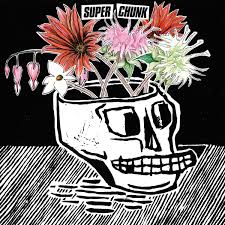


Superchunk – What a Time to Be Alive (Merge)


The title track to this venerable punk band’s 12th proper album is not exactly a celebration of life in the modern era. It, and the other songs here, was written between Donald Trump’s election and the period shortly after his inauguration. The chorus hasn’t aged a bit since then: “To see the rot in no disguise / oh, what a time to be alive / the scum, the shame, the fuckin’ lies / oh, what a time to be alive.”


The song works on several levels: it’s a brilliant protest song, in part because it doesn’t single out its target—it’s more than obvious, listening in 2018—and therefore could be applied to several situations. It’s also a rebuke to nostalgia, to which far too many punk bands subscribe. Most important, it’s not defeatist: in fact, almost every song here is a call to action, a rally for the like-minded to rally together and take back their country. Them’s fighting words, literally: “Fight me,” singer Mac McCaughan sings on “All for You.” “I’m not a violent person, but it can’t get any worse.”


Oh, and the band is on fire, playing like they’re raging against the dying of all lights. (Feb. 16)


Stream: “What a Time To Be Alive,” “Erasure,” “Reagan Youth”


Justin Timberlake – Man of the Woods (Sony)


I didn’t watch the SuperBowl. I did not have high expectations for a new Justin Timberlake album; the man’s obviously an exceptionally talented entertainer, but his records are spotty (witness the brilliant first instalment of The 20/20 Experience, and the completely lacklustre second half). By that measure, Man of the Woods is right on point: about half of it not only confirms Timberlake’s best talents, but points to a future where he merges a country influence from his native Tennessee with the once-futuristic funk of Timbaland and the Neptunes—the latter of which is significantly less forward-looking than it was 10 years ago, if only because their sonic footprint is now all over modern pop music. And the other half of Man of the Woods? It’s not terrible—well, lyrically it often is, but musically it’s usually several steps above the filler tracks on any other pop record.


The highlight here is the title track, where twangy guitars and country harmonies ride atop a synth bass and a drum machine—“Americana with 808s” is how the man himself described it. If more of the album sounded like this, Timberlake would have a real cross-genre game-changer on his hands. But it doesn’t. The collaboration with country star Chris Stapleton isn’t as successful, although the duet with Alicia Keys—which Stapleton had a hand in writing—is just fine. “Sauce” finds Timberlake doing a flat-out Pharrell impersonation, a song that sounds like a direct rip of Williams’s “Hunter,” from his 2014 album Girl. That said, despite the hideous lyrics, it’s a half-decent party track. The basslines on “Midnight Summer Jam” and the African-influenced “Living Off the Land” sound like a sampled talking drum pitched to the notes of the riff; that’s only one component that makes the former the most successful dance track here; the single “Filthy,” in comparison, sounds merely like a rocked-up outtake from FutureSex/LoveSounds.


We expect a lot from Justin Timberlake because he’s a big-tent pop star with an ear for musical innovation—as opposed to Bruno Mars, who shamelessly mines the past for new ideas. Nothing Timberlake has ever done or ever will do will be revolutionary or in any way deep—that’s not the point. If all he does is move the needle a bit and point other artists toward possibilities, then that’s all he has to do. That and a few choice dance moves. (Feb. 9)


Stream: “Midnight Summer Jam,” “Man of the Woods,” “Montana”


-->

Monday, November 03, 2014

October 2014 reviews


Highly recommended, reviewed earlier: Perfume Genius, Aphex Twin, Daniel Lanois

Recommended: Budos Band, Prince, Touré-Raichel Collective


As always, the following reviews first ran in the Waterloo Record.


Rich Aucoin – Ephemeral (Bonsound)


It’s September 2014: dozens of think pieces have been written about the fact Arcade Fire’s Funeral album is now 10 years old. Carbon traces of that album can be heard in much of today’s rock music, whether it’s the new U2 single or the piano-pulsing anthems by folkie band the Strumbellas or this entire album by Halifax techno artist Rich Aucoin. 


Arcade Fire, of course, took some disco detours on their latest album, Reflektor, with mixed results. Aucoin—whose voice bears an uncanny resemblance to Arcade Fire’s Win Butler at times—has made an album showing us what would have happened if that band had dove even deeper into discotheques, setting the stadium-sized choral choruses of Funeral to peppy pop music that sounds like Skrillex cutting up Katy Perry songs.


Like Butler on his sunnier days, Aucoin wants to lift listeners out of darkness and offer an escape: “In times like this I want to be a believer,” goes one chant. The best and worst thing about Aucoin is that he’s a musical motivational speaker: it’s one thing to make a consistently strong dance party record like he does here; it’s another to feel like your personal trainer made you a mix tape.


If you step out from Funeral’s shadow and surrender to the ecstasy Aucoin’s peddling here, Ephemeral is a rush of a ride, a carefully controlled 30-minute release of endorphins and dopamine. There are just enough dynamics to prevent it from being an all-out onslaught, and Aucoin knows how to write the songs that can make the whole world sing. Indeed, most of the choruses here feature what sounds like entire small towns singing along.


This is not music that wants to be stuck in an indie ghetto or confined to the small clubs of Canada. Aucoin creates a big tent and wants the entire world dancing in it. No doubt they will, soon enough. (Oct. 4)


Download: “City of Love,” “They Say Obey,” “Yelling in Sleep”


Budos Band – Burnt Offering (Daptone/Maple)


What if Curtis Mayfield had produced a Black Sabbath record in the mid-1970s? The Budos Band have obviously asked themselves this question while making their fourth album. Budos have always been the heaviest players in the Daptone roster—where they share company (and members) with Sharon Jones and the Dap-Kings, Charles Bradley, Antibalas, Menahan Street Band, etc.—but this is the first time the songs have been fuzzed-out guitar riffs, not Afrobeat horns or Ethiopian jazz melodies. The horns are in full force, of course: bold, brash and with the baritone sax providing maximum muscle. Budos boast the only headbanger horn section whose jazz chops are indisputable. This sound could easily be gimmicky, but there is conviction and power in every note here. Do not, under any circumstance, miss a chance to see this band live. (Oct. 30)


Download: “Into the Fog,” “Shattered Winds,” “Magus Mountain”


Goat – Commune (Sub Pop) 


When this band played Lee’s Palace in Toronto in June, as part of the NXNE festival, I ran into a music media mogul before their set. He couldn’t contain his excitement or anticipation. “You’re going to love this!” he shouted at me. “It’s like Led Zeppelin meets Fela Kuti!” He wasn’t far off.


Goat are neither British nor Nigerian nor, despite their recent signing to Sub Pop, American. They’re Swedish, claiming to reside in a tiny commune north of the Arctic Circle. The costumes donned seem to be cribbed from dozens of cultures at once. Feathers were involved. The two frontwomen started the set by lighting incense at each side of the stage. It’s a trip.


Commune commences with solemn ringing of a solitary bell; each stroke rings out for about ten seconds before decaying into silence. Finally, a trance-like West African guitar riff begins, followed by the singer exhorting you to “call my name when you talk to God.” Guitar solos are played with distortion and wah pedals. The women push the upper registers of their vocal limits. The drummer has a jazzy touch. The percussion and keyboards are welcome textures, but the guitars rule. The formula rarely changes; you wouldn’t want it to during the 40 minutes you spend zoning out to Commune.


For obvious reasons, it’s nowhere near as mind-blowing as this band’s live show, but it successfully captures the essence. (Oct. 18)


Download: “Goatslaves,” “Words,” “Talk to God”


Kiesza – Sound of a Woman (Universal)


Calgary-born Kiesza has already landed on the 2014’s top singles of the year, “Hideaway,” thanks to a viral video and a sound that tones down the crushing “bro-step” sound of modern EDM pop and returns to the joyous, diva-driven, soulful house music of the early ’90s. Kiesza was born in 1989, and, like Taylor Swift, is enamoured with music in the year of her birth: Soul II Soul, Neneh Cherry, Cathy Dennis (credit to Toronto Star's Ben Rayner for reminding me of this), Crystal Waters, etc. Retro or not—and a cover of Haddaway’s What is Love provides further context—Kiesza has some fine pop songs under her belt, even if most of them involve her reaching for the exact same notes in her register. No matter: she’s a stunning singer, and there is more than enough material on her debut album to suggest she’ll be more than a one-hit wonder. (Oct. 30)


Download: “Hideaway,” “No Enemiesz,” “Losin’ My Mind” (feat. Mick Jenkins)


Prince – Art Official Age (Warner)
3rdeyegirl – Plectrumelectrum (Warner)


Why do we expect new Prince albums to be good? Why?


There’s the small matter that he was the decade-defining creative force that dominated the 1980s, continued to release great music well into the 1990s, and then—well, and then we all keep waiting for a Prince album to thrill us as deeply as his live show does consistently. After an uncharacteristic four-year absence, Prince returns with both a solo album and a new band.


Rock critics remembering that it’s the 30th anniversary of Purple Rain have longed for Prince to show off his guitar heroics once again—but be careful what you wish for. Plectrumelectrum is interesting only in the way that eavesdropping on a jam by Prince’s garage band might be. The fact he occasionally surrenders lead vocals to his female bandmates doesn’t help matters any. The songs are weak, the arrangements are bland, and the guitar solos aren’t even that great—shocking, really, when you consider that Prince is the greatest guitarist of his generation. Also: he’s done tossed-off garage rock before, and much better, on the underrated 1996 album Chaos and Disorder, an album lost in the shuffle during a time when he was itching to get out of his Warner contract. If it’s hard to imagine the Purple One fronting a crappy grunge-blues band—well, it’s not that hard anymore.


Thank God, then, for Art Official Age, a pop/R&B album made for any fan who hasn’t bothered with Prince since 1996’s Emancipation. There are sonic nods to 1999, Parade and Sign O the Times, and even if there’s no song here that would ever catapult onto a future greatest-hits comp, yet there is ample display of everything at which Prince has ever excelled: the tight funk grooves, the unbelievably elastic voice, the jazz harmonies, the sultry slow jams, the unconventional instrumental voicings. When he was his creative prime, Prince’s B-sides were where he really stretched out his creative impulses—and so to say that those B-sides are what Art Official Age most resembles is in no way a slag.  


Now: let’s have a tour, please! (Oct. 4)


Download Prince: “The Gold Standard,” “Clouds,” “Breakfast Can Wait”
Download 3rdeyegirl: “Pretzelbodylogic,” “Tictactoe,” “Funknroll”


The Touré-Raichel Collective – The Paris Session (Cumbancha)


There are no formal diplomatic relations between the governments of Israel and Mali. So there are obvious political undertones when two musicians, Jewish Israeli pianist Idris Raichel and Muslim Malian guitarist Vieux Farka Touré, collaborate and cross-pollinate so effectively, as they do here, on their second time together in the studio. Their 2012 debut was recorded in Tel Aviv; this was to made in Bamako, Mali, but the country was deemed too dangerous in which to record after an Islamist uprising last year. Instead, they relocated to Paris. Both men are subtle players; Raichel often takes a back seat here, while Touré’s tiny bursts of Malian blues leads recede as quickly as they appear. Nothing here sounds remotely like a collision of two cultures; perhaps that’s because Raichel’s appreciation of Touré and his father, Ali Farka Touré, runs deep—he says there was a time when he listened daily to the elder Touré’s landmark collaboration with Ry Cooder, Talking Timbuktu (they cover that record’s “Diaraby” here). Considering the chemistry heard here, this might even be the better album. (Oct. 30)


The Touré-Raichel Collective plays Toronto’s Koerner Hall on Nov. 21.


Download: “Tidhar,” “Hodu,” “Debo”

Tuesday, December 20, 2011

2011 Year in Review

1. tUnE-yArDs – Whokill (4AD). This is the one. No other record in 2011 was this inventive, this exuberance, this powerful, this stimulating, this much fun—and sounded so current, so unlike anything else either in her current peer group or comparison points. Merrill Garbus plays ukulele, percussion and sings her ass off, doing each in various layers that she loops together live. On Whokill, she fully embraces the studio and paints vivid moving pictures with the help of bassist Nate Brenner, a horn section and every conceivable percussion instrument she can find. In a year when everyone seemed excited about sexless wonders like Bon Iver and M83, Garbus reached out to all the mopey wallflowers of indie rock and dragged them by the hand onto the dancefloor. Garbus is nothing if not gutsy; she doesn’t half-step anything here, even the quieter lullabies, but she also knows when to tone down the bluster. For all the bells and whistles on Whokill, however, these songs would work just as well with only drums and voice. Elemental, in more ways than one.


2. Mark Davis – Eliminate the Toxins (Saved By Radio). This Edmonton songwriter successfully combines the comfort food of Canadiana roots rock with spooky sonic spellcasting in ways that few artists other than Daniel Lanois even attempt. (Plenty of credit should also go to producer/instrumentalist Lorrie Matheson.) Davis manages to pull off pop melodies worthy of Fleetwood Mac, folk songs that could come from Lightfoot, overtones of doom ala Nick Cave, Eno-esque production, and some twang mixed into to the chunky rock songs and pop hooks. Lyrically, Eliminate the Toxins may be full of ghosts, but you’ll want these songs to haunt you for a long, long time. The most underrated Canadian album this year is also the best.


3. Gillian Welch – The Harrow & the Harvest (Acony). “Hard times ain’t gonna rule my mind”—if that’s not an anthemic line for 2011, what is? Like Tom Waits, Welch and her partner David Rawlings took a long break from recording until she felt she had something to say, and it was worth the eight-year wait: 10 songs that are pure, perfect portraits and directly to the point, performed on little more than acoustic guitar and banjo that sounds like the duo is in your living room. It’s haunting, powerful, and impossible not to sing harmonies to. The simplest pleasure was also the strongest.


4. Feist – Metals (Arts and Crafts). Leslie Feist always had too much talent to be reduced to a one-hit wonder, and Metals is the record she’s been building toward for the past decade. This album is note-perfect without being slick; it’s deceptively heavy for such a featherweight sound; and it’s far more musically inventive than Feist gets credit for, being as she is an easily digestible artist commonly associated with coffee shops. The songwriting, arrangements, performance and production are all vivid and top-notch on every track, making Metals one of the most satisfying albums of the year, not merely one of the best.


5. Destroyer – Kaputt (Merge). A lot of people have trouble getting past the unabashedly ’80s lounge-lizard production here—apparently, this kind of homage is the last retro crime worth committing. Thankfully, there are a lot more people who made this Destroyer’s most commercially successful record to date, who cottoned on to the fact that bandleader Dan Bejar was writing his strongest melodies in years, and doesn’t seem like he’s in a hurry to get each verse over with (unusual for him). The lovely, lush arrangements were too intricate and inventive to be some kind of ironic joke—full credit is due to guitarist Nicolas Bragg and trumpeter JP Carter, who weave stunning textures—and it’s also the first Destroyer album one could imagine dancing to.


6. The Weeknd – House of Balloons (independent). 2011 was full of creeps: Tyler the Creator, Kanye West sinking to new lows, and, arguably Drake. But none of them sounded creepy like The Weeknd does, and none of them were able to express the complex combo of self-lacerating doubt mixed with aggression the way that Abel Tesfaye can; a gifted singer, he successfully navigates the ambiguity of drugged-out moral relativism without getting too uncomfortably literal (or, um, stupid: see above examples). Everything that Drake gets credit for, Tesfaye does far, far better. House of Balloons was also a musical game-changer for the way it approached the dark side of R&B. The fact that it’s still only available as a free download, and that Tesfaye spurned all media at every turn, was a zeitgeist story that helped define the year.


7. Wye Oak – Civilian (Merge). The Baltimore duo Wye Oak don’t sound like a rock band. They sound like a force of nature: a rushing river, a towering mountain range, an expansive Montana plain. Not that they sound natural: there’s nothing acoustic about Civilian, their third album, which is full of raging electric guitars and distorted sounds. But the way this duo conjure the elements at their disposal is magical, the way a sonic gust suddenly slaps you like a gale-force wind, the way dub textures stratify the sonic layers, the way Andy Stack’s drums gallop and lurch, following the push and pull of Jenn Wasner’s guitars, the way Wasner’s calm and understated vocals anchor everything like the eye of a hurricane.


8. Lykke Li – Wounded Rhymes (Warner). This is the sound of an awakening, of this Swedish singer getting her heart broken, getting her hands dirty and embracing the big sounds of ’60s Phil Spector pop (quite directly: she sounds like Ronnie Spector on much of this record) with extra amplification given to huge backing vocals and thundering percussion—every other instrument, other than her lead vocal, is secondary. Recorded in California, it’s not a sunny sound—there’s a goth melancholy barely beneath the surface throughout—but it’s joyous, cathartic, and incredibly catchy. It’s also 10 times better than her wisp of a debut record.


9. Nick Lowe – The Old Magic (Yep Roc). This 61-year-old performer reminds you what magical songwriting spells an old coot like him can still cast. Sure, the entire album has a ’50s supper-club vibe that sounds like rock’n’roll never happened, but that's just Lowe acting his age. He often croons with a gentle wink, but there's nothing ironic about anything here. Clever, yes, but Lowe never sounds anything less than completely sincere. This old magician is a guy you can trust to never let you down.


10. Kathryn Calder – Bright and Vivid (File Under: Music). The second solo album by this New Pornographer finds her embracing a wider sonic palette (with help of new husband Colin Stewart, one of the finest sonic architects on the West Coast) and writing more complex prog-pop songs that owe more to the Rheostatics or early Peter Gabriel than they do the bubblegum rush of her regular gig, or the type of safe music that most women with a voice as gorgeous as hers end up making. Calder is in a class of her own.


11. Grace Jones – Hurricane (Pias). This is not technically a 2011 album; it came out in the U.K. in 2008, and was inexplicably unavailable in North America until this past September, where it was packaged with a dub remix record. Jones reunites with the musicians who made her classic early ’80s recordings, filters that sound through late ’90s trip-hop and writes her most personal and powerful songs to date. Jones was always much more than a fashion freak and a b-movie actress, traits that unfortunately comprise her caricature today. This is a potent reminder of a powerful artist.


12. Geoff Berner – Victory Party (Mint). Berner has long been one of the finest entertainers and songwriters in Canada, but the aptly named Victory Party is a quantum leap forward in his discography. With the help of Montreal producer Socalled, Berner calls in a full band and pumps up the volume on his accordion-driven neo-klezmer arrangements, moving from rousing drinking songs to hipster smackdowns to anti-authoritarian anthems to plaintive political ballads—and then there’s the deranged electro retelling of the Golem legend, which only someone with Berner’s sharp sense of humour (and dread) could pull off.


13. Booker T. Jones – The Road From Memphis (Anti). The 57-year-old keyboardist and soul legend delivered one of his career highs with the help of the Roots’ ?uestlove, Daptones engineer Gabe Roth, Motown guitarist Dennis Coffey and vocalists including Sharon Jones, My Morning Jacket’s Jim James, and The National’s Matt Berninger. The Road From Memphis must lead to New Orleans, because this sounds like a dream collaboration between Booker T.’s MGs and the funkiest band of all time, the Meters.


14. Shabazz Palaces – Black Up (Sub Pop). Anyone who still thinks Kanye West is a hip-hop innovator needs to spend time in Shabazz Palaces. On Black Up, grooves pulse on distorted bass with nary a snare drum in sight, tempos are pushed and pulled apart, old-school soul meets 21st century clicks and cuts, and wiggy synths set everything just off-centre. Main man Ishmael Butler made a splash in the ’90s with Digable Planets, but this trippy project, where anything and everything seems possible, doesn’t seem to belong to any particular trajectory—unless early George Clinton and Black Album-era Prince dropped acid with Trent Reznor and Burial.


15. Seun Kuti – From Africa With Fury: Rise (Knitting Factory). In the year when a Fela Kuti musical was the toast of Broadway, the Nigerian legend’s youngest son released a firecracker of a record with his father’s old band and Brian Eno behind the boards. Modern African dance music rarely sounds this good—it’s usually either stuck in a retro groove or is full of unwelcome cheeseball synths. This sounds entirely modern while capturing the frenetic energy of a seasoned band, and perhaps needless to say, Kuti himself is more than a commanding frontman—one who’s nonetheless happy to take a backseat to the beat.


16. Sloan – The Double Cross (Outside). The best rock albums are always front-loaded with a group’s best songs. But after the strong “Follow the Leader” opens Sloan’s tenth album, they take their own advice and deliver gem after gem, making this milestone of an album sound more like a greatest hits compilation. All four members are writing at the top of their game, and one has to wonder if they have been purposely been saving their best songs for 2011 to celebrate their 20th anniversary.


17. Tom Waits – Bad As Me (Anti). What’s the definition of timeless? A 62-year-old who is weirder and more wonderful than he was when he was 20, writing songs that could be from the 1950s filtered through various distortions of the past five decades and with lyrics that, when they’re not about satisfaction and lives lived and eternal love, could just as easily be about the Arab Spring and Occupy Wall Street: “It’s hard times for some, but for others it’s sweet / someone makes money when there’s blood in the street.” And while it’s true that Waits’s eccentricities have become encoded and somewhat predictable, he convincingly begs you to “kiss me like a stranger once again.” Yeah, okay, why not? This may be his best album since 1992’s Bone Machine.


18. Rich Aucoin – We’re All Dying To Live (Sonic). Every other album that made this list is fairly consistent and easy to peg. Halifax multimedia adventurer Rich Aucoin, on the other hand, does it all: disco, psychedelia, rock numbers, rousing pop songs, piano concertos and contemplative neo-classical pieces. For such an epic record, Aucoin makes it all flow seamlessly, with interstitial segues that ease the incongruity with the skill of a pro DJ. It’s not slick, however; Aucoin maintains an earthy feel throughout, and engages 500 musicians (not an exaggeration) to help him out. One song is titled “We Must Imagine Sisyphus,” a nod perhaps to the enormity of Aucoin’s ambition, but there’s nothing world-weary about the joyous celebration in these grooves.


19. Colin Stetson – New History Warfare Vol. 2: Judges (Constellation). When discussing what is by far the strangest album to get major attention in 2011 (including a Polaris Prize shortlist position), it’s easy to talk only of Stetson’s methodology: solo saxophone performed with circular breathing and incorporating every possible element of the instrument for both melodic and rhythmic ends, all recorded in one take. But Stetson’s mood and melodic sense—along with lovely cameos from Laurie Anderson and Shara Worden—are the main reasons Judges broke through the usual avant-garde circles in which albums like this are usually ghettoized.


20. Beastie Boys – Hot Sauce Committee Part 2 (EMI). Yes, “grandpa’s been rapping since ’83,” as the Beastie Boys admit here, but no one who’s been in hip-hop that long has ever released an album this good this far into their career. The last 10 years have been rather creatively fallow for the Beasties, which is why it’s so rewarding to hear them come back swinging as they do here, to say nothing of Adam Yauch’s recovery from cancer. The videos were hilarious as always, the ska single “Don’t Play No Game” (featuring Santigold) was their finest pop song ever, and the entire record was full of life.

Runners-up:

A Hawk and a Hacksaw – Cervantine (LM Dupli-cation)

Dennis Coffey – s/t (Strut)

Couer de Pirate – Blonde (Gross Boite)

Crooked Fingers – Breaks in the Armor (Merge)

The Dirtbombs – Party Store (In the Red)

Tim Hecker – Ravedeath 1972 (Kranky)

Iron and Wine – Kiss Each Other Clean (Warner)

J Rocc – Some Cold Rock Stuff (Stones Throw)

My Morning Jacket – Circuital (ATO)

Rural Alberta Advantage – Departing (Paper Bag)