
Apparently neither does anyone else: with the exception of event sponsor CBC Music (now run by Polaris founder Steve Jordan), I'm not sure I've seen a single piece anywhere analyzing the shortlist. A shortlist, by the way, that for the first time doesn't have any white men on it—coincidence? A nation's culture reveals itself by the stories it can't be bothered to tell. Are editors increasingly allergic to Polaris the less white, the more left-field it gets?! I say this every year, but why doesn't Polaris get the same media attention as the Giller prize for literature, which features just as many underdogs?
Whether or not anyone is writing about Polaris this year, I'm happy it's championing the music that it is.

Alias Ensemble - A Splendour of Heart. An unbelievably gorgeous folk record, with exceptional playing and a stunning presence in singer Kelly Sloan. Available only on Bandcamp.
Kathleen Edwards - Total Freedom. Career best?
Rochelle Jordan - Play With the Changes. Retrofuturist R&B by this L.A.-via-Toronto artist, who's graduated from "most promising" to simply great. One of my favourite summer records of 2021.
Daniel Lanois - Heavy Sun. Career best?
Mustafa - When Smoke Rises. Actually on the real shortlist! See below.
Nyssa - Girls Like Me. This woman's voice is a total powerhouse: both physically and lyrically. Anthems for the new era. Few pop records in the last year have made me long for live audiences more than this one.

Allison Russell - Outside Child. The music is deceptively gorgeous; the lyrics are chilling and haunting. An incredibly powerful record, and the one I truly wish had made the shortlist so that more people here would hear it. Russell is doing very well in her adopted hometown of Nashville, however, with the likes of Brandi Carlile and Jason Isbell singing her praises—and loudly.
Leanne Betasamosake Simpson - Theory of Ice. Actually on the real shortlist! See below.
Julian Taylor - The Ridge. I've long respected Taylor as a singer, guitarist and all-around good guy in the Toronto club scene. Confession: I never loved his music. But this solo record (as opposed to his eponymous band) has become his most critically acclaimed to date (beyond borders, too), and it's no surprise why. It's a beautiful acoustic folk record that would make Jim Cuddy jealous, Taylor-made for Canadian campfires.
Yu Su - Yellow River Blue. Enchanting, psychedelic Asian-Canadian electronic music that owes a small debt to Caribou (and even some Prince and Kraftwerk). In yet another year when West Coast music is left out of this discussion, this was a rare bright light (as was the equally underrated C. Diab).
--
And now, briefly, the actual shortlist, voted on by 199 people other than me:

Cadence Weapon - Parallel World.
Good record. Great artist. I prefer his previous two records, but whatever. I'm really, really looking forward to his memoir, out next May. And I'm excited that the veteran artist seems to be riding a new wave of buzz, thanks in part to a more direct approach in his lyrics, tapping into the current political zeitgeist. He also just signed to Kelp Management, home of Lido Pimienta, Andy Shauf, and Ada Lea.
The chances: Strong. Many feel that this Polaris stalwart—shortlisted for the very first prize in 2006--is long overdue, and that this is the one to take it. However: "their time has come" has never been a convincing argument in the Polaris jury room.
 DijahSB - Head Above the Waters.
Very strong new rap artist from Toronto. Put out two EPs in 2020; the first, called, uh, 2020, is musically stronger, I think, though this one is lyrically stronger. So who knows? I'm more interested in where they're going than where they're at right now, but this record has a lot of love. As someone allergic to trap and its derivatives, I find the arrival of a young MC actually interested in funk and groove to be inspiring.
The chances: Good. Solid underdog choice.

Dominique Fils-Aime - Three Little Words.
This Quebecois artist surprised a lot of people when her 2019 album Stay Tuned appeared on that year's shortlist. I love that record, and its predecessor, Nameless. This album, the third in some kind of trilogy (the concept is not entirely clear to me), I don't enjoy as much: it seems safer, and aimed at a much wider audience, a bit too CBC Radio Two for my taste. But it's clearly working for her. I was surprised this shortlisted, but happy that she continues to be recognized: she's a major talent.
The chances: I'd say slim.

Klo Pelgag - Notre-Dame-des-Sept-Douleurs.
Beloved in Quebec. Solid record. Incredibly well crafted and orchestrated. Leaves me a bit cold; my francophone choice this year would have been Vanille (as well as the largely instrumental acts Fly Pan Am, Population II and You Doo Right). But right from the beginning I predicted this would shortlist, because it's just that good (and accessible). As poppy as Charlotte Cardin, but with a whole lot of Anna Calvi and Owen Pallett in the mix.
The chances: Fair. It's enough of a curiosity and left-field pick for anglo jurors that it has a shot. And amidst such an odd squad of competitors, it could very well rise to the top.
Leanne Betasamosake Simpson - Theory of Ice.
Fantastic. First time I heard this, I listened on headphones as I walked the perimeter of a frozen Ontario lake not that far from where Simpson grew up. That sublime experience aside, this is a gorgeous record in which the sonic poetry, arranged in part by Jim Bryson, matches the lyrics by an acclaimed poet and novelist. This is one of several records this year, including Thanya Iyer and the Weather Station, that gave me flashbacks to Jane Siberry; could there be a looming Siberrenaissance?! (Sorry.) All that said, there is a sense of emotional distance and restraint here that I find slightly off-putting (and a bit ASMR). But there's no denying it's a great record. Theory of Ice also gets a big lift from Simpson's timely cover of Willie Dunn's "I Pity the Country": it's timely because of the sadly ever-relevant lyrics, but also because Kevin Howes's long-awaited Dunn retrospective, Creation Never Sleeps, came out this year to great acclaim. Simpson nails the song with a powerful arrangement (and vocals by her sister, Ansley), but by no means does it overshadow her own material. Bandcamp here.
The chances: Strong. As recent years have shown, jurors are acutely interested in Indigenous voices, and Simpson's lyrical voice is incredibly strong. Part of me wants this record to win just to make Jonathan Kay angry (based on a barely-worth-mentioning Twitter fart of his last month).

Mustafa - When Smoke Rises.
Hooooooly shee-it, this is great. I'd heard the buzz about Mustafa the Poet for years; he's been in the public eye since he was 12, and has co-written songs for Shawn Mendes and Justin Bieber. But I had no idea what to expect when this debut dropped (without "the Poet"). For a concept record by a Sudanese-Canadian about the death of his friend, rapper Smoke Dawg, I did not expect it to be so folkie and influenced by Joni Mitchell and Sufjan Stevens (insert my systemically racist assumptions here, about music being made in the immigrant-heavy Toronto neighbourhood of Regent Park). This record is gorgeous: the vocals, the songwriting, the guitar playing, the production, the cameo from Mercury Prize-winner Sampha (whose supple voice is remarkably similar to Mustafa's). It's what I wanted to hear from Daniel Caesar; Mustafa is an infinitely superior songwriter, and almost as good a singer. Smarter people than me with more time on their hands can explain this record better than I can right now. Here's a great article by Nick Krewen. One thing that definitely works in its favour: economy. This is a relatively brief (by today's standards) eight-song collection, without a single dud.
If the shortlist was entirely up to me, a 50-year-old white man in Toronto, it would look like this:

Alias Ensemble - A Splendour of Heart. An unbelievably gorgeous folk record, with exceptional playing and a stunning presence in singer Kelly Sloan. Available only on Bandcamp.
Kathleen Edwards - Total Freedom. Career best?
Rochelle Jordan - Play With the Changes. Retrofuturist R&B by this L.A.-via-Toronto artist, who's graduated from "most promising" to simply great. One of my favourite summer records of 2021.
Daniel Lanois - Heavy Sun. Career best?
Mustafa - When Smoke Rises. Actually on the real shortlist! See below.
Nyssa - Girls Like Me. This woman's voice is a total powerhouse: both physically and lyrically. Anthems for the new era. Few pop records in the last year have made me long for live audiences more than this one.

Allison Russell - Outside Child. The music is deceptively gorgeous; the lyrics are chilling and haunting. An incredibly powerful record, and the one I truly wish had made the shortlist so that more people here would hear it. Russell is doing very well in her adopted hometown of Nashville, however, with the likes of Brandi Carlile and Jason Isbell singing her praises—and loudly.
Leanne Betasamosake Simpson - Theory of Ice. Actually on the real shortlist! See below.
Julian Taylor - The Ridge. I've long respected Taylor as a singer, guitarist and all-around good guy in the Toronto club scene. Confession: I never loved his music. But this solo record (as opposed to his eponymous band) has become his most critically acclaimed to date (beyond borders, too), and it's no surprise why. It's a beautiful acoustic folk record that would make Jim Cuddy jealous, Taylor-made for Canadian campfires.
Yu Su - Yellow River Blue. Enchanting, psychedelic Asian-Canadian electronic music that owes a small debt to Caribou (and even some Prince and Kraftwerk). In yet another year when West Coast music is left out of this discussion, this was a rare bright light (as was the equally underrated C. Diab).
--
And now, briefly, the actual shortlist, voted on by 199 people other than me:

Cadence Weapon - Parallel World.
Good record. Great artist. I prefer his previous two records, but whatever. I'm really, really looking forward to his memoir, out next May. And I'm excited that the veteran artist seems to be riding a new wave of buzz, thanks in part to a more direct approach in his lyrics, tapping into the current political zeitgeist. He also just signed to Kelp Management, home of Lido Pimienta, Andy Shauf, and Ada Lea.
The chances: Strong. Many feel that this Polaris stalwart—shortlisted for the very first prize in 2006--is long overdue, and that this is the one to take it. However: "their time has come" has never been a convincing argument in the Polaris jury room.

Very strong new rap artist from Toronto. Put out two EPs in 2020; the first, called, uh, 2020, is musically stronger, I think, though this one is lyrically stronger. So who knows? I'm more interested in where they're going than where they're at right now, but this record has a lot of love. As someone allergic to trap and its derivatives, I find the arrival of a young MC actually interested in funk and groove to be inspiring.
The chances: Good. Solid underdog choice.

Dominique Fils-Aime - Three Little Words.
This Quebecois artist surprised a lot of people when her 2019 album Stay Tuned appeared on that year's shortlist. I love that record, and its predecessor, Nameless. This album, the third in some kind of trilogy (the concept is not entirely clear to me), I don't enjoy as much: it seems safer, and aimed at a much wider audience, a bit too CBC Radio Two for my taste. But it's clearly working for her. I was surprised this shortlisted, but happy that she continues to be recognized: she's a major talent.
The chances: I'd say slim.

Klo Pelgag - Notre-Dame-des-Sept-Douleurs.
Beloved in Quebec. Solid record. Incredibly well crafted and orchestrated. Leaves me a bit cold; my francophone choice this year would have been Vanille (as well as the largely instrumental acts Fly Pan Am, Population II and You Doo Right). But right from the beginning I predicted this would shortlist, because it's just that good (and accessible). As poppy as Charlotte Cardin, but with a whole lot of Anna Calvi and Owen Pallett in the mix.
The chances: Fair. It's enough of a curiosity and left-field pick for anglo jurors that it has a shot. And amidst such an odd squad of competitors, it could very well rise to the top.
Leanne Betasamosake Simpson - Theory of Ice.
Fantastic. First time I heard this, I listened on headphones as I walked the perimeter of a frozen Ontario lake not that far from where Simpson grew up. That sublime experience aside, this is a gorgeous record in which the sonic poetry, arranged in part by Jim Bryson, matches the lyrics by an acclaimed poet and novelist. This is one of several records this year, including Thanya Iyer and the Weather Station, that gave me flashbacks to Jane Siberry; could there be a looming Siberrenaissance?! (Sorry.) All that said, there is a sense of emotional distance and restraint here that I find slightly off-putting (and a bit ASMR). But there's no denying it's a great record. Theory of Ice also gets a big lift from Simpson's timely cover of Willie Dunn's "I Pity the Country": it's timely because of the sadly ever-relevant lyrics, but also because Kevin Howes's long-awaited Dunn retrospective, Creation Never Sleeps, came out this year to great acclaim. Simpson nails the song with a powerful arrangement (and vocals by her sister, Ansley), but by no means does it overshadow her own material. Bandcamp here.
The chances: Strong. As recent years have shown, jurors are acutely interested in Indigenous voices, and Simpson's lyrical voice is incredibly strong. Part of me wants this record to win just to make Jonathan Kay angry (based on a barely-worth-mentioning Twitter fart of his last month).
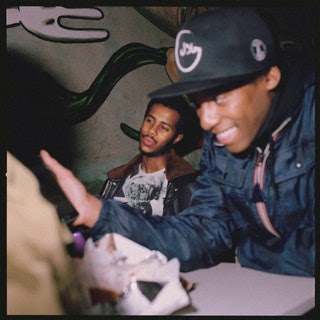
Mustafa - When Smoke Rises.
Hooooooly shee-it, this is great. I'd heard the buzz about Mustafa the Poet for years; he's been in the public eye since he was 12, and has co-written songs for Shawn Mendes and Justin Bieber. But I had no idea what to expect when this debut dropped (without "the Poet"). For a concept record by a Sudanese-Canadian about the death of his friend, rapper Smoke Dawg, I did not expect it to be so folkie and influenced by Joni Mitchell and Sufjan Stevens (insert my systemically racist assumptions here, about music being made in the immigrant-heavy Toronto neighbourhood of Regent Park). This record is gorgeous: the vocals, the songwriting, the guitar playing, the production, the cameo from Mercury Prize-winner Sampha (whose supple voice is remarkably similar to Mustafa's). It's what I wanted to hear from Daniel Caesar; Mustafa is an infinitely superior songwriter, and almost as good a singer. Smarter people than me with more time on their hands can explain this record better than I can right now. Here's a great article by Nick Krewen. One thing that definitely works in its favour: economy. This is a relatively brief (by today's standards) eight-song collection, without a single dud.
Update: Read this great article by Wendy Gillis and Victoria Gibson about the ongoing grief in Regent Park—important context while listening to this record.
The chances: Excellent. This year the Polaris in general was wide open; it was unusually difficult to predict both the long list and the shortlist, but this is the one record I always knew would be in the final running, despite the fact it came out days before the deadline. I'm almost certain it will win—and I only include a qualifier in there because Polaris has been known to confound. But whether or not Mustafa wins, I will say what an awesome flex it is that his headlining Toronto debut is being held at Massey fucking Hall (on December 1, making him the third person to play the newly renovated hall after Gordon Lightfoot and Buffy Sainte-Marie). Never heard of him? Catch up now.

The OBGMs - The Ends.
Not for me. I don't get Pup, I don't get Metz, and I don't get this. If you do, then great. I might be too old for rock'n'roll at this point. But hats off to this band, which, to my knowledge, didn't even have a big profile in Toronto, never mind the rest of the country, before suddenly arriving on the Polaris shortlist. Fun trivia: Colanthony Humphrey is the younger brother of longlisted rapper Clairmont the Second, making them the first siblings in different acts to make a Polaris long list in the same year. (Shout out to Kate Killet for pointing that out.)
The chances: Slim. I don't think a young rock band will win Polaris; that hasn't happened in more than 10 years, and frankly I think it's unlikely to ever again.

Tobi - Elements Vol. 1.
Incredibly talented new artist who was deservedly longlisted for his debut album, and now shortlists with this follow-up. I preferred the debut; this one veers more toward mainstream R&B, and a singer this good certainly doesn't need AutoTune. But his pop shift manifests in otherwise entirely natural ways and hopefully will expand his audience. Tracks like "Dollas and Cents" would give Anderson.Paak a run for his money. There are many strong tracks here, but despite the massive talent on display I'm not convinced this is a stellar collection overall. Would still be happy to see him win, though.

The Weather Station - Ignorance.
Wanted to love this record. I do not love this record. I love the idea of this record. Tamara Lindeman works with great people. She's incredibly smart and articulate. And yet--this record puts me to sleep. But so do those late-period Talk Talk records everyone cooler than me loves so much, so make of that what you will. I do really like the singles here, particularly "Robber." But, even more so than the Leanne Simpson record, this record sounds ice cold (and equally ASMR). After going through a tumultuous year of raw emotion, I found it hard to connect to something this reserved. But I'm more than thrilled that Lindeman's years of hard work are paying off, rising from a thriving Toronto musical community that I've admired for years (ever since she was in Bruce Peninsula).
The chances: Good. There's a lot of love for this record, both at home and (FWIW) abroad. And the completely mystifying millenial fandom for Steely Dan and pristine, slick adult pop records with jazz players might help tilt opinion in the Weather Station's favour. Also, as with Cadence Weapon, there may well be the sentiment that after years of critical acclaim, that Tamara Lindeman's time has finally come: and not with a sympathy vote, but with the most successful record of her career.

Zoon - Bleached Waves.
I've always hated shoegaze music, and calling it "moccasin-gaze" doesn't make it any better. This may well be the electronic Anishinaabe version of My Bloody Valentine's Loveless, as some claim; either way, it's not my bag. If your musical act of deconolonization is emulating the most bland music ever made by your colonizer, is that its own sort of musical statement? No idea. The woozy title track makes me physically nauseous—which may well even be the point.
The chances: Slim. I honestly can't imagine anyone being excited about this record, but that's clearly my own bias and I'm constantly told that objectivity is dead. C'mon Polaris, shock me!
15 other non-shortlisted records I really enjoyed, and if/when I have time I'll tell you more about them, if I haven't already:
The chances: Excellent. This year the Polaris in general was wide open; it was unusually difficult to predict both the long list and the shortlist, but this is the one record I always knew would be in the final running, despite the fact it came out days before the deadline. I'm almost certain it will win—and I only include a qualifier in there because Polaris has been known to confound. But whether or not Mustafa wins, I will say what an awesome flex it is that his headlining Toronto debut is being held at Massey fucking Hall (on December 1, making him the third person to play the newly renovated hall after Gordon Lightfoot and Buffy Sainte-Marie). Never heard of him? Catch up now.

The OBGMs - The Ends.
Not for me. I don't get Pup, I don't get Metz, and I don't get this. If you do, then great. I might be too old for rock'n'roll at this point. But hats off to this band, which, to my knowledge, didn't even have a big profile in Toronto, never mind the rest of the country, before suddenly arriving on the Polaris shortlist. Fun trivia: Colanthony Humphrey is the younger brother of longlisted rapper Clairmont the Second, making them the first siblings in different acts to make a Polaris long list in the same year. (Shout out to Kate Killet for pointing that out.)
The chances: Slim. I don't think a young rock band will win Polaris; that hasn't happened in more than 10 years, and frankly I think it's unlikely to ever again.

Tobi - Elements Vol. 1.
Incredibly talented new artist who was deservedly longlisted for his debut album, and now shortlists with this follow-up. I preferred the debut; this one veers more toward mainstream R&B, and a singer this good certainly doesn't need AutoTune. But his pop shift manifests in otherwise entirely natural ways and hopefully will expand his audience. Tracks like "Dollas and Cents" would give Anderson.Paak a run for his money. There are many strong tracks here, but despite the massive talent on display I'm not convinced this is a stellar collection overall. Would still be happy to see him win, though.
The chances: Fair. Depends a lot on the makeup of the jury, and how they weigh this against its most immediate analog, DijahSB—whose record is a lot more concise.

The Weather Station - Ignorance.
Wanted to love this record. I do not love this record. I love the idea of this record. Tamara Lindeman works with great people. She's incredibly smart and articulate. And yet--this record puts me to sleep. But so do those late-period Talk Talk records everyone cooler than me loves so much, so make of that what you will. I do really like the singles here, particularly "Robber." But, even more so than the Leanne Simpson record, this record sounds ice cold (and equally ASMR). After going through a tumultuous year of raw emotion, I found it hard to connect to something this reserved. But I'm more than thrilled that Lindeman's years of hard work are paying off, rising from a thriving Toronto musical community that I've admired for years (ever since she was in Bruce Peninsula).
The chances: Good. There's a lot of love for this record, both at home and (FWIW) abroad. And the completely mystifying millenial fandom for Steely Dan and pristine, slick adult pop records with jazz players might help tilt opinion in the Weather Station's favour. Also, as with Cadence Weapon, there may well be the sentiment that after years of critical acclaim, that Tamara Lindeman's time has finally come: and not with a sympathy vote, but with the most successful record of her career.

Zoon - Bleached Waves.
I've always hated shoegaze music, and calling it "moccasin-gaze" doesn't make it any better. This may well be the electronic Anishinaabe version of My Bloody Valentine's Loveless, as some claim; either way, it's not my bag. If your musical act of deconolonization is emulating the most bland music ever made by your colonizer, is that its own sort of musical statement? No idea. The woozy title track makes me physically nauseous—which may well even be the point.
The chances: Slim. I honestly can't imagine anyone being excited about this record, but that's clearly my own bias and I'm constantly told that objectivity is dead. C'mon Polaris, shock me!
15 other non-shortlisted records I really enjoyed, and if/when I have time I'll tell you more about them, if I haven't already:
Jennifer Castle - Monarch Season
C. Diab - White Whale
Fly Pan Am - Frontera (I've finally come around)
Thanya Iyer - Kind
Yves Jarvis - Sundry Rock Song Stock (I've finally come around)
Garrys - Haxan: Witchcraft Through the Ages
Greg Keelor - Share the Love
Population II - A la O Terre
C. Diab - White Whale
Fly Pan Am - Frontera (I've finally come around)
Thanya Iyer - Kind
Yves Jarvis - Sundry Rock Song Stock (I've finally come around)
Garrys - Haxan: Witchcraft Through the Ages
Greg Keelor - Share the Love
Population II - A la O Terre
Sam Roberts Band - All Of Us (career best?)
Serena Ryder - The Art of Falling Apart
Sagot - s/t
Vanille - Soleil '96
Donovan Woods - Without People
You Doo Right! - Don't Think You Can Escape Your Purpose
Serena Ryder - The Art of Falling Apart
Sagot - s/t
Vanille - Soleil '96
Donovan Woods - Without People
You Doo Right! - Don't Think You Can Escape Your Purpose
Could I make a playlist? Could, but won't. Not this year. I'm amazed I even pulled off this post.
And of course there's a lot more on the longlist that I haven't talked about here.
Happy listening! Congratulations to everyone who managed to stay alive and keep the lights on last year, never mind make amazing music.


