September reviews that appeared in the Kitchener-Waterloo Record and Guelph Mercury.
The Black Angels – Phosphene Dream (Blue Horizon)
The Black Angels are in love with sound. It’s a very specific sound: psychedelic guitar rock circa 1968. And you know that the dudes in this band (not so much drummer Jennifer Bailey) are the kind of guys who probably work at vintage guitar stores in their hometown of Austin when they’re not on the road, ready to peddle you old tube amps and Echoplex tape delays and tell you stories about working with Roky Erikson of the 13th Floor Elevators (which they’ve done, of course).
As much as they made indulge in fetishistic retro fantasies, none of this is a mere fashion statement: you can hear in every note of this, their third and best album, that the Black Angels are deadly serious. These are not posers relying on their equipment—or, for that matter, their stunning album artwork—to provide them with credibility. This is about the music, and they’re quick to get to the point; unlike most psychedelic wankers, the Black Angels get down to business in three-minute bursts—Phosphene Dream packs 10 tracks into just over 30 minutes. That’s still plenty of time to take a nice trip, without any squares even suspecting what you’ve been up to. (Sept. 16)
Download: “Yellow Elevator #2,” “Telephone,” “Haunting at 1300 McKinley”
Black Mountain – Wilderness Heart (Outside)
Vancouver’s ’70s-style retro rockers Black Mountain didn’t need any help crafting a massive, vintage classic rock sound on their first two albums, which they made in their hometown with engineer Colin Stewart, an old and trusted friend. But there’s something to be said for leaving your comfort zone, and so here they trek to London and Seattle to work with modern psychedelic producer Randall Dunn, and to Sunset Sound in Hollywood, the studio responsible for dozens of classic records by everyone from the Beach Boys to Led Zeppelin.
The result is that the marvelous mud of their early records has been washed away—thankfully, the resulting clarity only enhances their heaviness, while also allowing more windows for Jeremy Schmidt’s ancient keyboards to paint with vivid colours in the background; on lead single “Old Fangs,” his mix of analog synths and Deep Purple-style Hammond organ washes works wonders. Acoustic textures also shine through on tracks like “Radiant Hearts” and “Buried by the Blues,” bringing more diversity here than the band has ever displayed before.
The most significant shift, however, is the increased prominence of vocalist Amber Webber. Though one of the band’s defining factors from the beginning, she’s always been relegated to a supporting female role in a band full of bearded dudes who seemed happy to rock on without her, granting her only the occasional moody solo piece. Here, however, she’s integrated into every track; the best ones are when she and songwriter and bandleader Stephen McBean trade lines or verses. She more than rises to the challenge; while she used to rely too heavily on her signature vibrato, she’s developed into a rich and dynamic vocalist, and it’s gloriously visceral to hear her let loose on raging rockers like “Let Spirits Ride.”
The performances and production are top notch; the songs themselves somewhat less so. The lyrics are still stoner-quality ridiculousness (“Electric tides cast upon your shores/ the rudimentary force of life is shining at the gates of heaven’s door”), but when your head is banging this hard, it’s unlikely you’ll notice. (Sept. 9)
Download: “Old Fangs,” “Let Spirits Ride,” “Buried by the Blues”
Flying Lotus – Cosmogramma (Warp)
The intersections between hip-hop, jazz and the Aphex Twin school of electronic music very rarely pay dividends: often the beats are weak, the nods to jazz are token, and the electronics are mere window dressing. Flying Lotus, on the other hand, is a musical sponge and an electrifying eclectician who defies any attempt to pigeonhole the hybrid he’s working on. Many of his tracks seem like mere sketches, clocking in at under three minutes, but they’re each equally dense and effortless-sounding mini-movies that are deliciously satisfying.
Radiohead’s Thom Yorke stops by on a few tracks—but whatever, he’s barely noticeable, hardly a highlight, and if his star power draws unsuspecting listeners into this record, more power to him. More interesting is harpist Rebekah Raff and saxophonist Ravi Coltrane; the latter is Flying Lotus’s cousin, as he is the nephew of Alice Coltrane, an obvious influence here.
There are times, however, when it sounds like he’s just playing with you—literally, in the case of a track called “Table Tennis,” in which the sound of a bouncing ping-pong ball dribbles intermittently and arrhythmically throughout the track, practically mocking the poor listener. But that’s a rare move on what is otherwise an entrancing and engaging sonic journey. (Sept. 23)
Download: “Do the Astral Plane,” “Nose Art,” “Arkestry”
Mary Gauthier – The Foundling (Latent)
Mary Gauthier has had the kind of life that most songwriters write about; she’s lived it and survived to tell the tales herself. Past songs dealt with her alcohol and substance abuse, her troubled youth in Baton Rouge, turning her life around by studying philosophy and opening her own restaurant in Boston, and launching her music career late in life.
But on The Foundling, an album it took her two years to write and record—with the help of Michael Timmins of Cowboy Junkies—she tackles her most personal material yet: the story of how she was born to an unwed mother and left on the steps of a “women and infants asylum” in New Orleans, and how she spent the rest of her life asking herself questions about her past; when she finally got an answer and located her birth mother, at age 45, her request for reconnection was denied.
Such material can be morose—and some of it here certainly is, especially the straight-up autobiography of the song “March 11, 1962”—but Gauthier also finds time for some swinging country and rollicking New Orleans rhythms. And while the lyrics are intense, they tap into universal themes of abandonment, searching and self-identity, and the fact that “blood is blood/ blood don’t wash away.” Timmins knows how to cast each song perfectly, always leaving plenty of space in order to enhance the narrative, as he does in his own band’s best work. (Sept. 16)
Download: “Goodbye,” “Sideshow,” “Walk in the Water”
Chilly Gonzales – Ivory Tower (Arts and Crafts)
Chilly Gonzales claims he needs an arch-nemesis in order to thrive. Maybe he should look at the man in the mirror—he is often his own worst enemy.
That the man born Jason Beck is brilliant is beyond question: his skills as a composer and pianist are crystal clear on his unlikely 2004 breakthrough Solo Piano album, and as a performer his egocentrism is oddly engaging. But really, it’s his baiting public persona and media manipulation that are the main reason he gets any press at all; Gonzales loves to be hated, even more than he hates his need to be loved. And so his career is a cacophony of confounding moves, from self-consciously terrible electro-rap to the easy listening disco of 2008’s Soft Power to his mainstream success with Feist and Jane Birkin to his own TV show on French television.
Which brings us to Ivory Tower, which is shocking only in the fact that it’s so boring. It’s the soundtrack to a film about two brothers who are chess rivals, starring Gonzales, Peaches and Tiga. Hopefully the movie is far more entertaining than the music, which is but a trifle, missing most of the melodic gifts Gonzales showed on even the weakest moments of Soft Power. Instead, the self-proclaimed musical genius surrenders to producers Boyz Noize, who surgically remove the personality in his music, and don’t even give him enough beats to cut it on the dance floor. It’s not disco, it’s not piano pop, it’s certainly not hip-hop, and it’s cinematic only in that it sounds like a perfume commercial.
The expat Canadian, who both rails against and relishes in his obscurity at home, has been living in Europe for 10 years now—long enough to serve up a hilarious skewering of continental stereotypes on “I Am Europe”: “I’m socialist lingerie/ I’m diplomatic techno/ I’m gay pastry and racist cappuccino.” That song is worth a few chuckles more than “The Grudge,” in which Gonzales manages to sound like a parody of his satirical self—which is probably the point, but who cares? (Sept. 16)
Download: “I Am Europe,” “Smothered Mate,” “Rococo Chanel”
Grinderman – Grinderman 2 (Anti)
As the unoriginal title of this album suggests, the sequel never lives up to the original. Grinderman is the side project for Nick Cave and some of his Bad Seeds, where he gets down and dirtier than he does by day—although he’s just as libidinous as he is literary both inside and outside Grinderman, so the difference seems somewhat arbitrary.
While the first Grinderman album did sound liberating for Cave—largely because he kicked out his piano stool and strapped on a guitar—there’s not much here that lives up to the promise of that debut. Most tracks merely lurch when they should be letting loose, and—shockingly, for such a dramatic band—tension is, for the most part, kept to a minimum. Cave exploits his sexually frustrated old-man persona on tracks like “Worm Tamer” and “Kitchenette,” though it’s a joke that’s not really funny more than once. (Sept. 16)
Download: “Mickey Mouse and the Goodbye Man,” “Kitchenette,” “Worm Tamer”
It Kills – s/t (independent)
Halifax band It Kills may only be a tiny trio, but they sound positively symphonic on their remarkable debut album. A track might begin with a string quartet, then transform into a choral piece before guitars and drums come crashing through and tie it all together into triumphant territory. Many others who mine similar territory are often morose—Mogwai, Godspeed You Black Emperor, Explosions in the Sky, to name the three most obvious cinematic “post-rock” instrumental bands—and yet, ironically enough, the band called It Kills makes the most joyous music of them all, while maintaining the mystery and the majesty that make those other bands so intriguing.
Opening track “Dragons” offers some red herrings: with only two guitars and drums, it doesn’t hint at the diversity of the rest of the record, and it’s also one of the only songs to feature lyrics—which are a distraction for a band that communicates so much more without them.
It Kills are a brand new band with no pedigree that anyone outside of Halifax would know of; there are no immediate plans for them to head westward anytime soon, either. No matter: this music speaks volumes on its own, and is easily the most pleasant surprise in Canadian music this year. (Sept. 9)
Download: “Dragons,” “Le Coup,” “Sailors”
Selina Martin – Disaster Fantasies (selinamartin.com)
A cover version can either be a cheap attempt to get attention or reveal plenty about an artist’s intent. In the case of Toronto’s Selina Martin, her acoustic interpretation of “The Spirit of Radio” by Rush manages to be both. One the one hand, it’s an easy gimmick to get CBC Radio play, by tackling a hard-rock CanCon classic and giving it a coffeehouse-friendly makeover. On the other, because it’s actually one of the weaker tracks on her stellar third album, it speaks volumes about Martin’s own artistry and what she shares with the intent of Neil Peart’s lyrics: the belief in the “freedom of music” free from “glittering prizes and endless compromises.”
Disaster Fantasies displays Martin as an ambitious singer/songwriter with a knockout voice and the ability to corral her artier tendencies into a commanding power pop band; it’s an album that works on an entirely visceral level, with no shortage of catchy earworms and bold rock guitars. And yet there are tonnes of tiny tasty bits in every corner, whether it’s Rheostatics guitarist Martin Tielli noodling noisily underneath “I Know Dullness,” Laura Barrett’s kalimba on “News of Her Death,” or Martin herself playing wine glasses or tapping the loose end of a plugged-in patch cord as part of a rhythm track. Producer Chris Stringer (the D’Urbervilles, Timber Timbre) helps Martin paint vivid sonic portraits and brings the entire project into clear focus, amplifying the rock elements and leaving space for acoustic intimacy (“Throw Me in the Water”).
Martin has been on the periphery of CanRock royalty for years now, contributing to other projects (Rheostatics, Bob Wiseman) and having her praises sung by others (Gord Downie)—Disaster Fantasies deserves a place with the best work by any of those artists. (Sept. 9)
Download: “Public Safety Management,” “Always on My Mind,” “Throw Me in the Water”
Rae Spoon – Love is a Hunter (Saved by Radio)
Spoon opens this album lamenting: “death by elektro, baby you’re killing me,” sung in a pure, unwavering alto voice over fingerpicked acoustic guitar. He could easily be singing about the musical milieu of his adopted Berlin (he’s originally from Calgary), where all things techno dominate. And yet he fesses up to mixed feelings as he simultaneously wants to immerse himself in something hedonistic and meaningless: “Take me out tonight some place I can’t hear myself think/ take me out tonight, I don’t want to know what it means.”
Much of Love is a Hunter splits the difference between Canadian country-folk songs, indie rock and synthesized electro; Spoon bends each genre to his will, and the chugging pulse of several songs could work easily in either format, like the verbosely titled “We Can’t Be Lovers With These Guns On Each Other” (yes, that’s the chorus), where he sings: “nothing’s clear under the disco lights.”
Berlin has obviously invigorated Spoon, as both this and its predecessor, Superioryouareinferior, represented several leaps forward in his songwriting. He still has a tendency to beat a chorus to death, as he does on the title track, but that tack works best when he surrenders to the electronics, as on “You Can Dance.” As strong as much of Love is a Hunter is, one senses that a remix album would be even better. (Sept. 2)
Download: “Death by Elektro,” “You Can Dance,” “Dangerdangerdanger”
Superchunk – Majesty Shredding (Merge)
For a band whose sound is so frenetic and furious, Superchunk are just so… normal. Miraculously, they’ve been around for 21 years. There were no drug-fuelled flame-outs. They have kids. They never broke up, they just shifted priorities for a while. There’s no compelling reason to put out a new album, other than to prove something to themselves.
Which they do on Majesty Shredding. Their first 12 years saw them slowly maturing and changing, to the point where 2001’s Here’s to Shutting Up sounded like almost an entirely different (and, I alone would argue, better) band than the caffeinated hyperactivity of the early singles, which were at the height of grunge.
Here, however, they ditch the string sections, acoustic guitars and keyboards—or at least relegate them to the background—and return to the all-out pogo-friendly rock’n’roll band they always were. Underneath the squeals of feedback, the guitar interplay is often egghead-ish, and Mac McCaughan still revels in singing out of his range, but there’s nothing boyish about it anymore. Superchunk are adults who write songs titled “My Gap Feels Weird,” but there’s nothing self-conscious about the music.
For fans who follow McCaughan closely in both Superchunk and his solo project, Portastatic, they’ll note that while the lines between those two were often blurred, Majesty Shredding is unmistakably vintage Superchunk, the sound that fans first fell in love with in the mid-’90s. Only now there’s nary a wasted note; they know that what they have together is special and worth hanging on to. (Sept. 30)
Download: “Digging for Something,” “Crossed Wires,” “My Gap Feels Weird”
Richard Thompson – Dream Attic (Shout Factory/Warner)
It’s been said that Richard Thompson is one of the greatest British songwriters of the last 40 years. It’s been said that Richard Thompson is one of the greatest guitarists anywhere. And it’s been also said that his studio work doesn’t do justice to his great talent. So by recording 13 new songs in front of a live audience, Dream Attic should be the album to convince any non-believers, right?
Wrong. As someone who has repeatedly tried and failed to understand Thompson’s appeal—including 1982’s much-venerated Shoot Out the Lights—Dream Attic does little to change my mind. He does assemble a worthy band, featuring Joel Zifkin on violin, best known for his work with Kate and Anna McGarrigle. And the live approach does serve him better than his tepid studio work to date.
But his songs are still caught in an awkward spot between British folk and Americana singer-songwriters, and far too polite to ignite any fireworks either way. For such a renowned sultan of the strings, he writes dense songs that leave little room for him to stretch out—and when he does, perhaps his modesty prevents him from sounding anything but reserved at best. Only on the syncopated 6/8 Celtic rocker “Sidney Wells” does he really let loose. Which is a real shame, because I’d much rather hear him play guitar like that than spend 80 minutes listening to him sing flat. (Sept. 30)
Download: “Haul Me Up,” “Burning Man,” “Sidney Wells”
Neil Young – Le Noise (Warner)
Ever since CD technology was born, Neil Young has been taking the advice of his now-deceased producer, David Briggs, who told him: “All you have to do now is get closer to the source. Keep getting purer and purer.” In doing so, he’s been faithful to analog technology and capturing the essence of live performance, and how it sounds in real time, with a rock’n’roll purist’s approach to guitars-bass-drums that’s been his template since a few ill-regarded experiments in the ’80s.
Yet here he is, in what is a CanRock wet dream come true for many, teaming up with fellow expat Canadian Daniel Lanois, one of the most influential sound sculptors and studio hounds of the last 30 years. Lanois is known to have a deep respect for both raw live performances and carefully arranged, densely layered studio arrangements filled with haunting atmospherics.
The two men meet in the middle here, and part of the joy of Le Noise is hearing them learn from each other. Other than a few obvious studio tweaks, Le Noise sounds like Neil Young playing by himself in a room full of guitars and amps—there are no drums, and very little bass—with Lanois nearby twiddling knobs and manipulating his live performance, adding textures, distortion and tape-loop effects to enhance the trademark off-the-cuff nature of Young’s signature sound. And, of course, there’s plenty of reverb—which Lanois always lays on thick when he’s working with elder statesmen (Bob Dylan, Emmylou Harris, Willie Nelson, Neville Brothers).
Young has always loved dirty electric guitars, but he’s never sounded fuzzier and cracklier than he does on Le Noise; Lanois knows better than to make Neil Young sound pretty, and so instead he helps him amplify his grittiest tendencies with a raw, bleeding sound—while simultaneously reining it in so that the effect is focused, not sloppy, a painting where the artists’ bold use of colour is still kept between the lines.
For all the glorious sound, however, Young himself comes slightly unprepared for the occasion. In what could have been a defining career album—the likes of which he hasn’t had since the early ’90s, with Ragged Glory, Harvest Moon and Sleeps With Angels—Young, in typical fashion, sounds like he showed up to the session with nine songs he happened to have coughed up the month beforehand, the crushing naivete of “Angry World” being the most glaring example.
Perhaps knowing the importance of his date with Daniel Lanois, however, Young does offer two autobiographical songs. One, “Hitchhiker,” is far too literal: “And then I did this. And then I did that” (note: not actual lyric, but close). The other, the slightly Spanish-tinged acoustic song “Love and War,” sums up themes he’s dealt with “since the back streets of Toronto”: “I sang about justice and I hit a bad chord/ but I still sing about love and war.”
Despite its magnificence, Le Noise is largely a missed opportunity. If we’re lucky, it’s much more than a one-night stand; should these two giants continue their relationship, they’ll find they have plenty more to discover. And just remember, the relationship between Lanois and Dylan started with Oh Mercy before they went on to make Time Out of Mind. (Sept. 23)
Download: “Love and War,” “Peaceful Valley Boulevard,” “Walk With Me”
Thursday, October 14, 2010


Tuesday, October 05, 2010
Pop Montreal 2010
Friday, September 17, 2010
Polaris preview 2010 pt 2
Part one of this Polaris discussion is here.
The Polaris Prize will be awarded on Monday, Sept. 20.
 The remaining five nominees are:
 Owen Pallett – Heartland (For Great Justice)
The album: I’m tired of anyone with a string section getting comparisons to classical composers. Because frankly, Owen Pallett is one of the only composers making some semblance of pop music who writes the kind of melodies and orchestrations that successfully blend classical forms, pop melodicism and modern arrangements. There are straight-up songs here that need no explanation—“Lewis Takes Off His Shirt” being the obvious one—but it’s tracks like “The Great Elsewhere,” with its seemingly spastic keyboards, skittering and stuttering electronic percussion, stabbing strings and gentle, lilting melody that sum up most of Heartland’s strengths. In terms of compositional ambition in 2010, I don’t see anything in Canada or anywhere else that approaches this album’s scope. For that reason alone I’m ready to write Pallett another Polaris cheque.
The chances: Fair. Like Caribou, Pallett has the previous Polaris winner curse on him; at this young stage in Polaris history, the chances of a repeat winner are slim. And not everyone—including the self-deprecating Pallett himself—thinks he has the vocal chops to pull this off. Arguably the whole project is too egghead-y and not visceral enough. But more than a few critics simply don’t buy into Pallett’s lyrical concept, which has something to do with a meta-narrative involving a 13th-century farmer in a story told by one Owen Pallett, who rises up and kills off his creator, the very same Owen Pallett. I think it’s a fascinating comment on free will, theology, role-playing games, power struggles and the role of fiction in general. Others would use Pallett’s least favourite adjective: pretentious. Which is an entirely inaccurate term, as Heartland is very much true to who Pallett is, and manages to meet his own lofty ambitions.
 Radio Radio – Belmundo Regal (Bonsound)
The album: If there’s a dark horse this year, this is it. It’s also a testament to the growing power of the listserv to which Polaris jurors subscribe, where we champion albums we love and spam each others’ inboxes. It’s safe to say that this Acadian hip-hop group had zero profile in the rest of Canada until it began to be championed by a couple of jurors. And while Bonsound is a promotional powerhouse in Quebec, there’s no guarantee of a golden touch. The music, however, is merely okay. It is fun trying to decipher the deeply regional take on franglais, but (I’m only guessing here) there’s nothing terribly deep going on. Not that there has to be: the music is funky enough, a hip-hop-electro-pop hybrid with a bit of Southern bounce to it, and it’s pleasant enough one track at a time. But album of the year? This sounds like Bran Van 3000 b-sides at best.
The chances: Slim. This is definitely the luckiest band on the list—in that sense, they’ve already won.
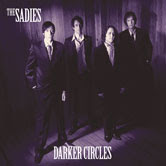 The Sadies – Darker Circles (Outside)
The album: Like anyone else in southern Ontario, I love the Sadies and have seen them dozens of times, with one or two ecstatic experiences in there somewhere. And yet I never, if ever, put on one of their albums for my own listening pleasure. There’s good reason this album—their, um, umpteenth—is getting more than its usual share of attention. I was frankly worried when I heard they were working with Gary Louris of the Jayhawks—a man who, talented though he is, is not known for his grit or sense of adventure. (Side note: he did excellent work on another Torontonian album last year, Kirsten Jones’s The Mad Mile, though no one would accuse that of being adventurous or gritty.) But as he did with their last album, New Seasons, Louris clears away only a bit of the haze and otherwise helps the band define their textures a bit more clearly; on Darker Circles, they’ve definitely hit their stride in their studio work, both with each other and with Louris. Whether he whipped their songwriting into shape or whether they’re just naturally maturing is beside the point; one finally gets the sense that the Sadies believe in these songs, that they’re not just vehicles to get them on the road and perform.
The chances: Good. Surely when a band that could be eligible for a lifetime achievement award makes an album this strong, it has to count for something.
 Shad – TSOL (Black Box)
The album: The best Canadian MC whose name doesn’t begin with K (although his last name does), Shad is hard to dislike: he’s warm, witty, and nerdier than thou. He’s also whip-smart and insightful when he wants to be, like on the haunting “At the Same Time,” but his metaphors can just as easily fall flat on their face (“Trying to listen to Jesus is hard as fake boobs”). Mostly, though, he’s full of good times and positivity, and uses his spotlight to spread the love and laugh at himself. The music rarely matches the dexterity of his lyrics, however; hopefully his continued success will attract stronger collaborators.
The chances: Excellent. Shad surprised a lot of people with his last Polaris shortlisted album, The Old Prince, and many feel that this is his year—not to mention the fact that it might be time a hip-hop album took home the prize. On top of genuine love for TSOL, people also love Shad himself; his chances of riding a wave of goodwill to the top are better than strong. He splits his time between B.C. and Ontario, which would at least be a small dent in Central Canada’s stronghold on the prize so far.
 Tegan and Sara – Sainthood (Universal)
The album: I’ll admit to having dismissed this album when it came out; not because I disliked it particularly, but because it was a competent, commercially palatable pop record and the world has plenty of those—why should I care about this one? I listened with open ears, hoping for at least a conversion on the level of Metric’s Fantasies; instead, I cast it away. The single “Hell” crept up on me during many a grocery trip (where I’m always a captive audience); the other singles are just as strong, and there’s a good chance they could be giving Carl Newman a run for his money in another few years. Maybe if my stepkiddo was as enthralled with Tegan and Sara as she is with Billy Talent, I might have succumbed by now, due to sheer overexposure.
The chances: Fair. Like the Sadies, they’ve been around a long time and their recorded output continues to improve; this may well be their best album yet (I have no idea; I haven’t followed them closely), which could tip some votes their way. But the same critics who won’t give Billy Talent the time of day are unlikely to give Tegan and Sara an objective listen.
The could've beens:
 Schomberg Fair – Gospel (Hi Hat)
The album: Last year I dumped on Elliott Brood, and arguably Schomberg Fair are cut from the same cloth. Except that they’re awesome. The breakneck banjo songs are thrilling, but there's much more going on here than a hackneyed hoedown. Bassist Nathan Sidon is the most frog-voiced singer I've heard since Gabe Minnikin in the Guthries, but it totally works for him. I don't hear a lot of people putting soul into roots music these days—and by soul I don't mean R&B (though there is a strong gospel element here, hence the title, as well as the aptly titled oddball track “Motown Break”), but that indescribable "it" that gives certain bands undeniable chemistry and sets them apart from genre-fication. This band absolutely kicks my ass: the blistering shredding, the Christian guilt, the gutsy playing that's probably the most punk rock thing I've heard in Canada this year, the banjos, the rumbling baritone voice, and the ability to breathe life into hoary clichés like "Wayfaring Stranger."
Why it didn’t make the short list: This band barely has a profile in its hometown of Toronto, never mind the rest of the country.
 Souljazz Orchestra – Rising Sun (Strut)
The album: What began as a rather imitative second-rate Afrobeat band has grown up quickly, and Rising Sun is an intriguing and varied jazz album that happens to use some African instrumentation and grooves. It’s their first for an international label, and they’re more than ready for the spotlight. Keyboardist Pierre Chretien deserves top marks for tying it all together; tenor saxophonist Steve Patterson has plenty of fine performances here as well, particularly on the dreamy, spacy “Consecration,” which owes a debt to Alice Coltrane.
Why it didn’t make the short list: World music? Jazz? Polaris has a long way to go. And fans of these genres rarely rally around a favourite, no doubt leading to an insane amount of vote-splitting.
 South Rakkas Crew – The Stimulus Package (Mad Decent)
The album: Polyglot pop and deconstructionist dancehall that draws from just about every dance music trend of the last 15 years. It’s wicked, wacky and wild party from beginning to end, full of booty bass that’s both abrasive and persuasive, and even the occasional auto-tuned vocal merely adds to the overall madness rather than a nauseating distraction. This came out on Diplo’s Mad Decent label, and it has much more in common with that scene than anything else going on in Canada. Indeed, the Crew themselves have lived in Orlando (?!) for over 10 years now, but coming from Brampton and Mississauga, their sound is definitely the sound of the modern, multicultural suburbs—suburbs barely recognizable to Arcade Fire.
Why it didn’t make the short list: Because it’s a free mix tape, not a “real album,” the old world has a bit of trouble grasping the fact that this was not available in stores and therefore not legit. It also recycles a couple of “riddims,” in Jamaican parlance, which means four tracks here with the “double-up riddim” sound exactly the same except for the vocal—that doesn’t mean each individual one is less thrilling, however. But really, the main reason South Rakkas Crew didn’t make the shortlist is because not nearly enough people listen to David Dacks.
 John Southworth – Mama Tevatron (Dead Daisy)
The album: John Southworth must be as sick as anyone by descriptors like “weird and wonderful” or, that classic kiss of death, “quirky.” But on Mama Tevatron this unique character not only shows off his songcraft at its best, but moves away from several of the stranger personas he’s inhabited in the past. Gone is the sweater-clad boyish man, gone is the weird blackface bluegrass phase; in its place is a space-age bachelor pad pop music that’s a strange hybrid of Esquivel, the Ramones and Dirty Mind-era Prince—that has to be heard to be believed. Nine of these 10 songs are pop perfection, both in their immediate appeal and the layers underneath. The final one, “Zulou,” could be Klaus Nomi covering Pink Floyd, as Southworth heads deeper and deeper into space.
Why it didn’t make the short list: Southworth’s heyday—if he had one—was over 10 years ago, when both he and Hawksley Workman were starting out and were cut from the same cloth; their paths have since diverged considerably. Maybe people still have him pegged in that period, who knows. If so, they’re missing out.

 Yukon Blonde – s/t (Nevado)
Zeus – Say Us (Arts and Crafts)
The albums: I’m going to cheat and group these together—because I can barely tell them apart, and not just because they’re always neighbours at the bottom of any alphabetical list. They’re both full of bearded boys who love ’60s pop and ’70s guitar rock, and have the kind of chops that will come in handy when Paul McCartney needs a new pool of backing players. They’re both full of rich harmonies and harmonized guitar leads, and goddammit, they both write songs that are mere inches away from the greatness of their biggest influences. If I had to give the nod to one, it would be Zeus; though their lyrics are equally as inconsequential, they do avoid downright dorkiness, which Yukon Blonde is guilty of on occasion.
Why they didn’t make the short list: Because no one else can tell them apart either, and most jurors likely reserved only one spot on their ballot for ’70s retro rock, meaning both of them (and Jason Collett, for that matter) suffered from vote-splitting. Just get together and form a supergroup already!
The Polaris Prize will be awarded on Monday, Sept. 20.
 The remaining five nominees are:
  Owen Pallett – Heartland (For Great Justice)
 The album: I’m tired of anyone with a string section getting comparisons to classical composers. Because frankly, Owen Pallett is one of the only composers making some semblance of pop music who writes the kind of melodies and orchestrations that successfully blend classical forms, pop melodicism and modern arrangements. There are straight-up songs here that need no explanation—“Lewis Takes Off His Shirt” being the obvious one—but it’s tracks like “The Great Elsewhere,” with its seemingly spastic keyboards, skittering and stuttering electronic percussion, stabbing strings and gentle, lilting melody that sum up most of Heartland’s strengths. In terms of compositional ambition in 2010, I don’t see anything in Canada or anywhere else that approaches this album’s scope. For that reason alone I’m ready to write Pallett another Polaris cheque.
The chances: Fair. Like Caribou, Pallett has the previous Polaris winner curse on him; at this young stage in Polaris history, the chances of a repeat winner are slim. And not everyone—including the self-deprecating Pallett himself—thinks he has the vocal chops to pull this off. Arguably the whole project is too egghead-y and not visceral enough. But more than a few critics simply don’t buy into Pallett’s lyrical concept, which has something to do with a meta-narrative involving a 13th-century farmer in a story told by one Owen Pallett, who rises up and kills off his creator, the very same Owen Pallett. I think it’s a fascinating comment on free will, theology, role-playing games, power struggles and the role of fiction in general. Others would use Pallett’s least favourite adjective: pretentious. Which is an entirely inaccurate term, as Heartland is very much true to who Pallett is, and manages to meet his own lofty ambitions.
 Radio Radio – Belmundo Regal (Bonsound)
 The album: If there’s a dark horse this year, this is it. It’s also a testament to the growing power of the listserv to which Polaris jurors subscribe, where we champion albums we love and spam each others’ inboxes. It’s safe to say that this Acadian hip-hop group had zero profile in the rest of Canada until it began to be championed by a couple of jurors. And while Bonsound is a promotional powerhouse in Quebec, there’s no guarantee of a golden touch. The music, however, is merely okay. It is fun trying to decipher the deeply regional take on franglais, but (I’m only guessing here) there’s nothing terribly deep going on. Not that there has to be: the music is funky enough, a hip-hop-electro-pop hybrid with a bit of Southern bounce to it, and it’s pleasant enough one track at a time. But album of the year? This sounds like Bran Van 3000 b-sides at best.
The chances: Slim. This is definitely the luckiest band on the list—in that sense, they’ve already won.
 The Sadies – Darker Circles (Outside)
 The album: Like anyone else in southern Ontario, I love the Sadies and have seen them dozens of times, with one or two ecstatic experiences in there somewhere. And yet I never, if ever, put on one of their albums for my own listening pleasure. There’s good reason this album—their, um, umpteenth—is getting more than its usual share of attention. I was frankly worried when I heard they were working with Gary Louris of the Jayhawks—a man who, talented though he is, is not known for his grit or sense of adventure. (Side note: he did excellent work on another Torontonian album last year, Kirsten Jones’s The Mad Mile, though no one would accuse that of being adventurous or gritty.) But as he did with their last album, New Seasons, Louris clears away only a bit of the haze and otherwise helps the band define their textures a bit more clearly; on Darker Circles, they’ve definitely hit their stride in their studio work, both with each other and with Louris. Whether he whipped their songwriting into shape or whether they’re just naturally maturing is beside the point; one finally gets the sense that the Sadies believe in these songs, that they’re not just vehicles to get them on the road and perform.
The chances: Good. Surely when a band that could be eligible for a lifetime achievement award makes an album this strong, it has to count for something.
 Shad – TSOL (Black Box)
 The album: The best Canadian MC whose name doesn’t begin with K (although his last name does), Shad is hard to dislike: he’s warm, witty, and nerdier than thou. He’s also whip-smart and insightful when he wants to be, like on the haunting “At the Same Time,” but his metaphors can just as easily fall flat on their face (“Trying to listen to Jesus is hard as fake boobs”). Mostly, though, he’s full of good times and positivity, and uses his spotlight to spread the love and laugh at himself. The music rarely matches the dexterity of his lyrics, however; hopefully his continued success will attract stronger collaborators.
The chances: Excellent. Shad surprised a lot of people with his last Polaris shortlisted album, The Old Prince, and many feel that this is his year—not to mention the fact that it might be time a hip-hop album took home the prize. On top of genuine love for TSOL, people also love Shad himself; his chances of riding a wave of goodwill to the top are better than strong. He splits his time between B.C. and Ontario, which would at least be a small dent in Central Canada’s stronghold on the prize so far.
 Tegan and Sara – Sainthood (Universal)
 The album: I’ll admit to having dismissed this album when it came out; not because I disliked it particularly, but because it was a competent, commercially palatable pop record and the world has plenty of those—why should I care about this one? I listened with open ears, hoping for at least a conversion on the level of Metric’s Fantasies; instead, I cast it away. The single “Hell” crept up on me during many a grocery trip (where I’m always a captive audience); the other singles are just as strong, and there’s a good chance they could be giving Carl Newman a run for his money in another few years. Maybe if my stepkiddo was as enthralled with Tegan and Sara as she is with Billy Talent, I might have succumbed by now, due to sheer overexposure.
The chances: Fair. Like the Sadies, they’ve been around a long time and their recorded output continues to improve; this may well be their best album yet (I have no idea; I haven’t followed them closely), which could tip some votes their way. But the same critics who won’t give Billy Talent the time of day are unlikely to give Tegan and Sara an objective listen.
The could've beens:
 Schomberg Fair – Gospel (Hi Hat)
The album: Last year I dumped on Elliott Brood, and arguably Schomberg Fair are cut from the same cloth. Except that they’re awesome. The breakneck banjo songs are thrilling, but there's much more going on here than a hackneyed hoedown. Bassist Nathan Sidon is the most frog-voiced singer I've heard since Gabe Minnikin in the Guthries, but it totally works for him. I don't hear a lot of people putting soul into roots music these days—and by soul I don't mean R&B (though there is a strong gospel element here, hence the title, as well as the aptly titled oddball track “Motown Break”), but that indescribable "it" that gives certain bands undeniable chemistry and sets them apart from genre-fication. This band absolutely kicks my ass: the blistering shredding, the Christian guilt, the gutsy playing that's probably the most punk rock thing I've heard in Canada this year, the banjos, the rumbling baritone voice, and the ability to breathe life into hoary clichés like "Wayfaring Stranger."
Why it didn’t make the short list: This band barely has a profile in its hometown of Toronto, never mind the rest of the country.
 Souljazz Orchestra – Rising Sun (Strut)
 The album: What began as a rather imitative second-rate Afrobeat band has grown up quickly, and Rising Sun is an intriguing and varied jazz album that happens to use some African instrumentation and grooves. It’s their first for an international label, and they’re more than ready for the spotlight. Keyboardist Pierre Chretien deserves top marks for tying it all together; tenor saxophonist Steve Patterson has plenty of fine performances here as well, particularly on the dreamy, spacy “Consecration,” which owes a debt to Alice Coltrane.
Why it didn’t make the short list: World music? Jazz? Polaris has a long way to go. And fans of these genres rarely rally around a favourite, no doubt leading to an insane amount of vote-splitting.
 South Rakkas Crew – The Stimulus Package (Mad Decent)
 The album: Polyglot pop and deconstructionist dancehall that draws from just about every dance music trend of the last 15 years. It’s wicked, wacky and wild party from beginning to end, full of booty bass that’s both abrasive and persuasive, and even the occasional auto-tuned vocal merely adds to the overall madness rather than a nauseating distraction. This came out on Diplo’s Mad Decent label, and it has much more in common with that scene than anything else going on in Canada. Indeed, the Crew themselves have lived in Orlando (?!) for over 10 years now, but coming from Brampton and Mississauga, their sound is definitely the sound of the modern, multicultural suburbs—suburbs barely recognizable to Arcade Fire.
Why it didn’t make the short list: Because it’s a free mix tape, not a “real album,” the old world has a bit of trouble grasping the fact that this was not available in stores and therefore not legit. It also recycles a couple of “riddims,” in Jamaican parlance, which means four tracks here with the “double-up riddim” sound exactly the same except for the vocal—that doesn’t mean each individual one is less thrilling, however. But really, the main reason South Rakkas Crew didn’t make the shortlist is because not nearly enough people listen to David Dacks.
 John Southworth – Mama Tevatron (Dead Daisy)
The album: John Southworth must be as sick as anyone by descriptors like “weird and wonderful” or, that classic kiss of death, “quirky.” But on Mama Tevatron this unique character not only shows off his songcraft at its best, but moves away from several of the stranger personas he’s inhabited in the past. Gone is the sweater-clad boyish man, gone is the weird blackface bluegrass phase; in its place is a space-age bachelor pad pop music that’s a strange hybrid of Esquivel, the Ramones and Dirty Mind-era Prince—that has to be heard to be believed. Nine of these 10 songs are pop perfection, both in their immediate appeal and the layers underneath. The final one, “Zulou,” could be Klaus Nomi covering Pink Floyd, as Southworth heads deeper and deeper into space.
Why it didn’t make the short list: Southworth’s heyday—if he had one—was over 10 years ago, when both he and Hawksley Workman were starting out and were cut from the same cloth; their paths have since diverged considerably. Maybe people still have him pegged in that period, who knows. If so, they’re missing out.

 Yukon Blonde – s/t (Nevado)
 Zeus – Say Us (Arts and Crafts)
The albums: I’m going to cheat and group these together—because I can barely tell them apart, and not just because they’re always neighbours at the bottom of any alphabetical list. They’re both full of bearded boys who love ’60s pop and ’70s guitar rock, and have the kind of chops that will come in handy when Paul McCartney needs a new pool of backing players. They’re both full of rich harmonies and harmonized guitar leads, and goddammit, they both write songs that are mere inches away from the greatness of their biggest influences. If I had to give the nod to one, it would be Zeus; though their lyrics are equally as inconsequential, they do avoid downright dorkiness, which Yukon Blonde is guilty of on occasion.
Why they didn’t make the short list: Because no one else can tell them apart either, and most jurors likely reserved only one spot on their ballot for ’70s retro rock, meaning both of them (and Jason Collett, for that matter) suffered from vote-splitting. Just get together and form a supergroup already!
Thursday, September 16, 2010
Polaris preview 2010 pt 1
It's Polaris Prize season again, which means that music critics across the nation are reaching fever pitch trying to hide the fact that they actually care quite a bit about who ends up with a $20,000 cheque at the end of Monday night. As they should--ultimately, they're collectively responsible for the shortlist, from which the winner will be chosen by 10 selected jurors.
Polaris season inevitably means many incoherent rants about what the prize is and what it isn't and whatever Writer X thinks it should be and whether or not anyone even listens to albums anymore. Some people like to complain about the shortlist and then admit that they like at least half of the artists on it. Some people think the prize only awards safe, predictable choices--and then almost everyone is surprised at the final result, every single goddam year. Which really means that most of the snipers are just upset that they weren't able to predict anything at all.
With the exception of the first year, I've been wrong every single year. I don't see why this year will be any different.
That said, today and tomorrow I'll post my annual charge to the jury, along with 10 other albums I would have loved to have seen on the shortlist--many of which made the long list of 40, so I can't really complain.
Polaris season inevitably means many incoherent rants about what the prize is and what it isn't and whatever Writer X thinks it should be and whether or not anyone even listens to albums anymore. Some people like to complain about the shortlist and then admit that they like at least half of the artists on it. Some people think the prize only awards safe, predictable choices--and then almost everyone is surprised at the final result, every single goddam year. Which really means that most of the snipers are just upset that they weren't able to predict anything at all.
With the exception of the first year, I've been wrong every single year. I don't see why this year will be any different.
That said, today and tomorrow I'll post my annual charge to the jury, along with 10 other albums I would have loved to have seen on the shortlist--many of which made the long list of 40, so I can't really complain.
And the first five nominees are:

The album: I feel like I was one of three rock critics in all of Canada who was bored to tears by the Besnard Lakes; the universal praise for their last album, the Polaris-shortlisted The Besnard Lakes Are the Dark Horse, left me completely mystified. Then again, I’ve never been a part of the cult of either My Bloody Valentine or the Beach Boys, and this band is a wet dream for people in love with both. Yes, the singing is lovely, and yes, Jace Lacek is a great producer with an ear for big guitar tones—you should hire him today. And thank god that bassist Olga Goreas is taking more control of the lead vocals, as Lacek’s falsetto can be a bit strained. But I clearly don’t take enough drugs to be entranced by the plodding rhythms here, which seem scared of any semblance of syncopation, and I spend most of my time while listening to this record simply nodding my head and counting out the beats: one and two and three and four and one and two and three and four and one and two and three and four and one and two and zzzzzzz …. Zzzzz … zzzz
The chances: Fair. The people who love this band love them to bits. And Roaring Night is a definite improvement over Dark Horse—which in turn was leaps and bounds above their debut, so on the other hand this is a band that continues to improve. Their masterpiece is most likely ahead of them. Considering the competition, this is probably not their year.

(Arts and Crafts)
The album: Broken Social Scene and I are fair-weather friends. That is to say, I love 2002’s You Forgot It In People as much as anyone, and I can take or leave pretty much everything else they’ve ever done. Having said that, I love this album: it’s full of pop hooks, sonic experimentation, a surprising Krautrock influence, a star turn by new singer Lisa Lobsinger, stellar production, and Justin Peroff delivers the best performance by a drummer I’ve heard this year. String sections, horn sections and multiple guitar lines bob and weave around each other yet never distract from the unity of purpose. I don’t know nor do I care what “Texico Bitches” are (though I can guarantee it’s not the prescient political statement some lugheads thought it was when the BP oil spill hit), but the lyrics on “World Sick” give me chills, as does the melody on “Sweetest Kill.” Forgiveness Rock Record is diverse, daring, and deserves all absolution for past sins, perceived or real.
The chances: Good. The last time they were on a Polaris shortlist, it was for their divisive self-titled album, which—according to Stuart Berman’s book This Book is Broken—even the band itself was divided on. Forgiveness Rock Record has brought old fans back into the fold, but it’s unclear whether the unconvinced are on board. Jury members might be either sick of this band or never cared in the first place; with the kind of baggage this band carries around, hopefully objective ears will prevail. “It’s the year 2010,” goes a line in the triumphant “Water in Hell”—a year that could well belong to Broken Social Scene.

The album: Caribou picked up a Polaris two years ago for Andorra, an album that saw him shifting away from his electronic and psych-rock beginnings toward a ’60s-tinged pop sound. Swim sees Dan Snaith moving forward yet again, retaining the melodic sense of Andorra with an intriguing mix of acoustic and electronic sounds that sounds worlds away from anything else he’s ever done. “Odessa” was a perfect summer dance single; “Found Out” does his peers the Junior Boys better than they do themselves; likewise, “Bowls” betters Caribou’s one-time mentor Four Tet. But mostly, Swim sounds like no one other than Snaith himself, an eclectician and sound scientist giddy with endless possibilities. Surely that’s him we hear cackling like a monkey on “Odessa,” delirious with joy about the wonder he’s created.
The chances: Merely fair. Because no matter how good Swim may be—and it’s Snaith’s best work in an already impressive discography—the fact that he’s a previous winner in the short history of this prize may work against his chances in the jurors’ minds, subliminally or otherwise.

The album: This Quebecois band has been around for 12 years, this is their fourth album, and yet it’s safe to say precious few in TROC have ever heard of them, despite their popularity in their native province. Listening to Les Chemins de Verre, it’s easy to understand the cultural gap: there is an entirely different vernacular at work here. Never mind the language difference; this music sounds entirely foreign, in ways that bands like Sigur Ros or Dungen or, I don’t know, even Tinariwen doesn’t. The previous Polaris franco contender, Malajube, came from prog and punk reference points that translated universally. All of this is a long-winded way of saying that I simply don’t get it. Thankfully, Ben Rayner does.
The chances: Fair. Its difference could work in its favour, especially since most jurors probably feel like they’ve heard enough of the other nominees, and their respective genres, already.

The album: There’s nothing I can say about this album that the title doesn’t. I will say, however, that I met Dan Mangan at last year’s Polaris. He is, in fact, very nice.
The chances: Depends on how many CBC Radio programmers are on the jury. Or twentysomething university students. Or both. Either way, it will answer the eternal question: do nice guys finish last?
The could've beens:

The album: A lovely, low-key debut from Feist’s guitarist, sung in a morning-after voice—although judging by the longing in the lyrics, there was no loving to be had: “In the morning I woke up, and the whole thing was in my head.” Afie Jurvanen makes tasty guitar licks sound effortless, which combined with the fact that he sounds like he’s singing in a reclining chair, makes listening to Pink Strat as easy as relaxing on a beach in, uh, the Bahamas. Though it’s a promising debut, its one downfall is that every time it comes up on my shuffle, I think it’s M. Ward.
Why it didn’t make the short list: Despite his famous friends, not many people heard this album in time for it to make an impression; it likely scraped onto the long list on the strength of two or three extremely enthusiastic supporters in the jury. Expect his forthcoming album, recorded with the Weakerthans’ Jason Tait, to make big waves.

The album: I’ll admit I fell in love with this via Stockholm syndrome, because my teenage stepkiddo plays it relentlessly and mastered every bass line on it. As a result, I probably heard this more than any other Canadian album released in the qualifying period. Thankfully, it’s really good: though they started out as a slightly screamo, Buzzcocks-influenced melodic mall punk band, Billy Talent have come a long way, and producer Brendan O’Brien (Bruce Springsteen, Pearl Jam) brings out subtle nods to R.E.M. and The Police inside the huge riff rock that they’ve now mastered. Ben Kowalewicz is not only less cartoonish now that he’s on the other side of 30, but he’s an increasingly impressive singer. “Saint Veronika” not only gave the stepkiddo an excuse to read Paulo Coehlo, but it was one of my favourite melodies of 2009; “Turn Your Back” is the rare song that makes me feel 16 again. Billy Talent are a teenage rock fantasy that this adult doesn’t feel guilty about at all.
(P.S.: Ben, Ian, Aaron and Jon: if I could get your autograph, I’d score major points at home and would be eternally grateful.)
Why it didn’t make the short list: Billy Talent do it for the kids, not the critics. And sadly, headlining the Air Canada Centre doesn’t mean they’re taken seriously. No matter—surely they’re laughing all the way to the bank.

(Dead Oceans)
The album: I’ve had many musician I admire tell me for years that Carey Mercer is a genius. I never bought it. Until now. While I found early Frog Eyes albums somewhat intriguing, they seemed stuck in a rut and Mercer’s Beefheart strut got wearisome quickly. Here, however, there are far more dynamics at play, and his usual maelstrom of madness is tempered with majesty and melody. The guitars sound fantastic, and drummer Melanie Campbell steers the ship that’s always in danger of capsizing completely. Paul’s Tomb is certainly an exhausting listening experience—as is everything Mercer is involved with—but it’s also utterly fascinating.
Why it didn’t make the short list: Frankly, because most people hate this band— if they’ve heard of it at all. The fact they made the long list was a minor miracle. Carey Mercer frightens most, and infuriates others. It’s too bad that some who wrote him off ages ago might not give this album a chance.

The album: A bunch of CanRock survivors—Tom Wilson (Junkhouse, Blackie and the Rodeo Kings), Michael Timmins (Cowboy Junkies), Josh Finlayson (Skydiggers, Country of Miracles), Colin Cripps (Crash Vegas, Kathleen Edwards) and elder statesman Brent Titcomb (Three’s a Crowd)—unite to play some spooky blues and Velvet Underground jams in the wee hours of the night. It’s not unlike the magical mystery of the first two Cowboy Junkies albums, even if it’s more muscular and in clearer focus. Indeed, it seems to have sparked something in Timmins, who also just released the finest Cowboy Junkies album in 15 years, Remnin Park. And it’s hands down the best album Tom Wilson has ever been at the centre of—whether or not you consider that faint praise.
Why it didn’t make the short list: Too old and taken for granted. Polaris is a young man’s game, though they did squeak on to the long list. Also, it’s too weird for folkies and too folkie for weirdos, plus some critics thought the whole thing was too slapdash—though I’d argue that’s why it worked.

The album: Together indeed, as every member of this uncommonly talented band brings their A-game to their fifth album. Kathryn Calder has fully grown into her role, and she and Neko Case play off each other perfectly. Carl Newman coughs up his best set of songs since at least 2005’s Twin Cinema, perhaps even since the New Pornographers’ 2000 debut Mass Romantic. Everyone else provides the muscle and ornamentation that make this band the dense delight it is. At this point, their biggest problem is that people take them for granted.
Why it didn’t make the short list: Fucked if I know.
Friday, September 10, 2010
Summer reviews '10 pt2
August reviews from the Kitchener-Waterloo Record and Guelph Mercury.
Aphasia – The Crocodile Society of Aphasia (White Wabbit/Arts and Crafts)
This Taiwanese post-rock cinematic instrumental band make their North American debut with what is actually their second album; the first, suitably enough, was a film score. Yet what might work for brooding indie dramas doesn’t come alive on disc; this also sounds decidedly stuck in the late ’90s, when bands sounding exactly like this were popping up across North America and the U.K., particularly Mogwai and Godspeed You Black Emperor and other disciples of Slint. Aphasia may be the best post-rock cinematic instrumental band in Taiwan, but the world market was saturated a long time ago. (Aug 26)
Download (iTunes, eMusic, amazon.com): “Metal Tank,” ‘Behind the River,” “This is a Go”
The Books – The Way Out (Temporary Residence)
David Byrne must love this band. This electroacoustic duo from upstate New York combine two of Byrne’s favourite things: absurdist recontextualiztion of everyday oddities in North American culture (which Byrne has done in both his lyrics and visual art), and manipulation of found sound and speech into a musical narrative (as Byrne did with Brian Eno on My Life in the Bush of Ghosts).
The Books take a playful approach to avant-garde and pop composition, delighting in nonsensical children’s stories, meaningless new age platitudes, the violent one-upmanship of grade-school taunts, and random overheard radio dialogues. These are all spliced together neatly into song structures, akin to Kid Koala’s more outré moments, or the playful pastiche of vintage Negativland. The Books took five years in between records, and returned with their most immediately appealing and accomplished album to date. (Aug 12)
Download (iTunes, eMusic, amazon.com): “A Cold Freezin’ Night,” “I Am Who I Am,” “Chain of Missing Links”
Budos Band – III (Daptone)
If you’ve ever wondered what it would sound like if an Ethiopian jazz band wrote the score to a ’70s New York City police film, it would sound a lot like Budos Band. And even if you’ve never stopped to contemplate such a thing, all you have to know is that Budos Band use a killer three-piece horn section—one baritone saxophone and two trumpets, which easily conjure maximum authority—four percussionists, flute, organ, guitar, bass, drums and a vintage studio sound (ala their labelmate Sharon Jones) to meld funk influences from around the world—and, if you believe the band’s bio, traces of Black Sabbath—into an arresting amalgam that is finally beginning to transcend its source material. The most obvious example is a Beatles cover, “Reppirt Yad” (read it backwards), which moves the original into a minor key and half the tempo and covers it in a haze of psychedelia that renders it unrecognizable. (Aug 26)
Download (iTunes, eMusic, amazon.com): “Reppirt Yad,” “Golden Dunes,” “Unbroken Unshaven”
Kathryn Calder – Are You My Mother? (File Under: Music)
It says a lot about Kathryn Calder’s voice and charisma that (her uncle) Carl Newman picked her to join the New Pornographers as a pinch-hitter when Neko Case can’t join them on tour, and also a keyboardist and featured vocalist in her own right. Calder’s own band, Immaculate Machine, was proof of her potential. Now that she’s stepped into the spotlight on her own it’s clear that the esteemed company she keeps and years of experience have rubbed off. Of course her lovely voice is front and centre, but it’s her songwriting that really stands out here. String sections, mandolins, melodic lead guitar and atmospheric textures establish a breezy, West Coast vibe; some of the glee-club tendencies of the Pornographers also appear, though never carry things over the top. If she keeps this up, it won’t be long until the qualifying phrase “member of” is dropped from her CV. (Aug 12)
Download (iTunes, eMusic, zunior.com, amazon.com): “Castor and Pollux,” “Down the River”
Cumbia Beat Vol. 1: Experimental Guitar-Driven Tropical Sounds from Peru 1966-1976 - Various Artists (Vampisoul)
If your only impression of Peruvian music conjures images of those ubiquitous buskers with pan flutes, there’s a whole world waiting to be discovered. Cumbia originated in Colombia, but mixed with indigenous Peruvian elements and Cuban influences became known as “chicha,” and like most global music in the ’60s, was invigorated by the international reach of rock’n’roll, electric guitars, and organs.
Contrary to this compilation’s title claim, there’s very little here that could be considered “experimental”—there are no wigged-out detours or anything out of the ordinary—but that doesn’t distract from the consistently compelling rhythm, which is a mix of mambo, cha-cha-cha, early ska music and rock instrumentals, with electric guitars and percussion at the forefront.
Vampisoul has done an admirable job of curation and colourful design, with a 20-page book offering a plethora of vintage pictures and extensive liner notes in English and Spanish. At a time when cumbia is making a comeback, both among vintage record collectors and followers of a new digital cumbia movement on Argentina’s ZZK label, this compilation sets a high standard. (Aug 19)
Download (eMusic, amazon.com): “Un Silbido Amoroso” by Los Wemblers de Iquitos, “Pasion Oriental” by Los Destellos, “El Escape” by Los Mirlos
Danger Mouse and Sparklehorse – Dark Night of the Soul (EMI)
Is there anyone Danger Mouse (Gnarls Barkley, Gorillaz, Beck, Black Keys) hasn’t worked with? Not after his latest project, a collaboration with Sparklehorse, with guest vocalists that include Black Francis of the Pixies, Julian Casablancas of the Strokes, Iggy Pop, Wayne Coyne of the Flaming Lips, and, uh, David Lynch.
Anyone who has heard the surrealist film director speak—or shout, as he did in Twin Peaks—may have trouble imagining Lynch singing, but he makes it work in the two of the dreamier tracks here. Lynch also took photographs for the liner notes and the website, and one would be forgiven for wanting to hear more of his influence on the music—which skews much more conventional than one might think, not that far removed from a rock version of Gnarls Barkley or an extension of his most recent project, Broken Bells, with James Mercer of the Shins (who also shows up here).
Considering the star power involved, it’s fair to expect much more from this project; almost everyone involved appears to be going through motions. That doesn’t, however, explain why EMI held back its release for over a year. Yet it’s also not a vindicatory victory lap for the late Mark Linkous of Sparklehorse, who committed suicide last year; adding to the morbidity factor is the presence of fellow suicide victim Vic Chesnutt, singing a song called “Grim Augury.” It’d be nice to announce that Dark Night of the Soul is a fitting tribute to their legacies, at the very least; instead, it’s a mere curiosity. (Aug 5)
Download (iTunes, amazon.com, puretracks.com): “Revenge” (featuring the Flaming Lips), “Little Girl” (featuring Julian Casablancas), “Dark Night of the Soul” (featuring David Lynch)
Forest City Lovers – Carriage (Out of This Spark/ Arts and Crafts)
Even though Kat Burns established herself as one of the finest new songwriters in Canada on her 2008 album Haunting Moon Sinking, the newest line-up of Forest City Lovers—with the ace production help of Chris Stringer—has helped colour her songs and provide her with welcome muscle. Burns is nothing if not subtle: musically, lyrically and vocally. She would never be accused of being an emotive vocalist, and her lyrics can easily drift by until you realize the depth of imagery at work. Violinist Mika Posen (Timber Timbre) and bassist and guitarist Kyle Donnelly and Timothy James (both of the ex-Guelph band the D’Urbervilles) all provide delicate touches to songs that are equal parts breezy California folk pop, twee British indie rock and Euro cabaret. Drummer Christian Ingelevics—who has settled into a position that has rotated frequently in the history of the band—guides the twists and turns of Burns’s songwriting with ease. After Carriage, no one will underestimate this band again. (Aug 5)
Forest City Lovers will be playing on September 22 at the Ebar in Guelph, and September 25 at the Grist Mill in Waterloo.
Download (iTunes, eMusic, amazon.com, puretracks.com): “Tell Me Cancer,” “Minneapolis,” “Believe Me”
Iron Maiden – The Final Frontier (EMI)
Is this really The Final Frontier? You promise? Being one of the mightiest forces in the history of British heavy metal, Iron Maiden don’t have anything to prove to anyone—except maybe why they should continue making new albums instead of just being a touring machine. Unlike on their recent live album (and documentary) Flight 666, here they sound old and tired and going through more than a few motions. Tempos are sludgy, there’s very little spark in the performances, and the best spots here are actually the sci-fi epic power ballads. With a band of this stature, they run the risk of sounding as dated as their cover artwork—but a retro trip would be far more rewarding than this tepid tiptoe through new material. (Aug 26)
Download (iTunes, puretracks.com, amazon.com): “El Dorado,” “Starblind,” “The Man Who Would Be King”
Javelin – No Mas (Luaka Bop)
Every summer there has to be at least one new act that takes ’80s electro as a template and throws every other aspect of global pop music from the last 40 years on top of it. This year, that group is Javelin. There are times when they sound like the French band Air on adrenalin, others when they could have escaped from an early Nintendo video game, and then there are moments when they could be soundtracking a ’70s Bollywood film. There are also warm and dreamy space-pop tracks, a.k.a. “chillwave,” apparently. If there is some kind of joke at work here, you certainly don’t have to be in on it. Just raise a glass of something fruity and frosty. (Aug 5)
Download (iTunes, eMusic, amazon.com): “Oh! Centra,” “Intervales Theme,” “Tell Me What Will It Be?”
Tom Jones – Praise and Blame (Lost Highway)
Tom Jones has cut the cheese—from his act. For all his formidable, virile vocal talent, Tom Jones has been kitschy in almost everything he’s done, from the swinging ’60s to his ’90s comeback covering contemporary tunes. Not that there’s anything wrong with that: the man is a monstrous talent and a charismatic performer.
On the raw and spiritually inclined Praise and Blame, however, there is nary a wink to be found. “What good am I?” Jones asks on the opening track, and then spends the rest of the album proving to any doubters just exactly how good he is. Instead of hearing Tom Jones bellowing over a big band or glitzy modern production, he reins himself in to front a stripped-down band playing American gospel and folk music. The man who was Elvis Presley’s favourite male singer has no trouble at all conjuring both the brimstone and the humility necessary to pull it off. This is a million miles away from Vegas: Jones is reverential to this music’s raw roots, especially on the bare-bones “Burning Hell,” where the narrator’s existential questions are driven home by only a raunchy electric guitar and stomping drums—it’s almost shocking that Jack White wasn’t involved somehow.
This back-to-basics approach has drawn comparisons to Johnny Cash’s late-in-life comeback—they both cover “Run On (God’s Gonna Cut You Down)” and “Ain’t No Grave,” for starters—but this 70-year-old has considerably more zip left in him than Cash ever did during those often-morbid albums. Both men have authoritative voices, but Tom Jones sounds just as vital as he did during his prime—perhaps even better. For that, he has a lot to praise Jesus for, and so do we. (Aug 5)
Download (iTunes, amazon.com, puretracks.com): “Burning Hell,” “Strange Things,” “Nobody’s Fault But Mine”
Seu Jorge and Almaz – s/t (Now Again)
Michael Jackson’s cultural impact may have been enormous, but oddly enough, no one dares cover his songs. His work is so tied up in time, place, production and personality that translation is tricky.
Leave it to Brazilian actor/singer Seu Jorge then, to take “Rock With You” and make you forget that it’s anything but his own. His lazy, hazy version is a soft seduction for the bedroom, not the ballroom. He owns the song so completely that it’s easy to mistake for one of his own—and it’s hardly even the highlight of this album.
Technically, nothing is Jorge’s own on this album of covers, mostly of Brazilian songwriters, but with a few left turns thrown in—like Kraftwerk’s “The Model,” which also fits in seamlessly.
Jorge has assembled some of Brazil’s finest players here to let their hair down with some chilled-out psychedelic soul music drenched in dreamy dub technique. His baritone voice brings Barry White to the table, while the Beastie Boys’ Mario Caldato ensures that the mix of samba, rock, R&B and reggae all settles into the same sonic space.
If this is the hottest summer in recent history, Seu Jorge and Almaz is the perfect soundtrack. (Aug 19)
Download (iTunes, eMusic, amazon.com): “Everybody Loves the Sunshine,” “Cristina,” “The Model”
Luisa Maita – Lero-Lero (Cumbancha)
When it comes to laid-back Brazilian rhythms, there’s a fine line between languid and lovely bossa nova and featherweight cheese. Sao Paulo’s Luisa Maita navigates this terrain expertly with modern electronics, sparse ornamentation, and the ability to be delectably delicate without running the risk of withering into a mere wisp. Though it’s perfectly suited for lazy days, this is not lazy music; there is a depth of Maita’s music that branches well beyond the diluted coffeehouse version of Brazilian music we hear most often. Maita is the daughter of a Brazilian singer whose one album has become a sought-after collector’s item; there’s no reason why people won’t still be hunting for this album 30 years later. (Aug 12)
Download (iTunes, eMusic, amazon.com): “Desencabulada,” “Fulaninha,” “Marie E Moleque”
Danny Michel – Sunset Sea (independent)
Danny Michel may still live outside of Guelph, but it sounds like he’s been spending plenty of time in warmer climes. The album title might conjure images of your last Caribbean vacation, and much of the music does too: recorded partially in Belize and Costa Rica, island rhythms are everywhere, along with kalimbas, marimbas, and some nods to New Orleans. There’s nary a country song or rock move to be found; Michel’s songwriting is adaptable enough to almost any genre, and he pulls off everything here with aplomb. Then again, when has he not? (Aug 12)
Download (iTunes, zunior.com, eMusic, cdbaby.com): “Switchman,” “Norma Desmond,” “Wish Willy”
Palenque Palenque!: Champeta Criolla & Afro Roots in Colombia 1975-91 – Various Artists (Soundway)
For all the great work the Soundway label has done lately, they’re bound to come up short occasionally—at least, short compared to the consistent excellence of, say, its Panama series. Palenque Palenque! focuses on Colombia, which, like Panama, is a cultural crossroads of Latin American, Caribbean and African influences. But whereas in Panama that led to a great diversity of music, much of the material here is stuck in a similar groove. It’s more raw and repetitive, and recommended primarily for the deep diggers. (Aug 26)
Download (iTunes, eMusic, amazon.com, soundwayrecords.com): “Los Soneros de Gamero” by Los Soneros de Gamero, “Pim Pom” by Wganda Kenya, “Naga Pedale” by Cumbia Siglo XX
Pomegranates: Persian Pop, Funk and Psych of the ’60s and ’70s - Various Artists (Finders Keepers)
In a surprisingly underreported incident recently, Iran’s supreme leader Ayatollah Ali Khamenei—who banned Western music when he was president of Iran in the ’80s—has now declared that music itself is somehow “not compatible” with the values of an Islamic republic, and should not be practised or taught in modern Iran. Granted, this isn’t as serious an issue as, say, sentencing women accused of adultery to death by stoning. But it is a strong punch in the gut to anyone who knows how rich Iranian culture is, especially its music.
Needless to say, Khamenei would find this new compilation of Persian pop to be beyond haram. Like much of the world in the ’60s and ’70s, Western pop music—in fact, global pop music in general—was being merged with indigenous music in Iran, creating fascinating hybrids. So not only are there nods to rock’n’roll and psychedelic pop music, but there are Parisian accordions, Indian table and sitar, Latin rhythms, cinematic funk and more, all backing up melodies that are, for the most part, more in tune with traditional Iranian music (though at times could be mistaken for Bollywood, also the site of very similar fusions during this time period).
None of it sounds like a half-assed cultural appropriation mishap; everything flows perfectly. Some of the performers here are Iranian legends, like Googoosh—who is still recording and touring, and sold out the Air Canada Centre in Toronto as recently as 2006—while others are unlikely to be recognizable to anyone but the Iranian diaspora.
All the more reason to pick up Pomegranates and pray that Persian music isn’t entirely extinguished by an increasingly paranoid, tyrannical regime. (Aug 19)
Download (amazon.com): Helelyos by Zia, Gol-E Aftab Gardoon by Nooshafarin, Talagh by Googoosh
Shangaan Electro: New Wave Dance Music From South Africa – Various Artists (Honest Jon’s)
Ever notice how most African compilations that surface on these shores don’t date back any earlier than the early ’80s? That’s because, much like American R&B and soul music, synthesizers were often a poor substitute for blazing horn sections; likewise, drum machines were no match for the powerhouse percussion heard on those ’70s recordings.
This compilation, on the other hand, is firmly rooted in ’80s production style, with hyperkinetic drum programming, mad marimba sounds and tinny keyboards that play some of the most insane music you’ve ever heard—in part because it’s consistently set to a neck-snapping 180 bpm, sounding like Soweto township jive on 45 setting. Details can be hard to cling to when it’s all whipping by so fast, but it’s safe to say that this is the kind of African compilation perfectly suited to anyone who thinks they’ve heard it all before—because until they’ve at least heard the insanity of Shangaan, they most certainly haven’t. (Aug 19)
Download (iTunes, eMusic, amazon.com): “Nwamfundla” by Tshetsha Boys, “Naxaniseka” by Tiyiselani Vomaseve, “N'wagezani My Love” by Zinja Hlungwani
Charanjit Singh – Synthesizing: Ten Ragas to a Disco Beat (Bombay Connection)
The backstory to this reissue is so good it sounds like a hoax. In 1982, Bollywood composer Charanjit Singh decided to play Indian ragas on a synthesizer, with a pulsing electronic disco beat, presaging house music, techno and other popular forms that this album doesn’t just hint at—it lays out the template explicitly. And while the rhythm is as hypnotic and repetitive as you would expect—the bass line is suspiciously similar on almost every track—but the versatility of the lead synth work is head-spinning: imagine synth wizard Bernie Worrell (Parliament, Talking Heads) soloing for five minutes in Indian scales over acid house tracks. It’s safe to say there was nothing else remotely like this in 1982; it’s equally safe to say there’s nothing like it in 2010, either. (Aug 26)
Download (iTunes, eMusic, amazon.com): “Raga Madhuvanti,” “Raga Todi,” “Raga Yaman”
Hawksley Workman – Milk (Six Shooter)
The more ridiculous the better—that’s usually been the case for Hawksley Workman, who has always been at his best when he lets it all hang out instead of trying to play polite. And yet: be careful what you wish for. Milk is Workman at his most unhinged, his most libidinous—and his most embarrassing.
It’s not because he is embracing electronic beats and glittery pop—as opposed to the U2-style theatrics, the delicate piano songs, or the glam and indie rock he’s done in the past. Musically, he sounds as adventurous as he ever has; the MOR politeness has been chucked out the window, hence the song “Not Your Parents’ Music”—which owes a large debt to pop megaproducers the Neptunes.
Lyrically, however, he hits several all-time lows, starting with statements like “everybody gets born to a mommy and a dad” (from “Who Do They Kiss?”) and choruses about “Warhol’s portrait of Gretzky/ pretty f—ing sexy” and something about how he’s “gotta keep you in my suicidekick clothes.”
And, despite its Eddie Van Halen-style guitar solo, the less said about the song titled “Stay Drunk and Keep F---ing,” the better.
When he’s not being over the top, he’s downright dull, on ballads like “Devastating,” or coming off like a low-rent Metric (“Robot Heart”) or worse—like the mall-punk-pop of “Chemical” (which, not surprisingly, is a radio hit).
At one point, Workman sings, “Somewhere between Stephen Morrisey and the mindblowing genius of Jay-Z/ I sit and wonder of career blunders and listen to the oldies show.” Funny, so do we. (Aug 12)
Download (iTunes): “Not Your Parents’ Music,” “Snow Angel,” “Wayside”
The World Ends: Afro Rock and Psychedelia in 1970s Nigeria – Various Artists (Soundway)
Surely there is one man somewhere in Nigeria who held all of that country’s musical output of the 1970s—and that of its immediate neighbours Ghana and Benin (sorry, Togo)—captive and hidden away, and waited for someone from Soundway Records to sell him their soul in exchange for access to his vaults. There’s no other explanation for the flood of incredible music that the label has put out in the last two years, which renders decades of similar yet shoddy compilations entirely moot.
The World Ends is no exception: two discs packed with African takes on psychedelic rock and R&B, with considerable cross-pollination with local traditions. Though the focus is on rhythm, as is to be expected, there’s also plenty of fiery lead guitar work and great pop and soul songwriting as well, making this more than a straight-up African funk collection—and an essential selection in the Soundway catalogue. (Aug 26)
Download (iTunes, eMusic, amazon.com, soundwayrecords.com): “Blacky Joe” by P.R.O., “Life’s Gone Down Low” by the Lijadu Sisters, “Breakthrough” by the Funkees
Aphasia – The Crocodile Society of Aphasia (White Wabbit/Arts and Crafts)
This Taiwanese post-rock cinematic instrumental band make their North American debut with what is actually their second album; the first, suitably enough, was a film score. Yet what might work for brooding indie dramas doesn’t come alive on disc; this also sounds decidedly stuck in the late ’90s, when bands sounding exactly like this were popping up across North America and the U.K., particularly Mogwai and Godspeed You Black Emperor and other disciples of Slint. Aphasia may be the best post-rock cinematic instrumental band in Taiwan, but the world market was saturated a long time ago. (Aug 26)
Download (iTunes, eMusic, amazon.com): “Metal Tank,” ‘Behind the River,” “This is a Go”
The Books – The Way Out (Temporary Residence)
David Byrne must love this band. This electroacoustic duo from upstate New York combine two of Byrne’s favourite things: absurdist recontextualiztion of everyday oddities in North American culture (which Byrne has done in both his lyrics and visual art), and manipulation of found sound and speech into a musical narrative (as Byrne did with Brian Eno on My Life in the Bush of Ghosts).
The Books take a playful approach to avant-garde and pop composition, delighting in nonsensical children’s stories, meaningless new age platitudes, the violent one-upmanship of grade-school taunts, and random overheard radio dialogues. These are all spliced together neatly into song structures, akin to Kid Koala’s more outré moments, or the playful pastiche of vintage Negativland. The Books took five years in between records, and returned with their most immediately appealing and accomplished album to date. (Aug 12)
Download (iTunes, eMusic, amazon.com): “A Cold Freezin’ Night,” “I Am Who I Am,” “Chain of Missing Links”
Budos Band – III (Daptone)
If you’ve ever wondered what it would sound like if an Ethiopian jazz band wrote the score to a ’70s New York City police film, it would sound a lot like Budos Band. And even if you’ve never stopped to contemplate such a thing, all you have to know is that Budos Band use a killer three-piece horn section—one baritone saxophone and two trumpets, which easily conjure maximum authority—four percussionists, flute, organ, guitar, bass, drums and a vintage studio sound (ala their labelmate Sharon Jones) to meld funk influences from around the world—and, if you believe the band’s bio, traces of Black Sabbath—into an arresting amalgam that is finally beginning to transcend its source material. The most obvious example is a Beatles cover, “Reppirt Yad” (read it backwards), which moves the original into a minor key and half the tempo and covers it in a haze of psychedelia that renders it unrecognizable. (Aug 26)
Download (iTunes, eMusic, amazon.com): “Reppirt Yad,” “Golden Dunes,” “Unbroken Unshaven”
Kathryn Calder – Are You My Mother? (File Under: Music)
It says a lot about Kathryn Calder’s voice and charisma that (her uncle) Carl Newman picked her to join the New Pornographers as a pinch-hitter when Neko Case can’t join them on tour, and also a keyboardist and featured vocalist in her own right. Calder’s own band, Immaculate Machine, was proof of her potential. Now that she’s stepped into the spotlight on her own it’s clear that the esteemed company she keeps and years of experience have rubbed off. Of course her lovely voice is front and centre, but it’s her songwriting that really stands out here. String sections, mandolins, melodic lead guitar and atmospheric textures establish a breezy, West Coast vibe; some of the glee-club tendencies of the Pornographers also appear, though never carry things over the top. If she keeps this up, it won’t be long until the qualifying phrase “member of” is dropped from her CV. (Aug 12)
Download (iTunes, eMusic, zunior.com, amazon.com): “Castor and Pollux,” “Down the River”
Cumbia Beat Vol. 1: Experimental Guitar-Driven Tropical Sounds from Peru 1966-1976 - Various Artists (Vampisoul)
If your only impression of Peruvian music conjures images of those ubiquitous buskers with pan flutes, there’s a whole world waiting to be discovered. Cumbia originated in Colombia, but mixed with indigenous Peruvian elements and Cuban influences became known as “chicha,” and like most global music in the ’60s, was invigorated by the international reach of rock’n’roll, electric guitars, and organs.
Contrary to this compilation’s title claim, there’s very little here that could be considered “experimental”—there are no wigged-out detours or anything out of the ordinary—but that doesn’t distract from the consistently compelling rhythm, which is a mix of mambo, cha-cha-cha, early ska music and rock instrumentals, with electric guitars and percussion at the forefront.
Vampisoul has done an admirable job of curation and colourful design, with a 20-page book offering a plethora of vintage pictures and extensive liner notes in English and Spanish. At a time when cumbia is making a comeback, both among vintage record collectors and followers of a new digital cumbia movement on Argentina’s ZZK label, this compilation sets a high standard. (Aug 19)
Download (eMusic, amazon.com): “Un Silbido Amoroso” by Los Wemblers de Iquitos, “Pasion Oriental” by Los Destellos, “El Escape” by Los Mirlos
Danger Mouse and Sparklehorse – Dark Night of the Soul (EMI)
Is there anyone Danger Mouse (Gnarls Barkley, Gorillaz, Beck, Black Keys) hasn’t worked with? Not after his latest project, a collaboration with Sparklehorse, with guest vocalists that include Black Francis of the Pixies, Julian Casablancas of the Strokes, Iggy Pop, Wayne Coyne of the Flaming Lips, and, uh, David Lynch.
Anyone who has heard the surrealist film director speak—or shout, as he did in Twin Peaks—may have trouble imagining Lynch singing, but he makes it work in the two of the dreamier tracks here. Lynch also took photographs for the liner notes and the website, and one would be forgiven for wanting to hear more of his influence on the music—which skews much more conventional than one might think, not that far removed from a rock version of Gnarls Barkley or an extension of his most recent project, Broken Bells, with James Mercer of the Shins (who also shows up here).
Considering the star power involved, it’s fair to expect much more from this project; almost everyone involved appears to be going through motions. That doesn’t, however, explain why EMI held back its release for over a year. Yet it’s also not a vindicatory victory lap for the late Mark Linkous of Sparklehorse, who committed suicide last year; adding to the morbidity factor is the presence of fellow suicide victim Vic Chesnutt, singing a song called “Grim Augury.” It’d be nice to announce that Dark Night of the Soul is a fitting tribute to their legacies, at the very least; instead, it’s a mere curiosity. (Aug 5)
Download (iTunes, amazon.com, puretracks.com): “Revenge” (featuring the Flaming Lips), “Little Girl” (featuring Julian Casablancas), “Dark Night of the Soul” (featuring David Lynch)
Forest City Lovers – Carriage (Out of This Spark/ Arts and Crafts)
Even though Kat Burns established herself as one of the finest new songwriters in Canada on her 2008 album Haunting Moon Sinking, the newest line-up of Forest City Lovers—with the ace production help of Chris Stringer—has helped colour her songs and provide her with welcome muscle. Burns is nothing if not subtle: musically, lyrically and vocally. She would never be accused of being an emotive vocalist, and her lyrics can easily drift by until you realize the depth of imagery at work. Violinist Mika Posen (Timber Timbre) and bassist and guitarist Kyle Donnelly and Timothy James (both of the ex-Guelph band the D’Urbervilles) all provide delicate touches to songs that are equal parts breezy California folk pop, twee British indie rock and Euro cabaret. Drummer Christian Ingelevics—who has settled into a position that has rotated frequently in the history of the band—guides the twists and turns of Burns’s songwriting with ease. After Carriage, no one will underestimate this band again. (Aug 5)
Forest City Lovers will be playing on September 22 at the Ebar in Guelph, and September 25 at the Grist Mill in Waterloo.
Download (iTunes, eMusic, amazon.com, puretracks.com): “Tell Me Cancer,” “Minneapolis,” “Believe Me”
Iron Maiden – The Final Frontier (EMI)
Is this really The Final Frontier? You promise? Being one of the mightiest forces in the history of British heavy metal, Iron Maiden don’t have anything to prove to anyone—except maybe why they should continue making new albums instead of just being a touring machine. Unlike on their recent live album (and documentary) Flight 666, here they sound old and tired and going through more than a few motions. Tempos are sludgy, there’s very little spark in the performances, and the best spots here are actually the sci-fi epic power ballads. With a band of this stature, they run the risk of sounding as dated as their cover artwork—but a retro trip would be far more rewarding than this tepid tiptoe through new material. (Aug 26)
Download (iTunes, puretracks.com, amazon.com): “El Dorado,” “Starblind,” “The Man Who Would Be King”
Javelin – No Mas (Luaka Bop)
Every summer there has to be at least one new act that takes ’80s electro as a template and throws every other aspect of global pop music from the last 40 years on top of it. This year, that group is Javelin. There are times when they sound like the French band Air on adrenalin, others when they could have escaped from an early Nintendo video game, and then there are moments when they could be soundtracking a ’70s Bollywood film. There are also warm and dreamy space-pop tracks, a.k.a. “chillwave,” apparently. If there is some kind of joke at work here, you certainly don’t have to be in on it. Just raise a glass of something fruity and frosty. (Aug 5)
Download (iTunes, eMusic, amazon.com): “Oh! Centra,” “Intervales Theme,” “Tell Me What Will It Be?”
Tom Jones – Praise and Blame (Lost Highway)
Tom Jones has cut the cheese—from his act. For all his formidable, virile vocal talent, Tom Jones has been kitschy in almost everything he’s done, from the swinging ’60s to his ’90s comeback covering contemporary tunes. Not that there’s anything wrong with that: the man is a monstrous talent and a charismatic performer.
On the raw and spiritually inclined Praise and Blame, however, there is nary a wink to be found. “What good am I?” Jones asks on the opening track, and then spends the rest of the album proving to any doubters just exactly how good he is. Instead of hearing Tom Jones bellowing over a big band or glitzy modern production, he reins himself in to front a stripped-down band playing American gospel and folk music. The man who was Elvis Presley’s favourite male singer has no trouble at all conjuring both the brimstone and the humility necessary to pull it off. This is a million miles away from Vegas: Jones is reverential to this music’s raw roots, especially on the bare-bones “Burning Hell,” where the narrator’s existential questions are driven home by only a raunchy electric guitar and stomping drums—it’s almost shocking that Jack White wasn’t involved somehow.
This back-to-basics approach has drawn comparisons to Johnny Cash’s late-in-life comeback—they both cover “Run On (God’s Gonna Cut You Down)” and “Ain’t No Grave,” for starters—but this 70-year-old has considerably more zip left in him than Cash ever did during those often-morbid albums. Both men have authoritative voices, but Tom Jones sounds just as vital as he did during his prime—perhaps even better. For that, he has a lot to praise Jesus for, and so do we. (Aug 5)
Download (iTunes, amazon.com, puretracks.com): “Burning Hell,” “Strange Things,” “Nobody’s Fault But Mine”
Seu Jorge and Almaz – s/t (Now Again)
Michael Jackson’s cultural impact may have been enormous, but oddly enough, no one dares cover his songs. His work is so tied up in time, place, production and personality that translation is tricky.
Leave it to Brazilian actor/singer Seu Jorge then, to take “Rock With You” and make you forget that it’s anything but his own. His lazy, hazy version is a soft seduction for the bedroom, not the ballroom. He owns the song so completely that it’s easy to mistake for one of his own—and it’s hardly even the highlight of this album.
Technically, nothing is Jorge’s own on this album of covers, mostly of Brazilian songwriters, but with a few left turns thrown in—like Kraftwerk’s “The Model,” which also fits in seamlessly.
Jorge has assembled some of Brazil’s finest players here to let their hair down with some chilled-out psychedelic soul music drenched in dreamy dub technique. His baritone voice brings Barry White to the table, while the Beastie Boys’ Mario Caldato ensures that the mix of samba, rock, R&B and reggae all settles into the same sonic space.
If this is the hottest summer in recent history, Seu Jorge and Almaz is the perfect soundtrack. (Aug 19)
Download (iTunes, eMusic, amazon.com): “Everybody Loves the Sunshine,” “Cristina,” “The Model”
Luisa Maita – Lero-Lero (Cumbancha)
When it comes to laid-back Brazilian rhythms, there’s a fine line between languid and lovely bossa nova and featherweight cheese. Sao Paulo’s Luisa Maita navigates this terrain expertly with modern electronics, sparse ornamentation, and the ability to be delectably delicate without running the risk of withering into a mere wisp. Though it’s perfectly suited for lazy days, this is not lazy music; there is a depth of Maita’s music that branches well beyond the diluted coffeehouse version of Brazilian music we hear most often. Maita is the daughter of a Brazilian singer whose one album has become a sought-after collector’s item; there’s no reason why people won’t still be hunting for this album 30 years later. (Aug 12)
Download (iTunes, eMusic, amazon.com): “Desencabulada,” “Fulaninha,” “Marie E Moleque”
Danny Michel – Sunset Sea (independent)
Danny Michel may still live outside of Guelph, but it sounds like he’s been spending plenty of time in warmer climes. The album title might conjure images of your last Caribbean vacation, and much of the music does too: recorded partially in Belize and Costa Rica, island rhythms are everywhere, along with kalimbas, marimbas, and some nods to New Orleans. There’s nary a country song or rock move to be found; Michel’s songwriting is adaptable enough to almost any genre, and he pulls off everything here with aplomb. Then again, when has he not? (Aug 12)
Download (iTunes, zunior.com, eMusic, cdbaby.com): “Switchman,” “Norma Desmond,” “Wish Willy”
Palenque Palenque!: Champeta Criolla & Afro Roots in Colombia 1975-91 – Various Artists (Soundway)
For all the great work the Soundway label has done lately, they’re bound to come up short occasionally—at least, short compared to the consistent excellence of, say, its Panama series. Palenque Palenque! focuses on Colombia, which, like Panama, is a cultural crossroads of Latin American, Caribbean and African influences. But whereas in Panama that led to a great diversity of music, much of the material here is stuck in a similar groove. It’s more raw and repetitive, and recommended primarily for the deep diggers. (Aug 26)
Download (iTunes, eMusic, amazon.com, soundwayrecords.com): “Los Soneros de Gamero” by Los Soneros de Gamero, “Pim Pom” by Wganda Kenya, “Naga Pedale” by Cumbia Siglo XX
Pomegranates: Persian Pop, Funk and Psych of the ’60s and ’70s - Various Artists (Finders Keepers)
In a surprisingly underreported incident recently, Iran’s supreme leader Ayatollah Ali Khamenei—who banned Western music when he was president of Iran in the ’80s—has now declared that music itself is somehow “not compatible” with the values of an Islamic republic, and should not be practised or taught in modern Iran. Granted, this isn’t as serious an issue as, say, sentencing women accused of adultery to death by stoning. But it is a strong punch in the gut to anyone who knows how rich Iranian culture is, especially its music.
Needless to say, Khamenei would find this new compilation of Persian pop to be beyond haram. Like much of the world in the ’60s and ’70s, Western pop music—in fact, global pop music in general—was being merged with indigenous music in Iran, creating fascinating hybrids. So not only are there nods to rock’n’roll and psychedelic pop music, but there are Parisian accordions, Indian table and sitar, Latin rhythms, cinematic funk and more, all backing up melodies that are, for the most part, more in tune with traditional Iranian music (though at times could be mistaken for Bollywood, also the site of very similar fusions during this time period).
None of it sounds like a half-assed cultural appropriation mishap; everything flows perfectly. Some of the performers here are Iranian legends, like Googoosh—who is still recording and touring, and sold out the Air Canada Centre in Toronto as recently as 2006—while others are unlikely to be recognizable to anyone but the Iranian diaspora.
All the more reason to pick up Pomegranates and pray that Persian music isn’t entirely extinguished by an increasingly paranoid, tyrannical regime. (Aug 19)
Download (amazon.com): Helelyos by Zia, Gol-E Aftab Gardoon by Nooshafarin, Talagh by Googoosh
Shangaan Electro: New Wave Dance Music From South Africa – Various Artists (Honest Jon’s)
Ever notice how most African compilations that surface on these shores don’t date back any earlier than the early ’80s? That’s because, much like American R&B and soul music, synthesizers were often a poor substitute for blazing horn sections; likewise, drum machines were no match for the powerhouse percussion heard on those ’70s recordings.
This compilation, on the other hand, is firmly rooted in ’80s production style, with hyperkinetic drum programming, mad marimba sounds and tinny keyboards that play some of the most insane music you’ve ever heard—in part because it’s consistently set to a neck-snapping 180 bpm, sounding like Soweto township jive on 45 setting. Details can be hard to cling to when it’s all whipping by so fast, but it’s safe to say that this is the kind of African compilation perfectly suited to anyone who thinks they’ve heard it all before—because until they’ve at least heard the insanity of Shangaan, they most certainly haven’t. (Aug 19)
Download (iTunes, eMusic, amazon.com): “Nwamfundla” by Tshetsha Boys, “Naxaniseka” by Tiyiselani Vomaseve, “N'wagezani My Love” by Zinja Hlungwani
Charanjit Singh – Synthesizing: Ten Ragas to a Disco Beat (Bombay Connection)
The backstory to this reissue is so good it sounds like a hoax. In 1982, Bollywood composer Charanjit Singh decided to play Indian ragas on a synthesizer, with a pulsing electronic disco beat, presaging house music, techno and other popular forms that this album doesn’t just hint at—it lays out the template explicitly. And while the rhythm is as hypnotic and repetitive as you would expect—the bass line is suspiciously similar on almost every track—but the versatility of the lead synth work is head-spinning: imagine synth wizard Bernie Worrell (Parliament, Talking Heads) soloing for five minutes in Indian scales over acid house tracks. It’s safe to say there was nothing else remotely like this in 1982; it’s equally safe to say there’s nothing like it in 2010, either. (Aug 26)
Download (iTunes, eMusic, amazon.com): “Raga Madhuvanti,” “Raga Todi,” “Raga Yaman”
Hawksley Workman – Milk (Six Shooter)
The more ridiculous the better—that’s usually been the case for Hawksley Workman, who has always been at his best when he lets it all hang out instead of trying to play polite. And yet: be careful what you wish for. Milk is Workman at his most unhinged, his most libidinous—and his most embarrassing.
It’s not because he is embracing electronic beats and glittery pop—as opposed to the U2-style theatrics, the delicate piano songs, or the glam and indie rock he’s done in the past. Musically, he sounds as adventurous as he ever has; the MOR politeness has been chucked out the window, hence the song “Not Your Parents’ Music”—which owes a large debt to pop megaproducers the Neptunes.
Lyrically, however, he hits several all-time lows, starting with statements like “everybody gets born to a mommy and a dad” (from “Who Do They Kiss?”) and choruses about “Warhol’s portrait of Gretzky/ pretty f—ing sexy” and something about how he’s “gotta keep you in my suicidekick clothes.”
And, despite its Eddie Van Halen-style guitar solo, the less said about the song titled “Stay Drunk and Keep F---ing,” the better.
When he’s not being over the top, he’s downright dull, on ballads like “Devastating,” or coming off like a low-rent Metric (“Robot Heart”) or worse—like the mall-punk-pop of “Chemical” (which, not surprisingly, is a radio hit).
At one point, Workman sings, “Somewhere between Stephen Morrisey and the mindblowing genius of Jay-Z/ I sit and wonder of career blunders and listen to the oldies show.” Funny, so do we. (Aug 12)
Download (iTunes): “Not Your Parents’ Music,” “Snow Angel,” “Wayside”
The World Ends: Afro Rock and Psychedelia in 1970s Nigeria – Various Artists (Soundway)
Surely there is one man somewhere in Nigeria who held all of that country’s musical output of the 1970s—and that of its immediate neighbours Ghana and Benin (sorry, Togo)—captive and hidden away, and waited for someone from Soundway Records to sell him their soul in exchange for access to his vaults. There’s no other explanation for the flood of incredible music that the label has put out in the last two years, which renders decades of similar yet shoddy compilations entirely moot.
The World Ends is no exception: two discs packed with African takes on psychedelic rock and R&B, with considerable cross-pollination with local traditions. Though the focus is on rhythm, as is to be expected, there’s also plenty of fiery lead guitar work and great pop and soul songwriting as well, making this more than a straight-up African funk collection—and an essential selection in the Soundway catalogue. (Aug 26)
Download (iTunes, eMusic, amazon.com, soundwayrecords.com): “Blacky Joe” by P.R.O., “Life’s Gone Down Low” by the Lijadu Sisters, “Breakthrough” by the Funkees
Subscribe to:
Posts (Atom)