Showing posts with label Hollie Cook. Show all posts

Thursday, March 01, 2018

Jan-Feb reviews 2018

These reviews ran in the Waterloo Region Record in January and February 2018.


Rich Aucoin – Fear EP (independent)


Rich Aucoin puts on one of the best live shows in Canada. They’re so good, in fact, that nothing the Halifax performer has ever released comes close to the experience. Which is why you’d be forgiven for wanting to skip his new record and just go see him when he hits your town—except this time that would be a mistake. The Fear EP finds Aucoin toning down his manic energy and making a smooth little pop record. That’s in part because while he was on a surfing trip, he had a laptop stolen that contained what was to be his next record. Starting fresh, Aucoin has come up with the perfect marriage of anthems, subtle electro-funk and R&B songs. Part of me wants to hear a whole record like this immediately; part of me thinks this four-song EP is a perfect distillation. (Feb. 16)


Rich Aucoin plays the Drake Hotel in Toronto tonight, March 1, and the Seahorse in Halifax March 15.

  
Beams – Teach Me To Love (independent)


Isn’t that what we want from most songs? To teach us how to love? For singer/songwriter and banjo player Anna Mernieks, it’s an imperative with added weight, following a crippling depression that led her to cancel a wedding (“The people living in the apartment in my head have got to go”). Mernieks channelled that journey into her art, and so the second album by her band Beams taps into that pain but never wallows in it: this is not a minor-key, downtempo mopefest. Beams makes tasteful indie folk-rock, with vibraphones, violins, mandolins and lap steel, while harmonies from co-lead vocalist Heather Mazhar make the whole affair seem even less lonely. In your darkest days, making music with your friends can be the best therapy. It may even teach you how to love. (Feb. 16)

Beams are touring the U.S. in March and April.

  
Stream: “Berlin, Teach Me to Love,” “Pull of the Night,” “You Are an Ocean”


Hollie Cook – Vessels of Love (Merge)


Hearing a great new reggae album in the middle of a Canadian winter is either a gift or a curse. Either way, it’s an escape. Hollie Cook’s third record—and first to get a proper North American release—is a dreamlike fantasy of a modern roots reggae record, produced by Youth (Paul McCartney, Killing Joke) with lovely melodies, rich female harmonies, full horn section, psychedelic overtones, and a killer dub-heavy rhythm section that features, at times, Jah Wobble of Public Image Limited (that band’s guitarist, Keith Levene, also shows up on one track). Cook has deep roots in Britain’s post-punk scene, being the daughter of a Sex Pistol and a backing singer for Culture Club; she also served time in a reunited Slits. Her music is most definitely a throwback—there’s no trace of dancehall or any trend in reggae of the last 30 years—but her songwriting and the production here ensure this is no mere pastiche. And it will sound even better four months from now. (Feb. 2)


Stream: “Angel Fire,” “Stay Alive,” “Ghostly Fading”


Craig David – The Time is Now (Sony)

Time isn’t usually kind to R&B singers who came up in the ’90s and early 2000s; the number of young challengers seems to rise every year, and the sonic innovation in the genre can easily leave old-timers behind. Then there’s Craig David, who had an improbable but welcome comeback two years ago when he reworked Justin Bieber’s “Where Are Ü Now” into the arguably better song “16,” as well as a collaboration with Montreal producer Kaytranada, which all led to the album Following My Intuition, which was a No. 1 album in David’s native Britain. The Time is Now is the somewhat quick follow-up, the title alluding to the fact that David doesn’t want to waste a moment of his time back in the spotlight. The same formula is in effect: melodically rich R&B with thoroughly modern grooves drawing from just about every radio trend from around the world, including the misnomer Afrobeats. David has better ears for a pop hook than other artists who are infinitely more successful; he deserves to be an international superstar, not just a British one. (Feb. 9)

Craig David plays the Velvet Underground in Toronto on March 14.


Stream: “Magic,” “Somebody Like Me,” “I Know You”


Betty Davis – Nasty Gal (Light in the Attic)


Whoever it was at Light in the Attic records who decided to time this reissue for January deserves a gold star. During the most depressing month of the year (or is that February?), listening to Betty Davis just might be the most ridiculously fun thing you can do with a set of headphones.


Davis was a funk goddess of the 1970s, whose music was driven by lots of wah pedals, clavinets, distorted guitars playing tight funk licks, and a series of incredible musicians—whom Davis insisted perform shirtless and lathered in baby oil. Before Prince took licentiousness to new levels in 1980s pop music, Davis revelled in raunch. Her hyper-sexual singing is filled with shrieks, snarls and moans, making Tina Turner sound like she was sprung from a nunnery. It easily devolves into shtick (“I can’t give it to you more messier than this!” she ad libs on one track), which can mask just what a great singer Davis actually was; when she tones down the dirty funk—as on closing track “The Lone Ranger,” or the ballad “You and I,” orchestrated with the help of her ex-husband, Miles—her true range shines through. But even if it didn’t, Davis is such a delight as a performer that every track here is a total gas.


This 1976 album was Davis’s last before she retired; her earlier records were reissued almost 10 years ago. But it’s never too late to discover Betty Davis, the Nasty Gal that she was—especially when self-identifying “nasty women” are again on the rise. (Jan. 19)


Stream: “Nasty Gal,” “F.U.N.K.,” “The Lone Ranger”


Khruangbin – Con Tudo El Mundo (Dead Oceans)


This Texas trio formed 13 years ago, when they would spend their Saturday evenings listening to ’60s Thai funk music and Iranian pop music, and their Sunday mornings soundtracking a church service. Their formula hasn’t changed much since: their take on meditative and melodic mood music is set to a light but solid groove that’s as sensual as it is spiritual. Laura Lee’s supple bass lines fitting perfectly inside the ginger grooves of drummer Donald “DJ” Johnson, while guitarist Mark Speer demonstrates remarkably fluid dexterity. Speer has the jazz voicings of Gábor Szabó, the R&B finesse of Prince in his quietest moments, and the rock’n’roll style of Brian Connelly from Shadowy Men. Khruangbin excel when they’re at their most languid, but Con Tudo El Mundo shows them playing with some extra fire—“Maria También” is based around the classic hip-hop “Apache” break—that probably comes from their first extended bout of touring following their 2015 debut, The Universe Smiles Upon You.


They play Toronto on April 17 at the Mod Club. (Feb. 23)


Stream: “Lady and Man,” “Maria También,” “Evan Finds the Third Room”


Rhye – Blood (Last Gang)


Rhye is the internationally acclaimed baby-making musical duo featuring Toronto vocalist Mike Milosh, whose cooing is set to cushiony bedroom grooves. It’s shocking their songs weren’t used on any of the Fifty Shades soundtracks, but maybe Milosh has some taste.


Rhye’s 2013 debut, Woman, was lovely but lightweight: there’s a reason they decided to call the follow-up Blood. The grooves have more depth to them, and even if Milosh rarely rises above a whisper, there’s a quiet intensity to the seductive and sparse soft pop underneath him—perhaps a result of Milosh parting ways with founding member Robin Hannibal and working instead with the live band who toured behind Woman. The string arrangements could stand to be more imaginative, and the piano hook on “Feel Your Weight” is a bit too close for comfort to Arcade Fire’s “Reflektor.” But Rhye’s music doesn’t seem designed to stand up to close inspection: it’s mood music by design, meant to leap out of algorithm-designed playlists as somewhat more substantial than the rest of the musical wallpaper that normally defines this genre. Rhye is a high jump over a low bar. (Feb. 9)


Rhye play Massey Hall on Monday, March 5.


Stream: “Taste,” “Count to Five,” “Feel Your Weight”
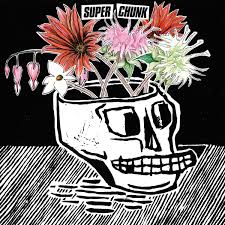


Superchunk – What a Time to Be Alive (Merge)


The title track to this venerable punk band’s 12th proper album is not exactly a celebration of life in the modern era. It, and the other songs here, was written between Donald Trump’s election and the period shortly after his inauguration. The chorus hasn’t aged a bit since then: “To see the rot in no disguise / oh, what a time to be alive / the scum, the shame, the fuckin’ lies / oh, what a time to be alive.”


The song works on several levels: it’s a brilliant protest song, in part because it doesn’t single out its target—it’s more than obvious, listening in 2018—and therefore could be applied to several situations. It’s also a rebuke to nostalgia, to which far too many punk bands subscribe. Most important, it’s not defeatist: in fact, almost every song here is a call to action, a rally for the like-minded to rally together and take back their country. Them’s fighting words, literally: “Fight me,” singer Mac McCaughan sings on “All for You.” “I’m not a violent person, but it can’t get any worse.”


Oh, and the band is on fire, playing like they’re raging against the dying of all lights. (Feb. 16)


Stream: “What a Time To Be Alive,” “Erasure,” “Reagan Youth”


Justin Timberlake – Man of the Woods (Sony)


I didn’t watch the SuperBowl. I did not have high expectations for a new Justin Timberlake album; the man’s obviously an exceptionally talented entertainer, but his records are spotty (witness the brilliant first instalment of The 20/20 Experience, and the completely lacklustre second half). By that measure, Man of the Woods is right on point: about half of it not only confirms Timberlake’s best talents, but points to a future where he merges a country influence from his native Tennessee with the once-futuristic funk of Timbaland and the Neptunes—the latter of which is significantly less forward-looking than it was 10 years ago, if only because their sonic footprint is now all over modern pop music. And the other half of Man of the Woods? It’s not terrible—well, lyrically it often is, but musically it’s usually several steps above the filler tracks on any other pop record.


The highlight here is the title track, where twangy guitars and country harmonies ride atop a synth bass and a drum machine—“Americana with 808s” is how the man himself described it. If more of the album sounded like this, Timberlake would have a real cross-genre game-changer on his hands. But it doesn’t. The collaboration with country star Chris Stapleton isn’t as successful, although the duet with Alicia Keys—which Stapleton had a hand in writing—is just fine. “Sauce” finds Timberlake doing a flat-out Pharrell impersonation, a song that sounds like a direct rip of Williams’s “Hunter,” from his 2014 album Girl. That said, despite the hideous lyrics, it’s a half-decent party track. The basslines on “Midnight Summer Jam” and the African-influenced “Living Off the Land” sound like a sampled talking drum pitched to the notes of the riff; that’s only one component that makes the former the most successful dance track here; the single “Filthy,” in comparison, sounds merely like a rocked-up outtake from FutureSex/LoveSounds.


We expect a lot from Justin Timberlake because he’s a big-tent pop star with an ear for musical innovation—as opposed to Bruno Mars, who shamelessly mines the past for new ideas. Nothing Timberlake has ever done or ever will do will be revolutionary or in any way deep—that’s not the point. If all he does is move the needle a bit and point other artists toward possibilities, then that’s all he has to do. That and a few choice dance moves. (Feb. 9)


Stream: “Midnight Summer Jam,” “Man of the Woods,” “Montana”


-->

Friday, September 02, 2011

Aug '11 reviews

These reviews ran in the Kitchener-Waterloo Record and Guelph Mercury last month.


Beirut – The Rip Tide (Ba Da Bing!)


Beirut bandleader Zach Condon has the voice of a romantic traveller, which is what he is: from his home in Albuquerque, New Mexico to Paris to Prague and beyond, with his ukulele and trumpet in tow. In the tender warble of his tenor, one can hear the youthful longing for experience, the fascination with new worlds, the friendly stranger who will offer you the shirt off his back and a drink from his glass, the mysterious siren who convinces kindred spirits to line up behind him and form a marching band parade through the centre of town.


That’s been the story of Beirut since its 2006 debut, Gulag Orkestar, became a word-of-mouth sensation, when Condon, the humble home recorder, was suddenly a bandleader attracting rapturous crowds who would storm his stages only to sway and swoon along with him. More recently, Beirut has spawned a cottage industry of tribute bands in Brazil, proving that his mongrel take on Eastern European folk music is truly adaptable to all cultures.


The Rip Tide is only his third full-length, and despite its brevity, it proves that since that debut album Condon has worked best in small doses, most recently on two 2009 EPs, March of the Zapotec and Holland, the latter exploring his electronic side. The sound of Beirut is so lush and lovely that it’s hard to quibble with it, but The Rip Tide finds Condon treading water; if you’re new to the band, then maybe this will sound every bit as intoxicating as the debut. For older fans, it’s hard to argue with more of the same, but it’s more interesting to imagine where Condon’s curiosity will take him next. (Aug. 18)


Download: “Santa Fe,” “East Harlem,” “A Candle’s Fire”


Charles Bradley – No Time For Dreaming (Daptone)


Why, you might ask soul singer Charles Bradley, is it No Time for Dreaming? He answers quickly, with a voice that takes no prisoners, in the opening couplet of the first song: “The world is going up in flames / And nobody wants to take the blame.”


Bradley rides that righteous rage throughout most of this, the debut album for the 63-year-old singer, where, among other woes, he laments the unravelling of the American social fabric. And he does so over the sound of the civil rights era in which he grew up; his backing band is led by Thomas Brenneck, of Sharon Jones and the Dap-Kings and the Budos Band.


Bradley sings like he’s been waiting his whole life to make this record—which he has. Working as a chef and a construction worker while looking for a musical break on the side, he was discovered doing a James Brown tribute in Brooklyn. (Listening to his performance here, there’s no doubt he was convincing in that role.) Brenneck provided him with a young, eager backing band and coaxed him into writing original material, based in part on his hardscrabble life (“Why Is It So Hard? (To Make It in America),” “Heartaches and Pain”). Even when he’s at his bleakest, his performance and his passion break through the darkest clouds; like anyone raised in the gospel tradition, Bradley is ultimately an optimist who finds refuge in love and urges us all to “go back to the golden rule.”


Though this record came out quietly earlier this year, Bradley has had an exceptional summer: he’s a highlight of a new Spin magazine tribute to Nirvana’s Nevermind (available for free download from the mag’s website), and his performance at Sackville, New Brunswick’s SappyFest a few weeks ago—a festival that’s a mecca for indie music lovers across the country—was the talk of the entire weekend, almost outshining Arcade Fire’s secret show there.


Charles Bradley doesn’t have time for dreaming, because his dreams are finally coming true. (Aug. 11)


Download: “The World (Is Going Up in Flames),” “No Time For Dreaming,” “The Golden Rule”


Hollie Cook – s/t (Mr. Bongo)


In the last 10 years there’s been a huge renaissance of classic ’60s and ’70s soul music, recorded with analog equipment and virtually indistinguishable from albums of the original era. Now it’s reggae’s turn.


The debut album by Hollie Cook takes a similar approach to roots reggae and rocksteady; unlike most modern reggae records, there’s no hint here that dancehall or hip-hop ever happened. Likewise, there’s no attempt to cross-pollinate or demonstrate Cook’s catholic tastes; this is nothing if not remarkably consistent.


Thankfully, it’s also much more than that. Cook—who has direct connections to ’70s punk, being the daughter of Sex Pistols drummer Paul Cook, and having served time in a recent incarnation of the Slits—is a breezy but engaging singer, and never uses her genre as a two-chord crutch: she writes great pop songs, just as many of the great singles of reggae’s first 20 years were, and sets them to deceptively simple arrangements with deep rhythm sections, big, churning organs and short, sharp horns.


Though reggae fans and followers of former punk greats will be the first to cotton on to her, she deserves a much more mainstream audience. (Aug. 4)


Download: “Walking in the Sand,” “That Night,” “Cry”


Dominik Eulberg – Diorama (Traum)


This German techno producer used to be a park ranger, which makes a lot of sense when you hear the rich textures he uses to create his playful, colourful and vivid approach to electronic dance music, one that can be imagined coming to life at a rural rave deep in the woods. His melodies are played on synths that sound like bells, his drum machines have a deep, analog texture to them, and everything in between has a shimmering, evocative warmth that continues to soothe even when the tempos accelerate or the mood turns darker. Though some of his rhythms occasionally draw from the minimal glitchiness of the last decade in German music, much of Diorama could just as easily be found on early ’80s records by Kraftwerk or Tangerine Dream. Which doesn’t make it retro; instead, the futurism of those acts is instead clearly vindicated. (Aug. 4)


Download: “Islandmuschel 400,” “H20,” “Die 3 Millionen Musketiere”


Fountains of Wayne – Sky Full of Holes (Yep Roc)


In mainstream consciousness, Fountains of Wayne are known primarily as a one-hit wonder (“Stacy’s Mom”). Outside of that, the band is known to the record-collector crowd as clever and consistent songwriters who exist somewhere between Barenaked Ladies, Weezer and Ron Sexsmith. In his spare time—which is not inconsiderable, seeing as how FoW put out an album every four years—singer/songwriter Adam Schlesinger has penned hits for Katy Perry, Jonas Brothers, Tom Hanks movies (That Thing You Do), John Waters Broadway musicals (Cry Baby) and Stephen Colbert Christmas TV specials, as well as running two side projects, one with the Smashing Pumpkins’ James Iha.


So even though Schlesinger takes his time and risks wearing himself thin, Sky Full of Holes is well worth the wait. He utilizes pop culture references not just as cheap signifiers, but as telling details of his characters, like the woman of whom he writes, “She’s been afraid of the Cuisinart since 1977.” He’s also conscious of cliché—like the tired trope of the lonely musician writing a song for a lover back home—and yet still manages to pen the touching “A Road Song,” with the chorus, “I’m writing you a road song that you can call your own.” That makes him one of the only people since Elton John and Bernie Taupin’s “Your Song” to actually pull that off.


Suitably, the music behind those lyrics sounds instantly familiar, like a series of lost ’70s AM radio hits, which makes Fountains of Wayne irresistible to any pop fan on the other side of 40. Sky Full of Holes also sounds warmer and more welcoming than most of their previous recordings; now that they’re off the major-label treadmill, their acoustic side is brought to the forefront, without toning down the tempos of their patented power pop. (Aug. 18)


Download: “The Summer Place,” “Richie and Reuben,” “A Dip in the Ocean”


Heavyweights Brass Band – Don’t Bring Me Down (independent)


You know when you walk by a group of buskers and you think, “Oh, isn’t that cute, there’s a New Orleans-style brass band playing a Michael Jackson cover.” It’s fun for a minute or two, you toss them some change, and then you move on. Heavyweights Brass Band probably sound just fine on a street corner, but there’s little on their debut album that suggests they’re much more than festival filler. Over half the tracks here are covers—including Beyoncé’s “Single Ladies” and Jackson’s “Beat It”—but other than a somewhat inspired version of Lady Gaga’s “Bad Romance” (which, above all else, is a great melody), they’re all tiresome at best, and none more so than Justin Bieber’s “Baby,” a song that sounds even worse when someone other than him does it. The originals are passable, but there still doesn’t sound like there’s any serious fire in this band. Brass bands should not be polite, as anyone who’s seen or heard Chicago’s Hypnotic Brass Ensemble can attest. These guys, on the other hand, sound like they’ve never had a blister on their lips. (Aug. 11)


Download: “Bad Romance,” “The Plunge,” “City Dreams”


Aline Morales – Flores, Tambores, e Amores (independent)


Morales is perhaps the most visible Brazilian musician in Toronto, as the former bandleader of drum corps Maracatu Nunca Antes. Here, she dials down the volume for an album of tender tropicalia and bossa nova, where her voice sounds just as compelling over vibraphones and muted trombones as it did when it was being projected over thundering drums. Even when she’s singing softly, her voice is as strong as it is seductive, and the arrangements are likewise delicate but powerful. If she wasn’t singing in Portugese—the linguistic rhythms of which are an integral part of this album’s appeal—Morales could easily envision a mainstream crossover to the Sade crowd. Summer’s not over yet; it’s not too late to unwind with this beautifully breezy Brazilian record. (Aug. 18)


Download: “Como Polen,” “Rosa,” “Um Cheiro Que Arrepia”


National Parks Project – Various Artists (Last Gang)


When you’re in a van touring Canada, the true splendour of this country is not always apparent from the Trans-Canada Highway. And when you’re hustling from gig to gig, there usually isn’t a lot of time to stop and smell the wild roses. Which is why this collection of Canucks was probably ecstatic to be invited by Parks Canada to spend some quality time in this country’s national parks, being photographed by some of the country’s top documentary filmmakers, and creating music in the wild.


The result has surfaced in 13 episodes of a TV series for the Discovery Channel (which can also be viewed here), a series of six EPs, and this album collecting some of the more focused moments from the often improvisational collaborations. The well-curated cast reads like the Polaris Prize people put this all together: Sarah Harmer, Shad, Besnard Lakes, Great Lake Swimmers, Kathleen Edwards, Sam Roberts, Tanya Tagaq Gillis, John K. Samson of the Weakerthans, Miracle Fortress, and more, including members of Billy Talent, the Deadly Snakes, Godspeed You Black Emperor, Death From Above 1979, Woodpigeon and the Luyas.


As one would expect, much of the material sounds like it was written for a nature documentary; the catch is that it was written on location. It’s not all acoustic guitars and hand drums; most of the musicians manage to either plug in or make do—hip-hop artist Cadence Weapon, for example, brought solar-powered backpacks that he could plug his sampler into, which he used to capture natural sounds and transform them into percussion. It is, however, almost uniformly reflective and mellow, with the sole exception being an up-tempo percussive track from Sebastien Granger, Woodhands’ Dan Werb and Jennifer Castle.

Sometimes actual songs are created; the album opens with two of the most straightforward tracks here, one by Sarah Harmer, Jim Guthrie and the Constantines’ Bry Webb, the other by Old Man Luedecke, Great Lake Swimmers’ Tony Dekker and Snowblink’s Daniela Gesundheit. Generally, the less literal the lyrics are, the better, although Christine Fellows—who travelled to Bruce Peninsula with John K. Samson and Sandro Perri—captures sublime imagery in “Marr Lake.”


Mostly, however, the process produces ambient instrumentals that effectively convey the sense of space and awe that a national park is supposed to inspire, like Tanya Tagaq Gillis with the Apostle of Hustle. Sometimes—like the track by Ohbijou’s Casey Mecija, Ohad Benchetrit of Do Make Say Think, and drummer/producer Don Kerr (Rheostatics, Ron Sexsmith)—the result is an epic amalgam of both approaches, and is the highlight track of the entire project. (Which is good, as the episode it came from is one of the most harshly reviewed of the entire series.)


And yet much of this isn’t as rewarding as it might look on paper, despite the more-than-impressive cast of characters. The material was written and recorded quickly, and much of what ended up on this compilation are short snippets that aren’t fully developed; people like Sam Roberts and Kathleen Edwards seem wasted. But it is fascinating to hear artists taken out of their comfort zone, both physically and with new, perhaps unexpected collaborators. One of the more revealing tracks features Graham Van Pelt of electro-dream-pop act Miracle Fortress with Mishka Stein of the cinematic art-rock band Patrick Watson, and the real wild card, Ian D’Sa of pop-punk megastars Billy Talent, who has never sounded more like Peter Buck of R.E.M.—an obvious but often unacknowledged influence on his guitar style—than he does here.


The album is much like a national park itself: beautiful, somewhat inaccessible, its greatest charms lying in subtle moments and unexpected surprises rather than the obvious. (Aug. 25)


Download: “Long Time Before This” – Sarah Harmer, Jim Guthrie, Bry Webb; “Welcome to the Dark” – Old Man Luedecke, Tony Dekker, Daniela Gesundheit; “Mystic Morning” – Casey Mecija, Ohad Benchetrit, Don Kerr


Peaking Lights – 926 (Not Not Fun)


Peaking Lights is to reggae what Shabazz Palaces (see review below) is to hip-hop: a 21st-century mutation that colours outside almost every line. There’s nary a trace of traditional reggae in Peaking Lights, but everything they do is influenced by Jamaican dub and its approach to texture. The married couple of Indra Dunis and Aaron Coyes always start with a reggae rhythm, though usually programmed on cheap, minimal electronic percussion that merely floats in the background. The focus is instead on distorted, dream-like, indistinguishable instrumentation and Dunis’s airy voice. Her dreary, distracted vocals are the weak link. When they work, they suit the lazy vibe perfectly, deadpan and drenched in sunbaked reverb. Too often, however, she just sounds bored—which is too bad, because the creative lo-fi soundscapes swirling around her are fascinating. There’s much here that’s reminiscent of the mid-’90s ambient dub band from Vancouver, Perfume Tree—and if that reference means anything to you, you need to hear Peaking Lights. (Aug. 4)


Download: “All the Sun That Shines,” “Hey Sparrow,” “Amazing and Wonderful”


Shabazz Palaces – Black Up (Sub Pop)


“Psychedelic hip-hop” usually means one of two things: someone has shamelessly sampled ’60s psychedelic pop music and rapped over it (e.g. Edan), or they’ve created something entirely abstract and impenetrable (e.g. Georgia Anne Muldrow). Which makes a case for this deliciously weird debut record by Shabazz Palaces as being the first truly great psychedelic hip-hop album—ever. “Catchy, yes, but trendy, no,” goes one line.


Fans of ’90s alt-hip-hop act Digable Planets—whose 1994 album Blowout Comb was a much-beloved underground favourite of that decade—should note that it is that group’s Ishmael “Butterfly” Butler who is behind Shabazz Palaces, although he purposely masked that fact while releasing two earlier EPs, not revealing who was behind the mask until shortly after the album came out last month.

Shabazz Palaces is nothing if not mysterious: rhythms can fall out of meter or shift entirely during the course of a track, perhaps, say, after everything drops out for a random kalimba interlude. Butler demands the listener “clear some space out so we can space out,” and there’s no telling where a track will take us, either musically or lyrically. Lyrically, Butler is often obtuse (check the song titles), but such is the relaxed cadence of his flow that nothing underneath it could possibly be discombobulating.


Traces of the Digable Planets’ jazzy underpinnings can be heard, and the album closes with a refrain from the Last Poets, a group who were, along with the late Gil Scott-Heron, the ’70s jazz progenitors of political hip-hop. But Shabazz Palaces is decidedly 21st-century in its approach to sound and texture, making avant-garde hip-hop that can both rock like early LL Cool J and flake out like Lee “Scratch” Perry jamming with Sun Ra.


Does any of it make sense? If you have to ask, you’ll never know. Strap on some serious headphones and enjoy the trip. (Aug. 4)


Download: “An echo from the hosts that profess infinitum,” “Youlogy,” “Swerve… the reeping of all that is worthwhile (noir not withstanding)”


William Elliott Whitmore – Field Songs (Anti)


William Elliot Whitmore is a gruff guy in his early 30s who sounds like he’s worked the fields for the past 50 years. In fact, he does work in fields—he still lives on his family farm in rural Iowa on the banks of the Mississippi River, and Field Songs may well have been recorded on his back porch. (The only sounds we hear are Whitmore’s voice, either a banjo or acoustic guitar, and occasionally a bass drum and a tambourine—all underscored by an army of crickets and frogs.)


Unlike his Anti Records debut, 2009’s Animals in the Dark—which was a thunderous, angry, political record with a full band—Field Songs is intimate, detailing personal struggle and hardship. “If you have burdens, don’t carry them / bury them in the ground,” Whitmore sings, although he’d obviously rather set them to song and deliver them with his gutsy, gripping vocals, which makes even the quietest songs here sound gigantic.


Field Songs is suitably timeless, with only the occasional modernity sneaking into the lyrics—there’s a lyric about “the manifest destiny of the factory farms.” Along with the near-perfect Gillian Welch album released last month, it’s been a good summer for bare-bones acoustic singer/songwriters. (Aug. 11)


Download: “Don’t Need It,” “Everything Gets Gone,” “Not Feeling Any Pain”