These reviews ran in the Waterloo
Region Record in January and February 2018.
Rich Aucoin – Fear EP (independent)
Rich Aucoin puts on one of the best live shows in Canada. They’re so
good, in fact, that nothing the Halifax performer has ever released comes close
to the experience. Which is why you’d be forgiven for wanting to skip his new
record and just go see him when he hits your town—except this time that would
be a mistake. The Fear EP finds
Aucoin toning down his manic energy and making a smooth little pop record.
That’s in part because while he was on a surfing trip, he had a laptop stolen
that contained what was to be his next record. Starting fresh, Aucoin has come
up with the perfect marriage of anthems, subtle electro-funk and R&B songs.
Part of me wants to hear a whole record like this immediately; part of me thinks
this four-song EP is a perfect distillation. (Feb. 16)
Rich Aucoin plays the Drake Hotel in Toronto tonight, March 1, and the
Seahorse in Halifax March 15.

Beams – Teach Me To Love
(independent)
Isn’t that what we want from most songs? To teach us how to love? For
singer/songwriter and banjo player Anna Mernieks, it’s an imperative with added
weight, following a crippling depression that led her to cancel a wedding (“The
people living in the apartment in my head have got to go”). Mernieks channelled
that journey into her art, and so the second album by her band Beams taps into
that pain but never wallows in it: this is not a minor-key, downtempo mopefest.
Beams makes tasteful indie folk-rock, with vibraphones, violins, mandolins and
lap steel, while harmonies from co-lead vocalist Heather Mazhar make the whole
affair seem even less lonely. In your darkest days, making music with your
friends can be the best therapy. It may even teach you how to love. (Feb. 16)
Beams are touring the U.S. in March and April.
Stream: “Berlin, Teach Me to Love,” “Pull of the Night,” “You Are an
Ocean”

Hollie Cook – Vessels of Love (Merge)
Hearing a great new reggae album in the middle of a Canadian winter is
either a gift or a curse. Either way, it’s an escape. Hollie Cook’s third
record—and first to get a proper North American release—is a dreamlike fantasy
of a modern roots reggae record, produced by Youth (Paul McCartney, Killing
Joke) with lovely melodies, rich female harmonies, full horn section,
psychedelic overtones, and a killer dub-heavy rhythm section that features, at
times, Jah Wobble of Public Image Limited (that band’s guitarist, Keith Levene,
also shows up on one track). Cook has deep roots in Britain’s post-punk scene,
being the daughter of a Sex Pistol and a backing singer for Culture Club; she
also served time in a reunited Slits. Her music is most definitely a throwback—there’s
no trace of dancehall or any trend in reggae of the last 30 years—but her
songwriting and the production here ensure this is no mere pastiche. And it
will sound even better four months from now. (Feb. 2)
Stream: “Angel Fire,” “Stay Alive,” “Ghostly Fading”
Craig David – The Time is Now (Sony)
Time isn’t usually kind to R&B singers who came up in the ’90s and
early 2000s; the number of young challengers seems to rise every year, and the
sonic innovation in the genre can easily leave old-timers behind. Then there’s
Craig David, who had an improbable but welcome comeback two years ago when he
reworked Justin Bieber’s “Where Are Ü Now” into the arguably better song “16,”
as well as a collaboration with Montreal producer Kaytranada, which all led to
the album Following My Intuition,
which was a No. 1 album in David’s native Britain. The Time is Now is the somewhat quick follow-up, the title alluding
to the fact that David doesn’t want to waste a moment of his time back in the
spotlight. The same formula is in effect: melodically rich R&B with
thoroughly modern grooves drawing from just about every radio trend from around
the world, including the misnomer Afrobeats. David has better ears for a pop
hook than other artists who are infinitely more successful; he deserves to be
an international superstar, not just a British one. (Feb. 9)
Craig David plays the Velvet Underground in Toronto on March 14.
Stream: “Magic,” “Somebody Like Me,” “I Know You”
Betty Davis – Nasty Gal (Light in the Attic)
Whoever it was at Light in the Attic records who decided to time this
reissue for January deserves a gold star. During the most depressing month of
the year (or is that February?), listening to Betty Davis just might be the
most ridiculously fun thing you can do with a set of headphones.
Davis was a funk goddess of the 1970s, whose music was driven by lots of
wah pedals, clavinets, distorted guitars playing tight funk licks, and a series
of incredible musicians—whom Davis insisted perform shirtless and lathered in
baby oil. Before Prince took licentiousness to new levels in 1980s pop music,
Davis revelled in raunch. Her hyper-sexual singing is filled with shrieks,
snarls and moans, making Tina Turner sound like she was sprung from a nunnery.
It easily devolves into shtick (“I can’t give it to you more messier than this!”
she ad libs on one track), which can mask just what a great singer Davis
actually was; when she tones down the dirty funk—as on closing track “The Lone
Ranger,” or the ballad “You and I,” orchestrated with the help of her
ex-husband, Miles—her true range shines through. But even if it didn’t, Davis
is such a delight as a performer that every track here is a total gas.
This 1976 album was Davis’s last before she retired; her earlier records
were reissued almost 10 years ago. But it’s never too late to discover Betty
Davis, the Nasty Gal that she was—especially when self-identifying “nasty
women” are again on the rise. (Jan. 19)
Stream: “Nasty Gal,” “F.U.N.K.,” “The Lone Ranger”

Khruangbin – Con Tudo El Mundo (Dead Oceans)
This Texas trio formed 13 years ago, when they would spend their
Saturday evenings listening to ’60s Thai funk music and Iranian pop music, and
their Sunday mornings soundtracking a church service. Their formula hasn’t
changed much since: their take on meditative and melodic mood music is set to a
light but solid groove that’s as sensual as it is spiritual. Laura Lee’s supple
bass lines fitting perfectly inside the ginger grooves of drummer Donald “DJ”
Johnson, while guitarist Mark Speer demonstrates remarkably fluid dexterity.
Speer has the jazz voicings of Gábor Szabó, the R&B finesse of Prince
in his quietest moments, and the rock’n’roll style of Brian Connelly from
Shadowy Men. Khruangbin excel when they’re at their most languid, but Con Tudo
El Mundo shows them playing with some extra fire—“Maria También” is based
around the classic hip-hop “Apache” break—that probably comes from their first
extended bout of touring following their 2015 debut, The Universe Smiles Upon You.
They play Toronto on April 17 at the Mod Club. (Feb. 23)
Stream: “Lady and Man,” “Maria También,” “Evan Finds the Third Room”

Rhye – Blood (Last Gang)
Rhye is the internationally acclaimed baby-making musical duo featuring
Toronto vocalist Mike Milosh, whose cooing is set to cushiony bedroom grooves.
It’s shocking their songs weren’t used on any of the Fifty Shades soundtracks, but maybe Milosh has some taste.
Rhye’s 2013 debut, Woman, was
lovely but lightweight: there’s a reason they decided to call the follow-up Blood. The grooves have more depth to
them, and even if Milosh rarely rises above a whisper, there’s a quiet
intensity to the seductive and sparse soft pop underneath him—perhaps a result
of Milosh parting ways with founding member Robin Hannibal and working instead
with the live band who toured behind Woman.
The string arrangements could stand to be more imaginative, and the piano hook
on “Feel Your Weight” is a bit too close for comfort to Arcade Fire’s “Reflektor.”
But Rhye’s music doesn’t seem designed to stand up to close inspection: it’s
mood music by design, meant to leap out of algorithm-designed playlists as
somewhat more substantial than the rest of the musical wallpaper that normally
defines this genre. Rhye is a high jump over a low bar. (Feb. 9)
Rhye play Massey Hall on Monday, March 5.
Stream: “Taste,” “Count to Five,” “Feel Your Weight”
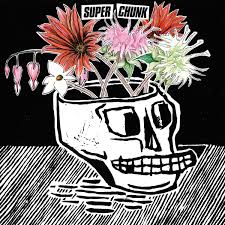
The title track to this venerable punk band’s 12th proper
album is not exactly a celebration of life in the modern era. It, and the other
songs here, was written between Donald Trump’s election and the period shortly
after his inauguration. The chorus hasn’t aged a bit since then: “To see the
rot in no disguise / oh, what a time to be alive / the scum, the shame, the
fuckin’ lies / oh, what a time to be alive.”
The song works on several levels: it’s a brilliant protest song, in part
because it doesn’t single out its target—it’s more than obvious, listening in
2018—and therefore could be applied to several situations. It’s also a rebuke
to nostalgia, to which far too many punk bands subscribe. Most important, it’s
not defeatist: in fact, almost every song here is a call to action, a rally for
the like-minded to rally together and take back their country. Them’s fighting
words, literally: “Fight me,” singer Mac McCaughan sings on “All for You.” “I’m
not a violent person, but it can’t get any worse.”
Oh, and the band is on fire, playing like they’re raging against the
dying of all lights. (Feb. 16)
Stream: “What a Time To Be Alive,” “Erasure,” “Reagan Youth”
Justin Timberlake – Man of the Woods (Sony)
I didn’t watch the SuperBowl. I did not have high expectations for a new
Justin Timberlake album; the man’s obviously an exceptionally talented
entertainer, but his records are spotty (witness the brilliant first instalment
of The 20/20 Experience, and the
completely lacklustre second half). By that measure, Man of the Woods is right on point: about half of it not only
confirms Timberlake’s best talents, but points to a future where he merges a
country influence from his native Tennessee with the once-futuristic funk of
Timbaland and the Neptunes—the latter of which is significantly less
forward-looking than it was 10 years ago, if only because their sonic footprint
is now all over modern pop music. And the other half of Man of the Woods? It’s not terrible—well, lyrically it often is,
but musically it’s usually several steps above the filler tracks on any other
pop record.
The highlight here is the title track, where twangy guitars and country
harmonies ride atop a synth bass and a drum machine—“Americana with 808s” is
how the man himself described it. If more of the album sounded like this,
Timberlake would have a real cross-genre game-changer on his hands. But it
doesn’t. The collaboration with country star Chris Stapleton isn’t as
successful, although the duet with Alicia Keys—which Stapleton had a hand in
writing—is just fine. “Sauce” finds Timberlake doing a flat-out Pharrell
impersonation, a song that sounds like a direct rip of Williams’s “Hunter,”
from his 2014 album Girl. That said,
despite the hideous lyrics, it’s a half-decent party track. The basslines on
“Midnight Summer Jam” and the African-influenced “Living Off the Land” sound
like a sampled talking drum pitched to the notes of the riff; that’s only one component
that makes the former the most successful dance track here; the single
“Filthy,” in comparison, sounds merely like a rocked-up outtake from FutureSex/LoveSounds.
We expect a lot from Justin Timberlake because he’s a big-tent pop star
with an ear for musical innovation—as opposed to Bruno Mars, who shamelessly
mines the past for new ideas. Nothing Timberlake has ever done or ever will do
will be revolutionary or in any way deep—that’s not the point. If all he does
is move the needle a bit and point other artists toward possibilities, then
that’s all he has to do. That and a few choice dance moves. (Feb. 9)
Stream: “Midnight Summer Jam,” “Man of the Woods,” “Montana”
-->


