Informative,
not authoritative. I
much prefer personal lists to those that lay some sort of claim to
objectivity. I learn about a lot of great music from them. I hope this does
this same for you. I want to read yours.
During
this decade, like the one before it, I had a weekly review column in which I
discussed approximately 200 albums a year. That’s 2,000 in a decade, not
counting music by artists about whom I wrote stories or by whom I was hired to
write bios, and not counting music I listened to just for the hell of it. So
yeah, I had trouble narrowing a few things down.
This
list has nothing to do with any professional obligation, however; it’s
personal. It’s a list made by a 48-year-old white dad who lives in Central
Canada, so make of that what you will. I don’t feel an obligation to
pretend to like Frank Ocean or Taylor Swift or Bon Iver or Lana del Rey or Radiohead or whomever else leaves me cold. I didn’t think I listened to much
rock’n’roll anymore, but apparently I listen to a lot more of it than Pitchfork writers do. Because I’m still very much an album listener, there’s nothing here
by some decade-defining artists whose singles I love. And there’s definitely no
Drake here—because, hey, I’m older than 35 and I’m pigheaded about my
emperor’s-new-clothes crusade. The fact that he’s universally hailed as the
“artist of the decade” only proves how wrong I am about everything.
So
here’s my top 100 of the decade 2010-19. There’s no way I’m going to rank these.
I did, however, break it down into a top 20 and the remaining 80,
singling out 30 underdogs for discovery purposes. With four exceptions, no
artist appears twice. One of these records seems to have been
wiped from the internet, and I’m probably one of the only people who’s noticed.
All lists arranged alphabetically, except the one off the top that’s not. I’m
sure I forgot more than a few things.
If
you want to shuffle all these up in your Spotify, there’s a playlist here.
If
you just want one sample song from each, that playlist is here.
Here
we go:
The
top 20:
I
wrote year-end lists every year—which made this task a helluva lot easier.
Looking back, it’s always interesting (to me) to see what records I still want
to listen to, and which merely sounded good at the time. But I’ll stand by my
10 #1 choices: I might not feel, today, that they’re necessarily the best
records of that given year, but they’re still favourites that earn an easy pass
onto an end-of-decade list. Click for links to the full lists for the years in
question.
Here’s
the last half of my top 20, absolutely essential records, all—at least to me, if no one else:
Alabama
Shakes – Sound and Color (2015)
Eric
Bachmann – s/t (2016)
Bonjay
– Lush Life (2018)
Jeremy
Dutcher – Wolastoqiyik Lintuwakonawa (2018)
Veda
Hille – Love Waves (2016)
Kaytranada
– 99.9% (2016)
Man
Man – On Oni Pond (2013)
Mbongwana
Star – From Kinshasa (2015)
Robyn
– Body Talk (2010)
Gillian
Welch – The Harrow and the Harvest (2011)
--
Stop
here if you’re already bored. But of the other 80 records on this list, here
are 30 underdogs records that got little or no press, by artists
unlikely to fill a venue in English Canada larger than 500 capacity. Again,
other than the top 20 listed above, these aren’t ranked; these are just
highlighted in the hopes that you make some discoveries here. Broken down by
Canada vs. the world:
Canada:
Geoff
Berner – Canadiana Grotesquica (2017)
Cadence
Weapon – s/t (2018)
Kathryn
Calder – Bright and Vivid (2011)
Le
Couleur – P.O.P. (2016)
Mark
Davis – Eliminate the Toxins (2011)
Dennis
Ellsworth – Things Change (2018)
Jim
Guthrie – Takes Time (2013)
Hilotrons
– At Least There’s Commotion (2013)
Zaki
Ibrahim – Every Opposite (2012)
La
Force – s/t (2018)
Jean
Leloup – À Paradis City (2015)
Michelle
McAdorey – Into Her Future (2015)
Scott
Merritt – Of (2015)*
Nick
Buzz – A Quiet Evening at Home (2013) Doug Paisley – Constant Companion (2010)*
International:
Africa Express Presents Maison des
Jeunes – Various Artists (2014)
Christian Scott aTunde Adjuah – Ancestral
Recall (2019)
Gaye
Su Akyol – Istikrarli Hayal Hakikattir (2018)
Altin Gun – On (2018)
Anna
Calvi – Hunter (2018)
Brandy
Clark – 12 Stories (2013)
Nels
Cline – Lovers (2016)
EMA
– The Future’s Void (2014)
Bill
Fay – Life is People (2012)
Kikagaku Moyo – Masana Temples
(2018)
Nakhane – You Will Not Die (2019)
Sons
of Kemet – Your Queen is a Reptile (2018)
Moses
Sumney – Aromanticism (2017)
The
Thermals – Personal Life (2010)
Shye
Ben Tzur, Jonny Greenwood and Rajasthan Express – Junun (2015)
--
Looking
for more familiar faces? Here’s the remaining 50, featuring somewhat
more well-known subjects (though not necessarily, especially if you’re not
Canadian):
Arca
– s/t (2017)
Arcade
Fire – Everything Now (2017)
BadBadNotGood
– IV (2016)
Beach
House – Teen Dream (2010)
Belle
and Sebastian – Write About Love (2010)
Mary
J. Blige – The London Sessions (2014)
David
Bowie – Blackstar (2016)
Broken
Social Scene – Forgiveness Rock Record (2010)
Basia
Bulat – Tall Tall Shadow (2013)
Caribou
– Swim (2010)
Rosanne
Cash – The River and the Thread (2013)
Jennifer
Castle – Pink City (2014)
Cat
Power – Sun (2012)
Neneh
Cherry – Broken Politics (2018)
Leonard
Cohen – You Want It Darker (2016)
Destroyer
– Poison Season (2015)
Beth
Ditto – Fake Sugar (2017)
Gord
Downie and the Country of Miracles – The Grand Bounce (2010)
A
Tribe Called Quest – We Got It From Here… (2016)
A
Tribe Called Red – Nation II Nation (2013)
Vampire
Weekend – Modern Vampires of the City (2013)
The
Weeknd – House of Balloons (2010)
The
Xx – I See You (2017)
*Four
titles are not available on streaming services
AroarA
seems to have ceased their web presence since Ariel Engle launched La Force:
you can’t stream or buy this anywhere. I’ve been told In the Pines is
about to be reissued in the U.S. on a poetry label out of Portland, Oregon.
Doug Paisley's music is on Spotify, but curiously his 2010 album Constant Companion is not. It is, however, on Bandcamp here.
--
What’s
that? You’re still here? Finally, in the highly unlikely event you’re not
already satiated, here’s yet another 50 excellent records I think should
also be thrown in the time capsule:
Alvvays
– Antisocialites (2017)
Atoms
for Peace – s/t (2013)
Courtney
Barnett – Sometimes I Sit and Think… (2015)
Willis
Earl Beal – Nobody Knows (2013)
Geoff
Berner – Victory Party (2011)
Jim
Bryson – Somewhere We Will Find Our Place (2016)
The
Comet is Coming – Channel the Spirits (2016)
Darkside
– Psychic (2013)
Dirty
Projectors – Swing Lo Magellan (2012)
Gord
Downie – Introduce Yerself (2017)
Dominique
Fils-Aimé – Stay Tuned (2019)
Dr.
John – Locked Down (2012)
Kevin
Hearn – Days in Frames (2014)
Hidden
Cameras – Home on Native Land (2016)
Japandroids
– Celebration Rock (2012)
J
Rocc – Some Cold Rock Stuff (2011)
Sharon
Jones & the Dap Kings – Give Them What They Want (2014)
The
Julie Ruin – s/t (2013)
Lydia
Képinski – Premier juin (2018)
Angelique
Kidjo – Remain in Light (2018)
Michael
Kiwanuka – Love & Hate (2016)
Pierre
Kwenders – Le dernier empereur bantou (2014)
Terra
Lightfoot – New Mistakes (2017)
Hubert
Lenoir – Darlène (2018)
Lykke
Li – Wounded Rhymes (2011)
Lizzo
– Coconut Oil EP (2016)
Lotic
– Power (2018)
Brad
Mehldau – Finding Gabriel (2019)
Miguel
– Kaleidoscope Dream (2012)
Tami
Neilson – Don’t Be Afraid (2015)
Tunde
Olaniran – Transgressor (2015)
Operators
– Blue Wave (2016)
Anderson.Paak
– Malibu (2016)
Pusha
T – My Name Is My Name (2013)
Kim
Richey – Edgeland (2018)
Rocket
Juice & the Moon – s/t (2012)
The
Roots – And Then You Shoot Your Cousin (2014)
Sagot
– Valse 333 (2014)
Sampha
– Process (2017)
Paul
Simon – Stranger to Stranger (2016)
Snowblink
– Inner Classics (2012)
Kae
Sun – Afriye (2013)
Tobi
– Still (2019)
Maylee
Todd – Acts of Love (2017)
Two
Hours Traffic – Foolish Blood (2013)
Tom
Waits – Bad As Me (2011)
Jack
White – Lazaretto (2014)
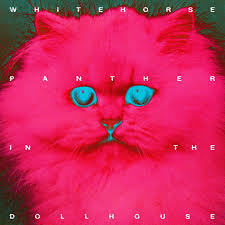
Whitehorse
– Panther in the Dollhouse (2017)
Wolf
Parade – Cry Cry Cry (2017)
Wye
Oak – Civilian (2011)
Apparently I thought 2018 and 2013 were amazing years for music. Breakdown by year:
2018:
21
2013:
20
2016:
19
2017:
18
2014:
14
2015:
14
2012:
14
2010:
13
2011:
10
2019:
7 (I’m less likely to trust my recent infatuations)
The final day of my annual five-day Polaris preview, examining two shortlisters and two absentees a day. Yes, this alphabetical saves the best for last. (Day 4: Partner, Snotty Nose Rez Kids, + Zaki Ibrahim and Terra Lightfoot discussed here.)
(Day 3: Hubert Lenoir, Pierre Kwenders, + Cold Specks and Dennis Ellsworth discussedhere.)
(Day 2: Daniel Caesar, Jeremy Dutcher, + Cadence Weapon and Bonjay discussed here.)
(Day 1: Alvvays, Jean-Michel Blais, + Arcade Fire and Geoff Berner discussed here.)
U.S. Girls – In a Poem Unlimited (4AD)
The album:
In a Poem Unlimited is the sound of an experimental artist
embracing pop music without losing her edge—in other words, an absolute recipe
for success that appeals on several levels. I love everything about this
record: music, lyrics, band, production, politics, and obviously the woman at
the centre of it all, Meg Remy.
Excerpt from my Feb. 23 review for the Waterloo Record (which appears in
full here):
“Why Do I Lose My Voice When I Have Something to Say?” That’s the title
of a musical interlude on the latest album by Meg Remy, a.k.a. U.S. Girls.
It describes a situation unlikely to ever happen to this outspoken artist: she
has a hell of a lot to say, and she wants to make sure you hear it.To make sure that happens, Remy has made her most musically accomplished
album to date, evolving from what was once a very solitary, homemade affair to
a large, vibrant band whose energy was captured in a professional studio. The
result? One of the slickest, catchiest pop songs here, “Pearly Gates,” is about
being sexually violated by St. Peter in order to gain access to heaven … The rest of the album is no less unflinching … Everything about In a Poem Unlimited plays to the aphorism of a “fist
in a velvet glove”: the more difficult the message, the more accessible the
music—much of it here references late ’70s David Bowie, or even at times an
art-damaged Madonna, with plenty of nods to the ’50s and ’60s pop of Motown and
Phil Spector…In connecting musical threads from the past into a modern context, Remy
is also underscoring that the abuse and the malaise she describes so vividly is
timeless: some of these songs may appear to be ripped from current headlines,
but there’s nothing new here—other than the fact that artists like Remy are
shining lights into dark corners and asking, “What are we going to do to
change?”
Side note, unrelated to Polaris, because the prize should not take into
consideration live performance or anything but the album itself: the current
incarnation of U.S. Girls put on one of the best shows I’ve ever seen IN MY
LIFE, at this year’s Hillside Festival in Guelph. Don’t miss them as they
continue to tour this fall, including Sept. 29 in Montreal and Nov. 7 in
Toronto.
The chances:
Extremely strong. This record works on so many levels, and is so smartly
done: not just the music, but the lyrics, which pull off the near-impossible
feat of functioning as either background pop music or searing critique. This is
not just a great party record, but it’s the kind of album you can sit around
debating for hours and like it even more at the end of the discussion. Which…
seems to be tailor-made for a jury-room victory. In any other year, I’d say
this is a shoo-in—but again, tough year.
Weaves – Wide Open (Buzz)
The album:
My Oct. 6, 2017 review:
If the best rock record of 2017 sounds like 2003, that’s fine: as long
as 2003 can be defined by Deerhoof’s Apple
O, the Yeah Yeah Yeahs’ Fever to Tell,
and Arcade Fire’s debut EP. Those records, and this one, are the sound of
rock’n’roll falling apart and reconstituted into something visceral that never
travels in a straight line, yet with pop melodies keeping everything on course. Listening to the second record by this Toronto quartet is a total rush,
right from the opening track “#53,” as surefire an anthem as can still be
written without falling into hoary cliche. Sure, the “Born to Run” glockenspiel
on the track has led to an onslaught of Springsteen comparisons already, but
Weaves are not a band easily reduced to influences. The first thing that jumps out is singer Jasmyn Burke, whose gripping
presence and commanding articulation almost overshadows the fact that she’s
also just a really great singer who’s more than capable of nailing any pitch,
but prefers to play with it instead. Guitarist Morgan Waters unleashes a flurry
of sound with punk rock energy, but he also knows when to lay back and let the
song speak for itself, like on “Walkaway” or the gentle 6/8 lilt of the title
track, drenched in Daniel Lanois-esque reverb. Rhythm section Spencer Cole and
Zach Bines are just as responsible for driving this record as Waters and Burke;
Weaves is very much four equal parts. Tanya Tagaq shows up on the album’s most
abrasive track, “Scream,” a daring move in the middle of an album that is
highly likely to pull this band up from the underground. Next time someone tries to tell
you that The National or War on Drugs are the greatest rock bands working
today, tell them to either go back to the nursing home or listen to Weaves
instead.
The chances:
Strong. I’d say the only knock against this thrilling album—other than
the strength of the competition—is that it sands off some of the edges of this
band’s prior record, which was shortlisted last year (making Weaves one of the
very few Polaris artists shortlisted in two subsequent years). I’ve heard some
jurors gripe about this, though I think that makes it a much stronger record, a
sign of maturity and growth, and it’s not like there still aren’t plenty of
tasty weird bits here to chew on—because there are. So other than competing
against nine other records on the shortlist, Weaves appear to be also competing
against themselves. Which is ridiculous. This record is an absolute triumph, on
its own terms. Every single track is a goddam delight. It was my favourite
record of 2017, period. It deserves a serious shot at the big pot.
The
shoulda, woulda, coulda:
Maylee
Todd – Acts of Love (Do Right!)
The
album:
An excerpt from my Nov. 9, 2017, review in the Waterloo Record:
Maylee Todd has always been a massive talent who made somewhat light
R&B (“Aerobics in Space”) that only hinted at her greater gifts. This, her
third album, is an astounding burst of creativity that marks her as a major
artist.The most immediately gripping songs here are the ones that sound like
soft-pop hits descended from Donna Summer and Madonna, rich with ’80s synth
bass and tightly wound rhythm guitar lines, or the type of early ’90s house
music employed by Bjork on Debut.
Having recorded everything herself in her bedroom, she sits beside modern
R&B electro innovators like Solange and Jessy Lanza. On the more downtempo
tracks, however, she pushes herself into more political and personal terrain,
with the necessary sonic innovation to illustrate it further. On “From This
Moment,” so smooth is her voice and the groove underneath—with its digitally
pitched backing vocals, marimbas, stuttering beats, weeping strings and a
lilting harp—that Todd can delve into heavy topics with incredible ease… Most
affecting is her devastating vocal turn on “That’s All I’ll Do,” set only to a
string octet, where Todd dives into the deeper end of her range to thrilling
effect.
Why it didn’t even longlist:
Too Toronto, is my guess, and from what I can tell she spent more time
in Japan than in Canada promoting it. Glad to see at least one country showing
interest.
Whitehorse
– Panther in the Dollhouse (Six
Shooter)
The
album:
An excerpt from my July 20, 2017, review in the
Waterloo Record (found here):
Luke Doucet and Melissa McClelland keep setting their own bar higher and
higher—which would be impressive for anyone, never mind two people whose median
age is 40.Whitehorse is, at its core, two master musicians schooled in folk and
rock, juggling guitar, bass and live drum loops in a live setting, with swoony
harmonies. This time out, they employ more electronics than just loop pedals,
as well as some funkier beats, courtesy of NYC hip-hop production duo Like
Minds (Q Tip, the Roots). Nothing drastic: Doucet’s monstrously rich, twangy
and tremolo guitar work is still front and centre, as are McClelland’s melodic
bass lines. If Whitehorse’s music is inherently slick and pretty, the subject
matter is not, fractured relationships set in societal underbellies amidst
predators and populist nativism.
Why it didn’t even
longlist:
Polaris
has always been no country for old (wo)men, with the notable exception of Buffy
Sainte-Marie’s 2015 win. But with a generational shift in the larger jury
recently, it’s even tougher for the over-40 crowd to be noticed. Which royally
sucks for Whitehorse, because here are two artists who are hitting their prime,
making the best work of their career(s), either in or outside this band. If
you’ve listened to the entire Polaris lists and for whatever reason don’t understand
what the young whippersnappers are up to, rest easy knowing that Whitehorse are
making great records and filling Massey Hall. When their stunning performance
of “Die Alone” comes out on a forthcoming Arts and Crafts release, Live at Massey Hall Vol. 1, prepare your
jaw for a drop.
"We are living in a time when misery is just common circumstance."
-Weaves
Except when it comes to music.
If
you thought 2016 was a year filled with bad news, 2017 was worse. I spent most
of it peeking nervously at headlines, while talking to some of my favourite
musicians about life, love and death as part of my upcoming book The
Never-Ending Present: The Story of Gord Downie and the Tragically Hip (out
April 3, 2018). My research sent me down many wormholes, spending far more time
in the ’90s than I would recommend for anyone’s musical mental health.
Miraculously, I still have a weekly review column in the Waterloo Region Record,
and found no shortage of inspiration in the vital music of today. Judging by
most other year-end lists I’m seeing, hopefully you find this one decidedly
different.
As
Prince said in 2015, albums still matter. On that note, be sure to read this
excellent Liz Pelly piece on Spotify and “Best New Muzak.”
1. Weaves – Wide Open (Buzz)
If the best rock record of 2017
sounds like 2003, that’s fine by me: as long as 2003 can be defined by
Deerhoof’s Apple O, the Yeah Yeah
Yeahs’ Fever to Tell, and Arcade
Fire’s debut EP. Those records, and this one, are the sound of rock’n’roll
falling apart and reconstituted into something visceral that never travels in a
straight line, yet with pop melodies keeping everything on course.
Listening to the second record by
this Toronto quartet is a total rush, right from the opening track “#53,” as
surefire an anthem as can still be written without falling into hoary cliché.
Sure, the “Born to Run” glockenspiel on the track has led to an onslaught of
Springsteen comparisons, but Weaves are not so easily defined. It’s easily my
favourite song of 2017, but the lyrics also seem to address the shitstorm of
awfulness: “I don’t wanna think about you again / I don’t wanna dream about you
again / I know I’m going to cry about you again.” Gather round, all ye who are
having nightmares about nuclear holocaust and/or anything else in the news
cycle.
The first thing anyone notices about
Weaves is singer Jasmyn Burke, whose gripping presence and commanding
articulation almost overshadows the fact that she’s also just a really great
singer who’s more than capable of nailing any pitch, but prefers to play with
it instead. Guitarist Morgan Waters unleashes a flurry of sound with punk rock
energy, but he also knows when to lay back and let the song speak for itself,
like on “Walkaway” or the gentle 6/8 lilt of the title track, drenched in
Lanois-esque reverb. Rhythm section Spencer Cole and Zach Bines are just as
responsible for driving this record as Waters and Burke; Weaves is very much
four equal parts. Tanya Tagaq shows up on the album’s most abrasive track,
“Scream,” a daring move in the middle of an album that is highly likely to pull
this band up from the underground.
Next time someone tries to tell
you that The National or War on Drugs are the greatest rock bands working
today—or the next time Rolling Stone puts a new U2 album in their top-three of
the year—tell them to either go back to the nursing home. Or listen to Weaves
instead.
On I See You, the British trio accept the fact that they’re now
playing for a much bigger audience, as opposed to being shy 20-year-old goth
kids making incredibly sparse music that married the mood of dour new wave
classics with pop songs and modern electronics …
Though tempos are occasionally upbeat,
there are no sunny pop songs. Sim and Croft, childhood friends who are perhaps
the only two gay people (of different genders) to duet in the same band, will
always sound like outsiders, like childhood friends since kindergarten still
singing for each other in the shelter of their bedroom (though Sim, in
particular, has improved greatly as a vocalist; Croft didn’t have to). “I will
be brave for you / do the things I’m afraid to do,” sings Croft, in one of the
album’s most affecting moments. Another is when Sim, a recently reformed
alcoholic, sing, “I go out, but every beat is a violent noise.”
3. Arcade Fire – Everything Now (Sony)
Reviewed earlier here, in which I discuss the “other” reasons
people judged this record.
People love to hate Arcade Fire,
and that’s fine. When they put out material like the dour back half of 2014’s
Reflektor, I can’t blame the critics. But I’m genuinely mystified why
Everything Now—which I’d place behind only Funeral and The Suburbs in their
discography—was treated like a turkey. It’s a joyous delight containing some of
their most melodic songs and most interesting production touches. It’s far
superior to the LCD Soundsystem comeback record, or the anemic Ambien of the
War on Drugs, or the over-intellectualized mess that is the St. Vincent record.
This is not a legacy band coasting on a rep. This is a band hitting a stride
while aiming to please.
I understand why people think Win
Butler is a cranky grampa castigating the consumerism of “the kids,” but that’s
who he’s been since day one—not sure why that would sink Everything Now. Admittedly, the two songs that expand on that
theme—two takes on a song called “Infinite Content”—are the least successful
songs here. But they’re also a total of three minutes out of the whole record,
a record we’re led to believe is a disaster on the level of U2’s 1997 album Pop, but where nothing comes close to Reflektor’s lows, i.e. “Porno.”
If part of Arcade Fire’s plan was to
lower expectations and then pleasantly surprise us, well, then maybe, just
maybe, there’s some counterintuitive genius there.
4. Tinariwen – Elwan (Anti)
For various reasons, I saw less
live music this year than I have since I was a teenager. One of the few shows I
witnessed was also the most glorious I’ve seen in a very long time: Tinariwen
at Massey Hall.
Very little ever changes from one
Tinariwen release to the next; sometimes the magic is there, sometimes it’s
not. With such potentially transcendent music, that’s hardly surprising. Emmaar found the band sounding out of
place and uninspired; the California desert was clearly not their home, and the
invited guests/hosts didn’t help matters any—their presence seemed more like
stunt casting to tweak interest in yet another Tinariwen album. This time out,
however, something has clicked, even in California: there is a firm resilience
in the languid grooves, a quiet strength that never bubbles over. There are
more acoustic guitars, bass lines that bring a sparse funk feel to some tracks,
and the trademark group vocals and distorted blues guitar leads.
The most immediately gripping
songs here are the ones that sound like soft-pop hits descended from Donna
Summer and Madonna, from Sade to Solange, rich with ’80s synth bass and tightly
wound rhythm guitar lines, or the type of early ’90s house music employed by
Bjork on Debut. There’s also some
straight-up Studio 54
thump on “Disco Dicks 5000.” … On the
more downtempo tracks, however, Todd pushes herself into more political and
personal terrain, with the necessary sonic innovation to illustrate it further
... Responsible for all the programming and engineering, she also plays almost
all the instruments. Most affecting is her devastating vocal turn on “That’s
All I’ll Do,” set only to a string octet, where Todd dives into the deeper end
of her range to thrilling effect. Throughout, Todd’s inventive arrangements
make a convincing argument that she could be a new Quincy Jones—there are more
than a few Thriller moments here.
Hyperbole? Not until you hear it yourself.
EMA owes musical debts to
industrial, goth and new wave of the ’80s and ’90s. She writes songs with
strong pop melodies, but everything that surrounds them is often terrifying:
there are no easy outs here. Her entire approach to production shows her to be,
unlike so many other artists for whom synths are window dressing, to be a sound
sculptor, not some random patch-finder …
Exile in the Outer Ring is very
much a zeitgeist record, speaking to the disembodied, the dislocated, and life
in the margins in modern North America. It's one of the most powerful records
of 2017, and—having been released in August—was so even before greater
resonance could be applied to the chorus, "Tell me stories of famous men /
I can't see myself in them." … “The outer ring” refers to the area between the suburbs and rural areas,
the last affordable place to live for city workers who have been gentrified out
of their old neighbourhoods. It’s a geography abandoned and rarely addressed by
anything in pop culture, a place where EMA’s disembodied electronic
environments and conventional songwriting chops clash perfectly.
7. Geoff Berner – Canadiana Grotesquica (Coax)
This year Canada lost a great
songwriter who held up a mirror to the nation and, at the end of his life,
forced us to confront some ugly truths. That’s the bad news. The good news is
that Geoff Berner is still here to do all that and much more.
What happens when a klezmer artist
makes a country record? Geoff Berner has certainly posed more unusual questions
over the course of his 17-year recording career. The Vancouver accordionist and
acerbic singer-songwriter is a satirist of the highest order, one capable of
extracting hilarity from horrors and providing the most emotionally complex
evening of music you’re likely to encounter at a live show…
His seventh album opens with “The
Ghost of Terry Fox,” one of the most tragic tales in Canadian celebrity: the
story of Steve Fonyo, the cancer-stricken amputee who actually completed Fox’s
mission, but suffered from second-banana syndrome in the eyes of an indifferent
public, racked up several criminal convictions, was stripped of his Order of
Canada, and was the victim of a home invasion in Surrey, B.C. … Berner takes a
similarly biographical approach to “Gino Odjick,” a song about the Vancouver Canucks’
“Algonquin Assassin,” an on-ice enforcer and residential school survivor who,
along with other prominent Indigenous Canadians, met the Pope to hear an
apology from the Catholic Church.
8. Whitehorse – Panther in the Dollhouse (Six Shooter)
Whitehorse is, at its core, two
master musicians schooled in folk and rock, juggling guitar, bass and live drum
loops in a live setting, with swoony harmonies. This time out, they employ more
electronics than just loop pedals, as well as some funkier beats, courtesy of
NYC hip-hop production duo Like Minds (Q Tip, the Roots). Nothing drastic:
Doucet’s monstrously rich, twangy and tremolo guitar work is still front and
centre, as are McClelland’s melodic bass lines.
The lyrics look at modern politics
(“they’re screening refugees for authenticity”) and the not-so-sunny-side of
life, when “all the normals are shutting off their lights.” “We hear the
sniffles behind the bathroom floor,” they sing: “Is it cocaine or heartbreak? /
We never can be sure.” If Whitehorse’s music is inherently slick and pretty,
the subject matter is not. They are both storytellers, paying as much attention
to lyrics as they do their instrumental skills.
9. Timber Timbre – Sincerely,
Future Pollution (Arts and Crafts)
Here’s something I never in a million
years thought I’d witness: a six-year-old child doing a funky dance to a Timber
Timbre song. Yet that’s what happened one of the first times I played
“Grifting,” from the group’s sixth album. Normally purveyors of bleak,
backwoods blues with twangy guitars and ’70s synths, Timber Timbre pulled out a
clavinet to make an unusually groovy beat for the track in question, which
isn’t as fish-out-of-water as a longtime fan might suspect.
Sexy, slinky grooves have slowly been
permeating Timber Timbre’s music as the band’s sound became more expansive,
most notably on 2014’s Hot Dreams.
Other than “Grifting,” there are no surprises here, other than the fact that
this group manages to milk endless possibilities out of a predictable format,
one in which bandleader Taylor Kirk’s undead-Elvis voice is drenched in reverb
singing lyrics like “Now I come before you moving through this tomb of vapour-y
perfume and fog-filled rooms,” one in which Simon Trottier and Mathieu
Charbonneau extract all kinds of unsettling sounds from their instruments, one
in which Tindersticks meet Tangerine Dream and groove to dub reggae and early
Peter Gabriel records.
It would be lazy to dismiss a band
this experimental as formulaic. Timber Timbre have a formula, to be sure, but
one that keeps evolving and getting more freaky as they go: witness the
Vocoders and completely wiggy, Fripp-esque guitar solo in “Moment.” And yet
they’re simultaneously sweeter and more accessible: the album closes with
“Floating Cathedral,” one of the loveliest songs in their catalog—surprising us
right until the end.
Even in an era when the likes of
Frank Ocean are blowing open all preconceived notions of what modern soul music
can sound like, Sampha sounds several steps apart from any of his American
counterparts. That’s evident on the stuttering syncopated beat on “Blood On
Me,” on the science-fiction-soundtrack textures throughout the whole album, on
the clipped sound samples that echo Matthew Herbert’s work in the 2000s, on the
elastic melodies that owe as much to Bjork as they do Marvin Gaye.
Sampha is a
stunning vocalist, enough of one to carry some of the weaker songs, but that’s
not even the real appeal here: it’s his entire approach to sound. He and
co-producer Rodaidh McDonald (The Xx) take an avant-garde approach: they are to
R&B what Joni Mitchell is to folk, what Kate Bush is to pop.
…This is the most successful mix of Spoon’s
experimental and pop tendencies since Kill
the Moonlight, and producer Dave Fridmann brings it into brilliant focus
with sonic touches that illuminate all the band’s strengths. Jim Eno’s rhythms
are a driving force, even if a set of shakers is placed higher in the mix than
his actual drum kit at times. Singer/guitarist Britt Daniel has said the death
of Prince hit the band hard while recording; maybe it’s a coincidence, but this
is also the sexiest Spoon record in a long while, thanks to Eno’s beats,
Daniel’s rhythm guitar and the ear candy from Fridmann and new keyboardist Alex
Fischel.
…
Daniel’s lyrics have always been
somewhat oblique; even ardent Spoon fans might have trouble telling you what
any of their songs are about. So it’s telling that on an album recorded during
Donald Trump’s presidential campaign, there’s a catchy pop song by this Texan
band with the chorus, “Let them build a wall around us / I don’t care, we’re
going to tear it down / It’s just bricks and ill intentions / I don’t care,
we’ll tear it all town,” followed by a “na-na-na-na-na” hook worthy of the Bee
Gees that might come in handy as a protest chant…
OnNew Mistakes,
the rockers are bigger. The ballads more intimate. But the real leap here is
her narrative voice on tracks like “Norma Gale,” where the John Prine
influence, which she references in lyrics elsewhere, manifests itself. (Read the incredible story behind
the song here.) Behind her, her crack band add all kinds
of tasty bits underneath the swaggering singer up front, never more so on the
surefire set-closer “Hold You,” where every member of the band truly shines—as
does the guest saxophonist who shows up in the last 30 seconds of the song and
almost steals the show, Clarence Clemons style. [Embarrassing edit from a guy who writes reviews without looking at liner notes: it's Jake Clemons on the saxophone.]
When classic rock stations claim they don’t have any room for
new artists on their playlists, Terra Lightfoot should stroll through their
doors with this new record and give them all a swift kick in their tired, saggy
asses.
13. Philippe
B – La grande nuit vidéo (Bonsound)
This is snowy-day Montreal apartment music, by one of Quebec’s loveliest
chansonniers, with echoes of Nick Drake and Jean-Pierre Ferland. Philippe B
plays finger-picked guitar and plaintive piano, with some lush arrangements for
eight string players, eight wind players and a harpist.
Their cinematic
qualities are not a coincidence: he was watching a lot of old films and
studying the work of Bernard Hermann and John Carpenter, though his own work is
much more romantic than that. Or creepy: “Sortie_Exit,” with vocals by Milk
and Bone’s Laurence Lafond-Beaulne, is
reminiscent of Krzysztof Komeda’s lullaby
from Rosemary’s Baby. La grande nuit vidéo is a bold step up from one of
Canada’s most underrated songwriters—underrated, of course, because he’s barely
known outside Quebec.
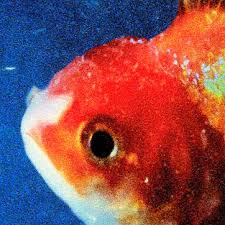
14. Vince Staples – Big Fish Theory
(DefJam)
Vince Staples is
riding a wave of acclaim for his skills as an MC, but those seem secondary to
his musical vision on this, his second album, following up an EP earlier this
year and his “double-disc” (whatever that means these days) debut, 2015’s
Summertime ’06. On the considerably more concise, 37-minute Big Fish
Theory, Staples deftly dances through L.A. G-funk, Chicago footwork,
Detroit techno, Atlanta trap, and more than a few debts to British beats from
Massive Attack to Kode9 to Stormzy.
The opening track, “Crabs in a Bucket,”
co-produced by Bon Iver’s Justin Vernon, even channels Angelo Badalamenti’s
Twin Peaks soundtrack—or Moby’s sampling of it. Staples has a voice
that oozes charisma and character; the fact that Kendrick Lamar shows up for a
brief cameo here barely registers, and nor do any of the other guests except
Kilo Kish, who stands out for being a consistent female presence
in Staples’s world. A more musically rich rap record you’re unlikely to
find in 2017.
15. Alvvays –
Antisocialites (Royal Mountain)
No sophomore slump
here. Everything that was merely promising or undeveloped or somewhat uneven on
the 2014 debut by this Toronto band of transplanted Maritimers has been
transformed into a triumph. Singer Molly Rankin used to write melodies slightly
outside of her range. Here, she’s no longer a newbie straining to hit the high
notes while guitars swirl around her; she’s a singer who walks the precious
line between introversion and complete confidence, once again writing melodies
that are instant earworms, not unlike their breakthrough single “Marry Me,
Archie.”
Guitarist and co-songwriter Alec O’Hanley (Two Hours Traffic) also did
a lot of recording and mixing this time out, following initial sessions with
L.A. producer John Congleton (St. Vincent, Nelly Furtado). In his hands, every
one of this band’s strengths comes into full focus in ways it didn’t on the
washed-out debut: the guitars of O’Hanley and Ranking shimmering with colourful
textures, and blending beautifully with Kerri MacLellan’s Farfisa organ. Bassist
Brian Murphy is a melodic player and drummer Sheridan Riley hits hard enough to
ensure the band doesn’t drift away on a sea of twee. After dreadful new albums
by the War on Drugs, Grizzly Bear, the National and LCD Soundsystem, Alvvays is
a rare bright light for indie rock in 2017.
16. Sudan Archives – s/t (Stones Throw)
Yes,
it’s strange that a self-taught violinist from Cincinnati would rebrand herself
as Sudan Archives. Brittney Denise Parks had her world turned around
when she heard violin music from northeast Africa, and decided to incorporate
it into her own brand of electronic music and looped vocals. Parks relies
heavily on loping, syncopated grooves with deep bass and a dub sensibility,
filtered through Aphex Twin glitchiness and African instruments like the mbira
or one-stringed fiddles.
Her vocals are sultry, her violin seductive. The songs
are short and almost too slight, which only leaves the listener wanting much
more. She’s sure to deliver. And if this EP isn't enough, look up her YouTube version
of Kendrick Lamar's "King Kunta."
In 16 albums over the past 17 years, the most beloved work by
songwriter Ryan Adams is his 2000 solo debut Heartbreaker.
Heartbreak is again a theme here, made crystal clear in songs like the title
track, “Breakdown,” or “Haunted House,” which would have fit in perfectly on
Bruce Springsteen’s Tunnel of Love record (an obvious touchstone
here).
The production here is sparse and yet dense with detail: the electric
guitars are graced with subtle shades of ’80s chorus pedals (like one of
Adams’s many heroes, the Replacements), the acoustic guitars shimmer front and
centre, and the rhythm section (including Adams on bass) is full and rich.
Daniel Clarke on organ is also a key asset, particularly on the album opener,
“Do You Still Love Me?” It’s normally an insult to any artist’s creative
process to suggest that personal pain and tumult necessarily results in great
work, but nevertheless: this is another Heartbreaker for the
ages.
18. Japandroids
– Near to the Wild Heart of Life
(Arts and Crafts)
Wild Heart is
a huge leap forward in terms of songwriting, performance and production for
this guitar-drums duo. These are much more than just drunken Saturday night
odes to youth, romance, rock’n’roll and the open road (not necessarily in that
order) that used to be Japandroids’ stock and trade. That still exists here:
“North South East West” is exactly the kind of fist-pumping catharsis one
expects from this band; expect this one to be a key part of the soundtrack of
2017.
But they’re both in their mid-thirties now, and so their signature
intensity is being applied to varying tempos and textures, including
instrumentation that will be difficult to duplicate onstage as a duo. Wild
Heart is very much an album as opposed to a live document. Slowing
down, in more ways than one, has made Japandroids an even better band. Great
rock bands are getting fewer and fewer. This one is fighting the good fight.
Just as 2014’s collaboration with punk rocker Ted Leo, The Both,
was so refreshing because Mann was playing much louder, much faster and in a
collaborative fashion, likewise it’s a revelation now to hear her strip away so
many of the sonic layers that defined her approach to adult-pop perfection in
the last 20 years. She mostly plays acoustic guitar and piano here; drummer Jay
Bellerose is barely noticeable, as is the rest of her band. Subtle string
sections colour around the edges, as do layers of California vocal harmonies.
This is Aimee Mann the folk singer, although her typically complex chord
progressions still place her closer to the Brill Building than, say, Billy
Bragg. This is easily one of the best collections of her career: her
razor-sharp wit and powers of observation in full focus, her unadorned voice
sounding crystal clear and lovelier than ever.
20. Shabazz Palaces – Quazarz vs. the
Jealous Machines / Quazarz: Born on a
Gangster Star (Sub Pop)
When Ishmael Butler
was known as Butterfly and fronted the mid-90s hip-hop group Digable Planets,
he was one of the first to explicitly reference the genre’s lineage back to
jazz. Gang Starr and Tribe Called Quest got there first, but Digable Planets
pushed it further into the abstract, not just sonic signifiers and samples.
Twenty years later, Butler is doing the same with his new project, Shabazz
Palaces, who released two new albums simultaneously in the middle of a
sweltering summer.
Perfect timing: Butler
and his creative partner Tendai Maraire eschew
trap and boom-bap and anything else you might expect in summer hip-hop jams, in
favour of a truly potent brew of psychedelia, dub reggae, spiritual jazz,
science fiction, Parliament/Funkadelic and futurist Detroit techno. Hip-hop
barely registers, other than the fact that there’s an MC up front. Shabazz
Palaces is “a glitch in the matrix,” they boast. Repetition? Choruses? That’s
for suckers. “We post-language, baby.” That’s for earthlings—because this music
is clearly from another galaxy.
Quazarz vs. the Jealous Machines is the proper album, the one rich with
lyrical detail and sonic intent. Apparently it’s about aliens—who knows? Butler
is engaging enough with wordplay and imagery that it doesn’t matter is his
overarching narrative is impenetrable. Plus, he easily wins Best Song Title of
the Year: “Love in the Time of Kanye.” Most important, the music is consistently
inventive and frequently surreal.
Born on a Gangster Star was created quickly from an inspired
session meant to produce some B-sides. Drunk on a creative bender, Shabazz
Palaces kept going and ended up with a companion album that’s just as worthy,
albeit one that’s considerably looser and even more abstract than the main
attraction. “Moon Whip Quäz” borrows a bit too heavily from Kraftwerk’s “The
Model”—not a terrible source, by any means, but it’s the longest track on Gangster Star, for no discernible
reason. But when a group like this hits a stride, it’s all good.
Class of
2018:
Jessie Reyez
– Kiddo (Universal)
Months before #metoo sent shockwaves through the entertainment industry
and beyond, Jessie Reyez released “Gatekeeper,” a scathing takedown of the
casting couch and its many modern permutations. That she released it on her
debut EP on a major label that vaulted her into continental consciousness shows
she’s afraid of no one; like fellow Colombian-Canadian Lido Pimienta, who faced
a racist shitstorm of vitriol after rising from indie obscurity to winning the
Polaris Music Prize, Reyez is fiercely talented and not to be messed with.
Kiddo shows a woman who not only shakes off Toronto hip-hop’s icy reputation
and brings a Carnival atmosphere to “Blue Ribbon,” but can also turn around and
deliver a devastating slow waltz with just her guitar and voice (“Figures,”
which she played on The Tonight Show). Expect Jessie Reyez to define the
zeitgeist of the next 12 months.
Beyond
compare:
Gord
Downie – Introduce Yerself (Arts
and Crafts)
This is not an album that belongs on a list. This is not an album that
should be judged in any way. It’s a dying man’s final statement—well, actually,
Downie was working on several projects in the last year of his life, but this
is the one he wanted to be sure to finish. It’s a series of love letters to
family, friends, bandmates, co-workers, and more. It could have been incredibly
maudlin; that it’s not remotely so is a testament to who Downie was as a person
and an artist.
What nobody seems to have talked about is that it’s also an
astounding vocal performance from Downie, likely his best ever: the
lower-register, hushed intimacies of Coke Machine Glow mixed with the soaring,
almost operatic melodies of his later work in and outside the Tragically Hip,
and none of the claustrophobia that marred much of Secret Path. Released 10
days after his death, Introduce Yerself was initially received as a sort of
self-pinned obituary, rushed to deadline, a souvenir of this moment of
collective grieving. Listening more than a month later, it’s clear that it’s
much more revelatory than that.
Reissues:
Jackie Shane – Any Other Way
(Numero)
Change of Heart – Smile (Label
Obscura). Reviewed here.
Prince – Purple Rain: Deluxe
Edition (Warner)
Worth your while:
Broken Social Scene – Hug of Thunder (Arts and Crafts)
Daniel Caesar – Freudian (Golden Child)
Cold Specks – Fool’s Paradise (Arts and Crafts)
Daphni – Joli Mai (Jiaolong)
Beth Ditto – Fake Sugar (Virgin)
Do Make Say Think –
Stubborn Persistent Illusions (Constellation)
Feist – Pleasure (Universal)
Ibibio Sound Machine – Uyai (Merge)
Julie & the Wrong Guys – s/t (Dine
Alone)
Kacy & Clayton – The Siren’s
Song (New West)
Mappe Of – A Northern Star, A Perfect Stone (Paper Bag)




 Informative,
not authoritative. I
much prefer personal lists to those that lay some sort of claim to
objectivity. I learn about a lot of great music from them. I hope this does
this same for you. I want to read yours.
Informative,
not authoritative. I
much prefer personal lists to those that lay some sort of claim to
objectivity. I learn about a lot of great music from them. I hope this does
this same for you. I want to read yours.