There’s no reason pop music should be
“important.” But when an artist hits that sweet spot between great songs,
catchy melodies, solid grooves, top-notch production and lyrics seeped in
empathy that also fume with fury and challenge listener’s assumptions—well,
that’s perfection. U.S. Girls, which has evolved from Meg Remy’s solo bedroom
project into a brilliant band that encapsulates a tiny corner of Toronto’s
creative community, not only made a brilliant record that sounds timeless, but
also a record that encapsulates 2018: rage against rampant misogyny, writ large
(“Pearly Gates”) and small (“Velvet 4 Sale”); questioning the legacy of
political heroes (“M.A.H.”); the personal toll of environmental destruction (“Rage
of Plastics”); yadda yadda yadda (“We all know what’s right … so what are we
going to do to change?”). That Remy does this inside slinky pop songs that
sound better every single time you spin them makes In a Poem Unlimited an absolute triumph. On top of all that, her
live band is killer, and her a cappella gospel ensemble performance at the
Polaris Music Prize gala was one for the ages. This poem is indeed unlimited. Original review here.
 2. Low – Double Negative (Sub Pop)
In one of the best punk singles released in this
year of incredible corruption and distortion of truth and dissolution of shame,
Superchunk sang about how “to see the rot in no disguise / oh, what a time to
be alive.” On one of the year’s best albums, Low sang about “Always Trying To
Work It Out” while the lead vocal mutated and warped over guitars and
electronics distorted beyond recognition, morphing and mutating over a steady
floor-tom pulse; only drummer Mimi Parker’s backing vocal holds fast as a
single source of purity in what otherwise sounds like beauty and purity rotting
before our ears. Twelve albums into their career, Low is still challenging
itself and scaring the crap out of everyone else. Double Negative sounds the way 2018 felt. Which makes it a shoo-in
for this year’s time capsule. Original review here.
 3. TuneYards
– I Can Feel You Creep Into My Private
Life (4AD)
3. TuneYards
– I Can Feel You Creep Into My Private
Life (4AD)
Much like
US Girls, TuneYards tackles many modern woes: social alienation, the perils of
technology, California wildfires, the bubble of white privilege, colonial
co-option of music of stories—you know, all the fun stuff. Oddly enough,
Merrill Garbus and company do have a lot of fun, and manage to make all this a
part of a wild dance party that’s largely delivered just by the duo of Garbus
and right-hand man Nate Brenner. This Private
Life has a plethora of layers, both musical and lyrical, in which one can
dive in deep while dancing down the street. Original
review here.
 4. Jeremy Dutcher – Wolastoqiyik Lintuwakonawa (independent)
Yes, part
of the appeal of this Polaris Prize-winning record is that there is literally
nothing else like it in the world: an opera singer and pianist who sings
exclusively in an almost-forgotten North American Indigenous language spoken by
fewer than 100 people in the modern age. But concept aside, it’s also simply a
powerful and emotional listening experience, listening to Dutcher dance with
the ghosts of his elders. Small wonder he’s smashing barriers left, right and
centre, and finding a global audience of music fans for his hyperlocal history
project. Original review here.
 5. Bonjay – Lush Life (Mysteries of Trade)
If Lush Life contained only the unadorned
vocals of Alanna Stuart, it would still be on this list—for she delivers the
most shiver-inducing, knockout vocal performance of the year on this record.
But it’s the music here, co-written with Bonjay’s other half, Ian Swain, that
truly transforms Stuart’s vocal skills into a killer pop record that, at times,
sounds like Kate Bush making a shockingly successful stab at dancehall,
produced by Bjork in a pre-dawn Berlin. And yet: it sounds so fully and
completely Toronto at the same time. Original
review here.
 6. Lotic – Power (Tri Angle)
This sound sculptor is a trans Texan woman
living in Berlin. Needless to say, their music crosses borders effortlessly,
finding exquisite beauty in off-kilter or even scarred sounds, borrowing
equally from the avant-garde side of trap hip-hop, neo-classical composition
and the icy edges of European minimal techno. Original
review here.
 7. Dennis
Ellsworth – Things Change
(independent)
7. Dennis
Ellsworth – Things Change
(independent)
Singer-songwriters
rarely cut it for me anymore—unless they’re this good. This Charlottetown
record-store clerk is a prolific guy with plenty of pleasant-enough albums, but
he knocks it out of the park here, with the help of producer Joel Plaskett.
Twelve songs in 40 minutes, staving off one midlife crisis after another, each
encapsulating all the best singles of ’90s indie rock and alt-country, enough
to make Jeff Tweedy jealous. “Life is cruel but beautiful,” goes my favourite
song here, one that’s been on constant repeat since the first day I heard it.
Easily the most underrated record of the year. Original
review here.
 8. Cadence Weapon – s/t
(EOne)
8. Cadence Weapon – s/t
(EOne)
Most MCs
are more than happy to talk primarily about themselves; Cadence Weapon, on the
other hand, is an astute observer and portrait painter: of people, of music
scenes, of urban ennui. His lyrical game has a poet’s eye, one that continues
to improve with age, but it’s the musical vision here that’s truly captivating.
Birthed in both Montreal and Toronto, the music here is big, bass-y and bold,
hip-hop informed by EDM trends without ever succumbing to the noisy, ham-handed
clichés of that genre. It’s also diverse: no two tracks here sound the same,
which is a rarity these days in albums of any genre. Original
review here.
 9. Sons of Kemet – Your Queen is a Reptile (Impulse)
Saxophonist
Shabaka Hutchings has been a light in London’s jazz scene in recent years,
fronting several bands and floating just under the radar—until now, with Sons
of Kemet’s debut for venerable label Impulse, and a spot on the Mercury Prize
shortlist. Backed up by a tuba player and two drummers, Hutchings delivers one
breathtaking performance after another, drawing from New Orleans funk to reggae
to Mingus swing to hip-hop to wherever the rhythm takes him and his cohorts.
They’re brilliant at raising the roof; it’s the quieter moments here that are
more surprising, and make for a well-rounded record. Plus, the song titles send
you scurrying down wormholes of Black history. Original
review here.
 10. Anna Calvi – Hunter (Domino)
Calvi is
a close runner-up to Bonjay’s Alanna Stuart for delivering the vocal
performance of the year, displaying an operatic breadth over dramatic art-pop
that draws from a template seemingly specified to British music in 1997-98:
Radiohead’s OK Computer, PJ Harvey’s Is This Desire, Portishead’s Dummy,
Bjork’s Homogenic. But if the musical template sounds familiar, Calvi’s vocals
take everything to a whole other plane, bending gender stereotypes at every
turn. She’s also a killer guitarist, and her drummer is a perfect match. Original review here.
 11. Janelle Monae – Dirty Computer (Universal)
“If the
world should end tonight / I had a crazy, classic life.” Sure sounds like it:
Monae is a consummate entertainer, especially now that she’s dropped the more
robotic elements of her “Arch-Android” persona. Dirty Computer delivers on all the promise she’s ever shown; we
always hear about who’s supposed to be the new Michael Jackson, a debate that
Monae can easily put to rest. Original review here.
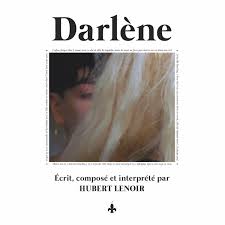
 2. Hubert Lenoir – Darlène (Simone)
The first
three tracks on this Québécois francophone’s debut move from jazz to glam rock
to metal, and the rest is just as successfully eclectic. This kid has total
starpower, the talent to back it up, and the curiosity that will ensure a long
career. This is just the start. Extra points for the tenor saxophone, which U.S. Girls also put to good use this year. Original
review here.
 13. La Force – s/t (Arts
and Crafts)
13. La Force – s/t (Arts
and Crafts)
In 2013,
Ariel Engle made my favourite record that year as one-half of AroarA (with
Broken Social Scene’s Andrew Whiteman). La Force is her solo debut, and it’s a
stunner: her haunting vocals sing torch melodies and droning folk songs over
syncopated rhythms and new wave textures. Original
review here.
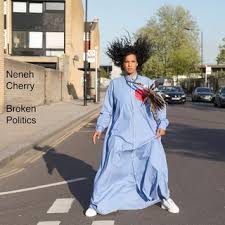 14. Neneh Cherry – Broken Politics (Smalltown Supersound)
Neneh
Cherry has had many phases of her 30-year career: pop star, African music
explorer, midwife to Massive Attack, collaborator with FourTet and free jazz
trio The Thing. All those sides of her unite on this, her second album with
FourTet, moving easily through a variety of moods and genres.
 15. Fucked Up – Dose Your Dreams
(Arts and Crafts/Merge)
15. Fucked Up – Dose Your Dreams
(Arts and Crafts/Merge)
As someone who only ever enjoyed
this hardcore punk band in the smallest of doses—despite their oft-grandiose,
artsy ambitions—I fell hard for this opus, which delivers the kind of musical
diversity they’ve always strived for, complete with many guest vocalists
lifting the weight off Damian Abraham. This is the album they’ve been aiming to
make all these years. Original review here.
 16. Zaki Ibrahim – The Secret Life of Planets (independent)
With both
Ibrahim and Neneh Cherry putting out albums in 2018, here’s hoping they get a
chance to meet, play some shows together, and trade notes, because they’re very
much cut from the same cloth. Though she shares Cherry’s jazzy bent, Ibrahim
has a thing for classic synths that sets her apart from elders or the new crop
of nouveau R&B singers. This record sums up why I once dubbed her approach
“sci-fi soul,” a descriptor she’s taken to heart. Original
review here.
 17. Onyx Collective – Lower East Side Part Three (Ninja Tune)
This NYC
jazz ensemble is known for popping up in random spots all over the city, so
it’s apt that this record sounds like it was made in a subway station, both
sonically and for the raw energy and conversational tone between the players.
This is the antithesis of smooth jazz, but neither is it abrasive or
deliberately challenging. Isaiah Barr’s saxophone is a siren’s call that draws
you deep into a dance with the rhythm section. Before you know it, you’ve
missed your train and learned a valuable lesson: the journey is more important
than the destination. Original review here.
 18. Richard Reed Parry – Quiet River of Dust Part One (Arts and
Crafts/Anti)
18. Richard Reed Parry – Quiet River of Dust Part One (Arts and
Crafts/Anti)
A member
of one of the world’s biggest rock bands wants you to simmer down and immerse
yourself in a two-part concept album (the second instalment drops on March 21)
about life, death, and the liminal space between the two. It doesn’t sound that
good on paper; thankfully, it does on record—and even more so live. Parry shies
away from the term “psychedelic folk,” but that pretty much sums up this
amalgam of very early Pink Floyd, Brian Eno, Arthur Russell, Caribou, and those
very tiny parts of Animal Collective that aren’t inherently terrible. This is
the kind of record that will suspend time—if you let it. Original review here.
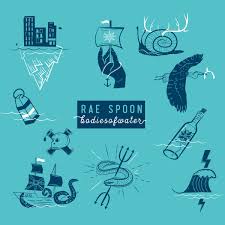 19. Rae Spoon – Bodiesofwater (Coax)
I’m a sucker for artists who hit
their stride on the other side of 40, and Rae Spoon is one. Bodiesofwater finds the Western Canadian
artist chock full of pop hooks and interesting arrangements that draw from
between indie rock, folk-country and electronic textures. “Do Whatever the Heck
You Want” is an irresistible earworm of affirmation, while “You Don’t Do
Anything” is the sharpest political song of the year, next to Steven Page’s
“White Noise.” Original review here.
 20. Jack White – Boarding House
Reach (Sony)
20. Jack White – Boarding House
Reach (Sony)
This is just so delightfully
batshit crazy. The Jack White I love best is when he really doesn’t give a shit
and just lets loose. Also: if Beasties besties Mike D and Ad Rock ever feel
like kicking out some new jams, they should give White a call. Original review
here.
Tribute acts—as good or better than the originals:
 Angelique Kidjo – Remain in Light
(Kravenworks). In which a modern African artist
reimagines the Talking Heads’ greatest album and recasts it with a decidedly
modern bent that crosses just as many borders as the original. In doing so,
Kidjo also illuminates subtexts and prescient points in David Byrne’s original
lyrics. This is essential listening that works on several levels—including just
pure pleasure. Original review here.
Angelique Kidjo – Remain in Light
(Kravenworks). In which a modern African artist
reimagines the Talking Heads’ greatest album and recasts it with a decidedly
modern bent that crosses just as many borders as the original. In doing so,
Kidjo also illuminates subtexts and prescient points in David Byrne’s original
lyrics. This is essential listening that works on several levels—including just
pure pleasure. Original review here. Meshell Ndgeocello – Ventriloquism
(Naive). Lots of people cover pop and rock songs from the ’80s and ’90s, but
Ndgeocello illustrates that the R&B of the time was also full of solid
songwriting that transcends time, even if the names Al B. Sure and Ralph
Tresvant and Force MDs don’t get bandied about much anymore. Yes, there are
songs here by Prince, Sade, Tina Turner and Janet Jackson, but they don’t stand
out any taller from the many underrated gems here, and Ndgeocello breathes
welcome life into each equally.
Meshell Ndgeocello – Ventriloquism
(Naive). Lots of people cover pop and rock songs from the ’80s and ’90s, but
Ndgeocello illustrates that the R&B of the time was also full of solid
songwriting that transcends time, even if the names Al B. Sure and Ralph
Tresvant and Force MDs don’t get bandied about much anymore. Yes, there are
songs here by Prince, Sade, Tina Turner and Janet Jackson, but they don’t stand
out any taller from the many underrated gems here, and Ndgeocello breathes
welcome life into each equally.
Reissues:
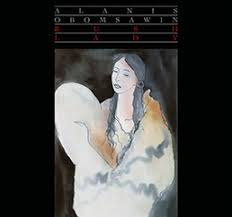
Alanis Obomsawin – Bush Lady (Constellation).
I didn’t even know the legendary
filmmaker was a musician until relatively recently. Seeing the then-85-year-old
play a 15-minute set solo, with just a drum, at the National Arts Centre as
part of a Native North America gathering this past February, was, quite simply,
one of the most mesmerizing and inspiring performances I’ve ever seen in my
life. This woman exudes otherworldly charisma in the same way Patti Smith,
Bjork, PJ Harvey, Nick Cave or Gord Downie all do for me, yet she does so with
just her Piaf-like voice and the tiniest of gestures. That this recording sat
in her closet for the past 30 years, after a very brief private run, is insane
to me. It’s gorgeous, haunting, and vital. Original review here.
 Prince – Piano and a Microphone
1983 (Warner).
Prince – Piano and a Microphone
1983 (Warner).
There is always more to Prince—and
there’s always more Prince. This previously unearthed solo set is exactly as
advertised, and it’s revelatory in many ways, not the least of which is his
skill as a pianist. (Yes, we always knew he could do everything, but hearing
him naked here is a whole other trip.) This is hardly for hardcore fans only.
Original review here.
2017 albums I fell in love with in 2018:
 Snotty Nose Rez Kids – The Average Savage. Review here.
Amyl & the Sniffers – Big
Attraction. Review here.