 These are not the best books of 2014; most were not even
released in 2014. These are the books I read in the past 12 months; these
reviews were written recently, not immediately after reading. What follows is
the order in which I read them (or abandoned them), although if you insist on
some kind of ranking, these are the five books I would buy for you right now
and give as belated gifts if I could:
Joseph Boyden – The Orenda
Chimamanda Ngozi Adichie – Americanah
Sean Michaels – Us Conductors
Carlos Ruiz Zafon – The Angel’s Game
Nile Rodgers – Le Freak
So here we go:
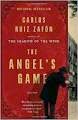 Carlos Ruiz Zafon – The Angel’s Game. The second in a trilogy of bibliophilic ghost stories situated in
post-Civil War Spain, this is the rare thriller that is also beautifully
written, appealing to both the adventure-loving boy in me and the grown man who
loves language and psychological studies of the scars of war. My only complaint
is that Zafon lays on the gothic gloom a bit thick in spots—not that I didn’t
love every minute of it.
Herman Koch – The Dinner.
A Dutch morality tale about two fathers coming to terms with a horrific act
performed by their sons on the same night that their own relationship and one
of their marriages are all in peril—it’s all set in 24 hours, which makes it a
tense read. Cate Blanchett is directing a film adaptation due this year.
 Paul Wells – The Longer I’m Prime Minister. Know thy enemy. It’s all well and good to think Stephen Harper is
a fascist who is intent on destroying everything that makes Canada great—which
of course is more or less true. But how the hell does he do it and how did he
convince Canada to go along with him? Paul Wells, who had already written a
book documenting the rise of the modern Conservative party, doesn’t just walk
us through headlines of the last eight years—that would be too easy, and a
retread of Wells’s work at Maclean’s. Instead, he tells us how Harper’s mind
works. And it’s to his credit as a writer that this book could—and does—appeal
to both Conservatives and Harper-haters alike. It’s obvious that some—perhaps
even many—of Harper’s moves have infuriated Wells, but Wells is smart enough to
know what Harper’s long game is. Now we do too. There’s an election in 2015. We
might be stuck with this guy; this book tells us why. Disclosure: My day job
involves copy-editing Wells (and all other writers) at Maclean’s. You’d think I’d be sick of him. But this book just made
me admire Wells more.
Greg Kot – I’ll
Take You There. This
is ostensibly a biography of Mavis Staples, the star of her family band who’s
had a long-overdue comeback thanks to her last three solo records. But the real
story here is that of her father, Pops Staples, patriarch of the Staple
Singers, a man whose life embodies African-American history of the 20th
century, for whom slavery was not a distant family memory, who grew up in the
South and migrated to Chicago, and who marched alongside Martin Luther King.
Greg Kot is one of my favourite music writers, for both his musical insight and
his storytelling ability—which serves him well with a tale like this. My review
for Maclean’s is here.
Robertson Davies – World of Wonders. After overcoming skepticism and a bad first impression to fully
enjoy Fifth Business a few years back, and then being thoroughly bored by its
sequel, The Manticore, this final book in the Deptford Trilogy is magical
(literally), funny and immensely satisfying.
Joseph Boyden – The Orenda. Where
to start? It’s a gripping read, first and foremost, regardless of subject
matter or historical import. Boyden is a fantastic writer—but we knew that
already. The Orenda is also a bloody
read, a profoundly uncomfortable one. The history of our country is gory—and
not just on the part of the settlers, whom much of our modern white guilt is
quick to blame for everything. The Aboriginal populations had their own take on
torture, for example, that would make even today’s CIA devils blush. And yet
part of Boyden’s brilliance is making even that horror seem like a less callous
way of treating prisoners than indiscriminate slaughter. The Orenda challenges every perception you had of Canada’s early
history, posing as many questions as it answers. One I’ve always wondered: why
on Earth did tribes put up with the missionaries who wanted to embed themselves
in local communities? What was in it for the Natives? Boyden brilliantly
dissects that dynamic with his portrayal of a priest with good intentions and
bad directions, and the community that humours him. The author’s empathy is
astounding, allowing us to fully experience both sides of the strange and
twisted new relationship between Europeans and inhabitants of the so-called New
World. It’s also incredibly informative from a purely anthropological
standpoint: agriculture, diplomacy and mere survival. The Orenda surpassed all expectations. (And now I’ve just inflated
yours—so please ignore everything I just said and go read it if you haven’t
already.)
Rosanne Cash – Composed. Inspired
by her incredible 2014 album The River
and the Thread, I went back to her 2012 memoir to find out more about this
fascinating woman. She’s frank and funny and incredibly insightful: the more
emotionally charged passages frequently had me tearing up. She writes about
growing up with her infamous father, being raised by the woman he left for June
Carter, her extended family, her marriage to Rodney Crowell, her search for her
own identity and path, an avalanche of loss in the early 2000s, and brain
surgery in 2007. Like her songs, there are no extraneous details; this is a
slim but satisfying volume.
 Robyn Doolittle – Crazy Town.
As someone who figured he knew most of this story already by following
Doolittle’s work in the Toronto Star,
I still found her book to be an exciting read. It’s not unlike All the President’s Men, in terms of
providing the reader with the day-to-day drama of uncovering one of the great
political scandals in modern Canadian history—and doing so as a young reporter not
yet 30 years old. Doolittle is surprisingly fair when it comes to Rob Ford’s
family history and explaining the context that created the so-called Ford
Nation. Considering the Fords’ outspoken opinion of her, she’d have every right
to take it personally and come back at them swinging. Instead, she sticks to
the story at hand. The most moving part, for me, was her account of the time
after the crack-video story broke but before the police confirmed the existence
of the video, when polls showed that almost 50 per cent of Torontonians thought
the Star was making the whole thing
up—which seems insane, but speaks to our collective suspicion of all
institutions, our belief in “truthiness.” It took a toll on Doolittle, and she
writes candidly—and understandably—about her frustration at being called a liar
on a daily basis. My only complaint: Doolittle is a great reporter (obviously),
but not necessarily a master crafter of prose. Crazy Town is written by a newspaper writer, not a magazine writer,
and it shows. But what do I know? I read musicians’ autobiographies.
Graeme Smith – The Dogs are Eating Them Now. This is a former Globe and
Mail reporter’s account of his years covering Afghanistan. It’s predictably
infuriating and beautiful, written by a man who fell in love with the country
so much that he quit his job and stayed in the country to work directly on
improving the fate of the failed state. What’s most interesting, especially in
the wake of the recent revelations—or rather, confirmations—about CIA torture,
is Smith’s account of Canadians’ complicity in turning over prisoners to the
Americans. Remember when Stephen Harper prorogued Parliament so he could shove
that messy little detail under the carpet? Well, it worked, because most people
who haven’t read Smith’s book will probably have forgotten that ever happened.
Eric Schlosser – Command and Control. The Cold War is over, but there are still tens of thousands of
nuclear warheads out there—and some of them are in incredibly unsafe places.
But hey, nothing’s happened in the last 25 years, so everything’s going to be
okay, right? That’s the odd takeaway one gets from Schlosser’s investigation
into decades of nuclear-safety mishaps, where birds and even the moon were
mistaken for enemy nukes, almost launching a full-on global thermonuclear war. Then
there are the bombs that fell off planes on the runway by accident, and how a
dropped screwdriver almost caused a complete meltdown. It’s enough to make you
believe that there is a God, because based on this evidence, the human race is
more than stupid enough to annihilate itself and it’s a miracle it hasn’t
happened already. Schlosser is best known for Fast Food Nation, a book that changed the eating habits of myself
and millions of others. This is nowhere near as strong a book; it’s much less economical,
for starters, and the editing is sloppy. And what should be a white-knuckle
horror story about a Titan missile exploding in Arkansas is parsed out in parts
throughout the book, in between a litany of other gaffes from Cold War history.
And surely someone could have tightened this up. And for some reason, every
second sentence starts with the word “and.”
Christopher R. Weingarten – It Takes a Nation of Millions
I’ve loved Public Enemy for
about 25 years; I’ve read Chuck D’s autobiography and hip-hop history books,
but not until now did I fully appreciate the genius that went into such a
seminal album. I had no idea, for example, that the Bomb Squad all loaded up
their samplers, sat around with DJ Terminator X, and played these tracks live
in the studio, in order to maintain a human feel and intentional sloppiness.
WTF? Who does that?! No wonder the glorious mess that Public Enemy was in its
prime still sounds so vital. Weingarten also goes deep into all the musical and
political icons that informed Chuck’s rhymes; among other things, this book
will make you seek out the classic ’70s concert film Wattstax (pssst: the whole thing is on YouTube). But it’s the
musical deconstruction where Weingarten excels, and it’s there that he proves
PE’s true brilliance.
Nancy Lee – The
Age (abandoned). There were
kernels of a good story here, but I didn’t feel any narrative pull and I had
trouble remembering who any of the auxiliary characters were. I’d read Lee’s
short stories years ago and enjoyed them, but put this own down after about 100
pages.
 John Strausbaugh – The Village
(still in progress). This is a history of Greenwich Village, from when it was a
rural retreat for rich downtowners in the 18th century through the
myriad characters of its long, bohemian history right up to its current
gentrification. I’ve only read the first quarter of this book (the part without
any famous historical names I’d recognize), but it’s already a fascinating and
well-written social history of a neighbourhood that came to define much of
American culture. I’m sure it gets even better from where I left off; I hope to
pick it up again soon.
Rachel Kushner – The Flamethrowers (abandoned). This woman is a beautiful writer who composes
sentences that stop you cold, but I quickly lost her plot—something to do with
motorcycles, Italian anarachists and the art world, if I recall—and this was
too dense to be a summer read. I’d happily read short stories of hers, but this
book didn’t do it for me.
 Nile Rodgers – Le Freak. What’s
the sign of a good autobiography? When the best parts of the book take place
before the person even gets famous. Nile Rodgers grew up in a junkie
household—Thelonious Monk, among others, would come over to cop—and almost
burned his family’s apartment down once. (His punishment? “Nile, you’ve got to
be cool.”) He was raised by his mother and Jewish stepfather; his birth father
he’d only run into occasionally on the street—and he once talked a suicidal man
off a ledge after encountering a crowd on the street, after realizing the man
they were all staring at above was his father. When he becomes a musician, he
gets a job in the Apollo Theatre house band, and then the Sesame Street touring
band. He forms Chic with Bernard “Nard” Edwards, sells millions of records, and
goes on to produce the likes of Diana Ross, Madonna and Duran Duran. He becomes
an addict himself. He finally kicks coke after listening to a live set that he
thought was transcendent at the time; hearing it later while sober, he realizes
it was the worst performance of his life. Rodgers’s tale is laugh-out-loud funny
and juicy as well as tragic. This book came out even before his 2013 comeback
with Daft Punk, so the happy ending keeps getting better.
Dave Eggers – The Circle. Can
we start teaching this to Grade 9 students, alongside 1984? Eggers has written a not-so-sci-fi novel about a company that
combines Google, Facebook, Amazon and Instagram (wait a minute, isn’t that
AliBaba?) and creates a society that celebrates complicity in complete
surveillance. Tech utopians will dismiss Eggers as a cranky Luddite—but so
what? He raises serious questions about what it means when we feel the need to
broadcast to the world our every move and thought, and what we lose in terms of
real human connection. One senses that he toned his writing down a bit to
appeal to a YA crowd, and surely most readers could see the twist coming from
miles away. But it’s still a fascinating and provocative book; Eggers is
raising questions here that are almost heretical in modern discourse. And
hopefully those under 40—indeed, under 20—will enjoy it at least as much as the
old grumps who gave this to them for Christmas.
Michael Lewis – Flash Boys.
I loved Lewis’s The Big Short, as
well as the follow-up anthology of Vanity
Fair pieces, all of which spun ridiculous-but-true tales of how and why the
world economy collapsed in 2008. This is another financial book about a nobody
who saw a hole in the stock market and tried to fix it ethically. It’s a great
story, but it doesn’t need to be a long one: this would have made a much better
extended magazine story than a full-length book.
Charles Frazier – Cold Mountain
(abandoned). I went to North Carolina this summer to celebrate an anniversary,
and wanted something regional to read while I was there. This Civil War tale, a
bestseller in 1997 that was made into a 2003 film, did the trick—while I was
there, in the Blue Ridge Mountains. Once I got home, however, I lost interest
completely.
Keith Sharp – Music Express.
You know I’m a music-book masochist and a CanCon sucker when I will willingly
read a memoir by the former publisher of a Canadian music magazine in the
1980s—especially one as poorly written as this one. I grew up reading Music Express (the magazine); it was the
first music mag to which I had a subscription, and it was a proud champion of
artists from this country, an idea that still seemed weird at the time. Now,
after years in the biz myself, I can see that its coverage was heavily informed
by cronyism and—not payola exactly, but let’s say a very close relationship
between the sales and editorial departments. Whatever—if you accept Sharp, the
magazine’s editor and publisher, as an extremely unreliable narrator, his book
can be rather amusing. It’s fun, albeit maddening, to spot the typos and
mistakes. But I’ll say this about Sharp: he was a dreamer, and he made
something crazy happen.
Tom Rachman – The Rise and Fall of Great Powers (abandoned). I loved, loved, loved Rachman’s debut, The Imperfectionists, a linked series of
short stories about the misfits who work at an international English-language
newspaper headquartered in Rome. His follow-up, a more conventionally
structured novel, involves a woman who fled a confusing history—one in which
she spent most of her youth being raised by an abductor in various global
locales—to open up a bookstore in a tiny Welsh town. Of course, her past comes
back to haunt her. The premise is strong; the execution, not so much. This was
thoroughly disappointing; about halfway through, I put it down for a few days
and didn’t feel any need to pick it up again.
Greil Marcus – The History of Rock’n’Roll in
Ten Songs. My review for Maclean’s is here.
 Chimamanda Ngozi Adichie – Americanah. As
a North American, one of the best things about reading literature by immigrants
is seeing familiar terrain portrayed as alien absurdity, in ways that only an
outsiders’ eye can. Not that Adichie is an outsider: she’s lived almost as much
of her life in the U.S. as she did in her native Nigeria; she now splits her
time between the two countries, which—obviously—greatly informs this novel,
whose central character feels like a foreigner in both worlds. Specifically,
the disconnect between Africans and African-Americans is a key theme. Class and
race play a large role here, but not at all in a way that overwhelms the
narrative. Adichie is a stunning writer with a great eye for detail, character
and nuance; the plot here is almost incidental. Reading it reminded me of The
Brief and Wondrous Life of Oscar Wao, by Junot Diaz—one of my favourite books,
despite the fact I barely remember anything about the plot. Indeed, the conventional
fairy-tale ending here is completely unsatisfying and unrealistic—all the more
so because it contrasts so greatly with the tone of the rest of the novel. But
that’s really just the last 10 pages of an otherwise flawless and fascinating book.
It was announced recently that Lupita Nyong’o (12 Years a Slave) and David Oyelowo (Selma) will be starring in a film adaptation.
John Darnielle – Wolf in White Van (abandoned). Despite facing consternation from dozens of my peers,
I’ve never warmed to John Darnielle’s music in the Mountain Goats. I can,
however, recognize that he’s a great storyteller and lyricist: I’d often
wondered what he’d be like as a novelist. Judging by reaction to this, his
debut, the transition was easy: it’s nominated for a National Book Award. The
central character is a disfigured loner who created a mail-in role-playing game
(I was not aware that was a thing) that a couple of its fans took too seriously,
with (I’m assuming) terrible results. I wanted to like this book, but the world
of role-playing games… well, let’s just say it’s far from my reality. And
Darnielle parses out information slowly through the novel, so by the halfway
point I was still guessing what the pivotal plot point might be—which makes
this more of a mystery novel than anything, but I wasn’t sold on the device or
the premise.
Gillian Flynn – Dark Places.
A theme Darnielle has touched on in the past is the Satanic witch hunts of the
1980s, when teenagers who listened to heavy metal music were vilified and, in
some cases, accused of horrific crimes. Flynn uses the hysteria of that time as
the backdrop to this, her second novel (her third would be Gone Girl). A woman whose brother was jailed for killing the rest
of her family gets pulled back into the case and suddenly has reason to doubt
everything she’s ever known. This being Flynn, of course, there are no obvious
answers, everyone is unreliable, and she keeps you guessing right until the
exhilarating end.
 Sean Michaels – Us Conductors.
My brief review and Q&A with Michaels is here.
Bruce Cockburn – Rumours of Glory. My review for Maclean’s
is here.
Something that occurred to me after I wrote the review: Cockburn admits to
being almost completely humourless until about the late 1980s, but never
explains what changed his demeanour. Maybe just the wisdom of age? Or did it
have something to do with his sudden interest in firearms—which came about as
part of a physical therapy program—when he had to overcome assumptions he had
of himself?
Susan Fast – Dangerous
(abandoned). Oh Carl Wilson, what have you wrought? Ever since Wilson’s excellent
book about Celine Dion (like this one, written for the 33 1/3 series) upended
how we study seemingly silly pop music, we now live in an age when we’re
supposed to pretend that Taylor Swift is deep. Here we have a McMaster
University academic taking on Michael Jackson’s least-loved album of his commercial
prime. Not a terrible premise, perhaps, but it’s a hard sell, and Fast’s
ivory-tower prose doesn’t make for the most engaging read. You didn’t have to
know Dion’s music intimately to appreciate Wilson’s book; you do, I believe, at
least need an informed opinion of Dangerous—an
album I’m happy to avoid revisiting. I did, however—and yes, it’s better than I
gave it credit for, certainly better than Bad
(the album). But even as a connoisseur of cheese, I don’t think there is any
way on Earth to defend “Heal the World” or the other mawkish ballads here. Maybe
that’s my loss; I can live with that.
Sarah Lazarovic – All the Pretty Things I Did Not Buy. I am not the target audience for this book: I
do not buy clothes. At one point, apparently, Lazarovic did. A lot. Working
from home, she would treat herself to online shopping as a break, until she
realized she had things she didn’t even remember buying, never mind needing in
the first place. For a year, the sketch artist decided to abstain from new
purchases, while examining her relationship to fashion and materialism in
general. This illustrated book is slight on size; you can read it in one
sitting. But I’m such a huge fan of Lazarovic’s sense of humour, insight, and
drawing style that I’m always excited to read her take on anything—yes, even
fashion.
 Ann-Marie MacDonald – Adult Onset.
MacDonald has written two of my favourite modern novels. This is not one of
them. I didn’t even want to finish it. Ostensibly a story about long-suppressed
trauma, instead it reads like a story of typical Canadian emotional repression,
detailing one woman’s humdrum everyday life raising two toddlers while her
partner is working on the other side of the country; the climax is a visit from
her parents in which nothing is resolved. I’m not even clear what needs to be resolved: maybe one of them
broke the protagonist’s arm by mistake as a child? We don’t even know that for
sure. And so the parents didn’t like to discuss the children they lost as
infants—well, who would? We’re supposed to be shocked, I suppose, when the
protagonist yells at her young daughter after a tantrum involving boots. But
what parent has not done this, whether or not there was trauma in their own
childhood? Jesus Christ, we’re only human: one moment of verbal abuse doesn’t
make you a monster. Meanwhile, MacDonald gives us an unnecessarily detailed
tour of her Annex neighbourhood in Toronto, including what seems to be pointless
product placement for a certain lingerie store at Bathurst and Bloor. The book
is far more interesting when MacDonald explores the complicated bitterness of
loving your suddenly queer-positive parents while still vividly remembering the
horrible, vile things they said to you when you came out decades ago. I’d much
rather read that book. I’m fully cognizant of my myriad privileges, having
grown up male and heterosexual in a happy household, which this character
certainly did not. Perhaps I shouldn’t even be reviewing this book at all—but
part of the reason I read any book is to learn something outside my own
experience. Sadly, I disliked it on many levels, but mostly because I expected
so much from MacDonald.
Allie Bosh – Hyperbole and a Half. I first saw Bosh’s comic strips when her blog
post on depression went viral: it was both hilarious and full of intense
hurt—not an easy balance. She maintains that balance throughout this book,
which is about feeling like an awkward misfit during those times when you’re
not in a full-on depression—as well as the absurdity and silliness in the
everyday.
Edward St. Aubyn – Lost for Words.
I’m sure there’s a wickedly funny satirical novel to be written about book
prizes. This is not it. Other than a few choice passages and spot-on parodies
of Irvine Welsh, bawdy historical English novels and back-to-the-land
Canadiana, this is the work of a talented writer spinning his wheels and
shooting turkeys.
 Suki Kim – Without
You There is No Us. Ms.
Kim accepted a job at a school outside Pyongyang run by Christian missionaries;
the students were the sons of the North Korean elite (even though a class
system is not acknowledged to exist). Kim is a Seoul-born, American atheist
writer with every intention of documenting her stay; that’s only one of the secrets
she has to keep from both her fellow teachers and the “counterparts” who
oversee them. She is suitably mystified by almost everything about North Korean
society, including the groupthink and almost complete lack of individuality of
her curious (in all respects) students, whom she grows to love—and pity. We all
know that North Korea is the last Orwellian, authoritarian regime left in the
world; Kim’s book shows exactly what that means for everyday life there. There
is no individual expression whatsoever. There is no culture—at all, of any
medium—that does not exist to serve Kim Jong Il (she leaves just days after his
death, before the succession of Kim Jong Un in 2011). The population has
literally no idea that the world is not cowering before the greatness of North
Korea; they crave international recognition and think everyone is envious of
kimchi. Ms. Kim’s perspective is also unique: she’s not a defector and she’s
not entirely a foreigner; she has immediate family members (uncles, cousins)
who disappeared in North Korea during the war. She speaks the language; she
understands how strange it is to hear incredibly violent and profane
refutations of South Korea and the U.S. in both everyday speech and newscasts
(“Imagine seeing ‘fuck’ or ‘shit’ in a headline in the New York Times”). It
sounds like an intensely lonely year in hell—although surely she knew that
going in. Her writing evokes great sympathy, but she willingly put herself in a
situation where she was going to betray everyone there by writing a book at the
end—and so our sympathy only extends so far. But this is an enlightening and
great read—so the end justifies the means, right? Right?


