Part one of this Polaris discussion is here.
The Polaris Prize will be awarded on Monday, Sept. 20.
 The remaining five nominees are:
 Owen Pallett – Heartland (For Great Justice)
The album: I’m tired of anyone with a string section getting comparisons to classical composers. Because frankly, Owen Pallett is one of the only composers making some semblance of pop music who writes the kind of melodies and orchestrations that successfully blend classical forms, pop melodicism and modern arrangements. There are straight-up songs here that need no explanation—“Lewis Takes Off His Shirt” being the obvious one—but it’s tracks like “The Great Elsewhere,” with its seemingly spastic keyboards, skittering and stuttering electronic percussion, stabbing strings and gentle, lilting melody that sum up most of Heartland’s strengths. In terms of compositional ambition in 2010, I don’t see anything in Canada or anywhere else that approaches this album’s scope. For that reason alone I’m ready to write Pallett another Polaris cheque.
The chances: Fair. Like Caribou, Pallett has the previous Polaris winner curse on him; at this young stage in Polaris history, the chances of a repeat winner are slim. And not everyone—including the self-deprecating Pallett himself—thinks he has the vocal chops to pull this off. Arguably the whole project is too egghead-y and not visceral enough. But more than a few critics simply don’t buy into Pallett’s lyrical concept, which has something to do with a meta-narrative involving a 13th-century farmer in a story told by one Owen Pallett, who rises up and kills off his creator, the very same Owen Pallett. I think it’s a fascinating comment on free will, theology, role-playing games, power struggles and the role of fiction in general. Others would use Pallett’s least favourite adjective: pretentious. Which is an entirely inaccurate term, as Heartland is very much true to who Pallett is, and manages to meet his own lofty ambitions.
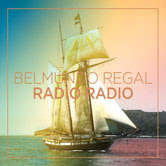 Radio Radio – Belmundo Regal (Bonsound)
The album: If there’s a dark horse this year, this is it. It’s also a testament to the growing power of the listserv to which Polaris jurors subscribe, where we champion albums we love and spam each others’ inboxes. It’s safe to say that this Acadian hip-hop group had zero profile in the rest of Canada until it began to be championed by a couple of jurors. And while Bonsound is a promotional powerhouse in Quebec, there’s no guarantee of a golden touch. The music, however, is merely okay. It is fun trying to decipher the deeply regional take on franglais, but (I’m only guessing here) there’s nothing terribly deep going on. Not that there has to be: the music is funky enough, a hip-hop-electro-pop hybrid with a bit of Southern bounce to it, and it’s pleasant enough one track at a time. But album of the year? This sounds like Bran Van 3000 b-sides at best.
The chances: Slim. This is definitely the luckiest band on the list—in that sense, they’ve already won.
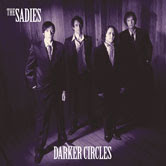 The Sadies – Darker Circles (Outside)
The album: Like anyone else in southern Ontario, I love the Sadies and have seen them dozens of times, with one or two ecstatic experiences in there somewhere. And yet I never, if ever, put on one of their albums for my own listening pleasure. There’s good reason this album—their, um, umpteenth—is getting more than its usual share of attention. I was frankly worried when I heard they were working with Gary Louris of the Jayhawks—a man who, talented though he is, is not known for his grit or sense of adventure. (Side note: he did excellent work on another Torontonian album last year, Kirsten Jones’s The Mad Mile, though no one would accuse that of being adventurous or gritty.) But as he did with their last album, New Seasons, Louris clears away only a bit of the haze and otherwise helps the band define their textures a bit more clearly; on Darker Circles, they’ve definitely hit their stride in their studio work, both with each other and with Louris. Whether he whipped their songwriting into shape or whether they’re just naturally maturing is beside the point; one finally gets the sense that the Sadies believe in these songs, that they’re not just vehicles to get them on the road and perform.
The chances: Good. Surely when a band that could be eligible for a lifetime achievement award makes an album this strong, it has to count for something.
 Shad – TSOL (Black Box)
The album: The best Canadian MC whose name doesn’t begin with K (although his last name does), Shad is hard to dislike: he’s warm, witty, and nerdier than thou. He’s also whip-smart and insightful when he wants to be, like on the haunting “At the Same Time,” but his metaphors can just as easily fall flat on their face (“Trying to listen to Jesus is hard as fake boobs”). Mostly, though, he’s full of good times and positivity, and uses his spotlight to spread the love and laugh at himself. The music rarely matches the dexterity of his lyrics, however; hopefully his continued success will attract stronger collaborators.
The chances: Excellent. Shad surprised a lot of people with his last Polaris shortlisted album, The Old Prince, and many feel that this is his year—not to mention the fact that it might be time a hip-hop album took home the prize. On top of genuine love for TSOL, people also love Shad himself; his chances of riding a wave of goodwill to the top are better than strong. He splits his time between B.C. and Ontario, which would at least be a small dent in Central Canada’s stronghold on the prize so far.
 Tegan and Sara – Sainthood (Universal)
The album: I’ll admit to having dismissed this album when it came out; not because I disliked it particularly, but because it was a competent, commercially palatable pop record and the world has plenty of those—why should I care about this one? I listened with open ears, hoping for at least a conversion on the level of Metric’s Fantasies; instead, I cast it away. The single “Hell” crept up on me during many a grocery trip (where I’m always a captive audience); the other singles are just as strong, and there’s a good chance they could be giving Carl Newman a run for his money in another few years. Maybe if my stepkiddo was as enthralled with Tegan and Sara as she is with Billy Talent, I might have succumbed by now, due to sheer overexposure.
The chances: Fair. Like the Sadies, they’ve been around a long time and their recorded output continues to improve; this may well be their best album yet (I have no idea; I haven’t followed them closely), which could tip some votes their way. But the same critics who won’t give Billy Talent the time of day are unlikely to give Tegan and Sara an objective listen.
The could've beens:
 Schomberg Fair – Gospel (Hi Hat)
The album: Last year I dumped on Elliott Brood, and arguably Schomberg Fair are cut from the same cloth. Except that they’re awesome. The breakneck banjo songs are thrilling, but there's much more going on here than a hackneyed hoedown. Bassist Nathan Sidon is the most frog-voiced singer I've heard since Gabe Minnikin in the Guthries, but it totally works for him. I don't hear a lot of people putting soul into roots music these days—and by soul I don't mean R&B (though there is a strong gospel element here, hence the title, as well as the aptly titled oddball track “Motown Break”), but that indescribable "it" that gives certain bands undeniable chemistry and sets them apart from genre-fication. This band absolutely kicks my ass: the blistering shredding, the Christian guilt, the gutsy playing that's probably the most punk rock thing I've heard in Canada this year, the banjos, the rumbling baritone voice, and the ability to breathe life into hoary clichés like "Wayfaring Stranger."
Why it didn’t make the short list: This band barely has a profile in its hometown of Toronto, never mind the rest of the country.
 Souljazz Orchestra – Rising Sun (Strut)
The album: What began as a rather imitative second-rate Afrobeat band has grown up quickly, and Rising Sun is an intriguing and varied jazz album that happens to use some African instrumentation and grooves. It’s their first for an international label, and they’re more than ready for the spotlight. Keyboardist Pierre Chretien deserves top marks for tying it all together; tenor saxophonist Steve Patterson has plenty of fine performances here as well, particularly on the dreamy, spacy “Consecration,” which owes a debt to Alice Coltrane.
Why it didn’t make the short list: World music? Jazz? Polaris has a long way to go. And fans of these genres rarely rally around a favourite, no doubt leading to an insane amount of vote-splitting.
 South Rakkas Crew – The Stimulus Package (Mad Decent)
The album: Polyglot pop and deconstructionist dancehall that draws from just about every dance music trend of the last 15 years. It’s wicked, wacky and wild party from beginning to end, full of booty bass that’s both abrasive and persuasive, and even the occasional auto-tuned vocal merely adds to the overall madness rather than a nauseating distraction. This came out on Diplo’s Mad Decent label, and it has much more in common with that scene than anything else going on in Canada. Indeed, the Crew themselves have lived in Orlando (?!) for over 10 years now, but coming from Brampton and Mississauga, their sound is definitely the sound of the modern, multicultural suburbs—suburbs barely recognizable to Arcade Fire.
Why it didn’t make the short list: Because it’s a free mix tape, not a “real album,” the old world has a bit of trouble grasping the fact that this was not available in stores and therefore not legit. It also recycles a couple of “riddims,” in Jamaican parlance, which means four tracks here with the “double-up riddim” sound exactly the same except for the vocal—that doesn’t mean each individual one is less thrilling, however. But really, the main reason South Rakkas Crew didn’t make the shortlist is because not nearly enough people listen to David Dacks.
 John Southworth – Mama Tevatron (Dead Daisy)The album: John Southworth must be as sick as anyone by descriptors like “weird and wonderful” or, that classic kiss of death, “quirky.” But on Mama Tevatron this unique character not only shows off his songcraft at its best, but moves away from several of the stranger personas he’s inhabited in the past. Gone is the sweater-clad boyish man, gone is the weird blackface bluegrass phase; in its place is a space-age bachelor pad pop music that’s a strange hybrid of Esquivel, the Ramones and Dirty Mind-era Prince—that has to be heard to be believed. Nine of these 10 songs are pop perfection, both in their immediate appeal and the layers underneath. The final one, “Zulou,” could be Klaus Nomi covering Pink Floyd, as Southworth heads deeper and deeper into space.
Why it didn’t make the short list: Southworth’s heyday—if he had one—was over 10 years ago, when both he and Hawksley Workman were starting out and were cut from the same cloth; their paths have since diverged considerably. Maybe people still have him pegged in that period, who knows. If so, they’re missing out.

 Yukon Blonde – s/t (Nevado)
Zeus – Say Us (Arts and Crafts)
The albums: I’m going to cheat and group these together—because I can barely tell them apart, and not just because they’re always neighbours at the bottom of any alphabetical list. They’re both full of bearded boys who love ’60s pop and ’70s guitar rock, and have the kind of chops that will come in handy when Paul McCartney needs a new pool of backing players. They’re both full of rich harmonies and harmonized guitar leads, and goddammit, they both write songs that are mere inches away from the greatness of their biggest influences. If I had to give the nod to one, it would be Zeus; though their lyrics are equally as inconsequential, they do avoid downright dorkiness, which Yukon Blonde is guilty of on occasion.
Why they didn’t make the short list: Because no one else can tell them apart either, and most jurors likely reserved only one spot on their ballot for ’70s retro rock, meaning both of them (and Jason Collett, for that matter) suffered from vote-splitting. Just get together and form a supergroup already!
The following reviews appeared in the Kitchener-Waterloo Record and Guelph Mercury in June.
Bei Bei and Shawn Lee – Into the Wind (Ubiquity)Chinese-Western musical match-ups are all too rare; successful ones rarer still. The pairing of Bei Bei Zheng and Shawn Lee is nothing short of perfect: she is a master of the gu zheng, or a Chinese zither, and he is an extremely adaptable funk instrumentalist and film composer. The gu zheng is most familiar to Western audiences from martial arts films; hearing it paired with Shaft-worthy instrumentation is evocative splendour—it’s amazing Quentin Tarantino didn’t think of it first. (He was too busy recycling old soundtracks, apparently.) Though Bei Bei comes from an obviously classical tradition—she’s a teacher and has even written a textbook about the instrument—she’s more than willing to bend the instrument’s capabilities to whatever cinematic mood Lee conjures up, from sparse, smoky jazz to bossa nova to action-sequence soundtracks. The gu zheng’s harp-like qualities at times recall Alice Coltrane’s enchanting jazz records, though Bei Bei is much more playful than spiritual. (June 17)Download (eMusic, amazon.com): “Hot Thursday,” “East,” “The Master Room”
Cowboy Junkies – Renmin Park: The Nomad Series Volume One (Latent)Michael Timmins is having a mid-life creative renaissance. After 10 years of Cowboy Junkies albums that only the most diehard of the band’s fans heard, the guitarist and songwriter bounced back in 2009 with a new band, Lee Harvey Osmond (with Blackie and the Rodeo Kings’ Tom Wilson and Skydiggers’ Josh Finlayson), that tapped into the sparse and spooky nature of the Junkies’ best recordings. Now back with the Junkies, Timmins launches the first of four albums they intend to put out in the next 18 months, a schedule that sounds ridiculously ambitious for a band well past their prime—until you hear how strong this album is.Renmin Park was written after Timmins and his family (not his siblings in the band) lived in China for three months, an experience that shapes the setting of Timmins’s short stories in the lyrics, but more importantly seeps into the music as well. Ehru and pipa solos fit perfectly into the Junkies’ sound, and Chinese singer Zuoxiao Zuzhou takes lead vocals on “A Walk in the Park,” co-written with bassist Alan Anton and guest keyboardist Joby Baker; two other tracks (“My Fall,” “I Cannot Sit Sadly By Your Side”) are written by Chinese writers and translated into English, sung by Margo Timmins.If the Junkies have been in a rut recently, Renmin Park widens their scope considerably, while remaining as intimate as their finest moments. Michael Timmins appears to have asserted more control here than ever—he also introduces his own, scraggly voice for the first time in the band’s 25-year history—yet it’s actually bassist Alan Anton who rises from the background to glue all these new elements together, especially on the handful of tracks where he adopts a dub reggae backbeat while Michael and keyboardist Baker provide textural touches that tap into the band’s psychedelic, Velvet Underground beginnings.The sound is captivating enough; Michael Timmins has also written some of his strongest songs in years. Longtime Junkies fans will be ecstatic; fair-weather fans are more than encouraged to check in and help this Canadian institution celebrate their 25th anniversary on a high note. (June 17)Download (iTunes, amazon.com): “(You’ve Got to Get) A Good Heart,” “My Fall,” “Stranger Here”
Crystal Castles – II (Last Gang)If notoriety is any measure of success, Crystal Castles are one of the biggest Canadian acts internationally. Listening to their second album, however, it’s near impossible to imagine why.The first album, which featured a demo recording that became a MySpace sensation, was a decent electro album that was equal parts abrasive aggression and goth gloom with melancholic melodies buried beneath the bleeps and blurps.Yet none of that promise is heard here, which—for a band that induces riot-like behaviour at live gigs—sounds remarkably muzzled. Singer Alice Glass is rarely let loose to squeal bloody murder; her most effective moments come when she’s at her most detached and robotic (notably on a cover of Platinum Blonde’s "Not In Love"). Ethan Kath’s production dips into cheesy ’90s rave territory and rote ’80s electro fetishism; even at it’s most aggressive here (which isn’t that often) it still sounds like it would fade into the background on a fashion runway.For all their adoring crowds, Crystal Castles attract a large amount of venom, due to their prickly and prank-ridden public personas. But this time the venom may well come from fans wondering why Crystal Castles sound like they’re made of sand. (June 3)Download (iTunes, eMusic, amazon.com): “Celestica,” “Baptism,” “Not in Love”
Gord Downie and the Country of Miracles – The Grand Bounce (Universal)The best and worst thing about Gord Downie’s solo records is their sloppy, unproduced nature. Outside the confines of The Tragically Hip—confines that applied much less to their last album, the creative comeback We Are the Same—Downie has hired musicians that embrace scrappy first takes, wrestle with wrong notes until they sound right, colour outside the lines when possible and settle into a punk-country shuffle when necessary.They still do all of those things on The Grand Bounce, Downie’s third solo album with this group of players, though this time everything is brought into brighter focus, in large part due to the influence of producer Chris Walla (Decemberists, Tegan and Sara). Thankfully, it’s not as polished as most of Walla’s work, like his own far-too-polite band Death Cab for Cutie and its spin-off project The Postal Service; Walla respects the raw nature of the Country of Miracles while also bringing out their best. As a result, Downie sounds more in control here—as he naturally does with The Hip, where he remains one of the most captivating frontmen in rock’n’roll—as opposed to surrendering to the spontaneity of his bandmates.The songwriting stands out this time as well; Downie is writing to his band’s strengths, particularly guitarist Dale Morningstar and vocalist Julie Doiron, while some songs (“The Drowning Machine”) sound like a younger, hungry Hip, minus the bluesy riffs that defined many of their earlier classics. (June 3)Download (iTunes, puretracks.com): “The East Wind,” “Yellow Days,” “As a Mover”
Drake – Thank Me Later (Universal)He was Canada’s biggest hip-hop superstar ever, even before his debut album came out. So why, now that we’re all paying attention, does he do nothing on said debut but whine about how empty and meaningless the life of a rich and famous rap star is? What a way to squander a wave of goodwill for the upstart underdog—imagine an Academy Award winner making an acceptance speech about how much the win will ruin their life.Drake grew up as a child TV star, so he’d already experienced a small level of fame before he was being wined and dined by U.S. rap royalty. So on some level, his love/hate relationship with fame comes naturally, and on the album’s first single, “Over,” he sums up his discomfort in his new mega-celebrity status, unsure whether he’s still playing a role or whether it’s his real life: “What am I doing? Oh, that’s right, I’m doing me.”That might be tolerable for a single—and yet Drake spends the vast majority of his debut album deconstructing the jetset life, how easy it is to get laid, how hard it is to have so much money, and wondering if it’s all worth it.Cry me a river. Isn’t there a recession going on? Isn’t the world going to hell? Are we supposed to feel sorry for him? Or is he trying to comfort the rest of us lowly listeners by explaining how success is not all that? Is this some self-deprecating Canadian complex, ill at ease in the belly of American celebrity culture?No matter which, it’s indulgent emo rap that rings hollow on almost every level—even the music is limp, without even a single escapist track that might make it on the dance floor—and it’s entirely unclear what exactly we’re supposed to be thanking him for. (June 24)Download (iTunes, puretracks.com, amazon.com): “Over,” “Fireworks,” “Karaoke”
Fred Eaglesmith – Cha Cha Cha (Lonesome Day/E1)After 15 albums in a 30-year career, Brantford, Ontario’s Fred Eaglesmith is currently enjoying his biggest mainstream success, with the likes of Miranda Lambert, Alan Jackson and even Toby Keith recording his material. When it comes to his own albums, however, Eaglesmith is content to get weirder. On Cha Cha Cha, it sounds like Tom Waits got Leonard Cohen’s back-up singers hammered with Los Lobos, getting David Lynch to film the whole thing. The Ginn sisters provide backing vocals that are alternately elegant and creepy, a perfect complement to Eaglesmith’s increasingly raspy voice—which is put to work singing songs of romantically devastated men who think their lover is “being careless with my love,” is “playing tricks on me,” has been “gone too long,” and who spend their days hallucinating said lover’s appearance all around town.As one might expect, Cha Cha Cha has a slight Latin vibe, mixed with twangy guitar, Farfisa organs and ’50s rock’n’roll. Because Eaglesmith recorded it at home—though still employing long-time collaborator Scott Merritt to mix the album—it has a decidedly more raw sound. Obviously, Eaglesmith is fine letting others make radio-friendly versions of his songs; left to his own devices, he likes to dwell in the shadows, where attention to sonic detail is as important as lyrical narratives. In fact, on their own, most of these songs are merely average: it’s Eaglesmith’s eerie delivery and morbid mood that really makes them shine. (June 17)Download (iTunes, amazon.com, zunior.com, eMusic): “Careless,” “Sliver of the Moon,” “Dynamite and Whiskey”
Minotaurs – The Thing (Static Clang)Once a drummer, always a drummer. Though Nathan Lawr (Royal City, King Cobb Steelie) moved from behind the skins to become an acclaimed singer/songwriter in his own right, he is once again slave to the rhythm in his new project, Minotaurs. Lawr isn’t drumming here—he leaves that to CanRock veteran Don Kerr (Ron Sexsmith, Rheostatics)—but has written a set of songs that rely almost entirely on rhythm. (That, and a killer horn section.) Opening track “Caught in the Light” sets the pace, easily falling into the type of Afrobeat groove that’s driven so many recent reissues of ’70s African obscurities. Several other tracks follow a similar template, but this is not Lawr’s Afrobeat record—even if perhaps it should be, seeing how those are the standout tracks. His tendencies toward traditional Western songcraft still shine through—though often it sounds like he’s trying to tame these wild Minotaurs, when really, he should be letting them loose to follow wherever the beat takes them. (June 24)Download (iTunes, eMusic, zunior.com): “Caught in the Light,” “Get Down,” “Pink Floyd”
Janelle Monae – The Archandroid (Bad Boy/Warner)“Am I a freak?” asks Janelle Monae, “Or just another weirdo? / Call me weak / Or just call me your hero.”Hero it is, then. Her haircut and style might be the first thing you notice—like on her explosive performance on David Letterman’s show a couple of weeks back—but Monae’s myriad talents are what make her a star, not just the fact that she can out-glam Gaga if she wants to.Vocally, she can be Grace Jones one moment, Lena Horne the next, and then sound as giddy as a young Michael Jackson, dropping huge pop songs, soul revue rave-ups, wigged-out hip-hop like her friends in Outkast and dancing like James Brown in the process. Then, just for the hell of it, she’s slice off some British psychedelic folk music or Broadway-style show tune—because she can. That she is capable of doing anything is obvious. Should she?The Archandroid contains 18 tracks, including a couple of pseudo-classical instrumental interludes that have something to do with the fact that Monae has somehow envisioned this album as parts two and three of a soundtrack to the silent film classic Metropolis—which I don’t believe for a second. She doesn’t need that kind of backstory to sell herself as an enigmatic, multi-talented tour-de-force—it’s all there in the music itself.But if The Archandroid is a tad show-offy and a bit too long, it never entirely wears out its welcome, thanks to at least four or five killer tracks and Monae’s seemingly endless charisma. Prince is undoubtedly also high on her list of influences, though unfortunately The Archandroid is more like Diamonds and Pearls-era Prince—past his prime but before the total decline. Monae is on her way up, of course, and there’s no doubt she’ll be bathing in the purple rain soon enough. (June 3)Download (iTunes, puretracks.com, amazon.com): “Tightrope,” “Cold War,” “Dance or Die”
Parallels – Visionaries (E1)Cameron Findlay was the live drummer in Crystal Castles before striking out to form Parallels; if CC has ’80s presets in their keyboards, Findlay likes to take it back further, mining warm analog synth sounds as if music stopped progressing after Kraftwerk’s Man Machine album.Findlay teamed up with singer Holly Dodson (whose father spent the ’70s avoiding synths in the colossal CanRock band the Stampeders), who plays the part of ice princess effectively—warmer than, say, the faceless Sally Shapiro, but not as charismatic as Lykke Li or Annie. Parallels are very much a genre band and a promising one at that, but Visionaries suffers from a sameness that gets wearying after more than a couple of tracks at a time. (June 3)Download (iTunes, amazon.com): “Nightmares,” “Ultralight,” “Needless to Say”
Tom Petty and the Heartbreakers – Mojo (Warner)Don’t do drugs, kids. If you do, you’ll wind up 60 years old and playing boring blues rock—no matter how good you were a mere 20 years ago, or 20 years before that.Tom Petty is not a man who should be singing the blues—nor, for that matter, at his age, should he be paying women backhanded compliments like: “She was kinda cute/ if a little past her prime.” His nasal voice is perfect for snarling rockers, tiny perfect pop songs and laid-back country rock; singing the blues simply brings out his worst, laziest tendencies. He doesn’t have the curmudgeonly character or evasive wordplay that his friend Bob Dylan does in order to pull this off; instead, he sounds like an old bore singing about partying with motel maids (which he does on “The Trip to Pirate’s Cove”) or his first acid trip (which he does on “First Flash of Freedom”).The Heartbreakers do their best—in particular stalwarts Mike Campbell on guitar and Benmont Tench on keyboards—and several tracks would be fine without Petty involved, like the lite reggae “Don’t Pull Me Over” or the shuffle of “Running Man’s Bible.” But the world is full of great bands backing up lacklustre songwriters—it’s just sad that fate has befallen the Heartbreakers. (June 24)Download (iTunes, amazon.com, puretracks.com): "High In the Morning," "Something Good Coming," "Don’t Pull Me Over"
Sean Nicholas Savage – Movin Up in Society (Arbutus)Plenty of artists adopt a retro sound; few sound like actual artifacts from times gone by. Sean Nicholas Savage, an Edmonton expatriate now living in Montreal, sounds like he hasn’t heard any new music since Bob Dylan went electric; Savage’s sound is very much rooted in the early ’60s Greenwich Village folk scene, with his warbly, slightly nasal tenor imbued with all the wide-eyed idealism and naivete of a Prairie boy suddenly “sleeping in a car in New York City.” His lyrics may not be terribly deep (“giant brain up in the sky/ tell me what is on your mind”)—he’s no Ian Tyson—yet his voice is entirely captivating, and the lo-fi, acoustic recording is enchanting, especially the contributions from the soprano backing vocalists and violinist. At times it recalls a more wistful and romantic Ray Condo—another Westerner who moved to Montreal to make country music—or a rural take on the sweet simplicity of Swedish songwriter Jens Lekman. Hopefully his new city life inspires some lyrics to match his musical vision. (June 10)Download: the entire album is available for free here.
South Rakkas Crew – The Stimulus Package (Mad Decent)With the lone exception of Kardinal Offishall’s 2008 pop hit “Dangerous”—which unfortunately overshadowed the criminally underrated album it appeared on, Not 4 Sale—the tiny but vital group of Canadians making Caribbean-influenced dancehall pop has rarely made international waves. South Rakkas Crew might be the ones to change that.South Rakkas Crew grew up in Mississauga and Brampton, worked in Toronto briefly (including on Barenaked Ladies tracks), and then fled to Orlando where they found work with ’N Sync, of all people, and even Michael Jackson, while maintaining links to club culture, in particular Jamaican dancehall. That dichotomy has made fans out of Thom Yorke and Tricky as well as Beyoncé and Justin Timberlake, and, most importantly, Diplo—the Baltimore DJ who helped give birth to M.I.A.’s career, as well as Santigold’s, and who is one-half of the electro-dancehall-pop duo Major Lazer. Diplo has put out South Rakkas Crew mix tapes and albums on his Mad Decent label, where they’re right at home alongside other artists under heavy Jamaican, Brazilian and hip-hop influences.Unlike their like-minded peer Poirier in Montreal, South Rakkas Crew come from a decidedly more pop background, meaning the hooks are huge and the beats much bigger than most people from the underground who came to the dance floor late in the game. That doesn’t mean they play it safe, however: one of the most engaging tracks on The Stimulus Package is their remix of sorts involving oddball art-punk band Deerhoof, and their 2008 pop song “+81”; stripped of its signature guitar riff, the Crew pull apart the other hooks embedded in the track and cut the tempo in half.They may be globetrotters now, but it’s not hard to hear the new sound of the suburbs—the culturally rich, cross-pollinating suburbs, not the sleepy enclaves of yore—in South Rakkas’ polyglot pop. (June 10)Download: the entire album is available for free here.
Tracy Thorn – Love and its Opposites (Merge)Everything But the Girl always seemed like one of those ridiculous British names for disposable pop bands of the ’80s (see: Pop Will Eat Itself, Wet Wet Wet). But that band’s singer, Tracy Thorn, is definitely not making music for girls and boys anymore: this, her second album, is for mature audiences only. And by mature, I mean anyone with enough life experience to be in a long-term relationship that either fractures after years of slowly developing cracks, or somehow survives despite years of disappointments. Mature in a way that will no longer accept a tired cliché like “I miss you like deserts miss the rain.”Thorn let’s you know exactly what you’re in for right off the top: “Oh! The Divorces” is a devastating song about watching friends fall apart, lost idealism, the fallacy of romantic pop songwriting, and the fall from passionate beginnings to mundane custody obligations—the latter is done during the song’s bridge in a mere 11 words: “the honeymoon/ the wedding rings/ the afternoon handovers by the swings.” Ominously, the song both opens and closes with the question: “Who’s next?”Love and its Opposites is not a breakup album—after all, Thorn is still married to her former EBTG bandmate and father of her children, Ben Watt. Rather, it’s full of well-crafted observations of middle age in general: parenting teenagers (“you worry about growing up/ I worry about letting go”), singles bars (“Can you tell how long I’ve been here? / Can you smell the fear?”) and family ghosts in the old hometown.The lyrics are the real selling point; on first listen, the music is merely pleasant and, well, adult. Thorn’s melancholy, empathetic voice is nothing if not subtle, but understatement serves her well; the arrangements here are often sparse, but always spot-on, and there are enough colours and tempos to rescue it from being a middle-aged mope. Much like the quiet, unseen daily dramas that she documents, there is far more going on here than first meets the eye. (June 10)Download (iTunes, eMusic, amazon.com, puretracks.com): “Oh! The Divorces,” “Kentish Town,” “Singles Bar”
Andre Williams – That’s All I Need (Bloodshot)This 73-year-old bluesman isn’t up to any new tricks on his latest album, other than that he’s digging into more of a late-night psychedelic blues trip than he has in the past, thanks to a group of Detroit players, most of whom—with the notable exception of Motown session legend Dennis Coffey—are from much younger generations. Williams is an oddly compelling vocalist, equally sexy and sinister, cool and creepy, even when he’s just chanting the word “tricks!” over a minimalist blues backdrop, or squeezing every bit of pathos out of a song titled “When Love Shoots You in the Foot.” Williams sounds a bit spent: he doesn’t seem capable of belting it out, but nor does he have to, and his calm command of the feisty youngsters behind him lends him even greater authority. (June 24)Download (iTunes, eMusic, amazon.com): “There Ain’t No Such Thing as Good Dope,” “Tricks,” “Cigarettes and My Old Lady”
 The remaining five nominees are:
 Owen Pallett – Heartland (For Great Justice)
 Radio Radio – Belmundo Regal (Bonsound)
 The Sadies – Darker Circles (Outside)
 Shad – TSOL (Black Box)
 Tegan and Sara – Sainthood (Universal)
 Schomberg Fair – Gospel (Hi Hat)
 Souljazz Orchestra – Rising Sun (Strut)
 South Rakkas Crew – The Stimulus Package (Mad Decent)
 John Southworth – Mama Tevatron (Dead Daisy)

 Yukon Blonde – s/t (Nevado)

