Showing posts with label AroarA. Show all posts

Wednesday, October 30, 2019

The 2010s in 10x10


Informative, not authoritative. I much prefer personal lists to those that lay some sort of claim to objectivity. I learn about a lot of great music from them. I hope this does this same for you. I want to read yours.

During this decade, like the one before it, I had a weekly review column in which I discussed approximately 200 albums a year. That’s 2,000 in a decade, not counting music by artists about whom I wrote stories or by whom I was hired to write bios, and not counting music I listened to just for the hell of it. So yeah, I had trouble narrowing a few things down.

This list has nothing to do with any professional obligation, however; it’s personal. It’s a list made by a 48-year-old white dad who lives in Central Canada, so make of that what you will. I don’t feel an obligation to pretend to like Frank Ocean or Taylor Swift or Bon Iver or Lana del Rey or Radiohead or whomever else leaves me cold. I didn’t think I listened to much rock’n’roll anymore, but apparently I listen to a lot more of it than Pitchfork writers do. Because I’m still very much an album listener, there’s nothing here by some decade-defining artists whose singles I love. And there’s definitely no Drake here—because, hey, I’m older than 35 and I’m pigheaded about my emperor’s-new-clothes crusade. The fact that he’s universally hailed as the “artist of the decade” only proves how wrong I am about everything.

So here’s my top 100 of the decade 2010-19. There’s no way I’m going to rank these. I did, however, break it down into a top 20 and the remaining 80, singling out 30 underdogs for discovery purposes. With four exceptions, no artist appears twice. One of these records seems to have been wiped from the internet, and I’m probably one of the only people who’s noticed. All lists arranged alphabetically, except the one off the top that’s not. I’m sure I forgot more than a few things.

If you want to shuffle all these up in your Spotify, there’s a playlist here.
If you just want one sample song from each, that playlist is here.

Here we go:


The top 20:

I wrote year-end lists every year—which made this task a helluva lot easier. Looking back, it’s always interesting (to me) to see what records I still want to listen to, and which merely sounded good at the time. But I’ll stand by my 10 #1 choices: I might not feel, today, that they’re necessarily the best records of that given year, but they’re still favourites that earn an easy pass onto an end-of-decade list. Click for links to the full lists for the years in question.

2010: Arcade Fire – The Suburbs
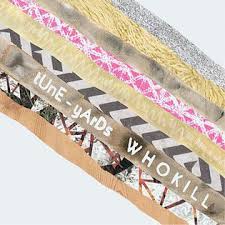
2011: TuneYards – Whokill
2012: Grimes – Visions
2013: AroarA – In the Pines*
2014: Owen Pallett – In Conflict
2015: Buffy Sainte-Marie – Power in the Blood
2016: Beyoncé – Lemonade
2017: Weaves – Wide Open
2018: U.S. Girls – In a Poem Unlimited
2019: Snotty Nose Rez Kids – Trapline

Here’s the last half of my top 20, absolutely essential records, all—at least to me, if no one else:

Alabama Shakes – Sound and Color (2015)
Eric Bachmann – s/t (2016)
Bonjay – Lush Life (2018)
Jeremy Dutcher – Wolastoqiyik Lintuwakonawa (2018)
Veda Hille – Love Waves (2016)
Kaytranada – 99.9% (2016)
Man Man – On Oni Pond (2013)
Mbongwana Star – From Kinshasa (2015)
Robyn – Body Talk (2010)
Gillian Welch – The Harrow and the Harvest (2011)


--

Stop here if you’re already bored. But of the other 80 records on this list, here are 30 underdogs records that got little or no press, by artists unlikely to fill a venue in English Canada larger than 500 capacity. Again, other than the top 20 listed above, these aren’t ranked; these are just highlighted in the hopes that you make some discoveries here. Broken down by Canada vs. the world:

Canada:
Geoff Berner – Canadiana Grotesquica (2017)
Cadence Weapon – s/t (2018)
Kathryn Calder – Bright and Vivid (2011)
Le Couleur – P.O.P. (2016)
Mark Davis – Eliminate the Toxins (2011)
Dennis Ellsworth – Things Change (2018)
Jim Guthrie – Takes Time (2013)
Hilotrons – At Least There’s Commotion (2013)
Zaki Ibrahim – Every Opposite (2012)
La Force – s/t (2018)
Jean Leloup – À Paradis City (2015)
Michelle McAdorey – Into Her Future (2015)
Scott Merritt – Of (2015)*
Nick Buzz – A Quiet Evening at Home (2013)
Doug Paisley – Constant Companion (2010)*

International:
Africa Express Presents Maison des Jeunes – Various Artists (2014)
Christian Scott aTunde Adjuah – Ancestral Recall (2019)
Gaye Su Akyol – Istikrarli Hayal Hakikattir (2018)
Altin Gun – On (2018)
Anna Calvi – Hunter (2018)
Brandy Clark – 12 Stories (2013)
Nels Cline – Lovers (2016)
EMA – The Future’s Void (2014)
Bill Fay – Life is People (2012)
Kikagaku Moyo – Masana Temples (2018)
Nakhane – You Will Not Die (2019)
Sons of Kemet – Your Queen is a Reptile (2018)
Moses Sumney – Aromanticism (2017)
The Thermals – Personal Life (2010)
Shye Ben Tzur, Jonny Greenwood and Rajasthan Express – Junun (2015)

--

Looking for more familiar faces? Here’s the remaining 50, featuring somewhat more well-known subjects (though not necessarily, especially if you’re not Canadian):
Arca – s/t (2017)
Arcade Fire – Everything Now (2017)
BadBadNotGood – IV (2016)
Beach House – Teen Dream (2010)
Belle and Sebastian – Write About Love (2010)
Mary J. Blige – The London Sessions (2014)
David Bowie – Blackstar (2016)
Broken Social Scene – Forgiveness Rock Record (2010)
Basia Bulat – Tall Tall Shadow (2013)
Caribou – Swim (2010)
Rosanne Cash – The River and the Thread (2013)
Jennifer Castle – Pink City (2014)
Cat Power – Sun (2012)
Neneh Cherry – Broken Politics (2018)
Leonard Cohen – You Want It Darker (2016)
Destroyer – Poison Season (2015)
Beth Ditto – Fake Sugar (2017)
Gord Downie and the Country of Miracles – The Grand Bounce (2010)
Feist – Metals (2011)
Fucked Up – Dose Your Dreams (2018)
Lady Gaga – Joanne (2016)
Kendrick Lamar – To Pimp a Butterfly (2015)
Lee Harvey Osmond – The Folk Sinner (2013)
Low – Double Negative (2018)
Corb Lund – Cabin Fever (2012)
Janelle Monae – Dirty Computer (2018)
AC Newman – Shut Down the Streets (2012)
Joanna Newsom – Have One on Me (2010)*
Orville Peck – Pony (2019)
Perfume Genius – Too Bright (2014)
Robert Plant – Band of Joy (2010)
Jessie Reyez – Kiddo EP (2017)
Rosalía – El Mal Querer (2018)
Santigold – Master of My Make-Believe (2012)
Sleater-Kinney – No Cities to Love (2015)
Solange – True EP (2012)
Spoon – Hot Thoughts (2017)
Mavis Staples – One True Vine (2013)
Vince Staples – Summertime 06 (2015)
Tanya Tagaq – Animism (2014)
Tracey Thorn – Love and Its Opposites (2010)
Timber Timbre – Sincerely, Future Pollution (2017)
Tinariwen – Elwan (2017)
The Tragically Hip – Man Machine Poem (2016)
Rokia Traoré – Beautiful Africa (2013)
A Tribe Called Quest – We Got It From Here… (2016)
A Tribe Called Red – Nation II Nation (2013)
Vampire Weekend – Modern Vampires of the City (2013)
The Weeknd – House of Balloons (2010)
The Xx – I See You (2017)

*Four titles are not available on streaming services

AroarA seems to have ceased their web presence since Ariel Engle launched La Force: you can’t stream or buy this anywhere. I’ve been told In the Pines is about to be reissued in the U.S. on a poetry label out of Portland, Oregon.

Scott Merritt’s music can be purchased here.

Joanna Newsom’s music can be purchased here.

Doug Paisley's music is on Spotify, but curiously his 2010 album Constant Companion is not. It is, however, on Bandcamp here

--

What’s that? You’re still here? Finally, in the highly unlikely event you’re not already satiated, here’s yet another 50 excellent records I think should also be thrown in the time capsule:
Alvvays – Antisocialites (2017)
Atoms for Peace – s/t (2013)
Courtney Barnett – Sometimes I Sit and Think… (2015)
Willis Earl Beal – Nobody Knows (2013)
Geoff Berner – Victory Party (2011)
Jim Bryson – Somewhere We Will Find Our Place (2016)
The Comet is Coming – Channel the Spirits (2016)
Darkside – Psychic (2013)
Dirty Projectors – Swing Lo Magellan (2012)
Gord Downie – Introduce Yerself (2017)
Dominique Fils-Aimé – Stay Tuned (2019)
Dr. John – Locked Down (2012)
Kevin Hearn – Days in Frames (2014)
Hidden Cameras – Home on Native Land (2016)
Japandroids – Celebration Rock (2012)
J Rocc – Some Cold Rock Stuff (2011)
Sharon Jones & the Dap Kings – Give Them What They Want (2014)
The Julie Ruin – s/t (2013)
Lydia Képinski – Premier juin (2018)
Angelique Kidjo – Remain in Light (2018)
Michael Kiwanuka – Love & Hate (2016)
Pierre Kwenders – Le dernier empereur bantou (2014)
Terra Lightfoot – New Mistakes (2017)
Hubert Lenoir – Darlène (2018)
Lykke Li – Wounded Rhymes (2011)
Lizzo – Coconut Oil EP (2016)
Lotic – Power (2018)
Brad Mehldau – Finding Gabriel (2019)
Miguel – Kaleidoscope Dream (2012)
Tami Neilson – Don’t Be Afraid (2015)
Tunde Olaniran – Transgressor (2015)
Operators – Blue Wave (2016)
Anderson.Paak – Malibu (2016)
Pusha T – My Name Is My Name (2013)
Kim Richey – Edgeland (2018)
Rocket Juice & the Moon – s/t (2012)
The Roots – And Then You Shoot Your Cousin (2014)
Sagot – Valse 333 (2014)
Sampha – Process (2017)
Paul Simon – Stranger to Stranger (2016)
Snowblink – Inner Classics (2012)
Kae Sun – Afriye (2013)
Tobi – Still (2019)
Maylee Todd – Acts of Love (2017)
Two Hours Traffic – Foolish Blood (2013)
Tom Waits – Bad As Me (2011)
Jack White – Lazaretto (2014)
Whitehorse – Panther in the Dollhouse (2017)
Wolf Parade – Cry Cry Cry (2017)
Wye Oak – Civilian (2011)

Apparently I thought 2018 and 2013 were amazing years for music. Breakdown by year:
2018: 21
2013: 20
2016: 19
2017: 18
2014: 14
2015: 14
2012: 14
2010: 13
2011: 10
2019: 7 (I’m less likely to trust my recent infatuations)

Wednesday, September 19, 2018

La Force


La Force – s/t (Arts and Crafts)


Ariel Engle made my favourite recordof 2013, “In the Pines,” as one-half of the duo AroarA. Five years later, on her debut as La Force, Engle has once again announced herself as a major talent—this time under a new name, and with her alone in the spotlight.


In the interim, she and her friends Leslie Feist and Snowblink’s Daniela Gesundheit formed a trio called Hydra, mainly as a social club with which Engle could play summer festivals with her newborn in tow. She then followed Feist into the latest incarnation of Broken Social Scene; Engle joined the already-crowded band on their comeback record, 2017’s “Hug of Thunder,” and easily carved out her own space beside the starpower of Feist and Emily Haines. Broken Social Scene also features Andrew Whiteman, who was not only Engle’s partner in AroarA, but off-stage as well. He co-wrote the music for La Force, but this is her project. She’s more than ready for her close-up.


For starters, she’s an arresting vocalist, every bit as compelling—if not more so—as her more famous friends. (The sole distraction on the album is on “Upside Down Wolf,” where she sounds remarkably like Cat Power—for an artist whose voice is so otherwise distinctive, this presumably accidental homage is somewhat jarring. It’s still a great song, though.) Her melodies are lovely, often based—as the best folk songs are—on as few chords as possible, if not just a plain drone (like the opener, “The Tide”).


But where Engle truly shines is in her rhythm: not just in the live and/or electronic percussion behind her, but in the role that every instrument plays on this record, starting with her own guitar playing. Latin rhythms often percolate underneath, not always in recognizable ways, though the bossa nova vibe of “Mama Papa” is undeniable. The overall production aesthetic is that of slick, art-rock torch music with more than a few nods to ’80s new wave (see the redundantly titled “Epistolary Love Letter”), with thoroughly modern technology; there’s nothing retro here, other than a sheer devotion to craft. As perfect as this record is, it also leaves the future of La Force wide open. This is an artist who could easily pivot in any which way: into darker corners, into sunnier settings, situated anywhere in the world.


Even though all her other projects have been with dear friends and loved ones, once this record makes the rounds, Ariel Engle’s own work will never be seen as an adjunct to someone else. Viva La Force!


La Force is on tour now. She plays Adelaide Hall in Toronto on Thursday, September 20. Full dates here.


Stream: “The Tide,” “TBT,” “Lucky One”


Monday, September 15, 2014

Polaris 2014 part one: Arcade Fire, Basia Bulat


Every day this week I'll post about two Polaris Prize shortlisted acts and two equally—if not more—worthy albums from the year in question. The winner will be announced at the gala Sept. 22


The shortlisted


Arcade Fire – Reflektor (Sonovox)


The album:


There’s no question Arcade Fire and Drake owned the year in Canadian music news, making headlines seemingly every week; in Arcade Fire’s case, it was not just the brilliant roll-out of Reflektor, but the site-specific cover versions they played in every city of their nine-month tour. They worked their ass off; I have no idea when they slept, because Win and Regine were juggling a newborn at the time, while the rest of the band gigged late into every night as a cover band at the afterparties. So yes, 2014 was all about Arcade Fire.


This record is the follow-up to an album that won every prize imaginable (including the Polaris) in 2011. On many levels, Reflektor is not The Suburbs. It sounds nothing like it, for starters; if The Suburbs perfected their Cure/Springsteen mashup (and I maintain that The Suburbs is as close to a perfect rock album as we’re likely to see this decade, on several levels), Reflektor took them in all new directions—not just the expected touches from LCD Soundsystem’s James Murphy in the producer’s chair, but soca, reggae, straight-up blues rock, a smidge of old-school punk (in the intro to “Joan of Arc”), Madonna-esque pop (the slinky “Like a Virgin” synth bass on “We Exist”), spaced-out Kraturock (“Supersymmetry”).


Did it work? Sometimes. Here’s my review from the Oct. 23 issue of the now-defunct Toronto mag The Grid (link here, for as long as it lasts):


LCD Soundsystem’s James Murphy was originally slated to produce Arcade Fire’s 2007 album, Neon Bible—which is hard to imagine, considering the gloomy dread that pervades much of that Bush-era relic. It was not a party record. But then, neither is the Murphy-helmed Reflektor, though the electro-Caribbean-disco makeover might lead you to believe otherwise. Reflektor is far more about sonics than songs or groove; less Daft Punk, more like—dare we say it?—U2’s Pop (fortunately, it’s better than that album). As a dense, layered production, it is often brilliant. But as a collection of songs that clocks in at 20 minutes longer than the already-sprawling Suburbs, Reflektor can be a suffocating chore—one where, 50 minutes in, the band dares to title a track “It’s Never Over,” then follows it with their worst song ever (called, um, “Porno”). The sequencing suggests they themselves are aware of all this: both songs follow something called “Awful Sound,” which sounds like Brian Eno producing Paul McCartney on a bad day for both of them. The title sums it up.

Certain tracks chart new directions for Arcade Fire. Among these are the soca-tinged “Here Comes the Night Time,” where drummer Jeremy Gara is on fire; and the straight-up rock ’n’ roll deliverance of “Normal Person,” designed for stadium flashpots. The Kraftwerkian drone of “Supersymmetry” is also a welcome closing respite. Cumulatively, Reflektor is Arcade Fire at their absolute best, inspiring and capable of reinvention, with a couple of great pop songs thrown in the mix (“We Exist,” “Afterlife”)—and yet it also displays them at their most indulgent and joyless.


This band deserves to be held to the highest standards—Funeral and The Suburbs are flawless—and for once, Arcade Fire sound remarkably fallible. At least they don’t sound lazy.


I wish my opinion had changed in the last 12 months. It hasn’t, other than I like the good stuff even more (especially after seeing the live show) and I still cringe at the lows (which, tellingly, rarely made the set lists).


The chances:


Zero. For starters, the likelihood of a repeat winner is slim at best—and it would have to be for an album much more universally loved than this divisive one. I was shocked this even made the shortlist. Maybe that’s just narcissistic of me, as a day-oner who can’t imagine anyone else being a bigger fan. If even I was disappointed in this album, who loved it enough to vote for it?


Basia Bulat – Tall Tall Shadow (Secret City)


The album:


This was impressive the first time I heard it; it sounds even better now, almost a year later. This is Bulat’s shining, star-making moment, her true coming-out party—much more bolder, confident and clear than her 2007 debut, which pole-vaulted onto the Polaris shortlist that year. Green girl no more, Bulat belts her heart out and shows her instrumental prowess to be finger-pickin’ good on any strings she finds: ukulele, guitar, autoharp and an Andean charango. (I felt this way before seeing her Massey Hall show this spring, which confirmed all of the above.) Producers Tim Kingsbury (Arcade Fire) and Mark Lawson help her shape her songs into anthems and atmospheric ballads, with influences ranging from gospel to new wave to Joanna Newsom to Feist. Most importantly, every song is fantastic: even if Bulat wasn’t the kind of singer to hold those chest-pumping, Celine-ish high notes on “Never Let Me Go”—and make no mistake, she has no trouble pulling it off—the song itself would be just as affecting if someone with a more limited range tried to sing it.


The chances:


I would say that they’re strong, except Tall Tall Shadow has one strike against it: perfection. There isn’t a note out of place here. There isn’t a single wayward track. Bulat has an incredible voice. The production is stellar. So other than, you know, excellence, what makes this an interesting record? Whether or not it will inspire one or more Polaris to jump up on their chair and demand that everyone surrender to beauty remains to be seen. Nobody’s ever won the Polaris for making a beautiful record (not even Feist).


The could’ve, should’ve beens:


AroarA – In the Pines (Club Roll)


The album:


Andrew Whiteman is one of those old guys who gets wilder and more creative as he gets older. So it might be tiresome hear my perennial rants that Album X is the best thing he’s ever done, but it’s usually true. Here, the Broken Social Scene guitarist and former bandleader of Apostle of Hustle makes music with his wife, Ariel Engle, as AroarA, taking the vivid, haunting poetry of Alice Notley and setting it to music just as open-ended and evocative as the lyrics. Both Whiteman and Engle play guitar—very well—but In the Pines is rich with samples, synths, pianos, orchestral chimes, upright bass, drum machines and other odds and sods stolen from the sands of time that are hardly worth trying to distinguish: better just to lie back and let this sonic tapestry wrap around you.  Whiteman wisely leaves most of the vocals to Engle, a bewitching figure every bit the equal of her bandmates in the side project Hydra: Feist and Daniela Gesundheit of Snowblink. Put it together and you have an album that’s part Hounds of Love, part Whale Music, part Yankee Hotel Foxtrot, part Homogenic. In other words, most of my favourite albums condensed into something that doesn’t sound like any of them.


The vinyl album consists of an EP released in March 2014 and 11 songs released in August 2014. The EP takes all the best songs, but whatever. You need to hear it all.


An amalgam of my April and August reviews:


Someone old, something new. You know Andrew Whiteman from Broken Social Scene, Apostle of Hustle and many other projects. You don’t know his new collaborator Ariel Engle, who sings the bulk of this material and brings out the best in Whiteman. The lyrics on AroarA’s debut EP are by American poet Alice Notley, from her 2007 book of the same name, set here to original music made with primitive cigar-box banjos and drum machines. Notley’s poems themselves reference old folk songs, and even a Bob Dylan lyric about Blind Willie McTell, so repurposing Notley’s words for modern avant-garde pop music taps into a natural continuum. If that doesn’t intrigue you enough and you need a big namedrop, it was recorded at Feist’s house.

Concept and pedigree aside, it’s the music of AroarA that compels. Like the Los Lobos side project Latin Playboys, AroarA takes traditional elements—Spanish pop, American blues, Asian melodies, PJ Harvey—and tosses them in a digital kaleidoscope that defies easy description. Engel’s compelling voice is the anchor: a confident calm presence not unlike Feist or Daniela Gesundheit of Snowblink (who all performed together at the 2012 Polaris Prize gala). The sonic density that marked Whiteman’s last album as Apostle of Hustle has been stripped back; each track contains only a few elements: sampler, two guitars and percussion, either electronic, hand-played or of unknown origin.

Engel is a compelling, confident frontwoman, with Whiteman playing her occasionally devilish foil and resident guitar shredder, weaving tiny explosions in and around her cigar-box banjo rhythms. Their melodies seem drawn from old blues and folk ballads, but the instrumentation is decidedly modern and avant-garde, set to a backdrop of surrealist samples that perfectly complement the evocative, image-rich lyrics. It’s all recorded with an inviting intimacy that easily envelops the listener in a strange new world “covered with human spirits in my pockets and my shoes.”

In the Pines is triumphant not just for Engle, for whom this is her first major recording, but also for Whiteman, whose 25-year career in music seems to have been all leading him toward this project, bringing out the best in what he does. “I am a new species,” sings Engel, and this unique, remarkable debut album is more than enough proof.

Why it didn’t make the shortlist: Whiteman has never even made a long list with an Apostle of Hustle record; I shouldn’t be that surprised that AroarA didn’t have enough momentum to vault onto the shortlist. Like much of his work, it’s not something that sinks in on first listen. It’s an investment that pays bigger dividends in time.


Austra – Olympia (Paper Bag)


The record:


Just because people think you’re a goth band, just because you’ve studied opera, just because you play synths in minor keys, just because your dance moves make it look like you’re casting spells—it doesn’t all mean you can’t make a dance-floor-friendly, upbeat album.

Toronto’s Austra was perhaps accurately pegged as post-teen-angst pop music for burgeoning coven leaders. Here, however, after being on the road for two years straight—including stints opening stadium shows for The Gossip in Europe and with The XX—they’re ready to raise the roof and give their fervent audience the dance party they’ve been waiting for.

Lead singer Katie Stelmanis is still a drama queen, and her quivering tremolo is far removed from expectations of disco divas; it remains an acquired taste. But it sounds considerably warmer here, surrounded by the Lightman twins (who also perform psychedelic folk music as Tasseomancy); one of whom, Sari, assisted with all the lyrics. Bassist Dorian Wolf (ex-Spiral Beach) and electronic percussionist Maya Postepski have also helped bring Stelmanis out of her solo-composer shell and surrender to the rhythm.

Much of Olympia owes a debt less to Nine Inch Nails devotees of the last two decades than it does ’80s and ’90s house music (the most mainstream incarnation of which would have been Madonna’s “Express Yourself”); it’s somewhat jarring to hear flourishes of Latin percussion in the middle of an Austra song, yet it works—nowhere more so than on “Home,” which opens with clunky quarter-note piano chords that sound like a lonely schoolgirl clumsily setting her diary to music. Forty seconds later, the beat kicks in, the piano suddenly perks up, a bubbly bass arrives, and suddenly we’re in the middle of what could be the anthem of summer 2013 (or at least Pride festivities—and a Kevin Saunderson remix helps the case).


Olympia is a stirring, sexy and soulful record; it’s either the darkest disco album or the most joyous goth dance party you’ll ever witness. Either way, it’s certainly transgressive and occasionally transcendent.


I’d also add that the early ’90s house touches heard here have suddenly percolated up into the mainstream: look no further than (the decidedly sunnier) Kiesza.


Why it didn’t make the shortlist: That’s easy: it was released a mere one week into the qualifying period, making it almost a year old by the time jurors cast their ballots. That’s the only thing that could explain why an album exponentially better than the debut—shortlisted in 2011—could be passed over.