Showing posts with label Betty Davis. Show all posts

Thursday, March 01, 2018

Jan-Feb reviews 2018

These reviews ran in the Waterloo Region Record in January and February 2018.


Rich Aucoin – Fear EP (independent)


Rich Aucoin puts on one of the best live shows in Canada. They’re so good, in fact, that nothing the Halifax performer has ever released comes close to the experience. Which is why you’d be forgiven for wanting to skip his new record and just go see him when he hits your town—except this time that would be a mistake. The Fear EP finds Aucoin toning down his manic energy and making a smooth little pop record. That’s in part because while he was on a surfing trip, he had a laptop stolen that contained what was to be his next record. Starting fresh, Aucoin has come up with the perfect marriage of anthems, subtle electro-funk and R&B songs. Part of me wants to hear a whole record like this immediately; part of me thinks this four-song EP is a perfect distillation. (Feb. 16)


Rich Aucoin plays the Drake Hotel in Toronto tonight, March 1, and the Seahorse in Halifax March 15.

  
Beams – Teach Me To Love (independent)


Isn’t that what we want from most songs? To teach us how to love? For singer/songwriter and banjo player Anna Mernieks, it’s an imperative with added weight, following a crippling depression that led her to cancel a wedding (“The people living in the apartment in my head have got to go”). Mernieks channelled that journey into her art, and so the second album by her band Beams taps into that pain but never wallows in it: this is not a minor-key, downtempo mopefest. Beams makes tasteful indie folk-rock, with vibraphones, violins, mandolins and lap steel, while harmonies from co-lead vocalist Heather Mazhar make the whole affair seem even less lonely. In your darkest days, making music with your friends can be the best therapy. It may even teach you how to love. (Feb. 16)

Beams are touring the U.S. in March and April.

  
Stream: “Berlin, Teach Me to Love,” “Pull of the Night,” “You Are an Ocean”


Hollie Cook – Vessels of Love (Merge)


Hearing a great new reggae album in the middle of a Canadian winter is either a gift or a curse. Either way, it’s an escape. Hollie Cook’s third record—and first to get a proper North American release—is a dreamlike fantasy of a modern roots reggae record, produced by Youth (Paul McCartney, Killing Joke) with lovely melodies, rich female harmonies, full horn section, psychedelic overtones, and a killer dub-heavy rhythm section that features, at times, Jah Wobble of Public Image Limited (that band’s guitarist, Keith Levene, also shows up on one track). Cook has deep roots in Britain’s post-punk scene, being the daughter of a Sex Pistol and a backing singer for Culture Club; she also served time in a reunited Slits. Her music is most definitely a throwback—there’s no trace of dancehall or any trend in reggae of the last 30 years—but her songwriting and the production here ensure this is no mere pastiche. And it will sound even better four months from now. (Feb. 2)


Stream: “Angel Fire,” “Stay Alive,” “Ghostly Fading”


Craig David – The Time is Now (Sony)

Time isn’t usually kind to R&B singers who came up in the ’90s and early 2000s; the number of young challengers seems to rise every year, and the sonic innovation in the genre can easily leave old-timers behind. Then there’s Craig David, who had an improbable but welcome comeback two years ago when he reworked Justin Bieber’s “Where Are Ü Now” into the arguably better song “16,” as well as a collaboration with Montreal producer Kaytranada, which all led to the album Following My Intuition, which was a No. 1 album in David’s native Britain. The Time is Now is the somewhat quick follow-up, the title alluding to the fact that David doesn’t want to waste a moment of his time back in the spotlight. The same formula is in effect: melodically rich R&B with thoroughly modern grooves drawing from just about every radio trend from around the world, including the misnomer Afrobeats. David has better ears for a pop hook than other artists who are infinitely more successful; he deserves to be an international superstar, not just a British one. (Feb. 9)

Craig David plays the Velvet Underground in Toronto on March 14.


Stream: “Magic,” “Somebody Like Me,” “I Know You”


Betty Davis – Nasty Gal (Light in the Attic)


Whoever it was at Light in the Attic records who decided to time this reissue for January deserves a gold star. During the most depressing month of the year (or is that February?), listening to Betty Davis just might be the most ridiculously fun thing you can do with a set of headphones.


Davis was a funk goddess of the 1970s, whose music was driven by lots of wah pedals, clavinets, distorted guitars playing tight funk licks, and a series of incredible musicians—whom Davis insisted perform shirtless and lathered in baby oil. Before Prince took licentiousness to new levels in 1980s pop music, Davis revelled in raunch. Her hyper-sexual singing is filled with shrieks, snarls and moans, making Tina Turner sound like she was sprung from a nunnery. It easily devolves into shtick (“I can’t give it to you more messier than this!” she ad libs on one track), which can mask just what a great singer Davis actually was; when she tones down the dirty funk—as on closing track “The Lone Ranger,” or the ballad “You and I,” orchestrated with the help of her ex-husband, Miles—her true range shines through. But even if it didn’t, Davis is such a delight as a performer that every track here is a total gas.


This 1976 album was Davis’s last before she retired; her earlier records were reissued almost 10 years ago. But it’s never too late to discover Betty Davis, the Nasty Gal that she was—especially when self-identifying “nasty women” are again on the rise. (Jan. 19)


Stream: “Nasty Gal,” “F.U.N.K.,” “The Lone Ranger”


Khruangbin – Con Tudo El Mundo (Dead Oceans)


This Texas trio formed 13 years ago, when they would spend their Saturday evenings listening to ’60s Thai funk music and Iranian pop music, and their Sunday mornings soundtracking a church service. Their formula hasn’t changed much since: their take on meditative and melodic mood music is set to a light but solid groove that’s as sensual as it is spiritual. Laura Lee’s supple bass lines fitting perfectly inside the ginger grooves of drummer Donald “DJ” Johnson, while guitarist Mark Speer demonstrates remarkably fluid dexterity. Speer has the jazz voicings of Gábor Szabó, the R&B finesse of Prince in his quietest moments, and the rock’n’roll style of Brian Connelly from Shadowy Men. Khruangbin excel when they’re at their most languid, but Con Tudo El Mundo shows them playing with some extra fire—“Maria También” is based around the classic hip-hop “Apache” break—that probably comes from their first extended bout of touring following their 2015 debut, The Universe Smiles Upon You.


They play Toronto on April 17 at the Mod Club. (Feb. 23)


Stream: “Lady and Man,” “Maria También,” “Evan Finds the Third Room”


Rhye – Blood (Last Gang)


Rhye is the internationally acclaimed baby-making musical duo featuring Toronto vocalist Mike Milosh, whose cooing is set to cushiony bedroom grooves. It’s shocking their songs weren’t used on any of the Fifty Shades soundtracks, but maybe Milosh has some taste.


Rhye’s 2013 debut, Woman, was lovely but lightweight: there’s a reason they decided to call the follow-up Blood. The grooves have more depth to them, and even if Milosh rarely rises above a whisper, there’s a quiet intensity to the seductive and sparse soft pop underneath him—perhaps a result of Milosh parting ways with founding member Robin Hannibal and working instead with the live band who toured behind Woman. The string arrangements could stand to be more imaginative, and the piano hook on “Feel Your Weight” is a bit too close for comfort to Arcade Fire’s “Reflektor.” But Rhye’s music doesn’t seem designed to stand up to close inspection: it’s mood music by design, meant to leap out of algorithm-designed playlists as somewhat more substantial than the rest of the musical wallpaper that normally defines this genre. Rhye is a high jump over a low bar. (Feb. 9)


Rhye play Massey Hall on Monday, March 5.


Stream: “Taste,” “Count to Five,” “Feel Your Weight”
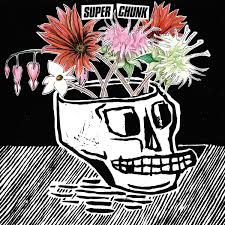


Superchunk – What a Time to Be Alive (Merge)


The title track to this venerable punk band’s 12th proper album is not exactly a celebration of life in the modern era. It, and the other songs here, was written between Donald Trump’s election and the period shortly after his inauguration. The chorus hasn’t aged a bit since then: “To see the rot in no disguise / oh, what a time to be alive / the scum, the shame, the fuckin’ lies / oh, what a time to be alive.”


The song works on several levels: it’s a brilliant protest song, in part because it doesn’t single out its target—it’s more than obvious, listening in 2018—and therefore could be applied to several situations. It’s also a rebuke to nostalgia, to which far too many punk bands subscribe. Most important, it’s not defeatist: in fact, almost every song here is a call to action, a rally for the like-minded to rally together and take back their country. Them’s fighting words, literally: “Fight me,” singer Mac McCaughan sings on “All for You.” “I’m not a violent person, but it can’t get any worse.”


Oh, and the band is on fire, playing like they’re raging against the dying of all lights. (Feb. 16)


Stream: “What a Time To Be Alive,” “Erasure,” “Reagan Youth”


Justin Timberlake – Man of the Woods (Sony)


I didn’t watch the SuperBowl. I did not have high expectations for a new Justin Timberlake album; the man’s obviously an exceptionally talented entertainer, but his records are spotty (witness the brilliant first instalment of The 20/20 Experience, and the completely lacklustre second half). By that measure, Man of the Woods is right on point: about half of it not only confirms Timberlake’s best talents, but points to a future where he merges a country influence from his native Tennessee with the once-futuristic funk of Timbaland and the Neptunes—the latter of which is significantly less forward-looking than it was 10 years ago, if only because their sonic footprint is now all over modern pop music. And the other half of Man of the Woods? It’s not terrible—well, lyrically it often is, but musically it’s usually several steps above the filler tracks on any other pop record.


The highlight here is the title track, where twangy guitars and country harmonies ride atop a synth bass and a drum machine—“Americana with 808s” is how the man himself described it. If more of the album sounded like this, Timberlake would have a real cross-genre game-changer on his hands. But it doesn’t. The collaboration with country star Chris Stapleton isn’t as successful, although the duet with Alicia Keys—which Stapleton had a hand in writing—is just fine. “Sauce” finds Timberlake doing a flat-out Pharrell impersonation, a song that sounds like a direct rip of Williams’s “Hunter,” from his 2014 album Girl. That said, despite the hideous lyrics, it’s a half-decent party track. The basslines on “Midnight Summer Jam” and the African-influenced “Living Off the Land” sound like a sampled talking drum pitched to the notes of the riff; that’s only one component that makes the former the most successful dance track here; the single “Filthy,” in comparison, sounds merely like a rocked-up outtake from FutureSex/LoveSounds.


We expect a lot from Justin Timberlake because he’s a big-tent pop star with an ear for musical innovation—as opposed to Bruno Mars, who shamelessly mines the past for new ideas. Nothing Timberlake has ever done or ever will do will be revolutionary or in any way deep—that’s not the point. If all he does is move the needle a bit and point other artists toward possibilities, then that’s all he has to do. That and a few choice dance moves. (Feb. 9)


Stream: “Midnight Summer Jam,” “Man of the Woods,” “Montana”


-->

Thursday, June 28, 2007

June review round-up 07

It's the long weekend with plenty of live action in Toronto, including two great shows around the corner from each other tonight at the Tranzac and Lee's Palace.

The Tranzac is holding a fundraiser to improve the venue's soundproofing--it currently shares a wall with its residential neighbour, which puts the kaibosh on late night activities. On the bill are Bruce Peninsula (which you might remember from this) and two all-star soul cover bands: Steel Door and Secret Recipe, the latter featuring the knockout vocals of Anne Rust d'Eye from Jon Rae's River, along with other Riverdwellers and local lights.

If for whatever reason that kind of community event isn't your thing, then I'd highly recommend the Brooklyn/Boston pop band Bishop Allen at Lee's, whose brilliant new album The Broken String (out in July) is highly recommended for anyone who spent 1996 listening to Wilco's Being There and the first Ben Folds Five album. Amazing songs and great production; hopefully they can do it live as well.

Some things that ran in Eye this month that I've neglected to mention:

This interview with We're Marching On, the gentlemen who organized the Track and Field festival. I'll post this transcript sometime in the future. In the meantime, they're playing the Tiger Bar in Toronto on Friday, June 29.

This CD review of The Ghost is Dancing, who are playing a release show on Friday, June 29 at the Drake Hotel in Toronto. Western Canadian dates in July.

This CD review of the new disc from Raising the Fawn, the main band of occasional Broken Social Scenester John Crossingham. It's the first thing I've liked from this band since their 2001 debut, which I wrote about here. Their CD release show is not until August 2 at the Rivoli.

And finally, one of my favourite new discs from the always-fertile Black Mountain posse, which is by Lightning Dust, the duo of Amber Webber and Josh Wells.
[Speaking of that crew, I'm currently reading Blood Meridian and can't say I'm getting much out of it at all other than colourful writing about desert sunsets and unspeakable gore. What am I missing?]


Here are some reviews written for the mainstream daily paper the Kitchener-Waterloo Record.
For scrolling ease, the order of appearance is: Mavis Staples, Patrick Wolf, Antibalas, Keren Ann, Rihanna, Cowboy Troy, Big & Rich, Betty Davis, Miracle Fortress, Metric, Abdominal.


Mavis Staples – We’ll Never Turn Back (Anti/Epitaph)

How quaint—an album of civil rights anthems. Isn’t segregation, like, so ’60s?

Not exactly. When the idea was first pitched to gospel and soul singer Mavis Staples, she thought these songs belonged in the past. After all, as part of the Staples Singers family, she had sung many of these songs countless times back when black children still needed armed guards to escort them into white schools. But as Katrina illustrated, double standards still abound, which is as good enough a reason as any to breathe new life into them.

With the help of guitarist/producer Ry Cooder, Staples sounds downright fiery on standards such as "Eyes on the Prize" (also covered by Springsteen recently), "On My Way" and "Down in Mississippi." These aren’t rendered as feel-good inspirationals, either; they’re recorded with a powerful sense of conviction and urgency. Cooder finds the funk in each one of them, while Staples is still as commanding as ever, her luxurious voice investing every line with divine grace.

That gift comes in handy during the four and a half minutes of "We Shall Not Be Moved," which might be fine at a rally, but it seems like an eternity here. And some tracks feature Staples giving a roll call of civil rights leaders, which threaten to make the whole album seem like civics lessons with grandma.

But as much as this is intentionally a living museum piece, Staples is still connected to the present day, where there’s still much work to be done. On the album’s finest, funkiest and most ferocious track, she tells us frankly: “Ninety-nine and a half just won’t do.” (June 7, 2007) Staples plays the Toronto Jazz Festival at Nathan Phillips Square this Sunday, July 1, with the Rebirth Brass Band.


Patrick Wolf – The Magic Position (Universal)

It’s like the last two decades never happened. Patrick Wolf was born in 1983, and if an artist gets their formative influences from childhood, it sounds like his parents stopped buying records the day his mom gave birth.

Wolf is a dandy drama queen drawn to lush, romantic pop, with ridiculously colourful fashion and devoid of doubt as to his own greatness. He’s the kind of eccentric pop star that decades of irony and cookie cutter corporatism have sought to erode, which is why The Magic Position sounds like such an artifact.

It would be embarrassing if Wolf wasn’t actually as good as he thinks he is. But he not only writes captivating cabaret melodies, but plays most of the instruments, including viola, ukeleles, and a cavalcade of keyboards with sufficient virtuosity. As a singer, he adopts a shameless swagger; his vocals send you scrambling to your New Romantic reference book to look up everyone from Martin Fry of ABC to Holly Johnson of Frankie Goes to Hollywood. Meanwhile, he even convinces Marianne Faithfull to sing a duet with him.

There more than enough moments here that reek of self-conscious affectation, but the songs manage to rise above all of that. Lucky for him, lucky for us. (June 7, 2007)


Antibalas – Security (Anti/Epitaph)

What started out as a tribute band to Afrobeat pioneer Fela Kuti has evolved to incorporate a wealth of other influences, with the focus remaining on the tightly wound grooves and the punchy horn section. Security is the fourth full-length for Antibalas, and easily the most well-rounded and rewarding.

Producer John McEntire strikes a fine balance between the vintage sound of Antibalas’s forefathers, and a crisp digital sound more akin to his own work in Tortoise. The five-piece horn section takes centre stage here, offering majestic melodies and funky fanfares for the rhythm section to dance around. As always, heavily charged politics play a part in the fleeting vocal moments, but they never distract from the party vibe.

Though Afrobeat is still the dominant influence, most of the grooves here have more in common with Herbie Hancock’s Headhunters—a high water mark in futuristic jazz funk that only a band like Antibalas could hope to surpass. (June 7, 2007) Antibalas play the Opera House in Toronto on Friday, June 29.


Keren Ann – s/t (EMI)

No wonder Keren Ann’s music sounds like a disembodied dreamstate. Born to Russian/Javanese/Israeli/Dutch parents, she was raised in Paris and relocated to New York City to record her 2005 masterstroke, Nolita. This time out, she records on three continents as well as in Iceland.

When she actually does sit still to record music, she has a sleepy, calming croon that invites you to “lay your head down in my arms,” and invites easy comparisons to Mazzy Starr and Suzanne Vega.

But don’t get too comfortable. Just as Nolita was adorned with sinister synths and eerie trumpet lines, this self-titled album has an unsettling undercurrent to it. Lyrically, there are many details of how her heart “died a slow weary death,” likely at the hands of a troubled artist. Underneath, a Lou Reed-ish electric guitar chugs alongside the deceptively delicate Euro folk-pop shadings; at the album’s halfway point, on "It Ain’t No Crime," the electric guitar suddenly breaks free from lullaby land into a skronky blues solo to jolt the unsuspecting listener awake.

While she still loves her synths to add textures to the cocktail piano and acoustic guitar base of much of this material, this time she also employs an Icelandic choir to add otherworldly harmonies when they’re least expected. Most of the time they’re barely recognizable, though they do come to the forefront on "Liberty," where their angelic qualities are on full display.

It’s these elements that set Keren Ann far apart from Norah Jones or even Feist, even though she likely has the same appeal for latte listeners. Don’t let the stark black and white album cover, simple title or surface beauty fool you: this is a multi-layered, dense delight. (June 14, 2007) [My live review of Keren Ann's show at the Rivoli is here.]


Rihanna – Good Girl Gone Bad (DefJam/Universal)

Barbadian singer Rihanna is barely 19 years old and this is her third album in three years—and the cracks are starting to show. “I don’t know who wants to be my friend for who I really am,” she intones on the confessional "Question Existing." “Who am I living for? Is this my limit? Can I endure some more?”

That awkward teenage moment aside, Rihanna comes out swinging on the first half of the album, with raunchy guitars on "Shut Up and Drive," a disco throwdown on "Don’t Stop the Music," and the vivid imagery when she sings: “I’m breakin’ dishes up in here all night/ I ain’t stoppin’ ‘til I see police lights.”

Even though her vocals put most of her moppet peers to shame, she might be understandably insecure that hired heavyweights like Timbaland, Jay-Z, Ne-Yo and Justin Timberlake threaten to steal the spotlight. Some of these older men have fond memories of the 80s, which is why there are subtle sampling nods to Lionel Richie, Michael Jackson, New Order and Art of Noise—all of whom were in their prime before Rihanna was even born. But the end result is that Good Girl Gone Bad manages to merge the best of 80s pop with modern R&B, not unlike Nelly Furtado (who can no doubt relate to the title).

Furtado’s hitmaker Timbaland shows up on three tracks, though it’s telling that these aren’t even the strongest moments here. He pulls out a New Orleans marching band on "Lemme Get That," but the song "Rehab" not only pales in comparison to Amy Winehouse’s song of the same name, but co-writer Justin Timberlake shamelessly rips off his own "What Goes Around."

Otherwise, Rihanna sounds like she has the summer hits sewn up. And if it does well enough, maybe she can even afford to take a year off. (June 14, 2007)


Cowboy Troy – Black in the Saddle (Warner)

His hick-hop 2005 debut album Loco Motive qualified for comedy album of the year, but Cowboy Troy is ready to be taken seriously—by going metal.

That’s right, if his main influences Garth Brooks and Run DMC already seemed like an odd combination, Cowboy Troy invites metal band Avenged Sevenfold to guest on the opening track, while the rest of Black in the Saddle features crunching guitars to add to the cartoonish genre mashing that he likes to call "Blackneck Boogie."

Producer J. Money (aka John Rich of Big & Rich) returns to sing smooth choruses and make sure tracks like "Hick Chicks" get the slick new country sound they deserve, always making room for a pedal steel and fiddle alongside the drum machines and stadium rock flourishes.

The Nashville Star co-host himself raps about Rambo and Sambo, sneaks in references to the Trail of Tears, and talks about how “People I’ve never met wanna take me body surfing behind a pick-up.” He knows that as only the second black artist ever invited to perform at the Country Music Association Awards, he’s always going to be the odd man out in Nashville, hence songs like "Take Your Best Shot Now," "Paranoid Like Me" and "How Can You Hate Me?"

And really, how can you hate Cowboy Troy? The more ridiculous he gets—and much of this album is nothing if not ridiculous—it’s hard not to admire the guy for his gumption. And hell, if the trashy freak show that is Kid Rock is allowed to get away with this, so should Cowboy Troy, who is just so gosh darn wholesome. (June 21, 2007)


Big & Rich – Between Raising Hell and Amazing Grace (Warner)

Cowboy Troy’s mentors Big & Rich are also looking to be taken a bit more seriously, ever since their single "Save a Horse (Ride a Cowboy)" pegged them as a novelty act.

Sadly, there’s no fun to be had on this album at all, as much of this mid-tempo material drips with saccharine platitudes that sound like they were written in rehab, including the title track.
Gimmicky guests don’t help matters. Wyclef Jean proves once again to be the most embarrassing man in hip-hop with his cameo on "Please Man," while R&B singer John Legend is invisible on "Eternity."

Finally, if Big & Rich can’t even pull off a countrified cover of AC/DC’s "You Shook Me All Night Long," one has to wonder if they’ll still be able to maintain their credibility as producers on other people’s records. (June 21, 2007)


Betty Davis – s/t (Light in the Attic/Koch)

Betty Davis – They Say I’m Different (Light in the Attic/Koch)

In the early 70s, Betty Davis was a snarling, sly and sexually brazen soul queen who specialized in raw and nasty funk, driven by electric guitars and clavinets that rode one-chord vamps that gave Davis plenty of room to strut.

On her first solo album in 1973, Davis had members of Sly and the Family Stone (including bassist Larry Graham) and Santana, and backing vocals from the Pointer Sisters and Sylvester. Hearing her slink her way through the caustic "Anti Love Song"—possibly written about abusive ex-husband Miles Davis—is to witness one of the most captivating vocal performances in the history of soul music.

She produced the follow-up herself, They Say I’m Different, where her funky vision comes into clearer focus. Though, really, nothing prepares you for the sound of her screaming, “He was a big frrrreak! I used to whip him with a turquoise chain!”

Both albums come with fascinating liner notes by Oliver Wang that document Davis’s mysterious life. But ultimately, the real story comes alive when you crank the volume and realize that this makes Amy Winehouse sound like Sarah McLachlan. (June 21, 2007)


Miracle Fortress – Five Roses (Secret City/Fusion 3)

The lazy, hazy days of summer are upon us, the ones where the heat leads to hallucination, the heart skips a beat at the sight of skin and sunglasses, and some days it’s hard to be motivated to do anything but drive out of town, lie in the grass and stare at the sky.

It’s the time of Brian Eno’s “blue August moon” and Brian Wilson’s “endless summer,” and a time that Montreal’s Miracle Fortress knows well, combining the best of both Brians to create a summery sonic landscape where guitars and synths melt into one another to create indeterminate textures, basslines sound like they’ve been borrowed from soul classics, layered vocal harmonies sing sweet melodies, and various sunbaked sounds conjure images of lapping waves and crying birds.

Indeed, it’s a miracle that this all works together, but Five Roses announces mainman Graham Van Pelt as a wildly creative producer and songwriter, one with a distinctive aesthetic that should sound just as sweet no matter what season in which it finds you. (June 28, 2007)


Metric – Grow Up and Blow Away (Last Gang/Universal)

Eventually Metric would grow up and blow everyone away, but this previously unreleased 1999 debut album clearly denotes baby steps. Here they toy with trip-hop synths and textures, sounding more like a pretentious version of Sneaker Pimps than the trashy new wave rock band they’d evolve into. Some fans might appreciate the chilled out middle ground between vocalist Emily Haines’s brooding solo work and the frantic sound of current Metric, but mostly this sounds dated and very much like a work in progress, made by a Toronto band trying hard to fit into the London/ New York/ L.A. axis (it was made in all three cities). In Haines’s own words, “You are everything/ you are nothing at all.” (June 28, 2007)


Abdominal – Escape From the Pigeon Hole (Do Right/Outside)

Why is it that the finest old school hip-hop is usually accompanied by a hokier-than-thou MC? Abdominal employs some fine beatmasters, including Jurassic 5’s Cut Chemist, the UK’s DJ Format and his fellow Torontonians in Circle Research, Notes to Self and DJ Fase, all of whom mine vintage soul tracks to create a funky backdrop for his nerdcore musings.

At times, it works brilliantly, as on the the bicyclist anthem "Pedal Pusher," the ultimate Toronto shout-out "T.Ode" and the breakneck breath-deficient "Abdominal Workout" and "Breathe Later," where the motormouth MC comes out swinging at rappers who can’t cut it live.

But more often than not, Abdominal sounds downright juvenile, like when he tries to drop as many f-bombs as possible in "Radio Friendly," or when writing horribly dorky sex rhymes like "Open Relationship" or the ridiculous "Sex With Girls."

Despite the skills of everyone involved, it’s tracks like these that leave a bad taste in the mouth. Unlike his equally nerdy Toronto neighbour and old school aficionado More or Les, Abdominal might pack more rhymes into each verse, but he doesn’t have enough to sustain a whole album. (June 28, 2007)