Showing posts with label Nels Cline. Show all posts

Wednesday, November 25, 2020

Top 20 of 2020: 11-20

My top 20 of 2020, numbers 11-20.


11 Nihiloxica – Kaloli (Crammed Discs). Ugandan drumming through a techno lens. This project started when the Nilotika Cultural Ensemble in Kamapla, Uganda, started playing at a local nightclub in between and during DJ sets. Word spread to Belgium, where a jazz drummer wanted to capture the synergy on tape. After a couple of EPs, this is the debut full-length, featuring two drum kits and electronics augmenting the vivid percussion, for a 21st-century Olatunji experience, a next-gen Congotronics, that doesn't in any way feel like the original tracks are being overshadowed. It's a great record, but on a personal note, it's also a very productive record: for writing, for walking, for housework, for whatever it is you need to do. As long as you're somewhere you can turn it up loud.  


12 Lido Pimienta – Miss Colombia (Anti). I wrote this and this earlier: It’s great. And I say that as someone who didn't at all love Pimienta’s Polaris-winning La Papessa. Everything has stepped up, starting with Pimienta’s own vocals: they’re stronger, express more dynamics and inflection, and generally more emotionally resonant. That’s true of the electronics as well; she’s said part of her challenge here was to make the technology sound beautiful, and she succeeded. The brass arrangements throughout are also a lovely touch. Her blending of Colombian rhythms with electronics more fully developed. The record is roughly divided into two parts: side one is more modern, side two is (mostly) more traditional, with guest spots from South American pop stars Bomba Estereo and the traditional Afro-Colombian percussion/vocal Sexteto Tabala (the collab here will sound familiar to any fans of Caribbean-Colombian legend Toto La Momposina) illustrating the scope of what Pimienta is aiming for—and achieves. And—hey, look! A Grammy nomination for Best Latin Alternative Album.  


And check out this beautiful video made for the Polaris Prize:


13 Marlaena Moore – Pay Attention, Be Amazed! (Flemish Eye). Wrote about this earlier here: It's a good sign when the opening track on your debut album is a song of longing on par with "Nothing Compares 2 U." Yes, this Edmonton performer's "I Miss You" is that good, and so is the rest of the record. Moore has no shortage of great lyrics that document fragility ("You came to see my harvest and you wanted it for free / Now this empty garden is all that's left of me"), and she often delivers them with a voice with just enough waver that you think she might break, but her inner strength pulls through every line. Moore's an incredible torch singer, as closing waltz "Tiger Water" demonstrates, over guitar feedback, vibraphones and snare brushes. "Imposter" borrows from Roxy Music's "More Than This," likely unconsciously, but the album is full of equally killer melodies all her own. "Xmas Oranges" is a total earworm, an acrobatic melody set to chugging cellos and a beguiling chorus: "Christmas oranges / I don't care for sticky citrus / You can't tell the difference between love and fatal interest." Producer Chad Van Gaalen, who's known for an often-hazy and psychedelic '90s aesthetic in his solo work and for others, helps Moore deliver a vivid and colourful sonic backdrop for songs that are part Patsy Cline, part Liz Phair, part Angel Olsen. It's hard not to be impressed with the chutzpah of the album title, but it turns out to be entirely accurate. I can't wait to hear more from this woman.


Also, I'm a sucker for one-shot videos (well, three in this case), no matter how goofy.


14 The Dears – Lovers Rock (Dangerbird) I wrote this earlier: When Murray Lightburn put out such an incredible solo album just last year, called Hear Me Out, I wondered if he would resurrect the ever-imploding Dears, of which only he and Natalia Yanchak remain. But at his age, it's important not to mess with the brand and name recognition. Sadly, very few people heard that solo record. And as this record proves, there is still a lot of life in this band, who this year celebrated 20 years of their breakthrough End of a Hollywood Bedtime Story. "Since all these years / is it still the same old song?" he asks. Maybe it is, but these are some of the best songs the Dears have ever written, starting with "The Worst in Us," the kind of melodic anthem they often excelled at, with a surprising and danceable bridge taking a left turn in the middle of the song. There are more orchestrations here than they've used since 2011's big-budget Degeneration Street, although Lovers Rock was recorded at their home studio and at Hotel 2 Tango (and Sam Roberts dusts off his violin for the occasion). Jake Clemons of the E Street Band (and Montreal transplant) elevates the lovely "Stille Lost" with his soaring saxophone, while some of the softer moments here ("Play Dead," "Is This What You Really Want," "Too Many Wrongs") are the most stunning. For a band that always recoiled at obvious Smiths comparsions (and I'm going to apologize for bringing them up yet again), there are some decidedly '80s-sounding Johnny Marr effects on the guitars here, but at this point in time, with such a rich and varied career behind them, the Dears shouldn't have to be so defensive. The closing track threatens "We'll Go Into Hiding." Let's hope not.


15 Wye Oak – Horizon EP (Merge). A few years back, this Durham-via-Baltimore duo covered Pat Benatar's "We Belong" for a radio session (watch it here), and it was stunning. That song makes me weepy at the best of times, and Wye Oak managed to make it their own. They didn't have a youth choir behind them at the time, but they do here: the Brooklyn Youth Chorus, who commissioned this work. Normally I find the use of kids choirs in pop music treacly (Benatar notwithstanding), but here they take Jenn Wasner's songs of alienation and dislocation and, to state the obvious, make them sound a lot less lonely, like all those Italian apartment-dwellers singing songs together during the first wave of the lockdown. Of course, these aren't catchy pop songs or simple folk anthems; this is Wye Oak, in all their glorious subtlety and complexity. Almost 15 years into their career, they continue to surprise. I'm extremely grateful they got to record this when they did, before it was no longer possible.


16 Deerhoof – Love Lore (Joyful Noise). This band is prolific at the best of times, and the pandemic made them even more so. In addition to a live album and a collection of odds and sods, they released a new album of original material, Greg Saunier covered Voivod's Angel Rat acoustically, and then finally this album of eclectic covers arranged into four long medleys. WIth such output, Deerhoof are more than easy to take for granted, which is why Love Lore is likely getting more attention than the original album released this year: we know what Deerhoof sound like playing their own songs, but what happens when they unleash their powers on others? Only Deerhoof would attempt Ornette Coleman, the Knight Rider theme, Eddy Grant, Stockhausen, Penderecki, Kraftwerk and the Jetsons theme on the same record, rubbing up one another and reinvented in the most magical way. The greatest rock band of the 2000s is still alive and kicking.


17 Fiona Apple – Fetch the Bolt Cutters (Sony). This is an uneasy listening record centred around piano and voice and searing lyrics, and yet for me the main appeal is the production, the percussion (drummer Amy Aileen Wood, and percussionist David Garza) and Apple's rhythmic choices, especially on tracks like "Relay," "Newspaper" and "For Her." Apple's strong personality dominates the discussion about this record, which is hardly surprising: it's the most visceral post-#MeToo record to have a large audience, a solidarity message and warning to other women about predatory behaviour, and she laments "yet another woman to whom I won't get through." But it's the band—including bassist Sebastian Steinberg and Apple's own piano work—that I keep coming back for.


18 Nels Cline – Share the Wealth (Blue Note). As much as I love guitarist Nels Cline's playing, in Wilco and elsewhere, I never know what to expect from his solo records. I loved his Blue Note debut Lovers in 2016, a deliberately pretty and "accessible" journey through a varied songbook, everything from Rodgers and Hart to Gabor Szabo to Annette Peacock and Sonic Youth. Share the Wealth is considerably more adventurous, skronky and noisy at times, filled with swing and verve and prog turns and itchy-scratchy avant-garde tumbles into the unknown—in the case of the aptly titled 17-minute epic "Stump the Panel," all in one song. And yes, it's also pretty, as on the relatively straightforward "Nightstand" and "Passed Down." Featuring staple Zorn players Brian Marsella (keys) and Cyro Baptista (percussion), Mr. Bungle bassist Trevor Zorn, Tuatara saxophonist Skerik, and Cline's long-time drummer Scott Amendola, this particular lineup had never played together before recording this album in two days. Cline originally intended to take the sessions and splice them up, but there was so much magic there he didn't bother. With players like this, there's no need for sleight of hand.


19 Sault – (untitled) Rise (Forever Living Originals). Nobody appears to know anything about this British act: whether it's an actual group, or a collection of studio musicians, or some kind of community arts project, or what. What we do know is that this is their fourth full length in the last two years, and the one before this, untitled (Black Is), managed to feature Michael Kiwanuka on one track; otherwise, everyone is completely anonymous. Each record is better than the last, and this features more complete songs rather than sketches, alongside killer grooves throughout. The sound can loosely be labelled soul, tied to no particular time period: big gospel/disco/R&B vocals, either by female soloists or in groupings, lush string sections, live rhythm section, and tasteful arrangements throughout. The raison d'etre, however, is to write songs that speak to the current/eternal unrest: "Fearless," "Street Fighter," "Uncomfortable," "Scary Times"—you get the idea. They sound all the more essential because so very few others appear to be doing this, or at least doing it this well. Closing track "Little Boy" is heartbreaking.


20 C. Diab – White Whale (Injazero). This album is the musical equivalent of escaping from the current shitshow to a Pacific Coast cabin during a rainstorm and just droning out with bowed guitar that sounds like a one-man Godspeed filtered through Loscil and Martin Tielli. It's not just bowed guitar, there are a few things going on here, none of which are ambient or soothing, but this does have a powerful catharsis of calm, if that makes an iota of sense. This is a very interior record, released during an extremely interior year, and it's been on high rotation for me since its release in June.  


Why the Melvillian title? Here's what he says in his artist statement:  

“The hope for security, for accountable humanitarian leadership, for affordable housing and fair income, for understanding, things which we learned were natural pieces of a progressive society, now seem like humanity’s great white whale in a darker, regressive world, once appearing on the horizon only to disappear again into the deep.
“It’s my hope that White Whale, for what it’s worth, will lend a small hand to the listeners’ emancipation from inward fear and sadness and feelings of unworthiness. And help you realize what it is you need to do in order to have that conversation, or make that move, and two steps forward in crushing that which seeks to crush you.”

Get I get an amen?

Sunday, June 24, 2018

March and April reviews 2018


These reviews ran in the Waterloo Region Record in March and April 2018. 

Cardi B – Invasion of Privacy (Atlantic)


Here’s a question no one thought would need answering in 2018: just how significant is Cardi B’s debut album? Yes, she had one of the biggest singles of 2017 with “Bodak Yellow,” which became the first solo female rap No. 1 hit since Lauryn Hill’s “Doo Wop” back in—whoa, really?—1998. Twenty years after Hill’s debut album topped the charts, Cardi B has now repeated that feat with her own debut—and again, one has to wonder what took so goddam long. Not even Nicki Minaj pulled this off.


Anyone who underestimated Cardi B because of her past—an Instagram star who vaulted to celebrity status on a reality show—is eating crow now. Not just because Invasion of Privacy is such a blockbuster hit right out of the gate, but because it’s really good: Cardi B is a commanding presence on the mic, delivering rags-to-riches tales with a fierce and profane take-no-prisoners approach. Musically, her collaborators—including Toronto’s Boi-1Da—give her plenty to work with, especially on the Latin trap of “I Like It.” For such a huge pop record, Cardi B’s team keeps the grooves ominous and with few, if any, pop hooks to satiate the mildly curious. Whereas Nicki Minaj lost her edge when she awkwardly catered directly to the mainstream, Cardi B is playing by her own rules, sticking to it, and dominating the landscape. (April 20)


Stream: “Get Up 10,” “Bodak Yellow,” “I Like It”


Paul Brandt – The Journey YYC: Volume 1 (Warner)


The most commercially successful Canadian country artist of the last 20 years—if not ever—is nothing if not consistent, and this latest EP shows that he’s still at the top of his game. For whatever reason—because no one listens to albums anymore?—he’s splitting up his latest release into two EPs, which means that the six surefire gems here are bulletproof evidence that this Calgarian is a class act, from his rich voice to his songwriting skills to his ability to match his old-school skills with the demands of modern radio. He’s also generous: many of these songs are about paying respect, whether it’s to the love of his life on “All About Her” or “Slow Down,” or to his audiences on “Thank You, Thank You.” And when he sings about wanting “A Better Country,” he means it: off-stage, his #NotInMyCity campaign targets sex trafficking, and he also advocates for concussion awareness in the rodeo community. Most recently, he was on the CBC dedicating his 2001 song “Small Town and Big Dreams” to the families of Humboldt, Sask. The man is a mensch, and his cavalcade of hits is sure to continue to shine a spotlight on the causes he cherishes. (April 13)


Stream: “All About Her,” “Thank You Thank You,” “Slow Down”


Nels Cline 4 – Currents, Constellations (Blue Note)


Guitarist Nels Cline has an enormous discography, the best known components being his work with Wilco, and most of it being considerably more abrasive and experimental. In 2016, he debuted with venerable jazz label Blue Note for the Lovers album, a sprawling set of beautiful covers of artists ranging from Henry Mancini to Sonic Youth, and everything in between. His second album for the label stems from a guitar duo he formed with Julian Lage in 2014; here, they add a killer rhythm section—bassist Scott Colley (Herbie Hancock, Pat Metheny), drummer Tom Rainey—that allows them even more room to roam. There are more pointy edges here than on Lovers, but just as many lovely passages as well, like the cinematic “As Close as That.” (April 27)


Stream: “Furtive,” “Imperfect 10,” “As Close as That”


Felix Dyotte – Politesses (Coyote)


It’s springtime in Montreal, where the second solo album from this songwriter sounds like rays of sunshine melting the still-remaining snow. (Qualifier: this actually came out in the fall, but its profile in English Canada has been minimal.) Dyotte takes a languid, dreamy approach to French chanson, with thick grooves underneath that wouldn’t be out of a place on a record by Destroyer or Beck. Like a poppier Philippe B or a more esoteric Coeur de Pirate (who shows up to duet on “Croix”), Dyotte is yet another Quebecois artist making some of the loveliest and lush pop music today. Leap over the language barrier and check it out. (April 27)

  
Stream: “Que ce soit toi, que ce soit moi,” “Croix,” “Jeanne”


Thompson Egbo-Egbo – A New Standard (EOne)


How to get noticed as a jazz artist in Canadian media: have an amazing name, throw in nods to John Coltrane, cover a Radiohead song, and have an interesting news hook to boot (in this case, it’s the artist’s philanthropic foundation focusing on education in disadvantaged communities).


Pianist Thompson Egbo-Egbo has more than that, however. Listening to his debut record for EOne, it’s more than obvious that his talent opened up more doors for him than anything else. Those covers—of Radiohead’s “Exit Music for Film,” of the incredibly obvious standard “My Favorite Things,” even a nod to the ’70s Spider-Man theme—are all just red herrings to get the listener in the door. Once there, Egbo-Egbo wows with the delicate dexterity of, yes, Oscar Peterson or any other jazz artist with cross-genre appeal. He’s not showy, either; one of the most impressive tracks here is the gentle “You Must Believe in Spring.” His rhythm section of drummer Jeff Halischuk and bassist Randall Hall are just as impressive as their bandleader; this is a formidable trio.


Now that he has our attention, we’ll be listening for a long time. (March 9)


Stream: “Softly as in a Morning Sunrise Golden Earrings,” “You Must Believe in Spring,” “Favela”


Esmerine – Mechanics of Dominion (Constellation)


This Montreal instrumental group, comprised primarily of members of Godspeed You Black Emperor (Bruce Cawdron) and A Silver Mt. Zion (Rebecca Foon), is usually enthralling, but on their sixth album they prove that they keep getting better as well. Their take on modern chamber music involves fascinating, tiny textures underneath pianos, pizzicato strings and marimbas, with a strong melodic undercurrent to even the most abstract pieces. This is rainy-morning music par excellence, especially when Foon’s cello steps to the forefront, but drummer Jamie Thompson also helps propel some pieces to the epic sweeps of labelmates Do Make Say Think. More than 20 years after Constellation Records began—the history of which was documented in an excellent article in a recent issue of Maisonneuve—Esmerine display how that label’s signature sound has evolved and refined, with one of its strongest releases in years. (April 27)


Stream: “The Space in Between,” “La Penombre,” “La Plume des Armes”


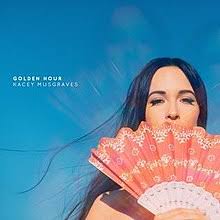
Kacey Musgraves – Golden Hour (Universal)


There’s a reason why Kacey Musgraves gets attention from media outlets that don’t normally cover a lot of contemporary country music. No, it’s not because she’s socially progressive in a conservative context, nor because her music is particularly raw or that far removed from mainstream country radio. First and foremost, Musgraves is a fine songwriter of the highest order, with melodies that match any of Nashville’s most successful production teams.


Central to her appeal, of course, is her no-frills approach. She’s not a showy singer and until now her music has been fairly free of slick production. On Golden Hour, her third album, Musgraves moves closer to the mainstream without compromising what made her special in the first place. Granted, she dips into ’70s soft-rock disco on “High Horse,” and there are some Daft Punk-ish Vocoder backing vocals on “Oh, What a World.” But the woman who met her husband at the Bluebird Café in Nashville generally keeps her arrangements simple and unadorned, regardless of whether or not she’s straying from the country template; “Butterflies” could easily be an Alicia Keys ballad. It’s vintage Musgraves, the way she articulates the comma in the phrase, “You can have your space, cowboy.”


She might claim that, “I ain’t Wonder Woman / I don’t know how to lasso the truth out of you.” But like any great country songwriter, Musgraves speaks truth in volumes, and this is indeed her Golden Hour. (April 13)


Stream: “Slow Burn,” “Love is a Wild Thing,” “Rainbow”


Sting and Shaggy – 44/867 (Universal)


For whom was this record made? For Shaggy fans? For Sting fans? For the two artists themselves, just for a lark? Or is this whole project a way for Sting to recover some of the money he lost in his Broadway show a few years back?


When these two appeared all over the Grammy Awards in February, one had to wonder who got paid off to promote this oddball collab. It’s not at all odd, of course, for Sting to make a reggae record; after all, the Police drew a not insignificant amount of inspiration from Jamaica on their earliest records. It is odd, however, for him to co-write a limp pop song called “44/876,” a song about the international calling codes for Britain and Jamaica. It’s even more odd for him to, on a record that is ripe for parody and ridicule, write a song with the chorus, “My name for you is sad trombone.”


On the one hand, it’s refreshing to hear the normally ultra-serious Sting having fun; there is absolutely no weight of the world bearing down on him here. Shaggy is still capable of reminding us why his ’90s singles were so much fun—but also why he hasn’t had a hit in 15 years. (Nor, for that matter, has Sting.) 44/867 is nowhere near as bad as one might expect, but that doesn’t stop it from being a head-scratcher best left to the dustbins of history. (April 27)

  
Stream: “Waiting for the Break of Day,” “Just One Lifetime,” “Night Shift”


Victime – Mon VR de reve (Michel Records)


The three members of Quebec City no-wave band Victime are not going to be quiet about whatever it is that made them choose their name. Bassist and vocalist Laurence Gauthier-Brown leads her francophone trio through a short, sharp explosion of noise formulated into danceable rock songs on this thrilling EP. Not dissimilar to the band Weaves, but stripped of that group’s pop hooks, Victime are a tiny tornado of creativity who show great promise. (April 27)


Stream: “Fatigue,” “Robot ou humaine,” “Brocher un doigt”


The Weeknd – My Dear Melancholy EP (Universal)


The Weeknd became a huge pop star with “Can’t Feel My Face,” which masked the darkness at the heart of his music since day one: the misanthropy, the misogyny, the fetishization of cocaine (though the song in question was about cocaine, few realized it). Those elements were certainly present on 2015’s Beauty Behind the Madness and 2016’s quick follow-up Starboy, but were somehow overlooked as his celebrity status took off, with Oscar nominations and high-profile lovers. Now he returns to the down-tempo brooding that defined his masterful debut, 2011’s House of Balloons, and it suits him perfectly. The eerie music behind him makes for a much better fit than the pop bangers. He’s still emotionally stunted and wallowing in misery, but there are several signs that his rampant, bitter misogyny is evaporating; at one point on this EP where he repeatedly laments the loss of a lover, the heartbroken singer even promises, “I’ll take my time to learn the way your body functions.” (What a guy!) Elsewhere, of course, he promises to “fuck the pain away,” to borrow a phrase from Peaches to mean something very different than what she intended. Throughout, of course, Abel Tesfaye commands our attention with the one thing that was so compelling right from the beginning: his voice. (April 13)

  
Stream: “Call Out My Name,” “Hurt You,” “Wasted Times”


Charlotte Day Wilson – Stone Woman EP (independent)

  
Wilson is a multi-instrumentalist who runs her own show, including producing and engineering duties. In a male-dominated industry, that’s something she’s justifiably proud of. Too bad, then, that all of these songs—and those on her debut EP—limp along with little life or direction, tilting toward the tedious. Her voice is great, the textures are lovely, the grooves are strong—yet she’s still missing a key ingredient. One hates to challenge the pride of a talented and politically motivated 25-year-old, but maybe the self-described “Stone Woman” who goes to a funeral “just to feel something” would benefit from some collaboration.


The track listing itself sums it all up: “Stone Woman.” “Doubt.” “Nothing New.” “Let You Down.” “Falling Down.” “Funeral.” (March 2)

  
Stream: “Stone Woman,” “Falling Apart,” “Funeral”


Yo La Tengo – There’s a Riot Going On (Matador)


There are most definitely riots going on, but you won’t hear them on the new Yo La Tengo record. On the contrary: this album is meant to be a soothing balm acting as an antidote to the tumult of our times. For a band already prone to dreamy soundscapes—along with guitar skronkfests, free jazz, bossa nova and anything else they put their mind to—this is the most featherweight they’ve ever been, outside of their film soundtrack work. Even the somnambulant 2000 album And Then Nothing Turned Itself Inside Out is a barn-burner next to this.


Only a band this seasoned and in-tune with each other—James McNew has now been in the band for 25 of their 34-year history—could pull off something this seemingly effortless. Songs are barely there, but such is their skill as texturalists that it’s never entirely dull, not even when a track is little more than a wash of sound, somewhere on the spectrum between Brian Eno and Tim Hecker. Then, seemingly out of nowhere, they’ll pull up a catchy little ditty like “Esportes Casual,” which sounds like a jingle for a modern furniture outlet, or “Forever,” which consciously echoes the Flamingos’ “I Only Have Eyes For You.”


This is no means essential listening for Yo La Tengo fans, and even less so for everyone else. But it’s a sign that even on auto-pilot and at low volume and the slowest possible tempos, Yo La Tengo can still hold our attention. (March 16)


Stream: “For You Too,” “What Chance Have I Got,” “Forever”

Sunday, December 18, 2016

Best of 2016

From what I can tell, this list is not like many others (#1 pick notwithstanding). I'd love to have seen more people talking about Veda Hille, Michael Kiwanuka, Eric Bachmann, Tami Neilson, The Comet is Coming, Black Mountain, Nels Cline, Glauco Venier, Paul Simon, Lizzo, Hidden Cameras and Jim Bryson, as well as many more great records found at the bottom of the main list. 2016 gave me panic attacks and made me think more about my mortality than at any time in my life, but at least there was no shortage of great music.

Some of these blurbs ran over two columns in the Waterloo Record, some ran on Macleans.ca.


1. Beyoncé – Lemonade (Sony). This is the only album that drove the collective conversation in 2016—and deservedly so. It’s the rare blockbuster pop album by a superstar that prompts political headlines, endless think pieces and taps directly into the zeitgeist in ways we haven’t seen in decades. It was also the first time the seemingly untouchable goddess appeared human, vulnerable, even vindictive, just as flawed as the rest of us. That came through not only in the lyrics but her vocal delivery, which was far more emotionally raw than she’s ever shown us. The cast of A-list collaborators gives the record an eclectic yet still consistent musical vision that by no means diminishes who exactly is in charge here: one queen to rule them all.


2. Veda Hille – Love Waves (independent). The Vancouver art-pop songwriter writes melodies that could sell a musical (which she’s done, to great acclaim), has the gall and the talent to rewrite and (gasp) improve her favourite songs by David Bowie and Brian Eno, employs many of Vancouver’s finest players, pens a plaintive ode to her young boy and reimagines the ordeal of Orpheus and Eurydice—in German, no less. Oh, and she’s wickedly funny when she wants to be. There’s no end to her insatiable curiosity—or her talent. (Original review here.)


3. Kaytranada – 99.9% (XL). The year’s weirdest success story also spawned one of the best records: 23-year-old bedroom-dwelling Haitian-Montrealer known for SoundCloud remixes pulls in up-and-coming international collaborators (Anderson.Paak, AlunaGeorge), almost-forgotten R&B and hip-hop artists (Craig David, Phonte), and new Toronto beatmakers (BadBadNotGood, River Tiber) and ends up creating the straight-up funkiest record to come out of Canada—perhaps ever, winning the Polaris Music Prize in the process. It’s draws from old school hip-hop, jazz fusion, Brazilian beats, Donna Summer disco, house music, DJ Shadow deconstruction, and anything else that sounds fantastic on the dance floor. Drake may have dominated the charts and the headlines, but Kaytranada made the infinitely superior—and much more fun—record. (Original review here. My take on his Polaris win here.)


4. Leonard Cohen – You Want It Darker (Sony). Frankly, Leonard, I’m not sure we did want it darker; 2016 turned out bleaker than we could ever have imagined (and it’s not over yet). It was enough that Cohen left us with one final masterpiece before he died, but his death proved to be a gift that gave us reason to re-examine his entire catalogue in a year when we were grasping for a glimpse of any light through the cracks. Unlike the elliptical Bowie record, You Want It Darker dealt specifically with death, with finality—and it was also funny, characteristically so. But there were no more chilling words sung (or spoken) this year than Cohen intoning, “I’m ready, my Lord.” (Original review here. My obit for him in Maclean’s here. I curated some memories of him from ordinary Canadians here.)


5. David Bowie – Blackstar (Sony). Even before his death shocked the world, this was already being hailed as his best album in (gulp) more than 30 years, one in which he fully embraced the influence of his hero, Scott Walker, and joined forces with Donny McCaslin’s powerful jazz band. Coy devil that he is, on Jan. 10 the always-innovative Bowie was also the first person to tell us that, other than music, 2016 was going to be a steaming pile of shit. (Original review here. My obit for him in Maclean’s here.)


6. The Tragically Hip – Man Machine Poem (Universal). Gord Downie was a newsmaker of the year for staring down death and delivering a series of triumphs, but least discussed among them was the fact that the newest Tragically Hip album was alone a reason to celebrate. Written and recorded before Downie’s diagnosis, and co-produced by Broken Social Scene’s Kevin Drew, it was a reinvention that could well have turned over a new leaf in the legendary band’s catalogue—and still might. Downie claims it’s not the last we’ll hear from them. (Original review here. My story on the Hip’s farewell and legacy for Maclean’s here. My review of the “final” show here. My year-end piece for Maclean’s Newsmakers here.)


7. A Tribe Called Quest – We Got It From Here… Thank You 4 Your Service (Sony). It wasn’t just Baby Boomers dying off; Phife Dawg was a mere 45 years old when he succumbed to diabetes, just after completing Tribe’s first album in 18 years. Both he and Q-Tip, neither of whom had prolific solo careers, proved they’d lost none of their potency and elevated their already-strong status as legends, not by emulating their glory days but by looking forward. Also: what a glorious thing it was to hear an actual rap group play off each other, as opposed to random guest verses on a superstar's record. It's a lost art. (Original review here.)


8. Michael Kiwanuka – Love and Hate (Universal). This British soul singer transformed his unassuming, folkie take on soul into the realm of the psychedelic, crafting a devastatingly beautiful respite in troubled times. The sound is undeniably retro—Nick Drake fronting Pink Floyd, or Marvin Gaye fronting Funkadelic—but never goes out of style. Nor should it. (Original review here.)


9. Eric Bachmann – s/t (Merge). Bachmann has been one of my favourite writers for more than 20 years (Archers of Loaf, Crooked Fingers), but it was his 2016 song “Mercy”—haunted by personal loss, impending apocalypse, and intense political divisions—that might well be his crowning moment, and was the one song I played more than any other in 2016, for obvious reasons. The rest this self-titled album is just as strong and heartbreaking (starting with “Modern Drugs”), a collection of perfectly crafted songs that pick up pieces of a shattered psyche. (Original review here.)


10. Anderson.Paak – Malibu (Steel Wool). This late bloomer (okay, he’s 30) is a studio veteran and multi-instrumentalist whose second album easily staked his claim in a crowded field of R&B reinventors. Malibu owes musical debts to D’Angelo, Erykah Badu and Kendrick Lamar, but with a considerably more joyous vibe—it’s no surprise that he also shows up on Kaytranada’s record. Miguel should watch his back. (Original review here.)


11. Tami Neilson – Don’t Be Afraid (Outside). No, really, one more record about death: this one by a Canadian expat in New Zealand, writing about her late father, the patriarch of a family band that toured Canada in her youth. Don’t Be Afraid is emotionally deeper than anything Neilson has done to date, which was well-executed but decidedly retro, bordering on kitsch. Not this time. The deeper she goes into the blues, the better she gets. Neilson’s voice has few equals in this country—k.d. lang? Serena Ryder?—and has to be heard to be believed, when she’s either hollering gospel (“Holy Moses”) or delivering a gorgeous country ballad (“Lonely”). (Original review here. Live review for Maclean’s here.)


12. The Comet is Coming – Channel the Spirits (Leaf). Led by saxophonist Shabaka Hutchings, this London trio’s debut is a synth-heavy, percussive, interplanetary psychedelic journey that lives up to titles like “Cosmic Dust” and “Slam Dunk in a Black Hole.” The New Musical Express dubbed the band “the Mercury Prize’s least-known nominee”—they were shortlisted alongside Bowie, Radiohead, Kiwanuka and other heavy hitters (and lost to Skepta). There’s nothing obscurist about them; this would go over like gangbusters in a Canadian rock club on a bill with Holy F--k and BadBadNotGood. (Original review here.)


13. Black Mountain – IV. If any rock record in the history of this country has a more powerful opening track than “Mothers of the Sun,” I’m not sure what that would be. A pulsing synth, a droning organ, a monster guitar riff, and the chilling vocals of Amber Webber and Stephen McBean keep us in suspense for more than three minutes before drummer Josh Wells kicks in to kick things into overdrive on what is an incredibly satisfying psychedelic rock record that never fizzles into pointless jam territory. McBean’s guitar solos are lyrical and evocative of Funkadelic great Eddie Hazel, but it’s Jeremy Schmidt’s keyboards that steal this show. (Original review here.)


14. Nels Cline – Lovers (Blue Note). The lead guitarist in Wilco appears on more than 200 records by others; his solo work, until now, has largely been experimental and skronky. On Lovers, his debut for the prestigious Blue Note label, however, he delivers a double album of love songs by composers ranging from Richard Rodgers and Henry Mancini to Arto Lindsay and Sonic Youth, along with original compositions. Lovers is lushly orchestrated, utilizing some of New York City’s most renowned avant-garde players, yet allows for plenty of abstraction and colouring far outside the lines, alongside more straightforward, classically beautiful performances. Though it never gets loud, that doesn’t mean it doesn’t get deliciously weird. (Original review here.)


15. Glauco Venier – Miniatures: Music for Piano and Percussion (ECM). Many were the days when headlines made me want to bury my head in the sand. For those days, this prolific Italian pianist—who normally performs in a trio format, studied Italian Renaissance music, and has recorded albums covering Tom Waits and Frank Zappa—offers sparse compositions and improvisations augmented by gongs, bells and other metallic instruments. Only two of the 14 tracks are uptempo; the majority are meditative yet melodic, not sparse enough to be ambient music, but played with a delicacy and somewhat cautious deliberation. (Original review here.)


16. Paul Simon – Stranger to Stranger (Universal). "The fact is, most obits are mixed reviews." When his day comes, that's going to be as true of Paul Simon as anyone else, but at least he's still here, even if he's strongly hinting this will be his last album. He sounds far from spent. He's still borrowing from wherever he can, including a young Italian DJ, but, as always, there's no sense he's trying to shoehorn himself into something he can't turn around and make his own. He can write circles around his peers or descendents, even if no one seems to care anymore; the man can't even get a Grammy nomination these days, even though those seem to get handed out like participation stickers. Stranger to Stranger, indeed.  (Original review here.)


17. Badbadnotgood – IV. Space-age bachelor pad music from a jazz band steeped in hip-hop and joined by guest singers, including Future Islands’ Sam Herring, Chicago MC Mick Jenkins and Toronto newcomer Charlotte Day Wilson (Kaytranada and Colin Stetson stop by as well). This band gets better with each record, and the permanent addition of saxophonist Leland Whittly pushes them even further. Also—for the love of God, don't judge this album by its cover. (Original review here.)


18. Lizzo – Coconut Oil EP (Universal).  “I’m lit / don’t mess with it,” says Lizzo, on a track where she demands that you “worship me.” She doesn’t need to ask twice. Lizzo is as strong a rapper as she is a singer—and she’s one hell of a singer, which puts her on the level with Lauryn Hill, Queen Latifah and Nicki Minaj right off the top. One of the last new artists to be taken under Prince’s wing before his death, Lizzo is equally political and playful, a feminist who rolls with an all-female crew, a plus-size woman pushing body positivity, and whose music fuses old-school hip-hop with modern trap, with Latino elements and nods to James Brown interspersed throughout. After two promising independent records, this is her major-label debut, six songs with producer Ricky Reed (Pitbull, Meghan Trainor) that strip everything down to the pop basics and set her on a path to stardom: expect to see her everywhere, starting with her own MTV show (Wonderland). (Original review here.)


19. Hidden Cameras – Home on Native Land. Joel Gibb’s Hidden Cameras inspired Arcade Fire’s debut album, brought a queer aesthetic into a straight-laced indie scene, and went full-on electro on their last album. Here, however, Gibb goes full-on country, which suits both his songwriting and his voice. He throws in a few covers—including a take on “Dark End of the Street” that places the classic soul song in a closeted context, and a joyous romp through “Log Driver’s Waltz” with Feist, Rufus Wainwright and Mary Margaret O’Hara—but it’s his originals that serve as a reminder of his unique talent. (Original review here.)


20. Jim Bryson – Somewhere We Will Find Our Place. On the surface, this Ottawa singer-songwriter (and sideman to Kathleen Edwards, the Weakerthans and Tragically Hip) writes pleasant, sad-sack Ontario folk-rock (one of my default favourite genres). But his interest in synths and experience doing production work on the side—as well as bringing in Broken Social Scene’s Charles Spearin as a collaborator, and Shawn Everett (Grammy-winning Alabama Shakes engineer)—informs the expanded sonic palette heard here, which provide vivid colours to his tales of disconnection and ennui. (Original review here.)


Runners-up:
AnchorsongCeremonial (Caroline) (Original review here.)
A Tribe Called RedWe Are the Halluci Nation (Pirates Blend) (Original review here.)
DaughterNot to Disappear (Glasshouse) (Original review here.)
Craig DavidFollowing My Intuition (Sony) (Original review here.)
DeerhoofThe Magic (Polyvinyl) (Original review here.)
Johan JohannssonArrival OST (Deutsche Grammophon) (Original review here.)
Jordan KlaasenJavelin (Nevado) (Original review here.)
LoscilMonument Builders (Kranky) (Original review here.)
Selina Martin –  I’ve Been Picking Caruso’s Brain (independent) (Original review here.)
Aaron NevilleApache (Sony) (Original review here.)
Agnes ObelCitizen of Glass (Play It Again Sam) (Original review here.)
OperatorsBlue Wave (Last Gang) (Original review here.)
PoirierMigration (Nice Up!) (Original review here.)
RihannaAnti (Universal) (Original review here; this album grew on me considerably.)
John K. SamsonWinter Wheat (Anti) (Original review here.)
Sturgill SimpsonA Sailor’s Guide to Earth (Atlantic) (Original review here.)
Colin StetsonSorrow: A Reimagining of Gorecki’s 3rd Symphony (52hz) (Original review here.)
Allen ToussaintAmerican Tunes (Nonesuch) (Original review here.)
TUNS – s/t (Royal Mountain) (Original review here.)
Donovan Woods  Hard Settle, Ain’t Troubled (Meant Well) (Original review here. This too grew on me considerably.)