Showing posts with label A Tribe Called Quest. Show all posts

Sunday, December 18, 2016

Best of 2016

From what I can tell, this list is not like many others (#1 pick notwithstanding). I'd love to have seen more people talking about Veda Hille, Michael Kiwanuka, Eric Bachmann, Tami Neilson, The Comet is Coming, Black Mountain, Nels Cline, Glauco Venier, Paul Simon, Lizzo, Hidden Cameras and Jim Bryson, as well as many more great records found at the bottom of the main list. 2016 gave me panic attacks and made me think more about my mortality than at any time in my life, but at least there was no shortage of great music.

Some of these blurbs ran over two columns in the Waterloo Record, some ran on Macleans.ca.


1. BeyoncĂ© – Lemonade (Sony). This is the only album that drove the collective conversation in 2016—and deservedly so. It’s the rare blockbuster pop album by a superstar that prompts political headlines, endless think pieces and taps directly into the zeitgeist in ways we haven’t seen in decades. It was also the first time the seemingly untouchable goddess appeared human, vulnerable, even vindictive, just as flawed as the rest of us. That came through not only in the lyrics but her vocal delivery, which was far more emotionally raw than she’s ever shown us. The cast of A-list collaborators gives the record an eclectic yet still consistent musical vision that by no means diminishes who exactly is in charge here: one queen to rule them all.


2. Veda Hille – Love Waves (independent). The Vancouver art-pop songwriter writes melodies that could sell a musical (which she’s done, to great acclaim), has the gall and the talent to rewrite and (gasp) improve her favourite songs by David Bowie and Brian Eno, employs many of Vancouver’s finest players, pens a plaintive ode to her young boy and reimagines the ordeal of Orpheus and Eurydice—in German, no less. Oh, and she’s wickedly funny when she wants to be. There’s no end to her insatiable curiosity—or her talent. (Original review here.)


3. Kaytranada – 99.9% (XL). The year’s weirdest success story also spawned one of the best records: 23-year-old bedroom-dwelling Haitian-Montrealer known for SoundCloud remixes pulls in up-and-coming international collaborators (Anderson.Paak, AlunaGeorge), almost-forgotten R&B and hip-hop artists (Craig David, Phonte), and new Toronto beatmakers (BadBadNotGood, River Tiber) and ends up creating the straight-up funkiest record to come out of Canada—perhaps ever, winning the Polaris Music Prize in the process. It’s draws from old school hip-hop, jazz fusion, Brazilian beats, Donna Summer disco, house music, DJ Shadow deconstruction, and anything else that sounds fantastic on the dance floor. Drake may have dominated the charts and the headlines, but Kaytranada made the infinitely superior—and much more fun—record. (Original review here. My take on his Polaris win here.)


4. Leonard Cohen – You Want It Darker (Sony). Frankly, Leonard, I’m not sure we did want it darker; 2016 turned out bleaker than we could ever have imagined (and it’s not over yet). It was enough that Cohen left us with one final masterpiece before he died, but his death proved to be a gift that gave us reason to re-examine his entire catalogue in a year when we were grasping for a glimpse of any light through the cracks. Unlike the elliptical Bowie record, You Want It Darker dealt specifically with death, with finality—and it was also funny, characteristically so. But there were no more chilling words sung (or spoken) this year than Cohen intoning, “I’m ready, my Lord.” (Original review here. My obit for him in Maclean’s here. I curated some memories of him from ordinary Canadians here.)


5. David Bowie – Blackstar (Sony). Even before his death shocked the world, this was already being hailed as his best album in (gulp) more than 30 years, one in which he fully embraced the influence of his hero, Scott Walker, and joined forces with Donny McCaslin’s powerful jazz band. Coy devil that he is, on Jan. 10 the always-innovative Bowie was also the first person to tell us that, other than music, 2016 was going to be a steaming pile of shit. (Original review here. My obit for him in Maclean’s here.)


6. The Tragically Hip – Man Machine Poem (Universal). Gord Downie was a newsmaker of the year for staring down death and delivering a series of triumphs, but least discussed among them was the fact that the newest Tragically Hip album was alone a reason to celebrate. Written and recorded before Downie’s diagnosis, and co-produced by Broken Social Scene’s Kevin Drew, it was a reinvention that could well have turned over a new leaf in the legendary band’s catalogue—and still might. Downie claims it’s not the last we’ll hear from them. (Original review here. My story on the Hip’s farewell and legacy for Maclean’s here. My review of the “final” show here. My year-end piece for Maclean’s Newsmakers here.)


7. A Tribe Called Quest – We Got It From Here… Thank You 4 Your Service (Sony). It wasn’t just Baby Boomers dying off; Phife Dawg was a mere 45 years old when he succumbed to diabetes, just after completing Tribe’s first album in 18 years. Both he and Q-Tip, neither of whom had prolific solo careers, proved they’d lost none of their potency and elevated their already-strong status as legends, not by emulating their glory days but by looking forward. Also: what a glorious thing it was to hear an actual rap group play off each other, as opposed to random guest verses on a superstar's record. It's a lost art. (Original review here.)


8. Michael Kiwanuka – Love and Hate (Universal). This British soul singer transformed his unassuming, folkie take on soul into the realm of the psychedelic, crafting a devastatingly beautiful respite in troubled times. The sound is undeniably retro—Nick Drake fronting Pink Floyd, or Marvin Gaye fronting Funkadelic—but never goes out of style. Nor should it. (Original review here.)


9. Eric Bachmann – s/t (Merge). Bachmann has been one of my favourite writers for more than 20 years (Archers of Loaf, Crooked Fingers), but it was his 2016 song “Mercy”—haunted by personal loss, impending apocalypse, and intense political divisions—that might well be his crowning moment, and was the one song I played more than any other in 2016, for obvious reasons. The rest this self-titled album is just as strong and heartbreaking (starting with “Modern Drugs”), a collection of perfectly crafted songs that pick up pieces of a shattered psyche. (Original review here.)


10. Anderson.Paak – Malibu (Steel Wool). This late bloomer (okay, he’s 30) is a studio veteran and multi-instrumentalist whose second album easily staked his claim in a crowded field of R&B reinventors. Malibu owes musical debts to D’Angelo, Erykah Badu and Kendrick Lamar, but with a considerably more joyous vibe—it’s no surprise that he also shows up on Kaytranada’s record. Miguel should watch his back. (Original review here.)


11. Tami Neilson – Don’t Be Afraid (Outside). No, really, one more record about death: this one by a Canadian expat in New Zealand, writing about her late father, the patriarch of a family band that toured Canada in her youth. Don’t Be Afraid is emotionally deeper than anything Neilson has done to date, which was well-executed but decidedly retro, bordering on kitsch. Not this time. The deeper she goes into the blues, the better she gets. Neilson’s voice has few equals in this country—k.d. lang? Serena Ryder?—and has to be heard to be believed, when she’s either hollering gospel (“Holy Moses”) or delivering a gorgeous country ballad (“Lonely”). (Original review here. Live review for Maclean’s here.)


12. The Comet is Coming – Channel the Spirits (Leaf). Led by saxophonist Shabaka Hutchings, this London trio’s debut is a synth-heavy, percussive, interplanetary psychedelic journey that lives up to titles like “Cosmic Dust” and “Slam Dunk in a Black Hole.” The New Musical Express dubbed the band “the Mercury Prize’s least-known nominee”—they were shortlisted alongside Bowie, Radiohead, Kiwanuka and other heavy hitters (and lost to Skepta). There’s nothing obscurist about them; this would go over like gangbusters in a Canadian rock club on a bill with Holy F--k and BadBadNotGood. (Original review here.)


13. Black Mountain – IV. If any rock record in the history of this country has a more powerful opening track than “Mothers of the Sun,” I’m not sure what that would be. A pulsing synth, a droning organ, a monster guitar riff, and the chilling vocals of Amber Webber and Stephen McBean keep us in suspense for more than three minutes before drummer Josh Wells kicks in to kick things into overdrive on what is an incredibly satisfying psychedelic rock record that never fizzles into pointless jam territory. McBean’s guitar solos are lyrical and evocative of Funkadelic great Eddie Hazel, but it’s Jeremy Schmidt’s keyboards that steal this show. (Original review here.)


14. Nels Cline – Lovers (Blue Note). The lead guitarist in Wilco appears on more than 200 records by others; his solo work, until now, has largely been experimental and skronky. On Lovers, his debut for the prestigious Blue Note label, however, he delivers a double album of love songs by composers ranging from Richard Rodgers and Henry Mancini to Arto Lindsay and Sonic Youth, along with original compositions. Lovers is lushly orchestrated, utilizing some of New York City’s most renowned avant-garde players, yet allows for plenty of abstraction and colouring far outside the lines, alongside more straightforward, classically beautiful performances. Though it never gets loud, that doesn’t mean it doesn’t get deliciously weird. (Original review here.)


15. Glauco Venier – Miniatures: Music for Piano and Percussion (ECM). Many were the days when headlines made me want to bury my head in the sand. For those days, this prolific Italian pianist—who normally performs in a trio format, studied Italian Renaissance music, and has recorded albums covering Tom Waits and Frank Zappa—offers sparse compositions and improvisations augmented by gongs, bells and other metallic instruments. Only two of the 14 tracks are uptempo; the majority are meditative yet melodic, not sparse enough to be ambient music, but played with a delicacy and somewhat cautious deliberation. (Original review here.)


16. Paul Simon – Stranger to Stranger (Universal). "The fact is, most obits are mixed reviews." When his day comes, that's going to be as true of Paul Simon as anyone else, but at least he's still here, even if he's strongly hinting this will be his last album. He sounds far from spent. He's still borrowing from wherever he can, including a young Italian DJ, but, as always, there's no sense he's trying to shoehorn himself into something he can't turn around and make his own. He can write circles around his peers or descendents, even if no one seems to care anymore; the man can't even get a Grammy nomination these days, even though those seem to get handed out like participation stickers. Stranger to Stranger, indeed.  (Original review here.)


17. Badbadnotgood – IV. Space-age bachelor pad music from a jazz band steeped in hip-hop and joined by guest singers, including Future Islands’ Sam Herring, Chicago MC Mick Jenkins and Toronto newcomer Charlotte Day Wilson (Kaytranada and Colin Stetson stop by as well). This band gets better with each record, and the permanent addition of saxophonist Leland Whittly pushes them even further. Also—for the love of God, don't judge this album by its cover. (Original review here.)


18. Lizzo – Coconut Oil EP (Universal).  “I’m lit / don’t mess with it,” says Lizzo, on a track where she demands that you “worship me.” She doesn’t need to ask twice. Lizzo is as strong a rapper as she is a singer—and she’s one hell of a singer, which puts her on the level with Lauryn Hill, Queen Latifah and Nicki Minaj right off the top. One of the last new artists to be taken under Prince’s wing before his death, Lizzo is equally political and playful, a feminist who rolls with an all-female crew, a plus-size woman pushing body positivity, and whose music fuses old-school hip-hop with modern trap, with Latino elements and nods to James Brown interspersed throughout. After two promising independent records, this is her major-label debut, six songs with producer Ricky Reed (Pitbull, Meghan Trainor) that strip everything down to the pop basics and set her on a path to stardom: expect to see her everywhere, starting with her own MTV show (Wonderland). (Original review here.)


19. Hidden Cameras – Home on Native Land. Joel Gibb’s Hidden Cameras inspired Arcade Fire’s debut album, brought a queer aesthetic into a straight-laced indie scene, and went full-on electro on their last album. Here, however, Gibb goes full-on country, which suits both his songwriting and his voice. He throws in a few covers—including a take on “Dark End of the Street” that places the classic soul song in a closeted context, and a joyous romp through “Log Driver’s Waltz” with Feist, Rufus Wainwright and Mary Margaret O’Hara—but it’s his originals that serve as a reminder of his unique talent. (Original review here.)


20. Jim Bryson – Somewhere We Will Find Our Place. On the surface, this Ottawa singer-songwriter (and sideman to Kathleen Edwards, the Weakerthans and Tragically Hip) writes pleasant, sad-sack Ontario folk-rock (one of my default favourite genres). But his interest in synths and experience doing production work on the side—as well as bringing in Broken Social Scene’s Charles Spearin as a collaborator, and Shawn Everett (Grammy-winning Alabama Shakes engineer)—informs the expanded sonic palette heard here, which provide vivid colours to his tales of disconnection and ennui. (Original review here.)


Runners-up:
AnchorsongCeremonial (Caroline) (Original review here.)
A Tribe Called RedWe Are the Halluci Nation (Pirates Blend) (Original review here.)
DaughterNot to Disappear (Glasshouse) (Original review here.)
Craig DavidFollowing My Intuition (Sony) (Original review here.)
DeerhoofThe Magic (Polyvinyl) (Original review here.)
Johan JohannssonArrival OST (Deutsche Grammophon) (Original review here.)
Jordan KlaasenJavelin (Nevado) (Original review here.)
LoscilMonument Builders (Kranky) (Original review here.)
Selina Martin –  I’ve Been Picking Caruso’s Brain (independent) (Original review here.)
Aaron NevilleApache (Sony) (Original review here.)
Agnes ObelCitizen of Glass (Play It Again Sam) (Original review here.)
OperatorsBlue Wave (Last Gang) (Original review here.)
PoirierMigration (Nice Up!) (Original review here.)
RihannaAnti (Universal) (Original review here; this album grew on me considerably.)
John K. SamsonWinter Wheat (Anti) (Original review here.)
Sturgill SimpsonA Sailor’s Guide to Earth (Atlantic) (Original review here.)
Colin StetsonSorrow: A Reimagining of Gorecki’s 3rd Symphony (52hz) (Original review here.)
Allen ToussaintAmerican Tunes (Nonesuch) (Original review here.)
TUNS – s/t (Royal Mountain) (Original review here.)
Donovan Woods  Hard Settle, Ain’t Troubled (Meant Well) (Original review here. This too grew on me considerably.)


Tuesday, November 29, 2016

November '16 reviews

Highly recommended this month: A Tribe Called Quest, Hidden Cameras, Lizzo

Well worth your while: Cosmic Range, Alicia Keys, Agnes Obel


As always, these reviews ran in the Waterloo Record.


Streaming is great for sample purposes, but please find a way to directly support your favourite artists financially.


A Tribe Called Quest – We Got It From Here … Thank You 4 Your Service (Sony)


A Tribe Called Quest have been teasing out promises of new music since they split up almost two decades ago. Throughout the 2000s, there were a series of reunion shows, and little new music from any of the three principals; even bandleader Q-Tip only released three albums in those 18 years.


Almost exactly a year ago, on a night that turned out to be the most horrific in music history with an attack on a Paris nightclub, Tribe performed on the Tonight Show to promote a reissue of their 1990 debut. For whatever reason—perhaps because rapper Phife Dawg’s diabetes was taking what would soon be a fatal toll—they decided to finally re-enter the studio. Phife would be dead four months later. This album came out days after the election of Donald Trump.


One of the first things you hear is sampled voice imploring, “It’s coming down hard: we got to get our s--t together!” One of the strongest tracks—indeed, one of the best singles of the year—is “We the People,” a screed against the polarized politics of the election year, particularly, and explicitly, the xenophobia that propelled a whitelash all the way to the presidency.


For all those reasons and more, this is not the happy-go-lucky Tribe of past glories. “F--k you and who you think I should be,” raps Phife; he’s addressing the power structure, not the listener, but the sentiment might as well apply to anyone expecting a nostalgia party or some kind of balm to relieve modern-day anxiety.


Musically, it’s a perfect update of their vintage sound: nothing here is a throwback, but nor do they try to fit into the latest fashions. It’s everything a comeback should be. There’s a heavy Caribbean influence throughout, including some straight-up reggae tracks. The slight touches of jazz are still there. The programming is decidedly modern. Jack White is one of the guests, alongside Busta Rhymes, Kendrick Lamar, Anderson.Paak, Talib Kweli and Andre 3000. In an entirely unexpected bit of stunt casting, Elton John shows up to sing the outro on a track that samples “Bennie and the Jets.” MC Consequence is practically a fourth member. Both Tip and Phife sound entirely on top of their game, the potency of their collective flow hasn’t diminished in the slightest. It’s telling that the only younger MCs to even be invited to this party are Lamar and Paak; few others of the next generation could attempt to hold a candle to these old-school masters.


This victory lap is bittersweet, of course. It’s quite consciously a farewell celebration to Phife Dawg. “Lost Somebody” is where Tip and Jarobi get downright mushy, and closing track “The Donald” (still trying to parse that title) is one big shout-out to the man they knew as the “five-foot assassin,” “the Trini-gladiator,” “the funky diabetic.”


A Tribe Called Quest is back. A Tribe Called Quest is finished. Thank You 4 Your Service. (Nov. 17)


Stream: “We the People,” “The Space Program,” “Black Spasmodic”


Cosmic Range – New Latitudes (IdĂ©e Fixe)


This was my most pleasant surprise of the Hillside Festival this past summer. Taking the stage were musicians I recognized from Bruce Peninsula, Diana, Slim Twig, Jennifer Castle’s band, and—wait, was that the original sax player from Martha and the Muffins? Why, yes it was.


Some semi-legendary starship cowboy Matthew “Doc” Dunn is the ringleader of this motely crew, who sound like Yo La Tengo covering Miles Davis’s Bitches Brew: a droning, wigged-out psychedelic trip driven by distorted organ and plenty of percussion. There are more delicate diversions as well, which bookend the album: the lovely ambience of “Morning, Ontario,” and the less enthralling eight-minute new-age piano of “Look at What Our Love Has Done.” In between, however, the grooves are heavy and haunting, the cacophony carefully conducted.


Bands like this are often a lot of fun on stage and a holy terror in the recording studio: one of the many wonders of New Latitudes is that it sounds fantastic—mixing engineer Jeff McMurrich is the real star of this project. (Nov. 10)


Stream: “Morning, Ontario,” “Love II,” “Kowboy”


Lori Cullen – Sexsmith Swinghammer Songs (True North)


Fans of Ron Sexsmith and Kurt Swinghammer, his long-time friend and frequent guitarist—the two once covered each other’s songs in a project called Sexhammer—will know that they share a love of the songwriting master of Burt Bacharach and the bossa nova pioneer AntĂ´nio Carlos Jobim. Sexsmith is also a big fan of Swinghammer’s wife, Lori Cullen, who has six previous albums to her name. Ergo, Sexhammer reunited to write a full album for Cullen, one that’s a full-on tribute to the breezy, sophisticated pop of their heroes. The instrumentation is perfect: plenty of nylon guitar, trombones, Rhodes piano, the most featherweight percussion, and the occasional clarinet or oboe to further remove it from any modern pop norms. Mia Sheard and Jennifer Foster chime in on backing vocals. It adds up to a series of love letters between incredibly accomplished musicians: both between friends and between generations. (Nov. 24)


Stream: “Face of Emily,” “New Love,” “Then There Were Three”


Hidden Cameras – Home on Native Land (Evil Evil/Outside)


Joel Gibb has had this on the backburner for almost 10 years, but Home on Native Land is far from a procrastination project; it’s more than worth the wait. It’s also not a coincidence that he’s finally releasing it immediately before Canada’s sesquicentennial year: the pun in the title is obvious, and for the album’s design he uses the beautiful new typeface called, yes, Canada 150, commissioned by the federal government for the upcoming national celebration.


Gibb’s nasal voice is well-suited to country and western, his skill at squeezing the most out of three- and four-chord songs perfectly in line with the genre. There are a couple of covers here, including a revelatory take on Percy Sledge’s “Dark End of the Street,” which illuminates the song’s sympathies with the love that dared not speak its name during more closeted times: “Hiding in shadows where we don't belong / Living in darkness, to hide alone / You and me, at the dark end of the street / I know a time has gonna take its toll / We have to pay for the love we stole / It's a sin and we know it's wrong / Oh, our love keeps going on strong.” It’s a song Gibb was born to sing. More important, it’s Gibb’s originals that truly shine: “Counting Stars” and “The Great Reward” deserve to be standards.


It may well be a cliché that every indie rocker eventually makes a country record, but few are likely to do it better than Joel Gibb. (Nov. 24)


Stream: “The Day I Left Home,” “Counting Stars,” “The Great Reward”


Jim James – Eternally Even (ATO)


The second solo album by the frontman of My Morning Jacket is another excuse for him to dive deep into his synth collection, sit down at his electric piano and jam over some sparse R&B grooves. The sound is luxurious and trippy, but the songs seem like afterthoughts and there’s little of the magic that James conjures when he’s leading a full band. His first album was delicate and lovely, like Bill Withers collaborating with the Flaming Lips; this time it’s more like Isaac Hayes being hijacked by Tangerine Dream. Hardcore fans of James won’t be disappointed; others should take this as a welcome reminder how good that overlooked first solo record was. (Nov. 10)


Stream: "Same Old Lie," “In the Moment,” “Hide in Plain Sight”


Alicia Keys – Here (Sony)


First Beyoncé, then Lady Gaga, now Alicia Keys: the biggest female pop and R&B artists have reinvented themselves in 2016, abandoning the maximalist demands of modern production, stripping down their sound and sounding better than they ever have.


Keys is still working with longtime associates Swizz Beatz, Mark Batson and Harold Lilly, but this time they turn their ear to early ’90s hip-hop beats, Roy Ayers samples (“She Don’t Really Care”), gospel blues (“Pawn it All”), Brazilian electro-pop (“In Common”), Lauryn Hill-style showdowns (“The Gospel”), Portishead-via-Issac Hayes balladry (“Illusion of Bliss”) and acoustic country music (“Kill Your Mama”). Even her incredibly earnest world-peace anthem (“Holy War”) is a winner; no doubt Bono is scrambling to figure out how to cover it with U2 ASAP. Is there anything she can’t do? Well, first single “Blended Family,” on the other hand, sounds like a treacly addendum to a TV movie soundtrack.


Alicia Keys has sold millions of records so far in her career; she didn’t need to change anything up to prove anything to anyone. But this finds her fulfilling the massive potential she’s shown since day one; this is the album she’s always had in her. (Nov. 10)


Stream: “Pawn It All,” “The Gospel,” “She Don’t Really Care”


Lady Gaga – Joanne (Universal)


There was always a lot more to Gaga than tabloid headlines and activism: her songs, her voice and her piano playing, for starters. Here, those three elements are at the forefront. Gone are the EDM trappings, the half-baked ideas fleshed out into album filler between singles, the cloying need to be everything to everyone. If 2011’s overproduced Born This Way started to fizzle her early promise, 2013’s Artpop just plain flopped and her 2014 album of duets with Tony Bennett was merely a distraction, Joanne marks a full-on comeback for one of the most exciting performers to emerge in the last decade.


Yes, there are more ballads, some with clear nods to Nashville, and one dedicated to Black Lives Mater. There are classic Gaga inspirationals, like “Diamond Heart” and the ’50s-via-’70s “Come to Mama.” There are obvious bids for pop radio (“John Wayne,” “Dancin’ in Circles”) and the dance floor (“A-YO,” “Perfect Illusion”). There are contributions from Mark Ronson, Queens of the Stone Age’s Josh Homme, Father John Misty, Beck, Tame Impala’s Kevin Parker and Haim, as well as a frankly forgettable duet with Florence Welch called “Hey Girl”—a lost opportunity to team up with Ryan Gosling, if nothing else.


Rare is the superstar pop record this varied and this satisfying. For those who’ve been waiting for Gaga to make a record like this, it’s as thirst-quenching as BeyoncĂ©’s Lemonade. (Nov. 3)


Stream: “Diamond Heart,” “Million Reasons,” “Sinner’s Prayer”


Lizzo – Coconut Oil (Atlantic)


"I don't need a crown to tell me I'm a queen." No doubt. Minnesota’s Lizzo makes her major-label debut with a flawless EP that announces her Queen Latifah/Lauryn Hill-level talent to the world: after two promising but uneven independent releases, a collaboration with Prince, a tour with Sleater-Kinney and a new job as an MTV host, she comes out swinging here as an unstoppable force not only as an MC, but as a powerhouse R&B singer—and, um, a flautist (that’s her playing the solo on the title track). With producer Ricky Reed (Pitbull, Meghan Trainor, Twenty-One Pilots), her stripped-down beats owe debts to New Orleans and dancehall, with the Latin-tinged opener “Worship” and first single “Phone” leaping out of the speakers. Body positivity is at the core of her message, hence the title track and “Good as Hell.” Best of all, she leaves us wanting more. A whole lot more. (Nov. 3)


Lizzo plays the Velvet Underground in Toronto on Dec. 8.


Stream: “Worship,” “Phone,” “Good as Hell”


Donny McCaslin – Beyond Now (MotĂ©ma)
Lazarus Original Cast Recording – Various Artists (Sony)


This year started with the death of David Bowie, and it ends with two direct reflections on his departure and his final creative endeavours.


The more successful of the two is from saxophonist McCaslin, whose band Bowie employed to create his final album, Blackstar. They are an enormous reason for its artistic triumph, bringing an energy not heard in his recordings for decades. On their own, they do their own thing—which makes it all the more remarkable how they managed to shoehorn themselves into Bowie’s songs in the first place. There are two direct nods to Bowie here: a cover of “A Small Plot of Land,” a forgettable later-period Bowie song that doesn’t get much better here, and a meditation on “Warszawa” from 1977’s experimental album Low. Both are curiosities at best, better employed as a gateway drug for Bowie fans to discover what McCaslin and band are capable of on their own compositions.


The cast recording for Lazarus, the off-Broadway production that was an odd jukebox musical of sorts produced with Bowie’s full participation, is a different beast. Recorded the day after he died, the cast runs through both popular (“Life on Mars”) and unpopular (“It’s No Game”) Bowie tracks, alternately murdering them (“This is Not America”) or reinventing them (“The Man Who Sold the World”) and, extremely rarely, improving them (“Absolute Beginners,” “Where Are We Now?”). The three new, previously unheard Bowie tracks are—okay. The bigger revelation, for those who didn’t already know, is that actor Michael C. Hall (Dexter, Six Feet Under) is a fantastic singer; I’d much rather hear him do his own Bowie tribute, independent of this weird stage production. (Nov. 3)


Stream Donny McCaslin: “Shake Loose,” “Bright Abyss,” “Warszawa”
Stream Lazarus: “Absolute Beginners,” “Where Are We Now?” “Valentine’s Day”


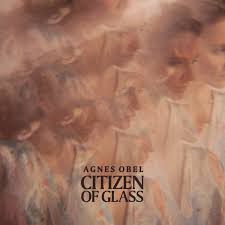
Agnes Obel – Citizen of Glass (Play it Again Sam)


As the weeks tick by on 2016, music lovers no doubt dread the news of each passing day: what beloved musician is going to die next? (Last week it was Sharon Jones.) How much more grief can we handle?


Agnes Obel is a Danish musician living in Berlin, who was raised by two accomplished musicians who buried their bigger dreams to take straight jobs. Her father died while she was touring her second album, 2013’s Aventine, and it was a huge blow. She cancelled a few shows but had to return to the road immediately. “After he died, I thought so much about his whole life, knowing how my life is now,” she told the Guardian newspaper. “He should have been a musician and I’m very aware I have something my father didn’t.”


It sounds like that stock-taking channelled directly into her work, because Citizen of Glass, her third album, is easily her best to date. It’s also heavy with grief: plaintive minor keys, her eerie string arrangements are filled with swoops and swoons, her voice increasingly comfortable in its lower range—in one case, artificially so; on “Familiar,” she duets with a pitch-shifted, masculine version of herself (not unlike Fever Ray of The Knife). Obel has a decidedly delicate touch as a pianist; here, she also utilizes harpsichord, spinet, celeste and a 1920s German synth called a Trautonium.


Citizen of Glass is for those long, dark winter nights ahead, during which we’ll reflect on all that we’ve lost. And in this case, what we’ve gained. (Nov. 24)


Stream: “Stretch Your Eyes,” “Familiar,” “It’s Happening Again”


Peppermoth – Now You Hear Me (independent)


How do you review ambient music? What makes one relaxation tape infinitely better than any other? Isn’t this music more of a function than art? Well, maybe, but it’s certainly easy to tell a good Saturday-night-beer-bash anthem from a piss-poor one, and you can easily delineate a quality Sunday morning meditation soundtrack from something that just sounds like a tap running in another room.


Peppermoth is the ambient project of Eccodek’s Andrew MacPherson, joined on occasion here by bassist Jeff Bird (Cowboy Junkies), trumpeter (and arts therapist) Gary Diggins, and guitar wizard Kevin Breit. It’s more than obvious that he’s spent time studying early Eno records—particularly the ones that featured trumpeter Jon Hassell—as well as the moodier side of the 4AD catalogue. But there’s nothing about Peppermoth that can be reduced to mere homage. Unlike a lot of ambient music, there is clear intention to every instrumental choice, every carefully placed note, every sonic layer that chooses to reveal itself at any given time. For a guy whose main band is about seeing what corners of the world he can bring into his sonic stew, this is a project where he peels back as much as he possibly can, how to make the most out of the most minimum of motifs—and he most certainly does. (Nov. 10)


Stream: “Dive,” “Ghosting,” “Moon Walk”


Robbie Robertson – Testimony (Universal)


The guitarist and principal songwriter with The Band has a new memoir out, you don’t need to be a fan of The Band or Bob Dylan or anyone else in the cast of dozens to appreciate a good yarn. But it sure helps to have an audio companion like this.


Much of this fans will have heard before: we don’t need to hear “The Weight” ever again, but by the same token this collection would be incomplete without it. No, the draw here is two tracks by Levon and the Hawks, recorded after Robertson and his bandmates quit as Ronnie Hawkins’s sidemen and before they hooked up with Bob Dylan. Here we finally hear the raw power of what was reputed to be the hottest live band on the Toronto scene of the mid-’60s—and the rumours are true. There are also live documents from their time with Bob Dylan, a track from The Basement Tapes, and other odds and ends.


There’s really no reason for any of Robertson’s post-Band solo material to be on here, as his book concludes with The Last Waltz. Apparently he’s writing a second volume; it’s safe to say there won’t be as much of an appetite for an audio companion to that one. (Nov. 17)


Stream: “He Don’t Love You” by Levon and the Hawks, “Honky Tonky” by Levon and the Hawks, “Come Love” by Ronnie Hawkins and the Hawks