Showing posts with label David Bowie. Show all posts

Tuesday, November 29, 2016

November '16 reviews

Highly recommended this month: A Tribe Called Quest, Hidden Cameras, Lizzo

Well worth your while: Cosmic Range, Alicia Keys, Agnes Obel


As always, these reviews ran in the Waterloo Record.


Streaming is great for sample purposes, but please find a way to directly support your favourite artists financially.


A Tribe Called Quest – We Got It From Here … Thank You 4 Your Service (Sony)


A Tribe Called Quest have been teasing out promises of new music since they split up almost two decades ago. Throughout the 2000s, there were a series of reunion shows, and little new music from any of the three principals; even bandleader Q-Tip only released three albums in those 18 years.


Almost exactly a year ago, on a night that turned out to be the most horrific in music history with an attack on a Paris nightclub, Tribe performed on the Tonight Show to promote a reissue of their 1990 debut. For whatever reason—perhaps because rapper Phife Dawg’s diabetes was taking what would soon be a fatal toll—they decided to finally re-enter the studio. Phife would be dead four months later. This album came out days after the election of Donald Trump.


One of the first things you hear is sampled voice imploring, “It’s coming down hard: we got to get our s--t together!” One of the strongest tracks—indeed, one of the best singles of the year—is “We the People,” a screed against the polarized politics of the election year, particularly, and explicitly, the xenophobia that propelled a whitelash all the way to the presidency.


For all those reasons and more, this is not the happy-go-lucky Tribe of past glories. “F--k you and who you think I should be,” raps Phife; he’s addressing the power structure, not the listener, but the sentiment might as well apply to anyone expecting a nostalgia party or some kind of balm to relieve modern-day anxiety.


Musically, it’s a perfect update of their vintage sound: nothing here is a throwback, but nor do they try to fit into the latest fashions. It’s everything a comeback should be. There’s a heavy Caribbean influence throughout, including some straight-up reggae tracks. The slight touches of jazz are still there. The programming is decidedly modern. Jack White is one of the guests, alongside Busta Rhymes, Kendrick Lamar, Anderson.Paak, Talib Kweli and Andre 3000. In an entirely unexpected bit of stunt casting, Elton John shows up to sing the outro on a track that samples “Bennie and the Jets.” MC Consequence is practically a fourth member. Both Tip and Phife sound entirely on top of their game, the potency of their collective flow hasn’t diminished in the slightest. It’s telling that the only younger MCs to even be invited to this party are Lamar and Paak; few others of the next generation could attempt to hold a candle to these old-school masters.


This victory lap is bittersweet, of course. It’s quite consciously a farewell celebration to Phife Dawg. “Lost Somebody” is where Tip and Jarobi get downright mushy, and closing track “The Donald” (still trying to parse that title) is one big shout-out to the man they knew as the “five-foot assassin,” “the Trini-gladiator,” “the funky diabetic.”


A Tribe Called Quest is back. A Tribe Called Quest is finished. Thank You 4 Your Service. (Nov. 17)


Stream: “We the People,” “The Space Program,” “Black Spasmodic”


Cosmic Range – New Latitudes (Idée Fixe)


This was my most pleasant surprise of the Hillside Festival this past summer. Taking the stage were musicians I recognized from Bruce Peninsula, Diana, Slim Twig, Jennifer Castle’s band, and—wait, was that the original sax player from Martha and the Muffins? Why, yes it was.


Some semi-legendary starship cowboy Matthew “Doc” Dunn is the ringleader of this motely crew, who sound like Yo La Tengo covering Miles Davis’s Bitches Brew: a droning, wigged-out psychedelic trip driven by distorted organ and plenty of percussion. There are more delicate diversions as well, which bookend the album: the lovely ambience of “Morning, Ontario,” and the less enthralling eight-minute new-age piano of “Look at What Our Love Has Done.” In between, however, the grooves are heavy and haunting, the cacophony carefully conducted.


Bands like this are often a lot of fun on stage and a holy terror in the recording studio: one of the many wonders of New Latitudes is that it sounds fantastic—mixing engineer Jeff McMurrich is the real star of this project. (Nov. 10)


Stream: “Morning, Ontario,” “Love II,” “Kowboy”


Lori Cullen – Sexsmith Swinghammer Songs (True North)


Fans of Ron Sexsmith and Kurt Swinghammer, his long-time friend and frequent guitarist—the two once covered each other’s songs in a project called Sexhammer—will know that they share a love of the songwriting master of Burt Bacharach and the bossa nova pioneer Antônio Carlos Jobim. Sexsmith is also a big fan of Swinghammer’s wife, Lori Cullen, who has six previous albums to her name. Ergo, Sexhammer reunited to write a full album for Cullen, one that’s a full-on tribute to the breezy, sophisticated pop of their heroes. The instrumentation is perfect: plenty of nylon guitar, trombones, Rhodes piano, the most featherweight percussion, and the occasional clarinet or oboe to further remove it from any modern pop norms. Mia Sheard and Jennifer Foster chime in on backing vocals. It adds up to a series of love letters between incredibly accomplished musicians: both between friends and between generations. (Nov. 24)


Stream: “Face of Emily,” “New Love,” “Then There Were Three”


Hidden Cameras – Home on Native Land (Evil Evil/Outside)


Joel Gibb has had this on the backburner for almost 10 years, but Home on Native Land is far from a procrastination project; it’s more than worth the wait. It’s also not a coincidence that he’s finally releasing it immediately before Canada’s sesquicentennial year: the pun in the title is obvious, and for the album’s design he uses the beautiful new typeface called, yes, Canada 150, commissioned by the federal government for the upcoming national celebration.


Gibb’s nasal voice is well-suited to country and western, his skill at squeezing the most out of three- and four-chord songs perfectly in line with the genre. There are a couple of covers here, including a revelatory take on Percy Sledge’s “Dark End of the Street,” which illuminates the song’s sympathies with the love that dared not speak its name during more closeted times: “Hiding in shadows where we don't belong / Living in darkness, to hide alone / You and me, at the dark end of the street / I know a time has gonna take its toll / We have to pay for the love we stole / It's a sin and we know it's wrong / Oh, our love keeps going on strong.” It’s a song Gibb was born to sing. More important, it’s Gibb’s originals that truly shine: “Counting Stars” and “The Great Reward” deserve to be standards.


It may well be a cliché that every indie rocker eventually makes a country record, but few are likely to do it better than Joel Gibb. (Nov. 24)


Stream: “The Day I Left Home,” “Counting Stars,” “The Great Reward”


Jim James – Eternally Even (ATO)


The second solo album by the frontman of My Morning Jacket is another excuse for him to dive deep into his synth collection, sit down at his electric piano and jam over some sparse R&B grooves. The sound is luxurious and trippy, but the songs seem like afterthoughts and there’s little of the magic that James conjures when he’s leading a full band. His first album was delicate and lovely, like Bill Withers collaborating with the Flaming Lips; this time it’s more like Isaac Hayes being hijacked by Tangerine Dream. Hardcore fans of James won’t be disappointed; others should take this as a welcome reminder how good that overlooked first solo record was. (Nov. 10)


Stream: "Same Old Lie," “In the Moment,” “Hide in Plain Sight”


Alicia Keys – Here (Sony)


First Beyoncé, then Lady Gaga, now Alicia Keys: the biggest female pop and R&B artists have reinvented themselves in 2016, abandoning the maximalist demands of modern production, stripping down their sound and sounding better than they ever have.


Keys is still working with longtime associates Swizz Beatz, Mark Batson and Harold Lilly, but this time they turn their ear to early ’90s hip-hop beats, Roy Ayers samples (“She Don’t Really Care”), gospel blues (“Pawn it All”), Brazilian electro-pop (“In Common”), Lauryn Hill-style showdowns (“The Gospel”), Portishead-via-Issac Hayes balladry (“Illusion of Bliss”) and acoustic country music (“Kill Your Mama”). Even her incredibly earnest world-peace anthem (“Holy War”) is a winner; no doubt Bono is scrambling to figure out how to cover it with U2 ASAP. Is there anything she can’t do? Well, first single “Blended Family,” on the other hand, sounds like a treacly addendum to a TV movie soundtrack.


Alicia Keys has sold millions of records so far in her career; she didn’t need to change anything up to prove anything to anyone. But this finds her fulfilling the massive potential she’s shown since day one; this is the album she’s always had in her. (Nov. 10)


Stream: “Pawn It All,” “The Gospel,” “She Don’t Really Care”


Lady Gaga – Joanne (Universal)


There was always a lot more to Gaga than tabloid headlines and activism: her songs, her voice and her piano playing, for starters. Here, those three elements are at the forefront. Gone are the EDM trappings, the half-baked ideas fleshed out into album filler between singles, the cloying need to be everything to everyone. If 2011’s overproduced Born This Way started to fizzle her early promise, 2013’s Artpop just plain flopped and her 2014 album of duets with Tony Bennett was merely a distraction, Joanne marks a full-on comeback for one of the most exciting performers to emerge in the last decade.


Yes, there are more ballads, some with clear nods to Nashville, and one dedicated to Black Lives Mater. There are classic Gaga inspirationals, like “Diamond Heart” and the ’50s-via-’70s “Come to Mama.” There are obvious bids for pop radio (“John Wayne,” “Dancin’ in Circles”) and the dance floor (“A-YO,” “Perfect Illusion”). There are contributions from Mark Ronson, Queens of the Stone Age’s Josh Homme, Father John Misty, Beck, Tame Impala’s Kevin Parker and Haim, as well as a frankly forgettable duet with Florence Welch called “Hey Girl”—a lost opportunity to team up with Ryan Gosling, if nothing else.


Rare is the superstar pop record this varied and this satisfying. For those who’ve been waiting for Gaga to make a record like this, it’s as thirst-quenching as Beyoncé’s Lemonade. (Nov. 3)


Stream: “Diamond Heart,” “Million Reasons,” “Sinner’s Prayer”


Lizzo – Coconut Oil (Atlantic)


"I don't need a crown to tell me I'm a queen." No doubt. Minnesota’s Lizzo makes her major-label debut with a flawless EP that announces her Queen Latifah/Lauryn Hill-level talent to the world: after two promising but uneven independent releases, a collaboration with Prince, a tour with Sleater-Kinney and a new job as an MTV host, she comes out swinging here as an unstoppable force not only as an MC, but as a powerhouse R&B singer—and, um, a flautist (that’s her playing the solo on the title track). With producer Ricky Reed (Pitbull, Meghan Trainor, Twenty-One Pilots), her stripped-down beats owe debts to New Orleans and dancehall, with the Latin-tinged opener “Worship” and first single “Phone” leaping out of the speakers. Body positivity is at the core of her message, hence the title track and “Good as Hell.” Best of all, she leaves us wanting more. A whole lot more. (Nov. 3)


Lizzo plays the Velvet Underground in Toronto on Dec. 8.


Stream: “Worship,” “Phone,” “Good as Hell”


Donny McCaslin – Beyond Now (Motéma)
Lazarus Original Cast Recording – Various Artists (Sony)


This year started with the death of David Bowie, and it ends with two direct reflections on his departure and his final creative endeavours.


The more successful of the two is from saxophonist McCaslin, whose band Bowie employed to create his final album, Blackstar. They are an enormous reason for its artistic triumph, bringing an energy not heard in his recordings for decades. On their own, they do their own thing—which makes it all the more remarkable how they managed to shoehorn themselves into Bowie’s songs in the first place. There are two direct nods to Bowie here: a cover of “A Small Plot of Land,” a forgettable later-period Bowie song that doesn’t get much better here, and a meditation on “Warszawa” from 1977’s experimental album Low. Both are curiosities at best, better employed as a gateway drug for Bowie fans to discover what McCaslin and band are capable of on their own compositions.


The cast recording for Lazarus, the off-Broadway production that was an odd jukebox musical of sorts produced with Bowie’s full participation, is a different beast. Recorded the day after he died, the cast runs through both popular (“Life on Mars”) and unpopular (“It’s No Game”) Bowie tracks, alternately murdering them (“This is Not America”) or reinventing them (“The Man Who Sold the World”) and, extremely rarely, improving them (“Absolute Beginners,” “Where Are We Now?”). The three new, previously unheard Bowie tracks are—okay. The bigger revelation, for those who didn’t already know, is that actor Michael C. Hall (Dexter, Six Feet Under) is a fantastic singer; I’d much rather hear him do his own Bowie tribute, independent of this weird stage production. (Nov. 3)


Stream Donny McCaslin: “Shake Loose,” “Bright Abyss,” “Warszawa”
Stream Lazarus: “Absolute Beginners,” “Where Are We Now?” “Valentine’s Day”
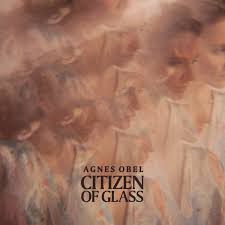


Agnes Obel – Citizen of Glass (Play it Again Sam)


As the weeks tick by on 2016, music lovers no doubt dread the news of each passing day: what beloved musician is going to die next? (Last week it was Sharon Jones.) How much more grief can we handle?


Agnes Obel is a Danish musician living in Berlin, who was raised by two accomplished musicians who buried their bigger dreams to take straight jobs. Her father died while she was touring her second album, 2013’s Aventine, and it was a huge blow. She cancelled a few shows but had to return to the road immediately. “After he died, I thought so much about his whole life, knowing how my life is now,” she told the Guardian newspaper. “He should have been a musician and I’m very aware I have something my father didn’t.”


It sounds like that stock-taking channelled directly into her work, because Citizen of Glass, her third album, is easily her best to date. It’s also heavy with grief: plaintive minor keys, her eerie string arrangements are filled with swoops and swoons, her voice increasingly comfortable in its lower range—in one case, artificially so; on “Familiar,” she duets with a pitch-shifted, masculine version of herself (not unlike Fever Ray of The Knife). Obel has a decidedly delicate touch as a pianist; here, she also utilizes harpsichord, spinet, celeste and a 1920s German synth called a Trautonium.


Citizen of Glass is for those long, dark winter nights ahead, during which we’ll reflect on all that we’ve lost. And in this case, what we’ve gained. (Nov. 24)


Stream: “Stretch Your Eyes,” “Familiar,” “It’s Happening Again”


Peppermoth – Now You Hear Me (independent)


How do you review ambient music? What makes one relaxation tape infinitely better than any other? Isn’t this music more of a function than art? Well, maybe, but it’s certainly easy to tell a good Saturday-night-beer-bash anthem from a piss-poor one, and you can easily delineate a quality Sunday morning meditation soundtrack from something that just sounds like a tap running in another room.


Peppermoth is the ambient project of Eccodek’s Andrew MacPherson, joined on occasion here by bassist Jeff Bird (Cowboy Junkies), trumpeter (and arts therapist) Gary Diggins, and guitar wizard Kevin Breit. It’s more than obvious that he’s spent time studying early Eno records—particularly the ones that featured trumpeter Jon Hassell—as well as the moodier side of the 4AD catalogue. But there’s nothing about Peppermoth that can be reduced to mere homage. Unlike a lot of ambient music, there is clear intention to every instrumental choice, every carefully placed note, every sonic layer that chooses to reveal itself at any given time. For a guy whose main band is about seeing what corners of the world he can bring into his sonic stew, this is a project where he peels back as much as he possibly can, how to make the most out of the most minimum of motifs—and he most certainly does. (Nov. 10)


Stream: “Dive,” “Ghosting,” “Moon Walk”


Robbie Robertson – Testimony (Universal)


The guitarist and principal songwriter with The Band has a new memoir out, you don’t need to be a fan of The Band or Bob Dylan or anyone else in the cast of dozens to appreciate a good yarn. But it sure helps to have an audio companion like this.


Much of this fans will have heard before: we don’t need to hear “The Weight” ever again, but by the same token this collection would be incomplete without it. No, the draw here is two tracks by Levon and the Hawks, recorded after Robertson and his bandmates quit as Ronnie Hawkins’s sidemen and before they hooked up with Bob Dylan. Here we finally hear the raw power of what was reputed to be the hottest live band on the Toronto scene of the mid-’60s—and the rumours are true. There are also live documents from their time with Bob Dylan, a track from The Basement Tapes, and other odds and ends.


There’s really no reason for any of Robertson’s post-Band solo material to be on here, as his book concludes with The Last Waltz. Apparently he’s writing a second volume; it’s safe to say there won’t be as much of an appetite for an audio companion to that one. (Nov. 17)


Stream: “He Don’t Love You” by Levon and the Hawks, “Honky Tonky” by Levon and the Hawks, “Come Love” by Ronnie Hawkins and the Hawks

Sunday, January 31, 2016

David Bowie and Donny McCaslin


David Bowie – Blackstar (Sony)


Always leave them wanting more. David Bowie knew a thing or two about show biz, where every performer wants to leave on a high note. Well, here we are, a week since he surprised us with his best record in at least 30 years—and then departed planet Earth mere days later. (I wrote this piece for Maclean's when the news broke.)


David Bowie, dead at 69, was—we now know—well aware of his mortality when he made both this and 2013’s The Next Day. That album was a direct nod to his past, both in sound, in personnel, and even the album art (the cover recycled the image on 1977’s Heroes). Here, however, he’s made a record that sounds nothing like anything else in his discography. It’s a crowning achievement on a 50-year career that altered the course of rock and pop music more times than perhaps any other artist.


Let’s be honest, however: the last 30 years of that career yielded precious few albums, or even songs, that even his biggest fans have cared to revisit. The first day I heard Blackstar, on the other hand, I played it five times in a row.


Blackstar blows up what we know of late-period Bowie. Here we see the eternal appreciator of the avant-garde bringing his love of increasingly weird Scott Walker records to a bunch of New York jazz musicians almost half his age, led by saxophonist Donny McCaslin, most of whom are associated with trumpeter Dave Douglas’s Greenleaf label. Drummer Mark Guiliana in particular does exemplary work here; jazz fans might know him from a duet album he made with Brad Meldau on synth. They give Bowie’s fractured incantations a muscle and vigour and exploratory splendour. It’s entirely possible that the band’s performance here is better than Bowie’s own, but the aged elegance of his distinctive croon provides the perfect anchor for this material. This is the sound of David Bowie acting his age, yet no less curious and experimental than he was in the late ’60s, before the mainstream found him.


Almost all of Bowie’s peers—certainly all of his peers who ever achieved the same commercial heights he once did—play it safer and safer as they get older. Bowie has always taken risks, for better or worse. Sometimes—many times—he has failed. Here, however, he’s triumphed, creating a masterpiece that serves as a perfect epitaph. Which is exactly the way he wanted it. (Jan. 14)


Stream: “Lazarus,” “Blackstar,” “Girl Loves Me”


Donny McCaslin – Fast Future (Greenleaf)


David Bowie’s final album, Blackstar, turned out to be one of his most popular: it’s his only album to ever hit #1 on the Billboard charts. That might have happened even had it not come out the week of his death, as unanimously positive reviews poured in immediately. Before tragedy prompted deep analysis of the album’s lyrics, most people were busy marvelling at the music and asking: who the heck is the incredible band behind Bowie, and where did they come from?


Donny McCaslin is a California-born, New York City saxophonist who plays in a band led by trumpeter Dave Douglas, who runs the Greenleaf label. McCaslin’s own band features drummer Mark Guiliana (who made a strong duo album with pianist Brad Mehldau last year), keyboardist Jason Linder and bassist Tim Lefebvre, all of whom Bowie pulled into the orbit of Blackstar.


McCaslin has 10 solo albums to his name; this one, released last March, is the first time he’s carried over one group of backing musicians from one album to the next. It was obvious to Bowie why. There is chemistry here greater than the individual players, though each are virtuosos. Linder uses electronic textures and there’s an Aphex Twin cover on here, but it’s far from avant-garde; McCaslin isn’t interested in abrasion, like the wilder exploits of John Zorn or Peter Brötzmann. There are strong melodic heads anchoring each of these tunes, and the band would be just as comfortable playing prog rock as they would jazz. If anything, Blackstar is more outré than Fast Future, if only because of expectations of the given genre.  


But even if Bowie hadn’t dragged McCaslin into our orbit, a talent this big—and that refers to the whole ensemble, not just the bandleader— was bound to get our attention eventually. (Jan. 28)


Stream: “No Eyes,” “Love What is Mortal,” “54 Cymru Beats”

Or you can hear the whole album here:


Friday, March 22, 2013

March 2013 reviews


The following reviews ran in the Guelph Mercury and Waterloo Record this month.

Highly recommended: Justin Timberlake, Devendra Banhart, Blue Hawaii, Billy Bragg


Apparat Organ Quartet - Pólýfónía (Head in the Sand)


This Icelandic group claim to be the only organ quartet in the world—who's going to argue? Joined by a propulsive rock drummer, the keyboardists play every kind of antiquated synth or organ they can get their hands on, sing through Vocoders, avoid pre-programmed tracks, and write sci-fi stadium anthems. This is not the slick techno of Daft Punk, nor is it the improvisational raw synth rock of Toronto's Holy Fuck. This is Kraftwerk on steroids. Yes, it's a schtick, and your tolerance for it over the course of an album may be limited, but rarely does keyboard music sound this visceral. They're making their first trip here for Canadian Music Fest later this month, with three shows in Toronto. Roofs will be raised. (March 14)


Download: “Konami,” “Polynesia,” “Macht Parat Den Apparat”


Devendra Banhart - Mala (Nonesuch)


In the early 2000s, there are few artist who squandered such great potential as Devendra Banhart. With a wonderfully elastic, Jeff Buckley-esque voice, an inventive approach to lo-fi recording, quirky songs and a pronounced Latin influence, his first three albums were magical. Of the three albums that followed, two of them were indulgent, silly, often embarrassing, and eclectic to the point of confusion. If Banhart has fans left still ready to follow him, they deserve to be rewarded. And now they have.


Mala was made by just Banhart and long-time sideman Noah Georgeson in a home studio where they purposely tried to limit their options. The result is a sonically consistent, playful recording that plays up to all of Banhart's many strengths and eccentricities. It’s also a focused collection of solid songs that give his voice a chance to shine. Latin rhythms, garage rock, electro dreaminess and plaintive acoustic tracks blend perfectly together in a subdued, experimental eclectic vibe not unlike Yo La Tengo—in fact, this may be a better Yo La Tengo album than that band's latest. Even the deadpan duet with his fiancée, entitled “Your Fine Petting Duck,” which starts out as an acoustic tarantella before somehow morphing into a techno pop track sung in German, somehow makes perfect sense in the context of the album—which is saying a lot. (March 14)


Download: “Won't You Come Over,” “Hatchat Wound,” “Fur Hildegard Von Bingen”


Belle Star – s/t (independent)

The Belle Game – Ritual Tradition Habit (Boompa)

Wild Belle – Isles (Sony)


It was almost 10 years ago that every new band seemed to have “wolf” in their name. This month, for whatever reason, the debut albums by Belle Starr, The Belle Game and Wild Belle all came out within a week of each other. Though they couldn’t be more stylistically different, it’s still easy to get them confused.


Wild Belle is the Chicago brother-sister duo of Elliot and Natalie Bergman, who play an odd, modern hippie/hipster take on roots reggae. Elliot plays baritone saxophone, all manners of keyboards and electric kalimba; Natalie is the disaffected, flat vocalist who also handles some keyboards. How they ended up signing to a major label is a mystery—did they have the same Sony A&R rep as synth-pop weirdos MGMT? The Talking Heads’ rhythm section, Tina Weymouth and Chris Frantz, get a shout-out in the thank yous, and it’s easy to hear the connection with their Tom Tom Club. While the sound is initially intriguing—especially the kalimbas and baritone saxophone clashing with the lo-fi electro reggae rhythms—it wears thin quickly, primarily due to Natalie’s limited vocal range.


Vocals are not an issue for Belle Starr, which unites three Canadian fiddle players—one of whom, Miranda Mulholland, has played extensively with Great Lake Swimmers in recent years—who also sing gloriously together and, um, happen to be incredibly easy on the eyes, almost as if someone purposely put these three women together to target the CBC and folk festival demographic. Sadly, “New Girl Now” is not a Honeymoon Suite cover, though they do tackle songs by Bruce Springsteen and Justin Rutledge—which is a risky venture, because the originals don’t approach the same craft.


The Belle Game is a new Vancouver band that sounds like—a Vancouver band. Rainy-day ’80s noir pop never dies in that town, and powerful vocalist Andrea Lo soars over low-key instrumentation (pianos, vibes, trumpet, strings) that occasionally swell into the dramatic and anthemic. There’s a lazy, hazy air to the recording, not unlike that on recent records by neighbours Brasstronaut or Kathryn Calder. There are elements of equal greatness here, but this is still a band finding its feet. (March 28)


Download Wild Belle: “Keep You,” “It’s Too Late,” “Another Girl”

Download Belle Starr: “Tougher Than the Rest,” “Charity Kiss,” “Arthur’s Air”

Download The Belle Game: “Wait Up For You,” “River,” “Blame Fiction”


Blue Hawaii - Untogether (Arbutus)

Mozart's Sister - Hello EP (Merok)


Young Montreal group Blue Hawaii features vocalist Raphaelle Standell-Preston of Braids and her partner, one-time Berlin resident Alex Cowan, both part of the same scene that spawned Grimes (a former roommate), and who are currently opening for Montreal buzz band Purity Ring. 


The vocals are often clipped and the melodies fractured, though nonetheless gorgeous throughout. The beats are glitchy yet deep, not a common combination in experimental pop bands using electronics, nor is it particularly easy to pull off—but if anyone can, it will be a group from Montreal (or Berlin), where electronic music is part of the lingua franca. 


There are no sappy anthems, and given the choice between an obvious answer and colourful abstraction, they opt for the latter every time. There are no big hooks, but none are needed; it's easy to be carried adrift on the lush harmonies and lulling beats. There are obvious nods to Laurie Anderson, Kate Bush and Bjork here—even a dash of very early Eurythmics at their most experimental—with modern R&B programming and James Blake-ish abstraction. Untogether is a bold, stunning and beautiful album, and enough of a tabula rasa to translate into any language.


Somewhat similar is Mozart's Sister, the project of Montreal's Caila Thompson Hannant. While her approach is just as left-field, she's much more interested in pop hooks and conventional vocal bravado--which she's already put to work in her supporting role in Montreal party band Think About Life (she was also one half of Shapes and Sizes, who were signed to Sufjan Stevens's label, and she played bass in Miracle Fortress). This EP puts a polish on some earlier, Internet-only tracks and shows that she's thinking bigger than just a bedroom project. (March 7)


Download Blue Hawaii: “Follow,” “Sierra Lift,” “Sweet Tooth”

Download Mozart’s Sister: “Contentedness,” “Mozart’s Sister,” “Single Status”


David Bowie - The Next Day (Iso/Sony)


When the 66-year-old David Bowie announced his first album in 10 years, there was much rejoicing. But wait—has anyone but the most fervent fans listened to anything Bowie has done in the last 20 years? Were we all really expecting greatness from a once-great artist who, while still exhibiting excellent taste in his public endorsements of new artists, has done precious little to enhance his discography after his first two decades of classic records?


There's plenty about this record that justifies the hype: Bowie is in fine voice and the fiery arrangements show that he's not ready to mellow out any time soon. He may open the album singing,  "Here I am not quite dying / my body left to rot in a hollow tree," but you'd never guess that from his performance. The production by long-time producer Tony Visconti casts off any trend-chasing attempt at modernity and hearkens back to his late '70s recordings—like, oh I don't know, maybe 1977's Heroes, the album cover of which is recycled here in full, with the title scratched out and a large white box over the 35-year-old image of Bowie. It's almost as if Bowie was saying, "I know everyone is going to listen to this digitally anyway, so why bother with a new album cover?"


Bowie has announced he's not going to tour—perhaps ever again—and because fans had given up on the idea of new material, he's free to do whatever he likes. More power to him. Ultimately, though, that makes it disappointing that a), he's mostly content to retread past glories instead of going out on a limb, and b), that the songs here are merely okay--if anyone other than Bowie was singing them, it's unlikely anyone would care. The Next Day may well be the best Bowie album in 20 years, but just like everything else he's put out in that time, it's primarily for the diehards. (March 14)


Download: “Dirty Boys,” “The Stars (Are Out Tonight),” “(You Will) Set the World on Fire”


Billy Bragg - Tooth and Nail (Dine Alone)


Though political folk singer Billy Bragg has been incredibly active in the last two decades—as an activist, touring act and author—fans are unlikely to recall any of his new songs that match the power of his work in the ’80s. The notable exception was when he teamed up with Wilco to set music to Woody Guthrie poems, on the highly successful Mermaid Avenue series.


Bragg returns to Americana here, recruiting producer Joe Henry and some key sidemen (pedal steel player Greg Leisz, Canadian bassist David Piltch) to help him make a full-blown Neil Young-style country album, written and recorded as quickly as possible in Henry’s California house. Bragg’s voice has reached a lovely, low maturity—albeit still with the heavy Essex accent that is his trademark—perfect for the tear-in-his-beer heartbreakers he’s written this time out, the kind of classic country ballads Elvis Costello keeps trying, and largely failing, to write. Bragg is in such fine form here that he even pulls off the hardest trick in the book: writing a song about songwriting that actually manages to be universal and emotionally poignant (“Handyman Blues”).


Bragg can’t avoid the political, of course, though recently he’s redirected his topical songs away from his albums and made them available as instant downloads. Here, however, the pointed “There Will Be a Reckoning” succeeds as a timeless all-purpose anthem, while “No One Knows Nothing Anymore” somehow sidesteps becoming a tired tirade from a grumpy old man.


Determined not to be a total sad sack or doomsayer, Bragg ends the album singing (and whistling) “Tomorrow Will Be a Better Day.” And no doubt it will be, if this album is indicative of a creative rebirth for Billy Bragg. (March 21)


Download: “No One Knows Nothing Anymore,” “Handyman Blues,” “Do Unto Others”


Grapes of Wrath - High Road (Aporia)


Interesting album title, for a trio that took two decade-apart increments to bury long-simmering resentments among the original members. Last year a reunion tour by this '80s Kamloops, B.C., group garnered rave reviews, and that energy obviously poured into recording sessions with producer Darryl Neudorf (Neko Case, Two Hours Traffic)--an energy that wasn't necessarily there the last time the two songwriters, Tom Hooper and Kevin Kane, got together in 2000. As contemporaries of R.E.M., it's great to hear a band that didn't burn out by sticking around too long, so the Grapes' particular take on new wave Byrdsian paisley pop sounds remarkably rejuvenated here. Kane and Hooper split the song list down the middle: the March break pop anthem “Mexico” soars; the acoustic ballad “Take On the Day” is a worthy successor to earlier triumph “All the Things I Wasn't”; the psychedelic ballad “I'm Lost” is luxurious; the harmonies throughout, of course, are magnificent. Well worth burying the hatchet for, and another fantastic chapter for a band who were dangerously close to being a distant memory for many. (March 21)


Download: “Mexico,” “Take on the Day,” “Waiting to Fly”


How to Destroy Angels - Welcome Oblivion (Sony)


Trent Reznor announced recently that he's resurrecting Nine Inch Nails after a four-year hiatus. In the meantime, he's been focusing on film scores—his work on The Social Network bagged him an Oscar—and this new project with his wife, Mariqueen Maandig, only now releasing their debut. “The more things change / everything stays the same,” she sings, and nothing here is a radical departure from Reznor's past, other than the fact that his vocals are not front and centre, and the overall sound is moody rather than menacing. Reznor's main strength continues to be as a producer first and foremost: he's capable of crafting creepy but astounding aural environments. As a songwriter, however, there's very little to latch on to here--which is a real shame considering the possibilities Maandig brings to the group. Perhaps Reznor is best at soundtracks and Nine Inch Nails, and not much in between. (March 7)


Download: “Ice Age,” “Keep It Together,” “The Loop Closes”


Low - The Invisible Way (Sub Pop)


When you’ve been a band for 20 years (and a married couple for longer), sometimes you need a friend and fan to come in and remind you what you do best. And so after three albums of necessary sonic detours—some of which took their trademarked hushed sound and dead-slow tempos and introduced crashing electric guitars, uptempo numbers and electronics—Low called on Wilco’s Jeff Tweedy to sit in the producer’s chair.


Tweedy had invited Low to open a Wilco tour several years back, which means that unlike previous outside producers (Steve Albini, Dave Fridmann) he witnessed their strengths at work night after night: what better prep before heading into the studio? That means the band has never before sounded this focused; being the hushed minimalists they are, they've always been meticulous and deliberate, but Tweedy ensures that they never settle for succeeding on mood alone. These songs sound refined, crafted. Hence The Invisible Way is, perhaps, if not the best album of Low’s career (that would be the sprawling The Great Destroyer), it's certainly the most consistently strong. 


Drummer Mimi Parker takes the lead more often than usual here, and the frequent occasions where husband Alan takes the high falsetto harmony above her are as transcendent as always. Only the penultimate track, “On My Own,” a dirge-y, noisy number with a monotonous, endless closing refrain of the phrase “happy birthday" threatens to derail the entire album, before Mimi returns with a minimal piano song that concludes everything on yet another lovely note—and there could never be too many of those on any given Low album. (March 21)


Download: “Plastic Cup,” “So Blue,” “Just Make It Stop”


Palma Violets - 180 (Rough Trade)


Here's a next-big-thing rock act from Britain that actually sounds like they can deliver. Obviously recorded live—tempos lurch and accelerate, and they play with the energy of four young dreamers breathing down each others' necks mere inches away from each other—180 doesn't boast any fancy production tricks or unusual sounds; everything here could be sourced from a local vintage store; every song could be sourced from vintage records, for that matter. Any group of geeks who meet playing Clash songs around a campfire at a music festival (in this case, Reading) could arguably achieve the same thing, but Palma Violets have the garage-rock Holy Trinity of swagger, soul and—for the most part on this somewhat uneven album, which stumbles toward its finish line—songcraft, immediately elevating them above other pretenders to the throne. Lou Reed turned 71 this week; these young turks could be his grandkids, doing him proud. (March 7)


Download: “Best of Friends,” “Step Up the Cool Cats”


Rhye - Woman (Universal)


The makeout album of summer 2013? If the lavender and chamomile tea leaves in your cup started singing softly in your ear, it would sound a lot like this. The album begins like a vintage Disney film, with a string section playing an opening theme before being joined by low brass, swooping harps and a wordless choir. Then the soft, sexy beats come in, and sweet nothings whispered by an androgynous voice with Brazilian bossa nova detachment—which is one way of saying it’s a man who sounds an awful lot like a woman. And not just any woman, but Sade, whose shadow looms large over everything on the debut by this hotly tipped duo—one of whom is the Toronto singer Mike Milosh, who toiled in obscurity (with three albums to his name) before hooking up with a Danish producer in L.A. before building considerable online buzz in the 12 months before this album appeared. It's like The XX settling down on a Caribbean island, or Feist setting up shop in a spa town after Let It Die. There's no faulting the mood set here, though it's impossible to imagine ever listening to it in the foreground outside of candlelit dinners and film placements. (March 21)


Download: “Open,” “3 Days,” “One of Those Summer Days”


Sound City - Various Artists (Sony)


Dave Grohl is a first-class geek. Why else would the Foo Fighters founder make his debut as a documentary film director with a movie about a sound mixing board—not an artist, not a label, not even a studio, but a piece of technological equipment that means nothing to anyone who's not a professional musician? The board in question was used to make classic records by Fleetwood Mac, Neil Young, Paul McCartney, Tom Petty and others, including Nirvana for Nevermind, which is when Grohl's fascination began. When the studio housing it went out of business, Grohl had it shipped to his garage and invited some of the film's interview subjects over to record new songs. You can't fault Grohl for his affability and intentions: who else would put '80s pop star Rick Springfield and the vocalist from L.A. hardcore punk band Fear on the same album? Who else would think to match the singer from Slipknot with the guitarists from Cheap Trick and Kyuss? Most importantly, who else could convince Paul McCartney to write and record a new song with the surviving members of Nirvana? 


The McCartney song is a delicious WTF moment that actually works, strange as it is to hear the 71-year-old Beatle screaming, "Mama, set me free!" (Is his mama even still alive?) The same is true of a surprisingly muscular Rick Springfield, who does more than just triumph over low expectations: he kicks some serious ass. Sadly, the same cannot be said of almost everyone else here. Stevie Nicks sounds great, and writes a new minor-key song with Grohl perfectly suited for her, yet the lyrics are frighteningly awful. The rhythm section of Rage Against the Machine prove, after more than a decade as Audioslave, that they've lost any groove they once had. And everyone just sounds like watered down versions of their normal selves, including Grohl. Stunt-casting supergroups rarely work; this album is no exception. (March 14)


Download: “The Man That Never Was” (feat. Rick Springfield), “Your Wife is Calling” (feat. Lee Ving), “Cut Me Some Slack” (feat. Paul McCartney)


Suuns - Images Du Futur (Secretly Canadian)


It's not just electronic acts from Montreal making waves; Suuns accomplish just as much with only one keyboard in their arsenal, on top of a live rhythm section and dreamy guitars. They're rooted in '70s German art rock, with metronomic rhythms and lightly arpeggiating melodic lines underscoring disaffected vocals; much more soulful than shoegaze, more electrifying than the electronic crowd, and, on “Bambi,” capable of some an icy yet visceral post-punk disco throwdown. Singer Ben Shemie communicates using slurred, monotonous vocals with major attitude, recalling the British band Clinic, who made one great album before spinning their wheels for the next decade; this is the album Clinic should have made years ago. Suuns add some essential rock'n'roll energy into Montreal's avant-garde scene, and they're hitting their stride on this, their second album. (March 7)


Download: “2020,” “Minor Work,” “Bambi”


Justin Timberlake – The 20/20 Experience (Sony)


Ever since Michael Jackson’s death, everyone agrees it’s unlikely anyone will ever replace him or replicate his success. Which is true, for myriad reasons. But if anyone is going to come close, it’s Justin Timberlake—and this is his Thriller.


Timberlake’s appeal is obvious: other than his looks, his dancing and his boy band history (’N SYNC had the biggest-selling album of the 2000s), his elastic, falsetto voice continues to improve, he’s pushing himself musically, and he’s got his own Quincy Jones—producer mastermind Timbaland—in his corner, turning traditional R&B on its head, nodding to the past and vividly envisioning a bold new future.


Timberlake takes his time: not only did it take him seven years to follow up FutureSex/LoveSounds, but the opening track here, the Al Green/D’Angelo channelling “Pusher Love Girl,” takes eight minutes to unfold—one of three tracks here to do so. Nothing about this album is indulgent, however: songs are suites that shift gears with no shortage of ear candy colouring every corner of the sonic spectrum.


“Don’t Hold the Wall” opens with doo-wop harmony before introducing Indian percussion and samples set to a Southern hip-hop beat and crickets in the background; four minutes later it all breaks down leaving only an Exorcist-style minor piano key motif with a child’s voice, before the whole thing halts for a sparse, bass-heavy techno beat that sounds a lot like driving through late ‘80s Detroit. “Let That Groove Get In” has a New Orleans groove executed by electronic drums, a tight horn section and a sample of field recordings from Burkina Faso. The one downtempo song, “Blue Ocean Floor,” features seven minutes of backward-tracked swells and Timberlake in choir-boy mode; it’s entirely enchanting. Lead single “Suit and Tie” has a snare drum that sounds like a submarine ping, and harp-like piano sweeps run like an ostinato throughout. It’s hard to imagine any other modern pop artist attempting such ambition while still making catchy, accessible music.


Much of the credit, of course, goes to Timbaland, who after being ubiquitous in 2006—behind the boards for Timberlake and Nelly Furtado—managed to fall off completely, being almost entirely MIA in recent years. This is as much a comeback for him as it is for Timberlake, and it sounds like he’s been bottling up seven years worth of his best beats. Maybe Timberlake had a contract specifying first right of refusal.


The only place Timberlake stumbles is lyrically. There’s nothing wrong with an album of silly love songs, including one about travelling in a “Spaceship Coupe”—which is no longer science fiction when sung by one of the only pop stars who could actually afford extraterrestrial travel. But Timberlake has more than a few laugh-out-loud moments here: “If you’ll be my strawberry bubblegum, then I’ll be your blueberry body pie”?? And what’s with “Suit and Tie,” where he chants, “I be on my suit and tie / s--t tie, s--t tie”? Thankfully, there’s too much else going on to ever notice or care.


Rihanna might be the defining R&B artist of the last 10 years because of her endless stream of #1 hits, but you’d never listen to one of her albums all the way through. Timberlake wants and gets pop thrills, but he also knows what it’s like to crawl inside a rich musical world for over an hour. Apparently he’s ready to release another album later this year, but we’re going to absorbing this one for a long, long time. (March 28)


Download: “Don’t Hold the Wall,” “Strawberry Bubblegum,” “Let the Groove Get In”