Highly recommended this month: A
Tribe Called Quest, Hidden Cameras, Lizzo
Well worth your while: Cosmic
Range, Alicia Keys, Agnes Obel
As always, these reviews ran in the Waterloo Record.
Streaming is great for sample purposes, but please find a way to directly support your favourite artists financially.

A Tribe Called Quest – We
Got It From Here … Thank You 4 Your Service (Sony)
A Tribe Called Quest have been
teasing out promises of new music since they split up almost two decades ago.
Throughout the 2000s, there were a series of reunion shows, and little new
music from any of the three principals; even bandleader Q-Tip only released
three albums in those 18 years.
Almost exactly a year ago, on a
night that turned out to be the most horrific in music history with an attack
on a Paris nightclub, Tribe performed on the Tonight Show to promote a reissue
of their 1990 debut. For whatever reason—perhaps because rapper Phife Dawg’s
diabetes was taking what would soon be a fatal toll—they decided to finally
re-enter the studio. Phife would be dead four months later. This album came out
days after the election of Donald Trump.
One of the first things you hear is
sampled voice imploring, “It’s coming down hard: we got to get our s--t
together!” One of the strongest tracks—indeed, one of the best singles of the
year—is “We the People,” a screed against the polarized politics of the
election year, particularly, and explicitly, the xenophobia that propelled a
whitelash all the way to the presidency.
For all those reasons and more,
this is not the happy-go-lucky Tribe of past glories. “F--k you and who you think I should be,” raps Phife; he’s
addressing the power structure, not the listener, but the sentiment might as
well apply to anyone expecting a nostalgia party or some kind of balm to
relieve modern-day anxiety.
Musically, it’s a perfect update of
their vintage sound: nothing here is a throwback, but nor do they try to fit
into the latest fashions. It’s everything a comeback should be. There’s a heavy
Caribbean influence throughout, including some straight-up reggae tracks. The
slight touches of jazz are still there. The programming is decidedly modern.
Jack White is one of the guests, alongside Busta Rhymes, Kendrick Lamar, Anderson.Paak, Talib Kweli and Andre 3000. In an
entirely unexpected bit of stunt casting, Elton John shows up to sing the outro
on a track that samples “Bennie and the Jets.” MC Consequence is practically a
fourth member. Both Tip and Phife sound entirely on top of their game, the
potency of their collective flow hasn’t diminished in the slightest. It’s
telling that the only younger MCs to even be invited to this party are Lamar
and Paak; few others of the next generation could attempt to hold a candle to
these old-school masters.
This victory lap is bittersweet, of
course. It’s quite consciously a farewell celebration to Phife Dawg. “Lost
Somebody” is where Tip and Jarobi get downright mushy, and closing track “The
Donald” (still trying to parse that title) is one big shout-out to the man they
knew as the “five-foot assassin,” “the Trini-gladiator,” “the funky diabetic.”
A Tribe Called Quest is back. A
Tribe Called Quest is finished. Thank You 4 Your Service. (Nov. 17)
Stream: “We the People,” “The Space Program,” “Black Spasmodic”

Cosmic Range – New Latitudes (Idée Fixe)
This was my most pleasant surprise
of the Hillside Festival this past summer. Taking the stage were musicians I
recognized from Bruce Peninsula, Diana, Slim Twig, Jennifer Castle’s band,
and—wait, was that the original sax player from Martha and the Muffins? Why,
yes it was.
Some semi-legendary starship cowboy
Matthew “Doc” Dunn is the ringleader of this motely crew, who sound like Yo La
Tengo covering Miles Davis’s Bitches Brew: a droning, wigged-out psychedelic
trip driven by distorted organ and plenty of percussion. There are more
delicate diversions as well, which bookend the album: the lovely ambience of
“Morning, Ontario,” and the less enthralling eight-minute new-age piano of
“Look at What Our Love Has Done.” In between, however, the grooves are heavy
and haunting, the cacophony carefully conducted.
Bands like this are often a lot of
fun on stage and a holy terror in the recording studio: one of the many wonders
of New Latitudes is that it sounds
fantastic—mixing engineer Jeff McMurrich is the real star of this
project. (Nov. 10)
Stream: “Morning, Ontario,” “Love
II,” “Kowboy”

Lori Cullen – Sexsmith Swinghammer Songs (True North)
Fans of Ron Sexsmith and Kurt Swinghammer, his long-time friend
and frequent guitarist—the two once covered each other’s songs in a project
called Sexhammer—will know that they share a love of the songwriting master of
Burt Bacharach and the bossa nova pioneer Antônio Carlos Jobim. Sexsmith is
also a big fan of Swinghammer’s wife, Lori Cullen, who has six previous albums
to her name. Ergo, Sexhammer reunited to write a full album for Cullen, one
that’s a full-on tribute to the breezy, sophisticated pop of their heroes. The
instrumentation is perfect: plenty of nylon guitar, trombones, Rhodes piano,
the most featherweight percussion, and the occasional clarinet or oboe to
further remove it from any modern pop norms. Mia Sheard and Jennifer Foster
chime in on backing vocals. It adds up to a series of love letters between
incredibly accomplished musicians: both between friends and between
generations. (Nov. 24)
Stream: “Face of Emily,” “New Love,” “Then There Were Three”

Hidden Cameras – Home on Native Land (Evil Evil/Outside)
Joel Gibb has had this on the backburner for almost 10 years, but
Home on Native Land is far from a
procrastination project; it’s more than worth the wait. It’s also not a
coincidence that he’s finally releasing it immediately before Canada’s
sesquicentennial year: the pun in the title is obvious, and for the album’s
design he uses the beautiful new typeface called, yes, Canada 150, commissioned
by the federal government for the upcoming national celebration.
Gibb’s nasal voice is well-suited to country and western, his
skill at squeezing the most out of three- and four-chord songs perfectly in
line with the genre. There are a couple of covers here, including a revelatory
take on Percy Sledge’s “Dark End of the Street,” which illuminates the song’s
sympathies with the love that dared not speak its name during more closeted
times: “Hiding
in shadows where we don't belong / Living in darkness, to hide alone / You and
me, at the dark end of the street / I know a time has gonna take its toll / We
have to pay for the love we stole / It's a sin and we know it's wrong / Oh, our
love keeps going on strong.” It’s a song Gibb was born to sing. More important, it’s
Gibb’s originals that truly shine: “Counting Stars” and “The Great Reward”
deserve to be standards.
It may well be a cliché that every indie rocker eventually makes
a country record, but few are likely to do it better than Joel Gibb. (Nov. 24)
Stream: “The Day I Left Home,” “Counting Stars,” “The Great
Reward”
Jim James – Eternally Even
(ATO)
The second solo album by the
frontman of My Morning Jacket is another excuse for him to dive deep into his
synth collection, sit down at his electric piano and jam over some sparse
R&B grooves. The sound is luxurious and trippy, but the songs seem like
afterthoughts and there’s little of the magic that James conjures when he’s
leading a full band. His first album was delicate and lovely, like Bill Withers
collaborating with the Flaming Lips; this time it’s more like Isaac Hayes being
hijacked by Tangerine Dream. Hardcore fans of James won’t be disappointed;
others should take this as a welcome reminder how good that overlooked first
solo record was. (Nov. 10)
Stream: "Same Old
Lie," “In the Moment,” “Hide in Plain Sight”

Alicia Keys – Here
(Sony)
First Beyoncé, then Lady Gaga, now
Alicia Keys: the biggest female pop and R&B artists have reinvented
themselves in 2016, abandoning the maximalist demands of modern production,
stripping down their sound and sounding better than they ever have.
Keys is still working with longtime
associates Swizz Beatz, Mark Batson and Harold Lilly, but this time they turn
their ear to early ’90s hip-hop beats, Roy Ayers samples (“She Don’t Really
Care”), gospel blues (“Pawn it All”), Brazilian electro-pop (“In Common”),
Lauryn Hill-style showdowns (“The Gospel”), Portishead-via-Issac Hayes balladry
(“Illusion of Bliss”) and acoustic country music (“Kill Your Mama”). Even her
incredibly earnest world-peace anthem (“Holy War”) is a winner; no doubt Bono
is scrambling to figure out how to cover it with U2 ASAP. Is there anything she
can’t do? Well, first single “Blended Family,” on the other hand, sounds like a
treacly addendum to a TV movie soundtrack.
Alicia Keys has sold millions of
records so far in her career; she didn’t need to change anything up to prove
anything to anyone. But this finds her fulfilling the massive potential she’s
shown since day one; this is the album she’s always had in her. (Nov. 10)
Stream: “Pawn It All,” “The
Gospel,” “She Don’t Really Care”
Lady Gaga – Joanne (Universal)
There was always a lot more to Gaga than tabloid headlines and
activism: her songs, her voice and her piano playing, for starters. Here, those
three elements are at the forefront. Gone are the EDM trappings, the half-baked
ideas fleshed out into album filler between singles, the cloying need to be
everything to everyone. If 2011’s overproduced Born This Way started to fizzle her early promise, 2013’s Artpop
just plain flopped and her 2014 album of duets with Tony Bennett was merely a
distraction, Joanne marks a full-on comeback for one of the most exciting
performers to emerge in the last decade.
Yes, there are more ballads, some with clear nods to Nashville,
and one dedicated to Black Lives Mater. There are classic Gaga inspirationals,
like “Diamond Heart” and the ’50s-via-’70s “Come to Mama.” There are obvious
bids for pop radio (“John Wayne,” “Dancin’ in Circles”) and the dance floor
(“A-YO,” “Perfect Illusion”). There are contributions from Mark Ronson, Queens
of the Stone Age’s Josh Homme, Father John Misty, Beck, Tame Impala’s Kevin
Parker and Haim, as well as a frankly forgettable duet with Florence Welch
called “Hey Girl”—a lost opportunity to team up with Ryan Gosling, if nothing
else.
Rare is the superstar pop record this varied and this
satisfying. For those who’ve been waiting for Gaga to make a record like this,
it’s as thirst-quenching as Beyoncé’s Lemonade. (Nov. 3)
Stream: “Diamond Heart,” “Million Reasons,” “Sinner’s Prayer”
Lizzo – Coconut Oil (Atlantic)
"I don't need a crown to tell me I'm a
queen." No doubt. Minnesota’s Lizzo makes her major-label debut with a flawless EP
that announces her Queen Latifah/Lauryn Hill-level talent to the world: after
two promising but uneven independent releases, a collaboration with Prince, a
tour with Sleater-Kinney and a new job as an MTV host, she comes out swinging
here as an unstoppable force not only as an MC, but as a powerhouse R&B
singer—and, um, a flautist (that’s her playing the solo on the title track).
With producer Ricky Reed (Pitbull, Meghan Trainor, Twenty-One Pilots), her
stripped-down beats owe debts to New Orleans and dancehall, with the
Latin-tinged opener “Worship” and first single “Phone” leaping out of
the speakers. Body positivity is at the core of her message, hence the title
track and “Good as Hell.” Best of all, she leaves us wanting more. A whole lot
more. (Nov. 3)
Lizzo plays the Velvet Underground in Toronto on Dec. 8.
Stream: “Worship,” “Phone,” “Good as Hell”
Donny McCaslin – Beyond Now (Motéma)
Lazarus Original Cast
Recording – Various Artists (Sony)
This year started with the death of David Bowie, and it ends
with two direct reflections on his departure and his final creative endeavours.
The more successful of the two is from saxophonist McCaslin,
whose band Bowie employed to create his final album, Blackstar. They are an enormous reason for its artistic triumph,
bringing an energy not heard in his recordings for decades. On their own, they
do their own thing—which makes it all the more remarkable how they managed to
shoehorn themselves into Bowie’s songs in the first place. There are two direct
nods to Bowie here: a cover of “A Small Plot of Land,” a forgettable
later-period Bowie song that doesn’t get much better here, and a meditation on
“Warszawa” from 1977’s experimental album Low.
Both are curiosities at best, better employed as a gateway drug for Bowie fans
to discover what McCaslin and band are capable of on their own compositions.
The cast recording for Lazarus,
the off-Broadway production that was an odd jukebox musical of sorts produced
with Bowie’s full participation, is a different beast. Recorded the day after
he died, the cast runs through both popular (“Life on Mars”) and unpopular
(“It’s No Game”) Bowie tracks, alternately murdering them (“This is Not
America”) or reinventing them (“The Man Who Sold the World”) and, extremely
rarely, improving them (“Absolute Beginners,” “Where Are We Now?”). The three
new, previously unheard Bowie tracks are—okay. The bigger revelation, for those
who didn’t already know, is that actor Michael C. Hall (Dexter, Six Feet Under)
is a fantastic singer; I’d much rather hear him do his own Bowie tribute, independent
of this weird stage production. (Nov. 3)
Stream Donny McCaslin: “Shake Loose,” “Bright Abyss,” “Warszawa”
Stream Lazarus: “Absolute Beginners,” “Where Are We Now?”
“Valentine’s Day”
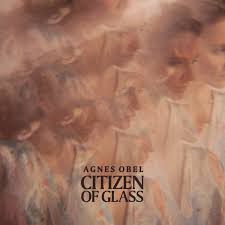
Agnes Obel – Citizen of Glass (Play it Again Sam)
As the weeks tick by on 2016, music lovers no doubt dread the
news of each passing day: what beloved musician is going to die next? (Last
week it was Sharon Jones.) How much more grief can we handle?
Agnes Obel is a Danish musician living in Berlin, who was raised
by two accomplished musicians who buried their bigger dreams to take straight
jobs. Her father died while she was touring her second album, 2013’s Aventine, and it was a huge blow. She
cancelled a few shows but had to return to the road immediately. “After he died, I
thought so much about his whole life, knowing how my life is now,” she told the
Guardian newspaper. “He should have
been a musician and I’m very aware I have something my father didn’t.”
It sounds like that stock-taking channelled directly into her
work, because Citizen of Glass, her
third album, is easily her best to date. It’s also heavy with grief: plaintive
minor keys, her
eerie string arrangements are filled with swoops and swoons, her voice
increasingly comfortable in its lower range—in one case, artificially so; on
“Familiar,” she duets with a pitch-shifted, masculine version of herself (not
unlike Fever Ray of The Knife). Obel has a decidedly delicate touch as a
pianist; here, she also utilizes harpsichord, spinet, celeste and a 1920s German
synth called a Trautonium.
Citizen of Glass is for those long,
dark winter nights ahead, during which we’ll reflect on all that we’ve lost.
And in this case, what we’ve gained. (Nov. 24)
Stream: “Stretch Your Eyes,” “Familiar,” “It’s Happening Again”
Peppermoth – Now You Hear
Me (independent)
How do you review ambient music?
What makes one relaxation tape infinitely better than any other? Isn’t this
music more of a function than art? Well, maybe, but it’s certainly easy to tell
a good Saturday-night-beer-bash anthem from a piss-poor one, and you can easily
delineate a quality Sunday morning meditation soundtrack from something that
just sounds like a tap running in another room.
Peppermoth is the ambient project
of Eccodek’s Andrew MacPherson, joined on occasion here by bassist Jeff Bird
(Cowboy Junkies), trumpeter (and arts therapist) Gary Diggins, and guitar
wizard Kevin Breit. It’s more than obvious that he’s spent time studying early
Eno records—particularly the ones that featured trumpeter Jon Hassell—as well
as the moodier side of the 4AD catalogue. But there’s nothing about Peppermoth
that can be reduced to mere homage. Unlike a lot of ambient music, there is
clear intention to every instrumental choice, every carefully placed note,
every sonic layer that chooses to reveal itself at any given time. For a guy
whose main band is about seeing what corners of the world he can bring into his
sonic stew, this is a project where he peels back as much as he possibly can,
how to make the most out of the most minimum of motifs—and he most certainly
does. (Nov. 10)
Stream: “Dive,” “Ghosting,” “Moon
Walk”
Robbie Robertson – Testimony (Universal)
The guitarist and principal songwriter with The Band has a new
memoir out, you don’t need to be a fan of The Band or Bob Dylan or anyone else
in the cast of dozens to appreciate a good yarn. But it sure helps to have an
audio companion like this.
Much of this fans will have heard before: we don’t need to hear
“The Weight” ever again, but by the same token this collection would be
incomplete without it. No, the draw here is two tracks by Levon and the Hawks,
recorded after Robertson and his bandmates quit as Ronnie Hawkins’s sidemen and
before they hooked up with Bob Dylan. Here we finally hear the raw power of
what was reputed to be the hottest live band on the Toronto scene of the
mid-’60s—and the rumours are true. There are also live documents from their
time with Bob Dylan, a track from The
Basement Tapes, and other odds and ends.
There’s really no reason for any of Robertson’s post-Band solo
material to be on here, as his book concludes with The Last Waltz. Apparently
he’s writing a second volume; it’s safe to say there won’t be as much of an
appetite for an audio companion to that one. (Nov. 17)
Stream: “He Don’t Love You” by Levon and the Hawks, “Honky
Tonky” by Levon and the Hawks, “Come Love” by Ronnie Hawkins and the Hawks


